

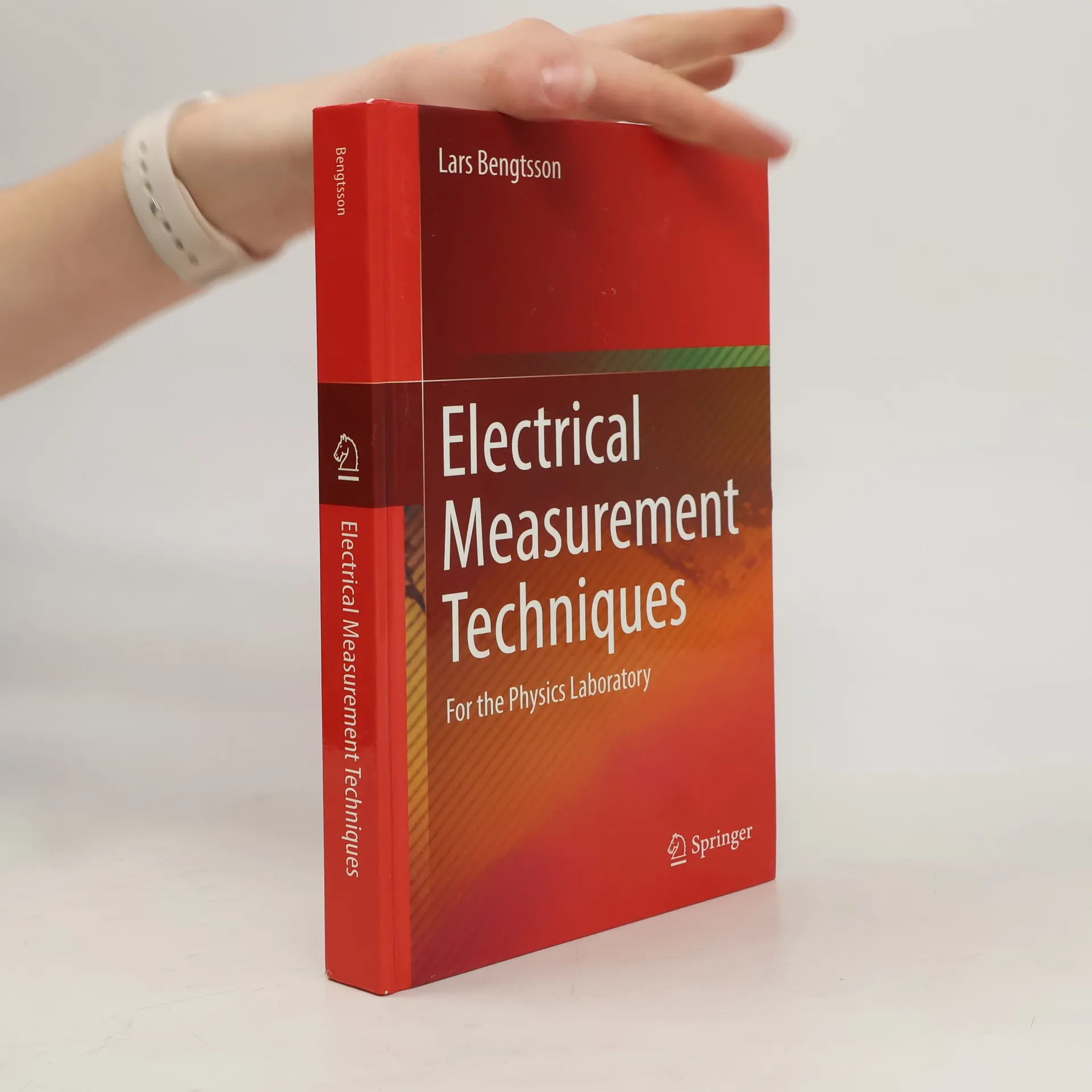
This book highlights the electrical engineering aspects of a typical physics laboratory. To perform a sound experiment in a physics laboratory, it is paramount that readers understand the equipment and methods used to collect the data. This includes sensors (e.g., thermocouples and vacuum gauges), amplifiers (e.g., instrumentation amplifiers and lock-in amplifiers), oscilloscopes and probes (active probes and current probes), transmission cables (50-ohm termination) and noise shielding (grounding), spectrum analyzers (FFT and heterodyne technique), ADCs and digital signal processing, convolution and correlation, data analysis such as curve fitting, and uncertainty calculations (uncertainty ‘budgets’). The readers need to know about electromagnetic crosstalk, time-to-digital converters, student-t distributions, PID controllers, spectral leakage, and windows. This book helps readers understand all of that.
Lars Bengtsson Book order (chronological)

A Historical Review of Swedish Strategy Research and the Rigor-Relevance Gap
- 94 pages
- 4 hours of reading
This Element reviews the existing literature on the rigor-relevance gap in academic research on strategic management and argues that it must go beyond the typical explanations of knowledge and language differences and look at more fundamental, societal, and cultural explanations.