


Explore the latest books of this year!
Bookbot

Geoffrey Ernest Richard Lloyd

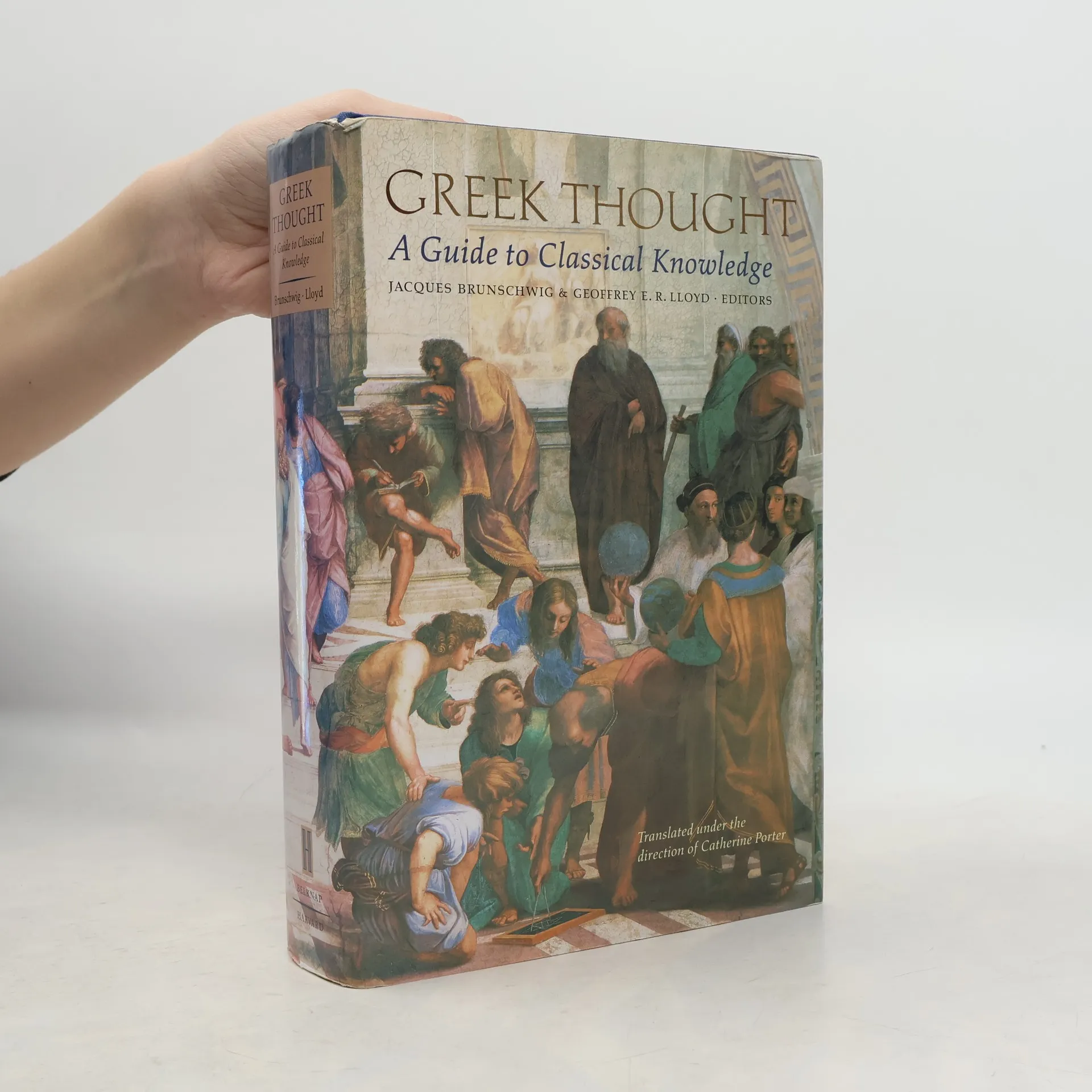
    Harvard University Press Reference Library: Greek Thought
    Early Greek Science. Thales to Aristotle
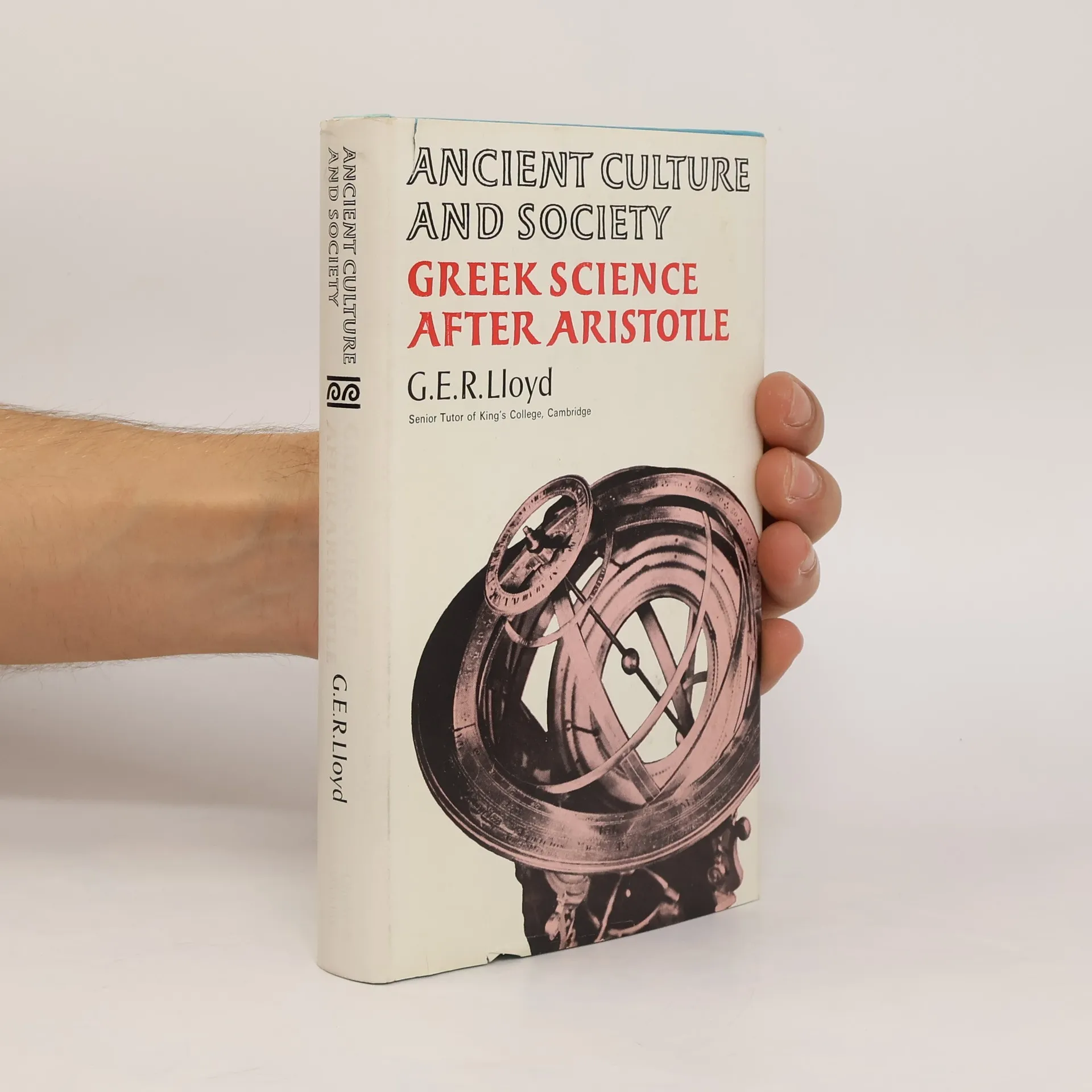
    Greek Science After Aristotle
    • Greek Science After Aristotle

      Ancient Culture and Society

      In his previous volume in this series, Early Greek Science: Thales to Aristotle, G. E. R. Lloyd pointed out that although there is no exact equivalent to our term 'science' in Greek, Western science may still be said to originate with the Greeks. In this second volume, Greek Science after Aristotle, the author continues his discussion of the fundamental Greek contributions to science, drawing on the richer literary and archaeological sources for the period after Aristotle. Particular attention is paid to the Greeks' conception of the inquiries they were engaged in, and to the interrelations of science and technology. In the first part of the book the author considers the two hundred years after the death of Aristotle, devoting separate chapters to mathematics, astronomy and biology. He goes on to deal with Ptolemy and Galen and concludes with a discussion of later writers and of the problems raised by the question of the decline of ancient science.

      Greek Science After Aristotle
      3.0
    • Harvard University Press Reference Library: Greek Thought

      A Guide to Classical Knowledge

      • 1056 pages
      • 37 hours of reading

      Ancient Greek thought is the essential wellspring from which the intellectual, ethical, and political civilization of the West draws and to which, even today, we repeatedly return. In more than sixty essays by an international team of scholars, this volume explores the full breadth and reach of Greek thought--investigating what the Greeks knew as well as what they thought about what they knew, and what they believed, invented, and understood about the conditions and possibilities of knowing. Calling attention to the characteristic reflexivity of Greek thought, the analysis in this book reminds us of what our own reflections owe to theirs.In sections devoted to philosophy, politics, the pursuit of knowledge, major thinkers, and schools of thought, this work shows us the Greeks looking at themselves, establishing the terms for understanding life, language, production, and action. The authors evoke not history, but the stories the Greeks told themselves about history; not their poetry, but their poetics; not their speeches, but their rhetoric. Essays that survey political, scientific, and philosophical ideas, such as those on Utopia and the Critique of Politics, Observation and Research, and Ethics; others on specific fields from Astronomy and History to Mathematics and Medicine; new perspectives on major figures, from Anaxagoras to Zeno of Elea; studies of core traditions from the Milesians to the various versions of Platonism: together these offer a sense of the unquenchable thirst for knowledge that marked Greek civilization--and that Aristotle considered a natural and universal trait of humankind. With thirty-two pages of color illustrations, this work conveys the splendor and vitality of the Greek intellectual adventure.

      Harvard University Press Reference Library: Greek Thought