
In a remote Polish village, Janina devotes the dark winter days to studying astrology, translating the poetry of William Blake, and taking care of the summer homes of wealthy Warsaw residents. Her reputation as a crank and a recluse is amplified by her not-so-secret preference for the company of animals over humans. Then a neighbor, Big Foot, turns up dead. Soon other bodies are discovered, in increasingly strange circumstances. As suspicions mount, Janina inserts herself into the investigation, certain that she knows whodunit. If only anyone would pay her mind . . . A deeply satisfying thriller cum fairy tale, Drive Your Plow over the Bones of the Dead is a provocative exploration of the murky borderland between sanity and madness, justice and tradition, autonomy and fate. Whom do we deem sane? it asks. Who is worthy of a voice?
Antonia Lloyd-Jones Book order (chronological)


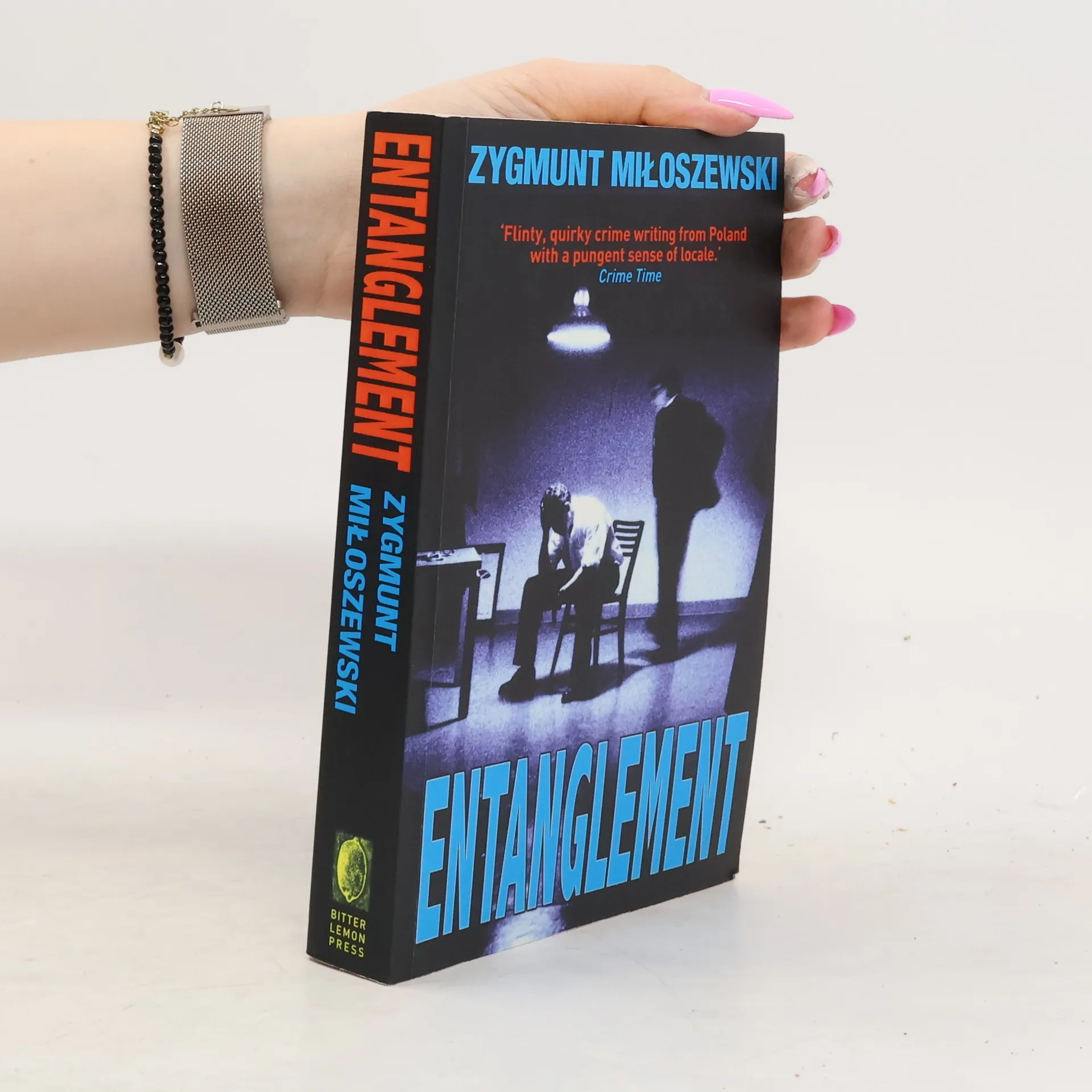
Entanglement
- 254 pages
- 9 hours of reading
After a tough psychotherapy session, Henryk Telak is found dead with a roasting spit in his eye. State Prosecutor Teodor Szacki, feeling weary and disillusioned, is assigned the case, which becomes a turning point in his life.
This is a searing portrait of the human devastation wrought by the Bosnian wars, and their aftermath - told through the stories of those who are left alive and looking for their families and their remains - by a young writer who has all the makings of a Kapuscinski or a Gourevitch.This book is suitable for readers of Philip Gourevitch, Janine Di Giovanni, Timothy Garton Ash, Slavenka Drakulic, Fergal Keane, Michael Ignatieff, Anna Funder, Misha Glenny.During four years of war in Bosnia, over 100,000 people lost their lives. But it was months, even years, before the mass graves started to yield up their dead and the process of identification, burial and mourning could begin. For many, the waiting, the searching and the suspended grieving still continues.Here we travel through the ravaged post-war landscape in the company of a few of those who survived, as they visit the scenes of their a hall where the clothing of victims is displayed; an underground cave with its pale jumble of bones; a camp for homeless refugees; a city now abandoned to the ghosts of painful memories; and a funeral service where a family finally says goodbye. These encounters are snapshots and memorials, capturing a jagged moment in a community's history as it is still flinching from its raw and recent past, not quite yet able to believe in a possibility of a peaceful future.
The ancient Greeks used the term catharsis for the cleansing of both the body by medicine and the soul by art. In this inspiring book, internationally renowned cardiologist Andrzej Szczeklik draws deeply on our humanistic heritage to describe the artistry and the mystery of being a doctor. Moving between examples ancient and contemporary, mythological and scientific, Catharsis explores how medicine and art share common roots and pose common challenges. The process of diagnosis, for instance, belongs to a world of magic and metaphor; the physician must embrace it like a poem or painting, with particular alertness and keen receptivity. Speculation on ways to slow aging through genetics, meanwhile, draws directly on the dream of immortality that artists and poets have nourished through the ages. And the concept of catharsis itself has made its way from the writings of Aristotle to today's growing interest in the benefits of music to health, especially in newborns. As Szczeklik explores such subjects as the mysteries of the heart rhythm, the secret history of pain relief, the enigmatic logic of epidemics, near-death or out-of-body experiences, and many more, he skillfully weaves together classical literature, the history of medicine, and moving anecdotes from his own clinical experiences. The result is a life-affirming book that will enrich the healing work of patients and doctors alike and make an invaluable contribution to our still-expanding vision of the art of medicine.