



Explore the latest books of this year!
Bookbot

Saddam Hussein

    This author, a former revolutionary and statesman, focused his literary and political endeavors on Pan-Arabism and Arab socialism. His written works include four historical novels that reflect a deep engagement with history and the political aspirations of the Arab world. Beyond his political activities, he was also noted for his advocacy for the emancipation of Arab women and the protection of the Iraqi Christian community, showcasing a commitment to social progress and minority rights.

    Das syrisch-iranische Zusammenspiel im Schlaglicht
    Zabibah und der König
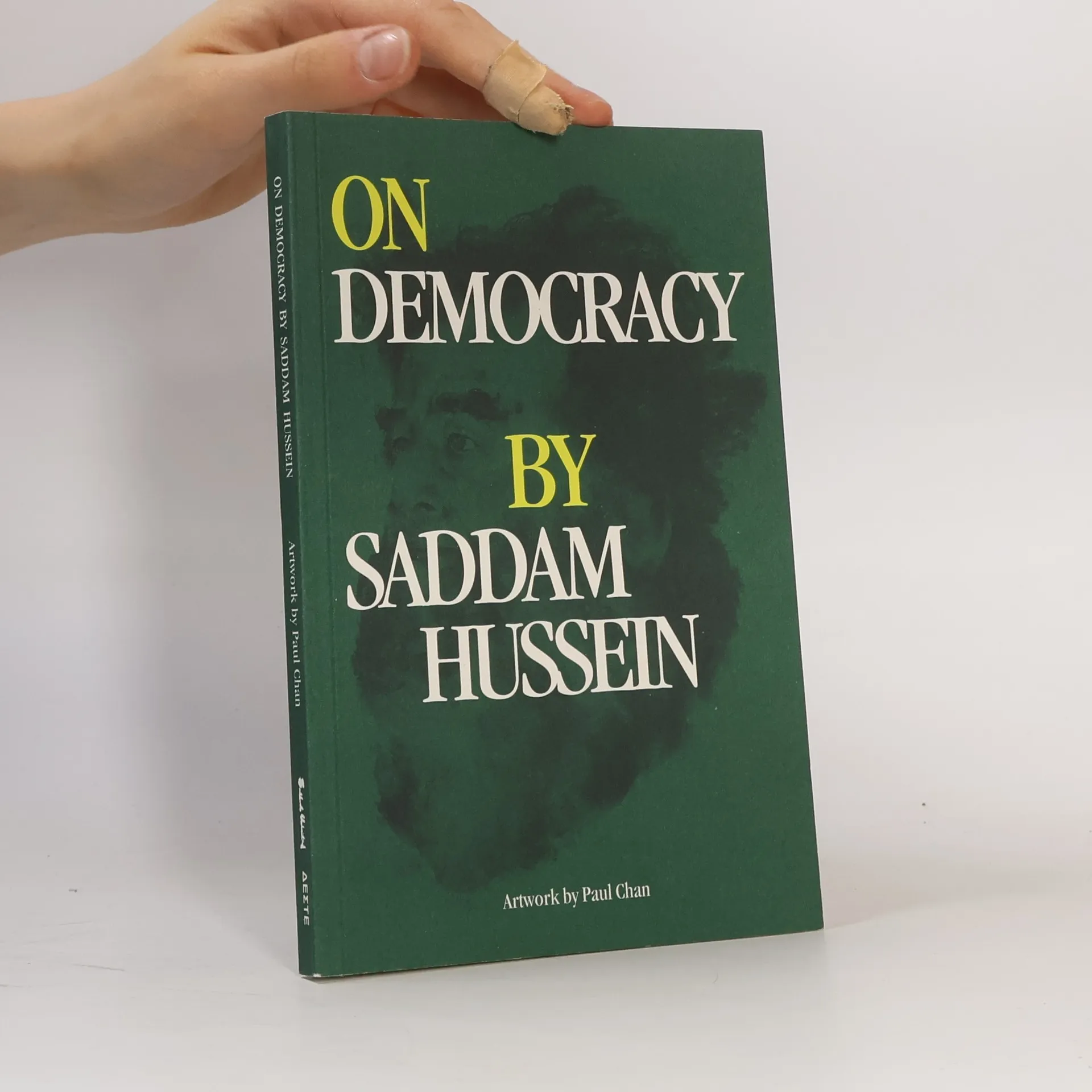
    On Democracy
    • On Democracy

      • 144 pages
      • 6 hours of reading

      In 2003, after returning from a monthlong stay in Baghdad, American artist Paul Chan was given a gift from a colleague in the human-rights group Voices of the Wilderness: a copy of three speeches on democracy written by Saddam Hussein in the 1970s, before he became president of Iraq. The speeches, compiled here for the first time in English, are politically perverse, yet eerily familiar. The then vice president of Iraq characterizes social democracy as demanding authority, and defines free will as the patriotic duty to uphold the good of the state. This volume takes the speeches as an opportunity to ask what democracy means from the standpoint of a notorious political figure who was anything but democratic, and to reflect on how promises of freedom and security can mask the reality of repressive regimes. With drawings by Paul Chan, including a new suite in its entirety, and essays by Bidoun's Negar Azimi, philosopher and artist Nickolas Calabrese and journalist Jeff Severns Guntzel, this book is the inaugural copublication of the Deste Foundation for Contemporary Art and Chan's own Badlands Unlimited.

      On Democracy2012
    • Zabibah und der König

      • 192 pages
      • 7 hours of reading

      Als Saddam Hussein Romane schrieb, spielte er die Rolle des einfachen Mannes und beschrieb eine von Männern dominierte Kultur, die von Unwissenheit, Analphabetismus und Hexerei geprägt ist. Als Führer fehlten ihm nicht die Ressourcen oder die Macht, um Veränderungen herbeizuführen; stattdessen nutzte er Macht und Reichtum für andere Zwecke. Der Roman Zabiba ähnelt der Geschichte von Scheherazade und König Schahrayar; Saddam zeigte Ungerechtigkeiten, war jedoch als Führer seines Volkes nicht in der Lage, diese Ungerechtigkeiten zu unterdrücken.

      Zabibah und der König2004
      3.0