

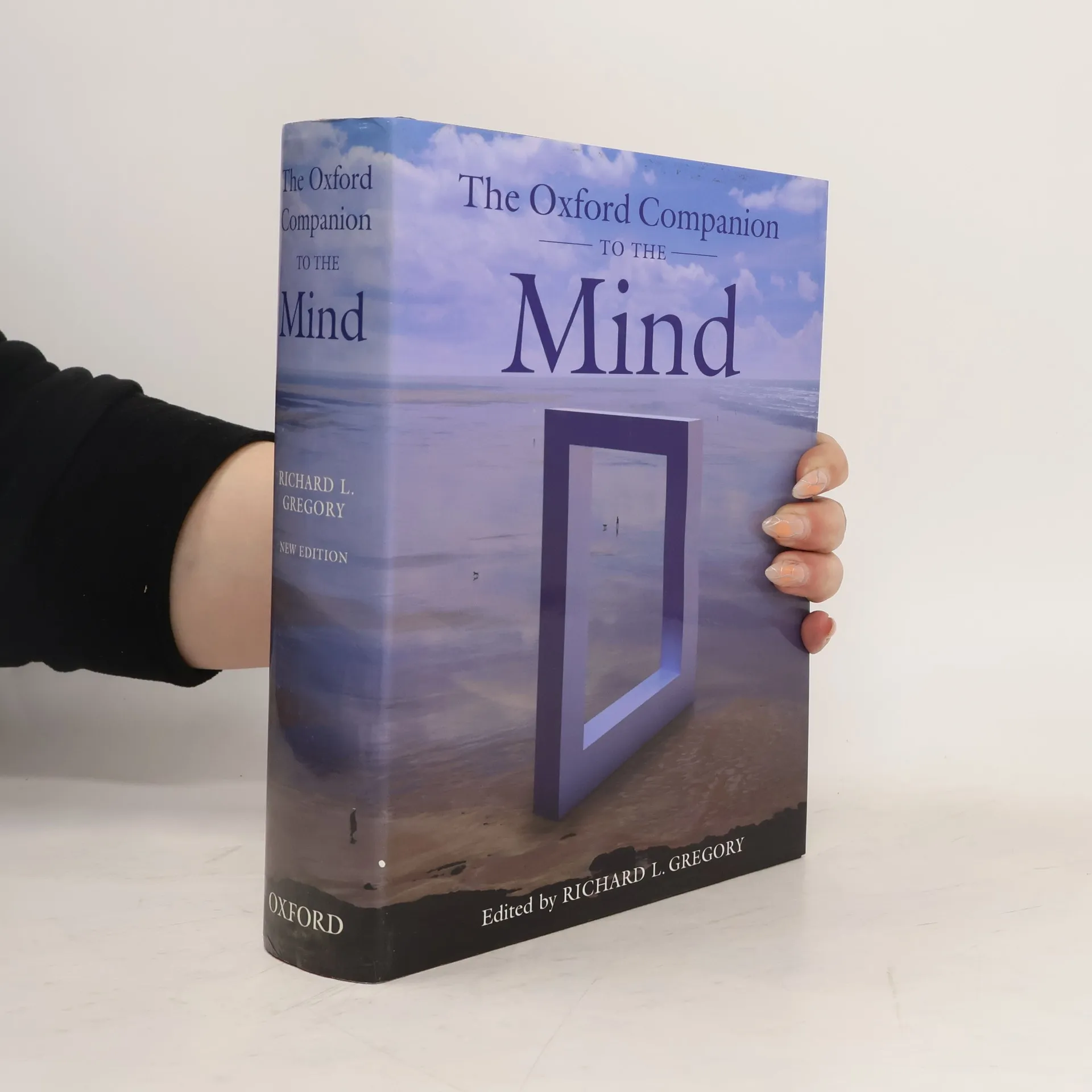
The Oxford Companion to the Mind is a classic. Published in 1987, to huge acclaim, it immediately took its place as the indispensable guide to the mysteries - and idiosyncracies - of the human mind. In no other book can the reader find discussions of concepts such as language, memory, and intelligence, side by side with witty definitions of common human experiences such as the 'cocktail-party' and 'halo' effects, and the least effort principle.Richard Gregory again brings his wit, wisdom, and expertise to bear on this most elusive of subjects. Research into the mind and brain has moved on in bounds in recent years, and interest in the subject has never been so high. There has been a shift in focus away from Freud's concept of the unconscious onto consciousness itself. The new edition of the Companion includes three 'mini symposia' - on consciousness, brain scanning, and artificial intelligence - with contributions from a number of specialists, and encompassing a range of approaches.Cultural as well as scientific in approach, this accessible book offers authoritative descriptions and analysis. With new entries on controversial topics such as artificial life, attachment theory, caffeine, cruetly, drama, extra-terrestrial intelligence, genetics of mental illness, imagination, lying, puzzles, and twins, this highly-anticipated second edition explores the most intriguing of subjects.
R. L. Richard Langton Gregory Books
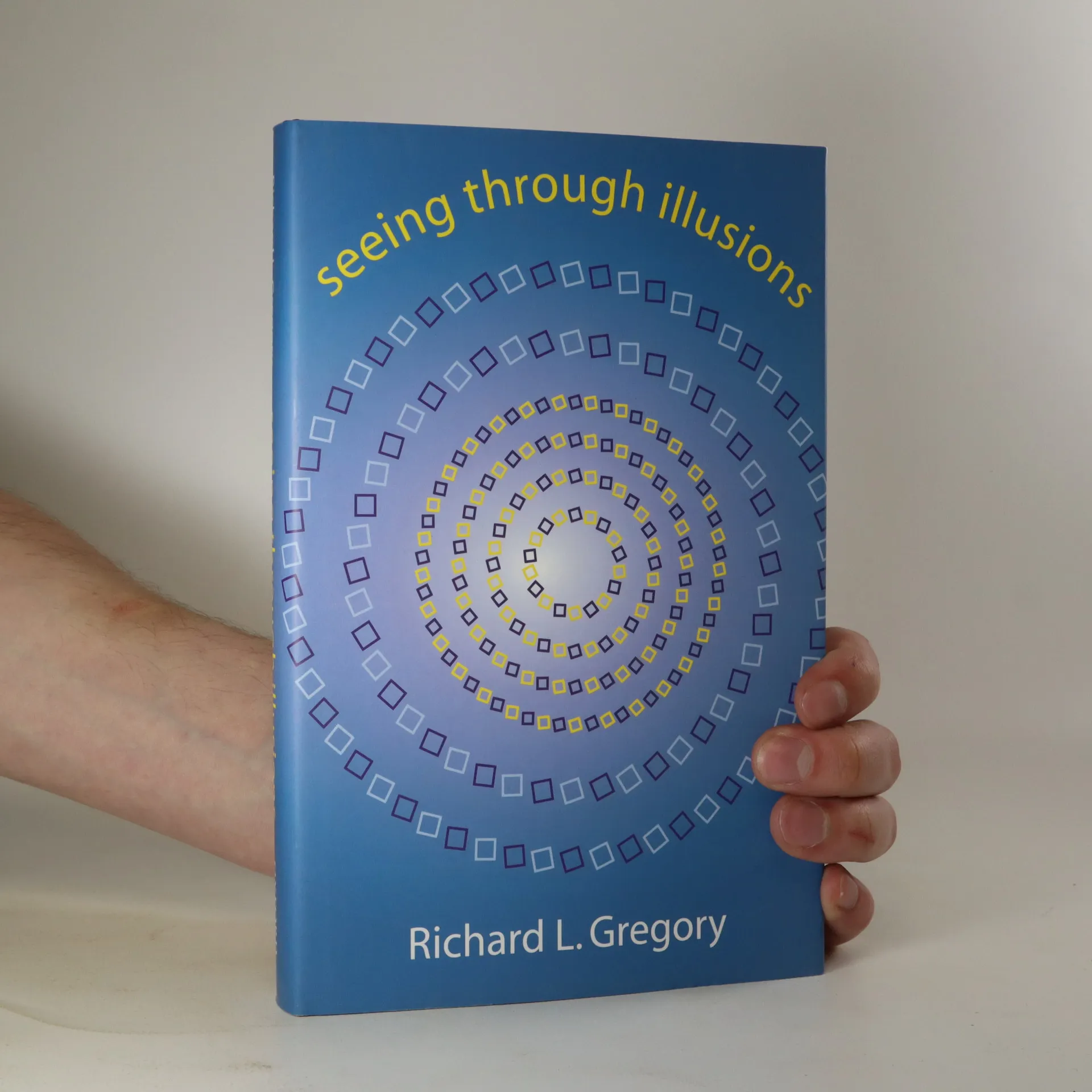
Seeing through illusions
- 253 pages
- 9 hours of reading
In Seeing Through Illusions , renowned scientist Richard Gregory explores what visual illusions can tell us about how our brains perceive the world. Looking at optical tricks and many other extraordinary phenomena, Gregory explains how scientists use these anomalies to peel back the normalprocesses of perception, and to reveal how the brain performs the remarkable feat of representing the real world with the kind of richness and accuracy which we experience--and take for granted--every day. And these visual illusions not only tell us about how our brain works, but they also revealthe brain's evolutionary past. Traces of earlier stages remain buried within our brains like stratified layers, laid down through evolutionary time, and Gregory shows how the study of different kinds of illusions reveals glimpses of these layers. Interweaving science with reflections on art andphilosophy, fascinating psychological case-studies, and some amazing visual phenomena, this book addresses questions about our brains that have puzzled scientists and philosophers for centuries.