


Explore the latest books of this year!
Bookbot

Tom Cooper

    January 1, 1970

    Tom Cooper is an author focused on exploring the human condition and the complexities of relationships. His stylistic approach is marked by penetrating introspection and precise language. Cooper's works often reflect themes of loss, redemption, and the search for meaning in a chaotic world. His unique ability to craft vivid characters and compelling narratives makes him a significant contemporary storyteller.

    Tom Cooper
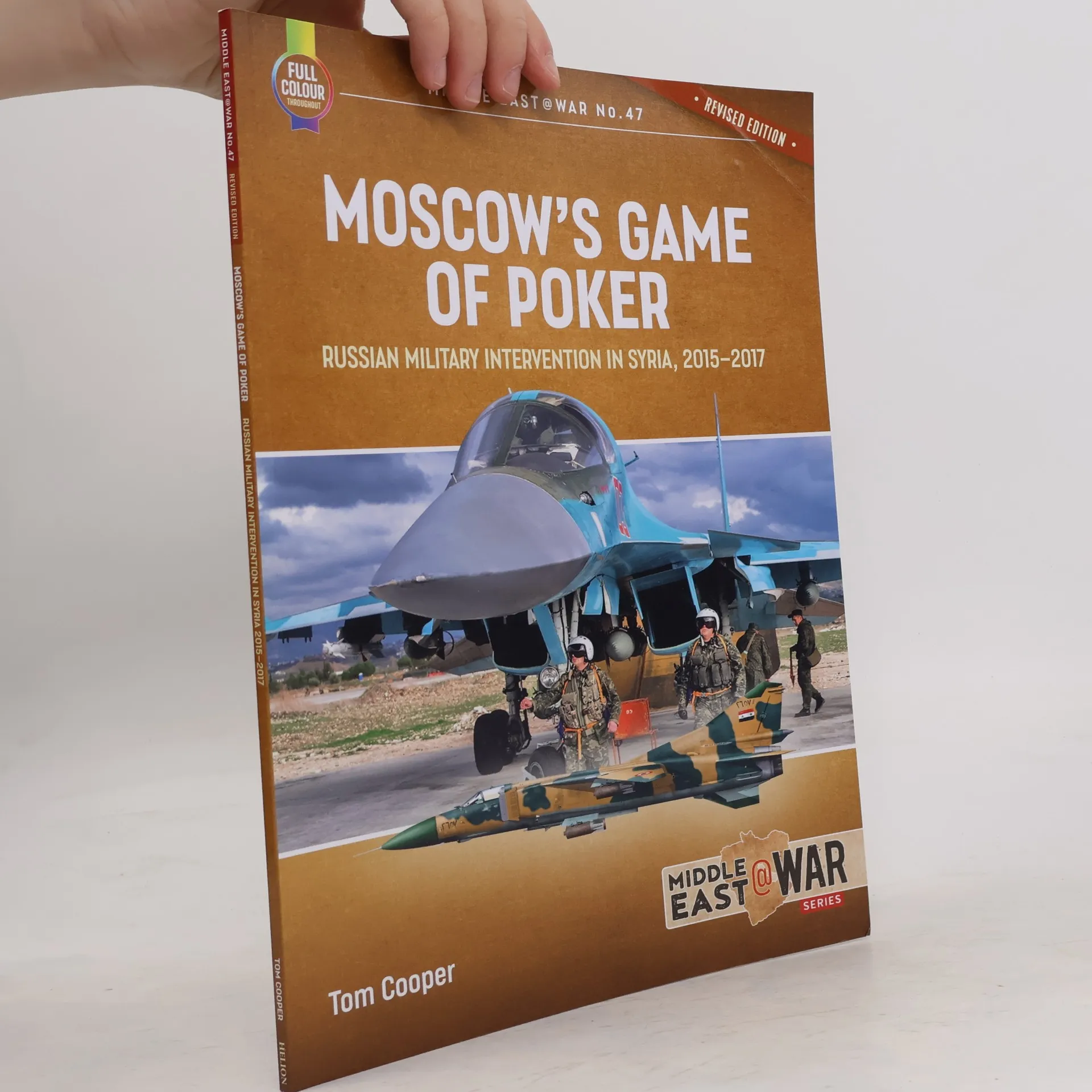
    War of Intervention in Angola: Volume 3 - Angolan and Cuban Air Forces, 1975-1989
    The June 1967 Arab-Israeli War Volume 1
    Target Saigon: the Fall of South Vietnam
    The Iran-Iraq War
    In the Claws of the Tomcat
    Titanic Captain: The Life of Edward John Smith
    • Commander Edward John Smith's career had been a remarkable example of how a man from a humble background could get far in the world. Born to a working-class family in the landlocked Staffordshire Potteries, he went to sea at the age of 17 and rose rapidly through the ranks of the merchant navy, serving first in sailing vessels and later in the new steamships of the White Star Line. By 1912, he as White Star's senior commander and regarded by many in the shipping world as the 'millionaire's captain'. In 1912, Smith was given command of the new RMS Titanic for her maiden voyage, but what should have been among the crowning moments of his long career at sea turned rapidly into a nightmare following Titanic's collision with an iceberg. In a matter of hours the supposedly unsinkable ship sank, taking over 1,500 people with her, including Captain Smith.

      Titanic Captain: The Life of Edward John Smith
    • In the Claws of the Tomcat

      • 80 pages
      • 3 hours of reading

      Equipped with well-balanced air wings, aircraft carriers have been central to the United States Navy's strategy since World War II, aimed at controlling vast airspace. From the mid-1970s to the mid-2000s, the USN's air wings were led by the Grumman F-14 Tomcat, renowned as one of the best air superiority systems. Designed as a fast, maneuverable, and heavily armed fighter, the Tomcat became the ultimate long-range fleet defender, known for its complex systems and legendary status by the mid-1980s. The F-14s achieved their first aerial victories during freedom of navigation exercises off Libya in 1981, but their most significant combat occurred during Operations Earnest Will and Desert Storm from 1987 to 1991. Contrary to popular belief, USN F-14s engaged in numerous air combats against Iran, often at the limits of their AWG-9 radars and AIM-54 Phoenix missiles, and sometimes at close range, resorting to guns. Despite challenges like weather and communication issues, as well as the discipline of their crews, they may have achieved at least one previously unrecognized aerial victory, while also suffering losses to enemy fighters.

      In the Claws of the Tomcat
    • Background to the long running confrontation between Arab and Jew in the Middle East, a detailed overview of the rival air forces that would become embroiled in the conflict, and an account of the opening Israeli air strikes against Egyptian targets.

      The June 1967 Arab-Israeli War Volume 1
    • Just three months after Indian forces withdrew from Sri Lanka, the war between the LTTE and the Sri Lankan government resumed. Illustrated with over 100 photographs, maps and colour profiles, Paradise Afire Volume 3 continues the story of the internal strife that plagued Sri Lanka in the late 20th Century.

      Paradise Afire Volume 3
    • Virtually born in battle, collecting precious combat experience and playing involved in so many conflicts, the Iraqi Air Force remains one of the most misinterpreted military services in the Middle East. Wings over Iraq provides a uniquely compact yet comprehensive guide to its operational history, officers, aircraft, and major operations.

      Wings of Iraq Volume 1
    • War of Intervention in Angola, Volume 4 continues the coverage of the operational history of the Angolan Air Force and Air Defence Force (FAPA/DAA) as told by Angolan and Cuban sources, in the period 1985-1988.Many accounts of this conflict – better known in the West as the ‘Border War’ or the ‘Bush War’, as named by its South African participants – consider the operations of the FAPA/DAA barely worth commentary. At most, they mention a few air combats involving Mirage F.1 interceptors of the South African Air Force (SAAF) in 1987 and 1988, and perhaps a little about the activity of the FAPA/DAA’s MiG-23s. However, a closer study of Angolan and Cuban sources reveals an entirely different image of the air war over Angola in the 1980s: indeed, it reveals the extent to which the flow of the entire war was dictated by the availability – or the lack – of air power. These issues strongly influenced the planning and conduct of operations by the commanders of the Angolan and Cuban forces.Based on extensive research with the help of Angolan and Cuban sources, War of Intervention in Angola, Volume 4, traces the Angolan and Cuban application of air power between 1985-1988 – during which it came of age – and the capabilities, intentions, and the combat operations of the air forces.The volume is illustrated with 100 rarely seen photographs, half a dozen maps and 15 color profiles, and provides a unique source of reference on this subject.

      War of Intervention in Angola, Volume 4
    • Largely based on new research and containing previously unpublished material, the highly successful Lebanese Civil War mini-series provides an in-depth insight into a complex, multi-facetted conflict, and an inclusive and balanced, blow-by-blow account of all the known actions in the air, on the ground, and at sea.

      Lebanese Civil War