Die Rückkehr des Großraums?
- 65 pages
- 3 hours of reading


Brendan Simms is Professor of the History of International Relations at the University of Cambridge. His work focuses on international history, particularly post-1945. He lectures and leads seminars examining the complex relationships between nations and powers in the modern era. His academic focus underscores a deep interest in the historical contexts that shape the contemporary world.



Brendan Simms beleuchtet die jahrhundertelange Wechselwirkung zwischen Briten und europäischen Nachbarn. Sein Buch bietet eine unterhaltsame und faktenreiche Darstellung der britisch-europäischen Geschichte vom Mittelalter bis zum Brexit und plädiert für eine enge Partnerschaft trotz des EU-Austritts Großbritanniens.
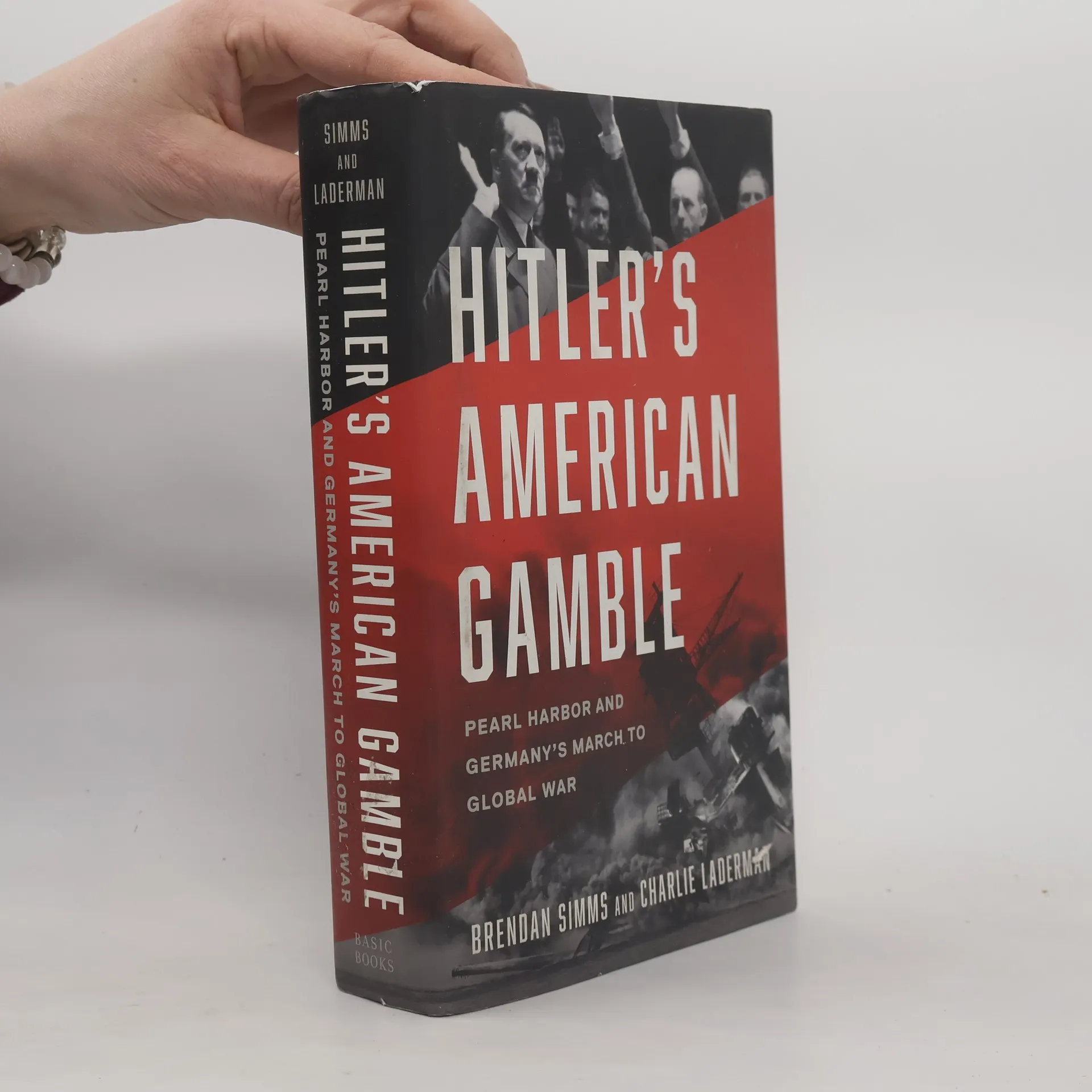
A riveting account of the five most crucial days in twentieth-century diplomatic history: from Pearl Harbor to Hitler's declaration of war on the United States By early December 1941, war had changed much of the world beyond recognition. Nazi Germany occupied most of the European continent, while in Asia, the Second Sino-Japanese War had turned China into a battleground. But these conflicts were not yet inextricably linked--and the United States remained at peace. Hitler's American Gamble recounts the five days that upended everything: December 7 to 11. Tracing developments in real time and backed by deep archival research, historians Brendan Simms and Charlie Laderman show how Hitler's intervention was not the inexplicable decision of a man so bloodthirsty that he forgot all strategy, but a calculated risk that can only be understood in a truly global context. This book reveals how December 11, not Pearl Harbor, was the real watershed that created a world war and transformed international history.
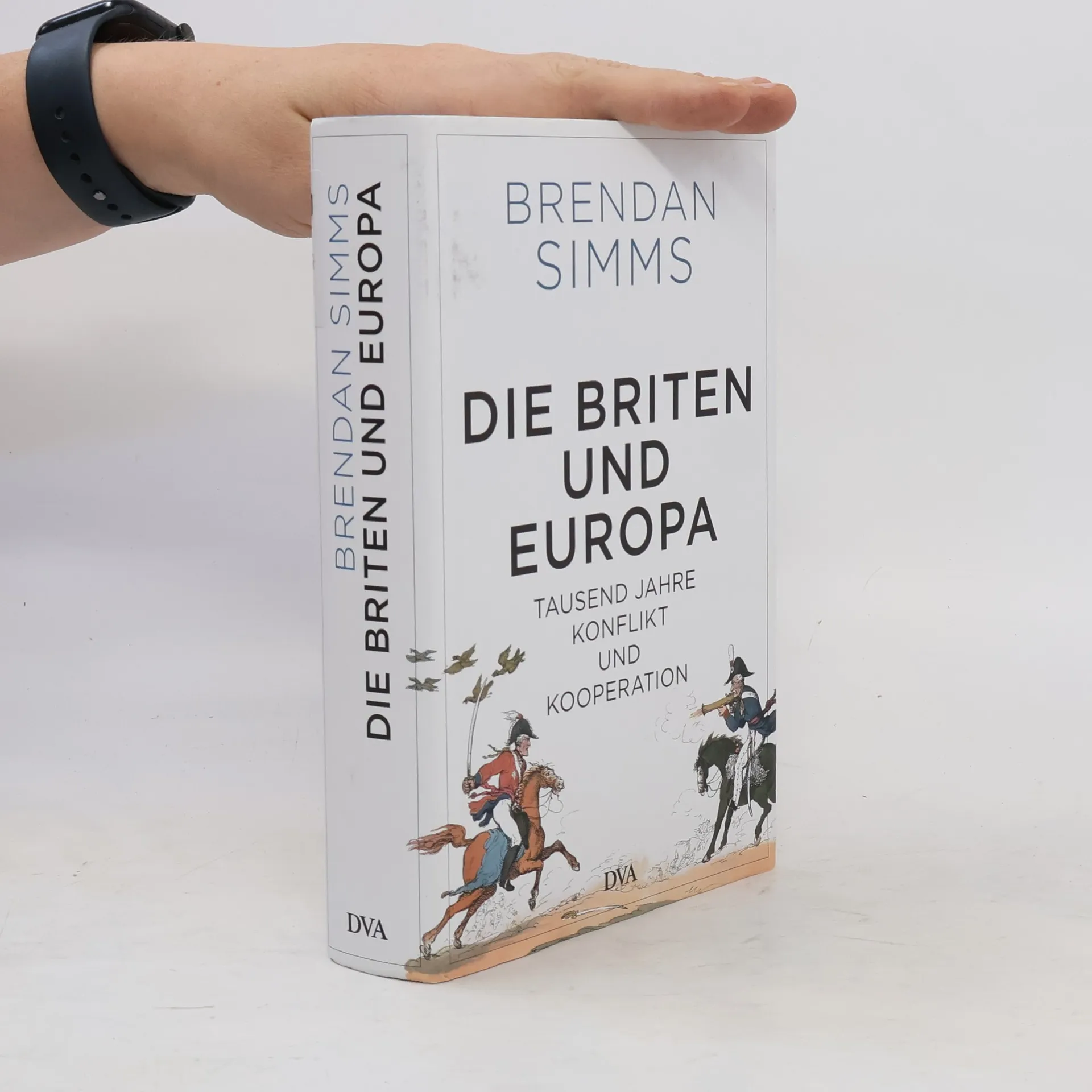
Die Briten und wir: Warum der Brexit nicht das Ende der britisch-europäischen Partnerschaft sein wird Europa hat in der Geschichte Großbritanniens stets eine wichtige Rolle gespielt. Seit Jahrhunderten mischen sich die Briten mit Lust in die Geschicke der europäischen Nachbarstaaten ein – und werden wiederum von den Ereignissen dort beeinflusst. In seiner fulminanten Geschichte der tausendjährigen, turbulenten Beziehung zwischen den Briten und Europa zeigt Brendan Simms ebenso faktenreich wie unterhaltsam, warum man die eine Seite des Ärmelkanals nicht ohne die andere denken kann. Sein Buch bündelt die Glanzlichter und die Tiefpunkte der britisch-europäischen Geschichte vom Mittelalter bis zum Brexit und ist ein eindrucksvolles Plädoyer für eine enge Partnerschaft, auch über das Ausscheiden Großbritanniens aus der EU hinaus.
For generations we have been hypnotised by the catastrophic, implausible way that Hitler came to seize power - the familiar story of the innumerable obstacles which fell aside to allow such a strange figure to rule a major European state. Brendan Simms's major new biography has a very different focus. It is the first attempt fully to get to grips with the true origins of Hitler's ideas themselves. Simms focuses on what those ideas really were and how they emerged. This gives a very different picture of Hitler, highlighting both how deeply he had always reflected wider (and now forgotten) paranoid geopolitical German concepts, as well as what was original, particularly Hitler's obsession with the United States (which loomed far greater in his imagination than the Soviet Union). It was this poisonous mix which was to have such a terrible impact on Europe's future. Brendan Simms's new book is the first to take these beliefs seriously, demonstrating how, as ever, it is ideas that are the true source of the most murderous behaviour
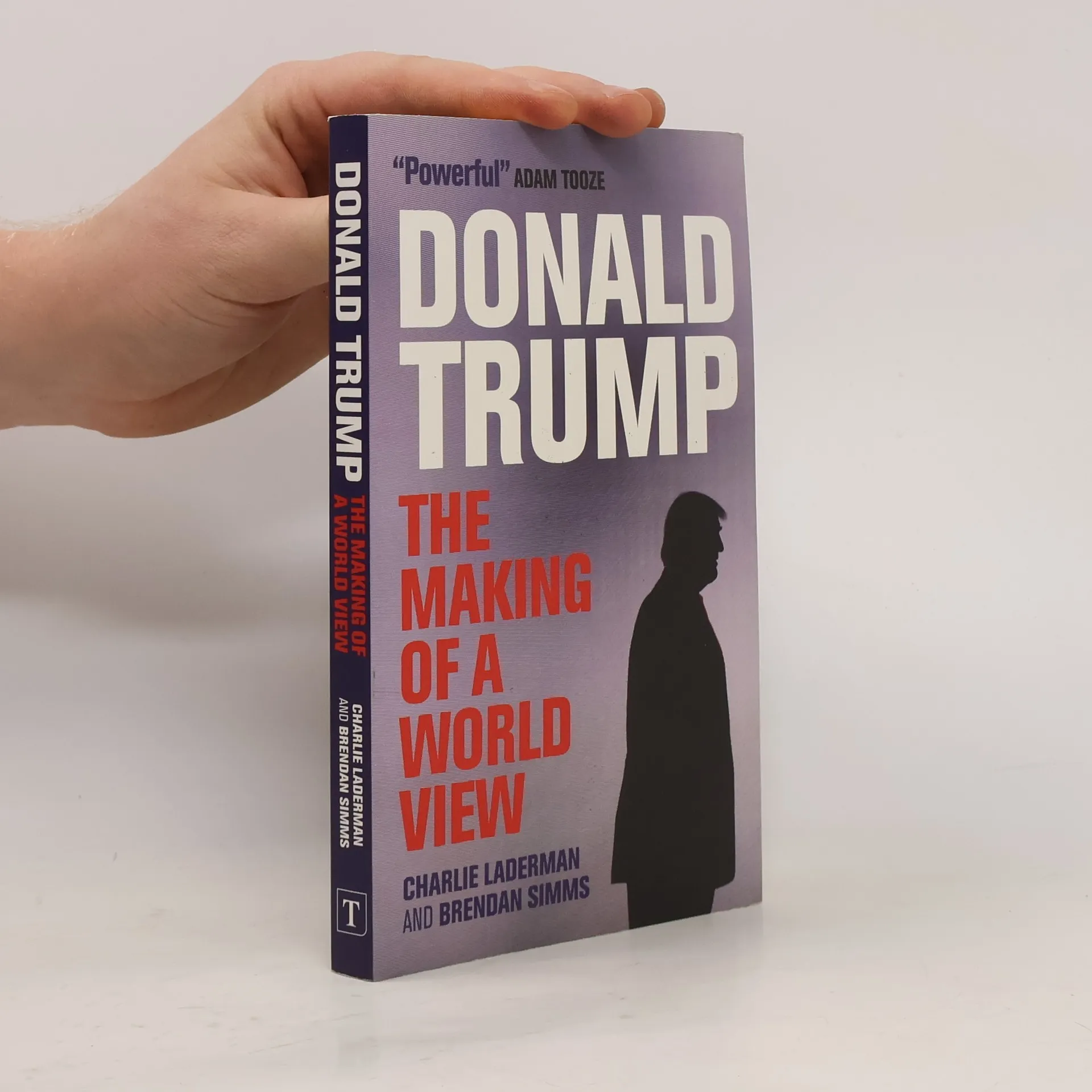
On November 8, 2016, Donald Trump won the American presidential election, to the surprise of many across the globe. Now that Trump is Commander-in-Chief of the most powerful country on earth, Americans and non-Americans alike have been left wondering what this will mean for the world. It has been claimed that Trump's foreign policy views are impulsive, inconsistent and that they were improvised on the campaign trail. However, drawing on interviews from as far back as 1980, Charlie Laderman and Brendan Simms show that this assumption is dangerously false. They reveal that Trump has had a consistent position on international trade and America's alliances since he first considered running for president in the late 1980s. Furthermore, his foreign policy views have deep roots in American history. For the new President, almost every international problem that has confronted the United States can be explained by the mistakes of its leaders. Yet, after decades of dismissing America's leaders as fools and denouncing their diplomacy, Trump must now prove that he can do better.Over the past three decades, he has been laying out in interviews, articles, books and tweets what amounts to a foreign policy philosophy. This book reveals the world view that Trump brings to the Oval Office. It shows how that world view was formed, what might result if it is applied in policy terms and the potential consequences for the rest of the world
Plädoyer für die Vereinigten Staaten von Europa
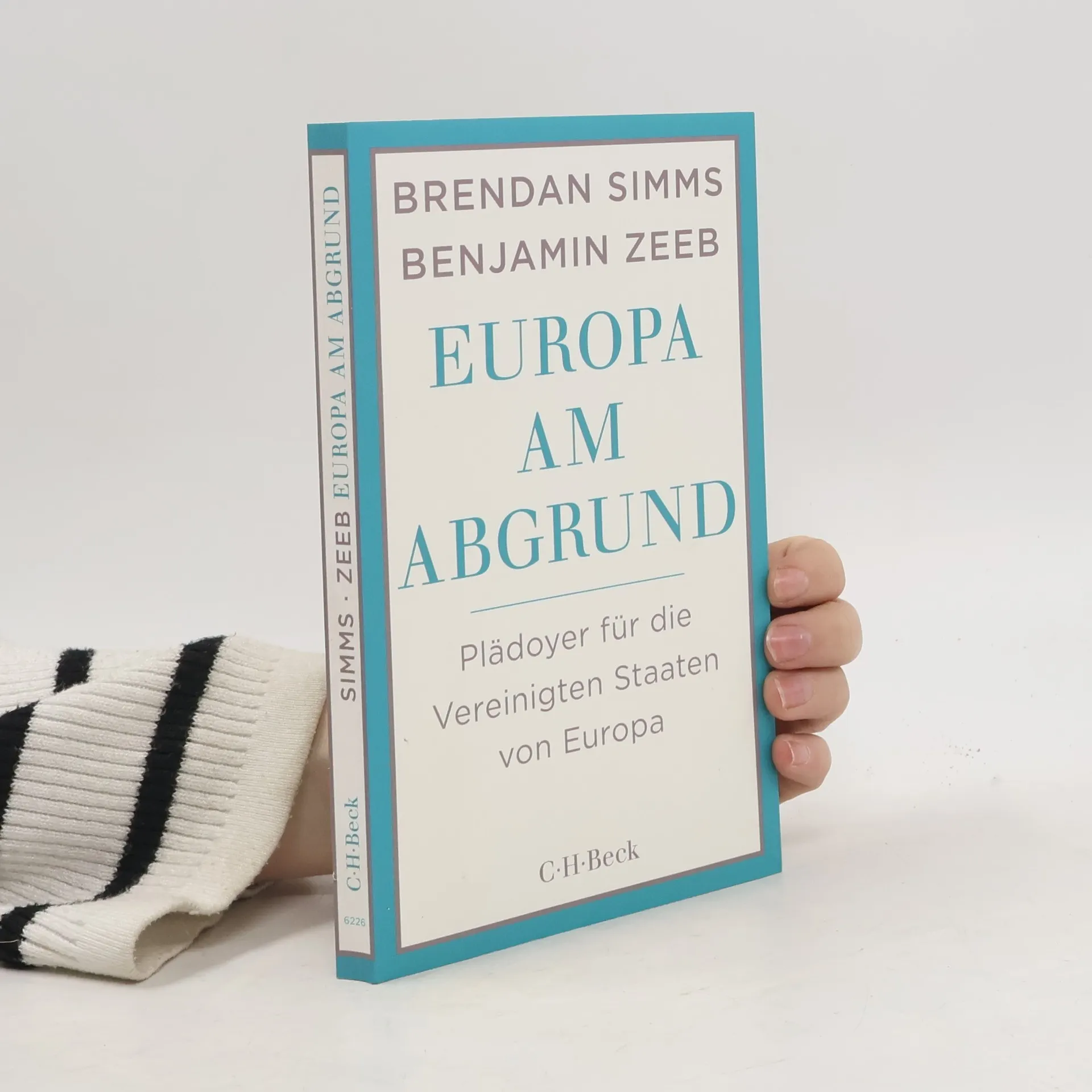
Großbritannien ist nicht das Problem und Europa die Antwort darauf, sondern Europa ist die Frage und das angloamerikanische Modell ihre Lösung. So lautet, kurz gefasst, die These von Brendan Simms und Benjamin Zeeb. Wir brauchen dringend die Vereinigten Staaten von Europa – ansonsten ist Europa auf dem besten Wege sich abzuschaffen. Europa sieht sich mit einer Reihe existenzieller Herausforderungen konfrontiert, die den Kontinent in die Knie zwingen: der unerwartete Wiederaufstieg eines autoritären Russland, eine anhaltende Finanz- und Wirtschaftskrise, die Wiederkehr des „deutschen Problems“ durch eine rigide Sparpolitik, die sogenannte Flüchtlingskrise, der islamistische Terrorismus, Sezessionsbestrebungen wie im Baskenland oder Schottland und nicht zuletzt das verbreitete Gefühl von Europamüdigkeit. Das Buch zeigt, dass es sich dabei nicht nur um ineinander greifende Fragen handelt, sondern im Grunde genommen um ein einziges großes Problem, das eine große Lösung verlangt. Im Gegensatz zu zahlreichen anderen Büchern bieten Simms und Zeeb nicht nur eine Diagnose, sondern auch eine Therapie: die zügige Verwirklichung einer demokratischen Union nach angloamerikanischem Modell, die die gesamte Eurozone umfasst und eine gemeinsame Finanz- und Verteidigungspolitik beinhaltet.
400 Deutsche, Napoleon und die Entscheidung von Waterloo
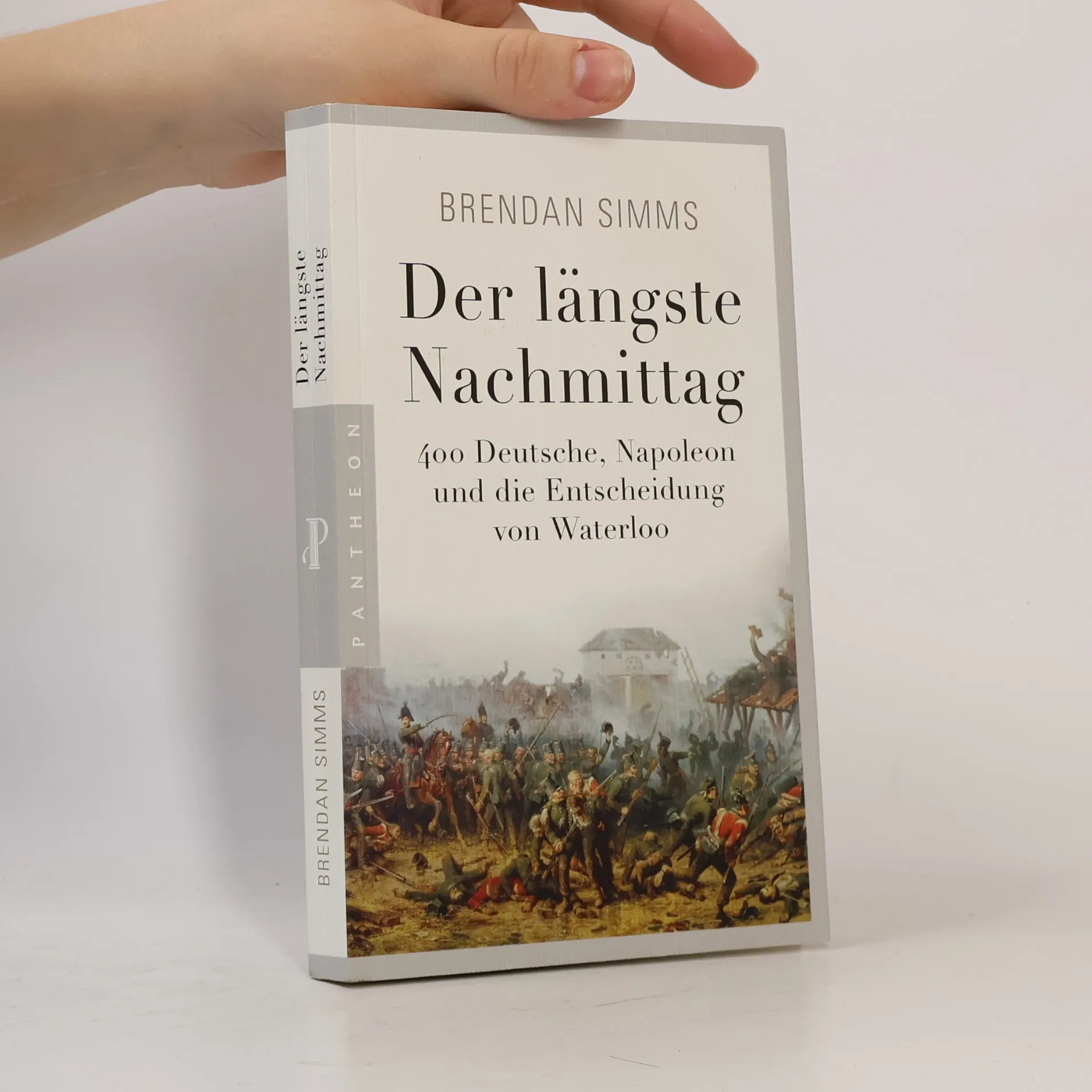
Die Schlacht, die Napoleons Untergang besiegelte »Der längste Nachmittag« erzählt in einer dichten Beschreibung von einer Schlacht in der Schlacht von Waterloo, der Verteidigung des Meierhofs La Haye Sainte durch die King´s German Legion gegen die anstürmenden Truppen Napoleons. Die Verteidigung misslang zwar letztlich, aber der erreichte Zeitgewinn sorgte dafür, dass die preußischen Truppen unter Feldmarschall Blücher in die Schlacht eingreifen konnten, was entscheidend war für Napoleons Niederlage noch am selben Abend. Simms zieht zahlreiche zuvor nicht ausgewertete oder unbekannte Quellen heran und ist so in der Lage, ein lebendiges Bild dieser Schlacht zu zeichnen und das Schicksal von Individuen nachzuerzählen.
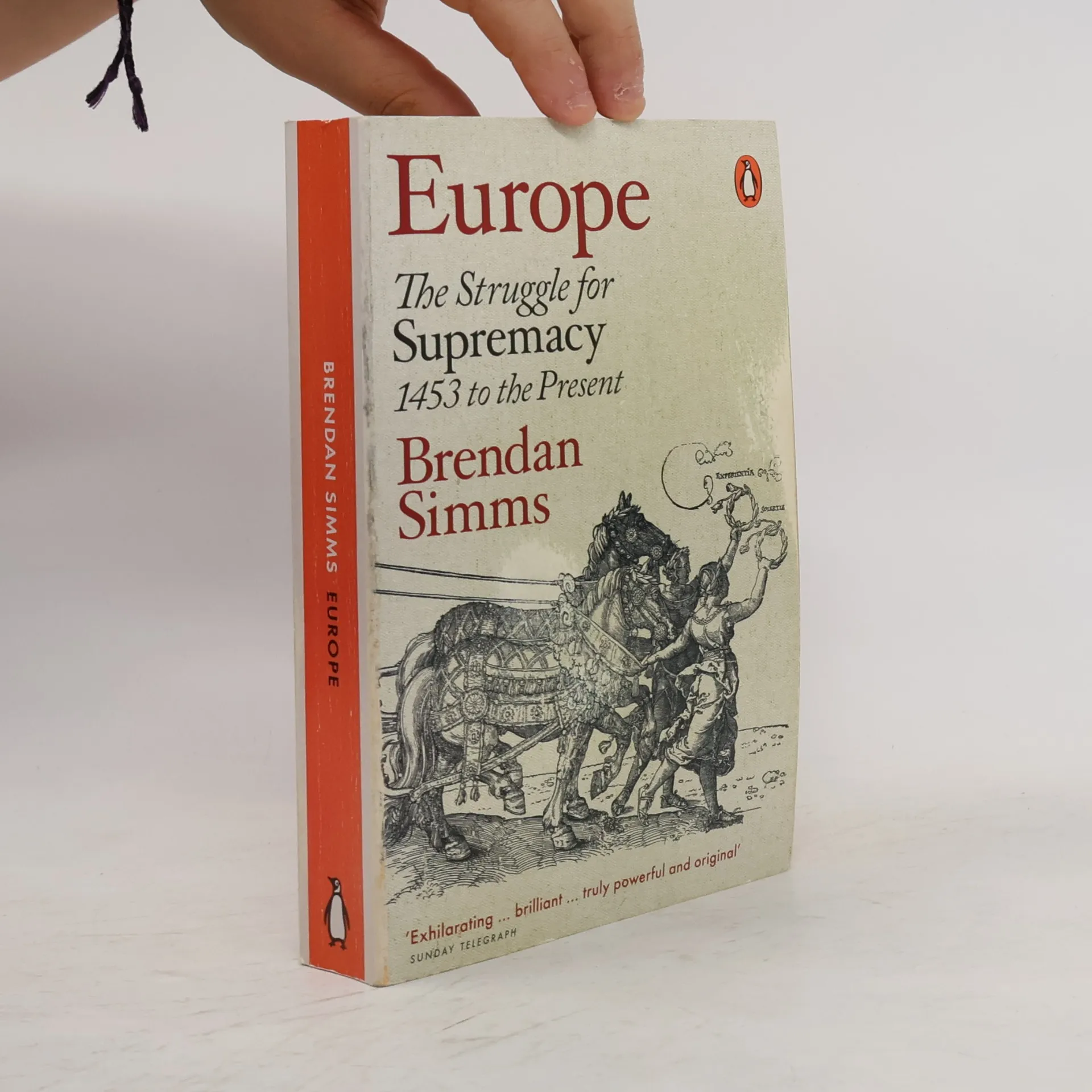
Tells the story of a group of highly competitive and mutually suspicious dynasties, and also of a continent uniquely prone to interference from 'semi-detached' elements, such as Russia, the Ottoman Empire, Britain and the United States
A polemical account of Britain's disruptive and damaging role in the break-up of Yugoslavia. For most of 1992-1995, Britain stood aside while an internationally recognised state was attacked by externally-sponsored rebels bent on a campaign of territorial aggression and ethnic cleansing. It was her unfinest hour since 1938. Based on interviews with many of the chief participants, parliamentary debates, and a wide range of sources, Brendan Simm's brilliant study traces the roots of British policy and the highly sophisticated way in which the government sought to minimise the crisis and defuse popular and American pressure for action. We all continue to live with the results of these shameful actions to this day.