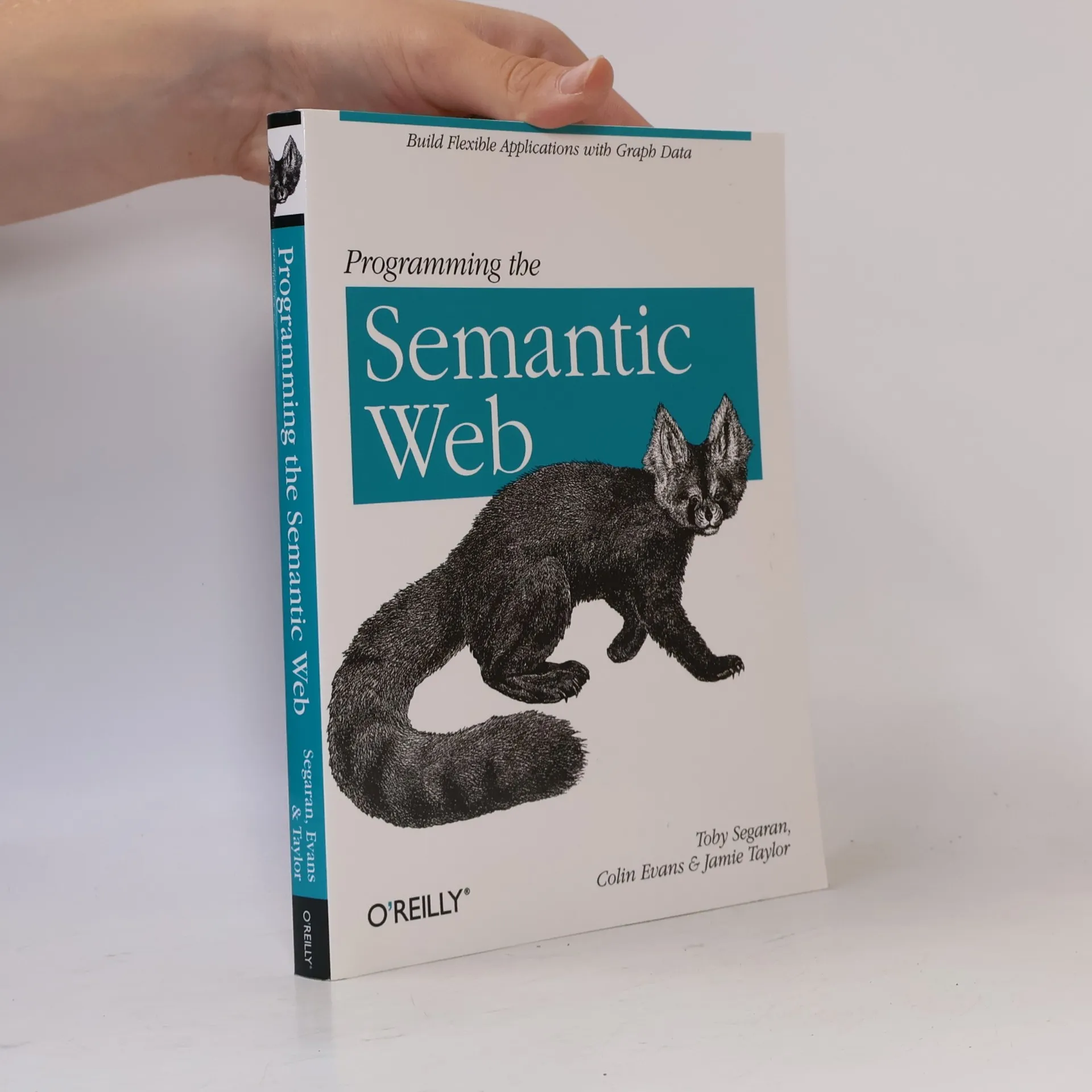
With this book, the promise of the Semantic Web -- in which machines can find, share, and combine data on the Web -- is not just a technical possibility, but a practical reality Programming the Semantic Web demonstrates several ways to implement semantic web applications, using current and emerging standards and technologies. You'll learn how to incorporate existing data sources into semantically aware applications and publish rich semantic data.Each chapter walks you through a single piece of semantic technology and explains how you can use it to solve real problems. Whether you're writing a simple mashup or maintaining a high-performance enterprise solution, Programming the Semantic Web provides a standard, flexible approach for integrating and future-proofing systems and data.This book will help
Colin Evans Book order (chronological)
Colin Evans is a dedicated chronicler of forensics and true crime, exploring the murkier aspects of human nature that first captivated him in his youth. His early research into historical cases sparked a lifelong fascination that has solidified his reputation as a leading writer on the history and evolution of forensic science. Evans's work delves deeply into the intricate details and psychological underpinnings of criminal investigations. Through his meticulous approach, he offers readers a compelling understanding of how forensic techniques have developed and their crucial role in uncovering the truth.



The Father of Forensics
The Groundbreaking Cases of Sir Bernard Spilsbury, and the Beginnings of Modern CSI
- 336 pages
- 12 hours of reading
Before there was CSI , there was one man who saw beyond the crime-and into the future of forensic science.His name was Bernard Spilsbury-and, through his use of cutting-edge science, he single-handedly brought criminal investigations into the modern age. Starting out as a young, charismatic physician in early twentieth-century Britain, Spilsbury hit the English justice system-and the front pages-like a cannonball, garnering a reputation as a real-life Sherlock Holmes. He uncovered evidence others missed, stood above his peers in the field of crime reconstruction, exposed discrepancies between witness testimony and factual evidence, and most importantly, convicted dozens of murderers with hard-nosed, scientific proof.This is the fascinating story of the life and work of Bernard Spilsbury, history's greatest medical detective-and of the cases that not only made him a celebrity, but also inspired the astonishing science of criminal investigation in our own time.
Die Leiche im Kreuzverhör
- 384 pages
- 14 hours of reading
Waargebeurde verhalen over Britse, Amerikaanse en Franse artsen die zich aan meervoudige moorden schuldig maakten.
Vraždící doktoři
- 234 pages
- 9 hours of reading
13 kriminálních příběhů s podtitulem Skutečné příběhy o lékařích, kteří porušili Hippokratovu přísahu tím nejotřesnějším způsobem.
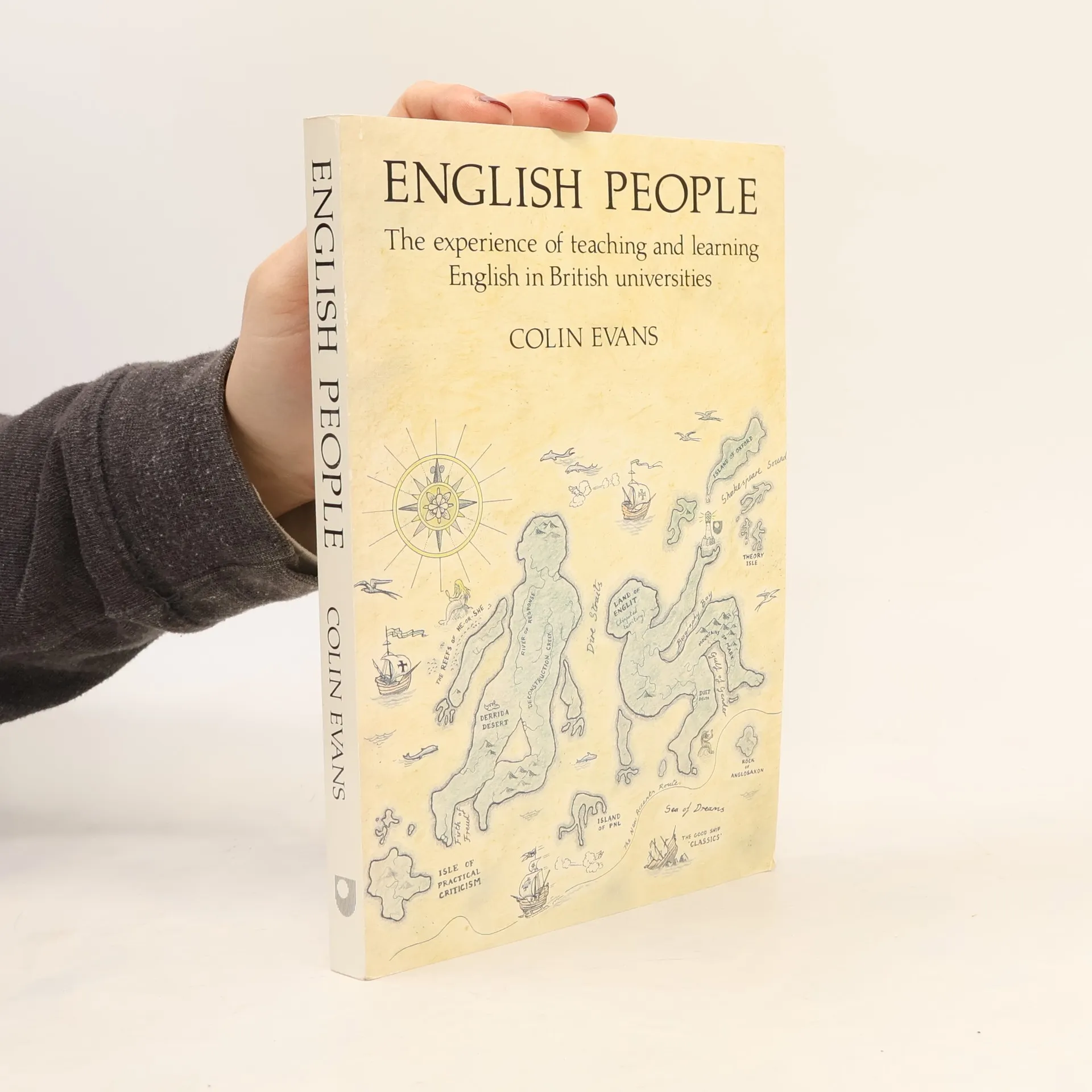
English People
The Experience of Teaching and Learning English in British Universities
- 242 pages
- 9 hours of reading
"English People" is a portrait of the subject "English" as it is experienced by teachers and students in British higher education. The author has interviewed staff and students in the Universities of Cardiff, Newcastle, Oxford and Stirling and in the former Polytechnic of North London (now the University of North London). These "English People" speak of the impact of theory, of feminism, of the experience of reading and writing, of the problems of teaching literature, of the peculiarities of Oxford and of compulsory Anglo-Saxon, of post-colonial literature, and of academic leadership in a time of financial pressure. "English People" is also an example of the way in which nations attempt to produce unity out of ethnic diversity by using the national education system and especially the subject which has the name of the national language. It questions whether "English" can still produce unity and whether is has unity itself. Is "English", like the British Isles, a varied archipelago and not a land mass? Has it deconstructed itself out of existence? The book is about students and teachers who have made this choice of subject and career, and should be of interest to past, present and aspiring students and teachers of English in universities, colleges and schools. It should also be relevant to anyone interested in Higher Education and its organization.
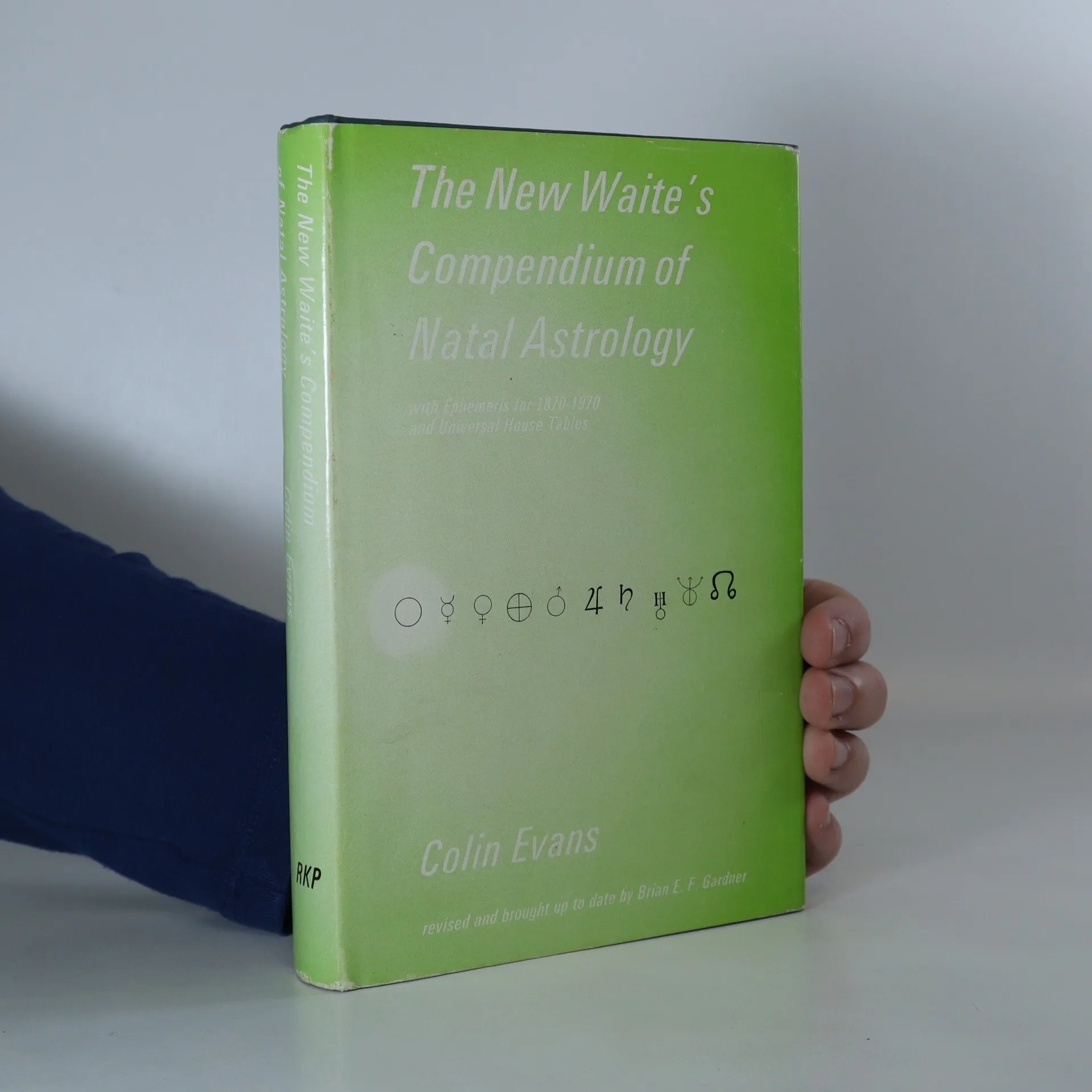
New Waites Compendium
With Ephemeris for 1880-1990 and Universal Table of Houses
- 276 pages
- 10 hours of reading