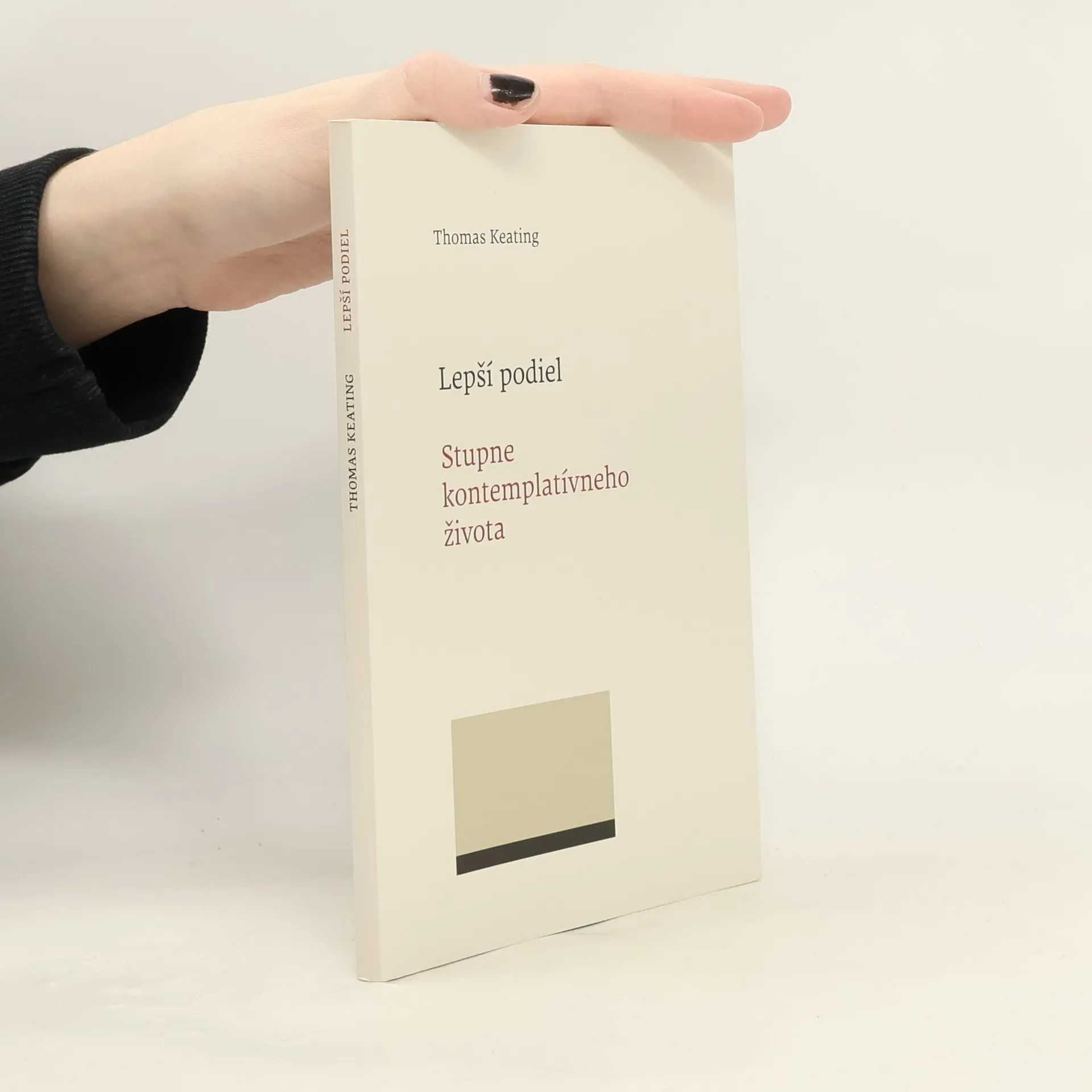
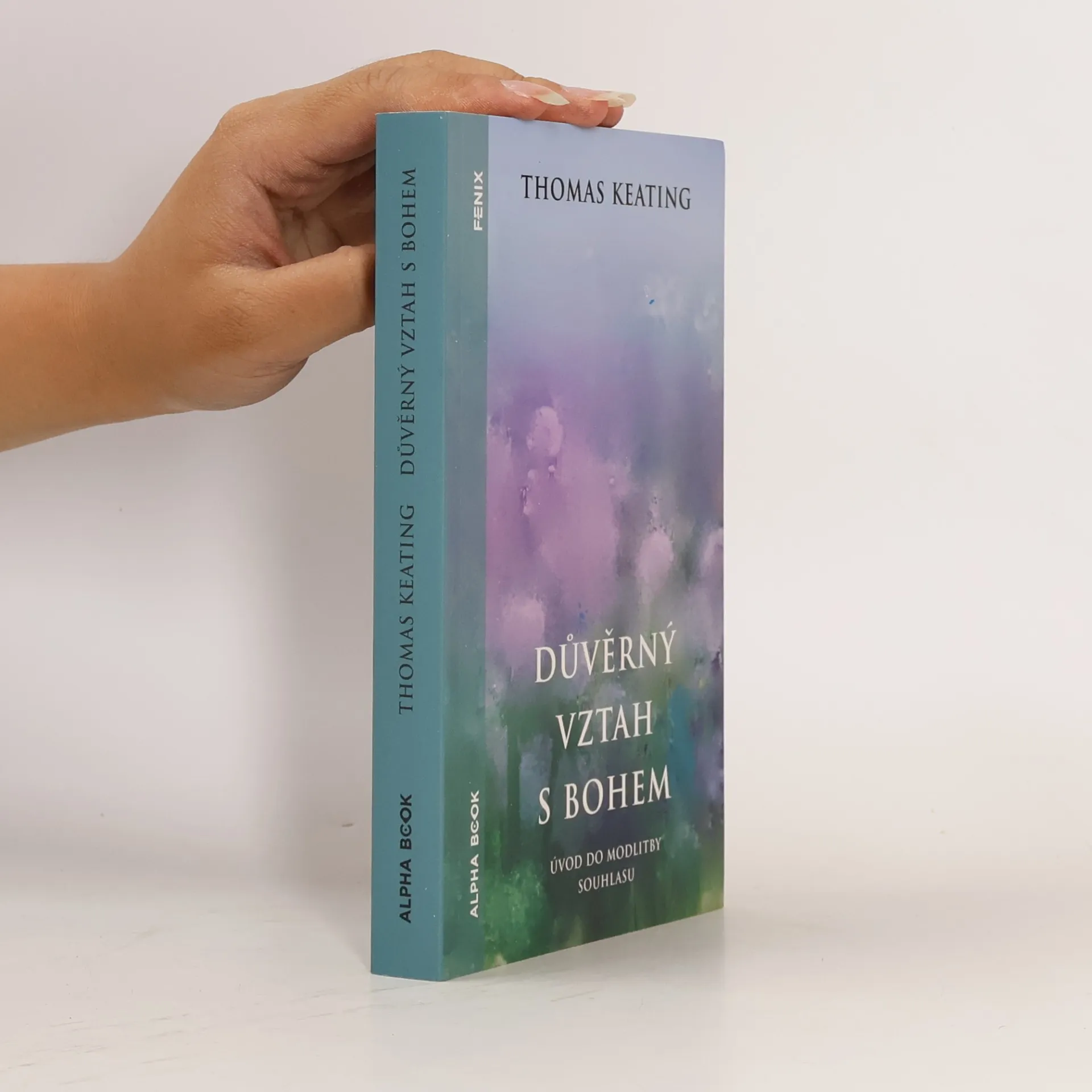
This author is a key architect of Centering Prayer, a contemporary method rooted in the Christian contemplative tradition. His work focuses on deepening spiritual life through quiet prayer and contemplative practice. The author's writings offer guidance for cultivating inner peace and a connection to the divine. Through his extensive contributions, he guides readers on a path toward profound self-discovery and spiritual growth.
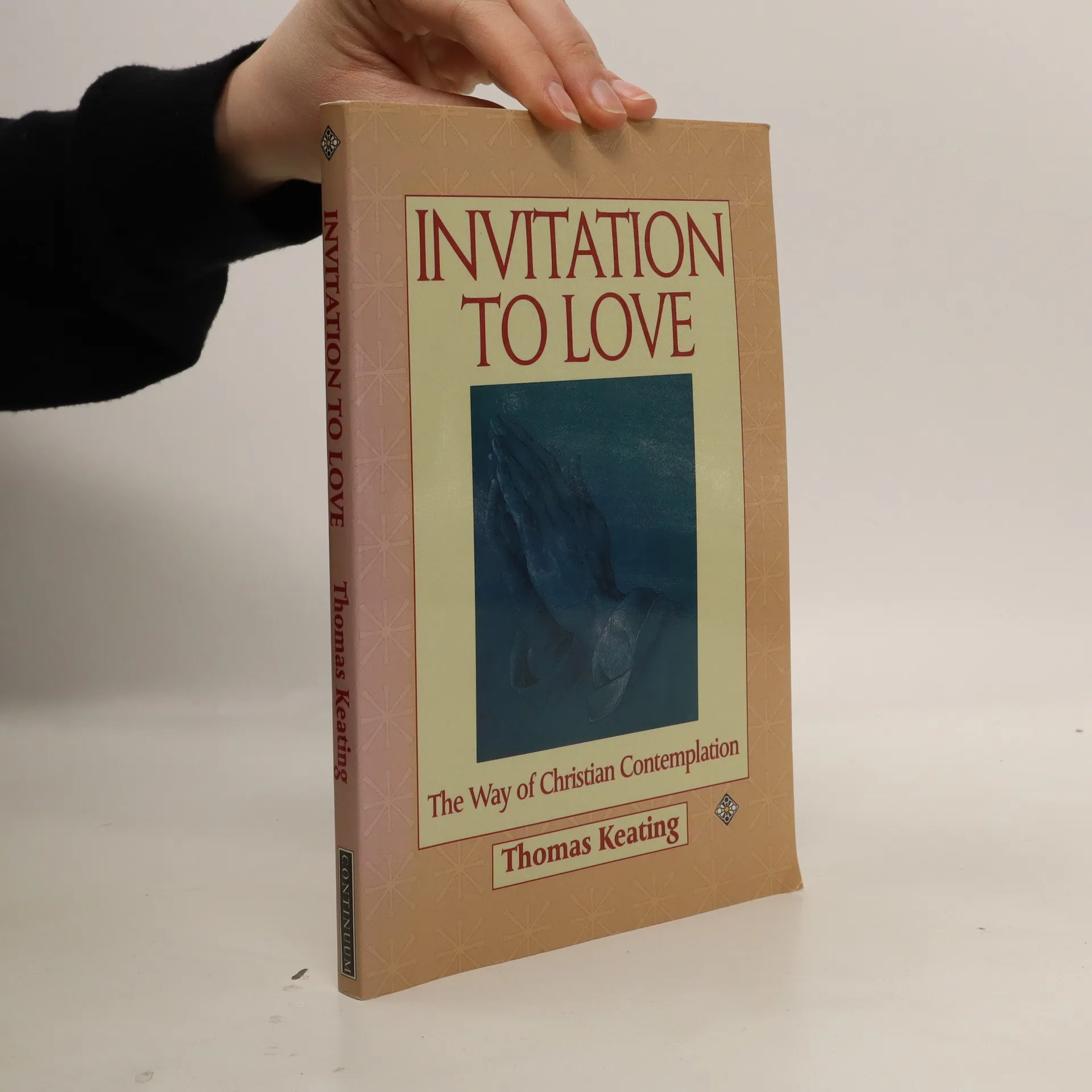
"This is the 20th anniversary edition of Continuum's spiritual classic. The new edition consists of a substantial new preface, an expanded glossary, some changes in terminology, and a reordering of several chapters."-- Goodreads.com.
Following upon Open Mind, Open Heart, which presents a profound formation in Christian prayer, this book demonstrates the contemplative dimension of Christian worship. Here Father Keating recovers the deeper sense of the liturgical year and shares a theological and mystical perspective on the major feasts of the annual cycle. The reader is immersed in the wonder of faith in the mystery of Christ and of the unique nature of God's action and presence in and through the liturgy of our lives.
Insightful commentary on timeless parables reveals their relevance in today's world, despite being originally conveyed to a vastly different audience. The author encourages readers to explore the profound messages within these stories, highlighting their enduring significance and ability to resonate across generations.
Manifesting God is about the principles of contemplative prayer—the retreat into the "inner room" mentioned by Jesus in Matthew 6:6, where the individual is able to meet God. In the inner room, the silent space in which God unloads the burdens and false selves that govern our individuality and our daily lives, God acts as a divine therapist, healing us and forcing us to recognize how many barriers we put up between ourselves and an authentic relationship with God. The process whereby this happens is the foundation of centering prayer—a technique of prayer that Keating and other contemporary mystics have revived out of the ancient mystical traditions of the Desert Fathers and the medieval mystics.Abbot Keating explores in this book what it means to enter the inner room and the transformation that takes place there. It explains the guidelines of centering prayer and offers advice on how to develop the relationship more deeply.
In this major new work, Father Thomas Keating reflects on the wisdom and legacy of the Alcoholics Anonymous Twelve-Step Method and its connections to, and similarities with, the Christian mystical traditions of centering prayer and Lectio Divina. In conversation with a long-time member of AA meetings, Father Thomas talks insightfully about surrendering to one’s Higher Power and the journey that must be undertaken for the healing of the soul to begin.
The book offers an insightful exploration of biblical parables, revising content from "The Kingdom of God Is Like" and incorporating selected material from "Awakenings" and "Reawakenings." Keating aims to invigorate the Christian imagination through thoughtful commentary, encouraging readers to deepen their understanding of these timeless stories.
A spiritual classic, which has appeared in 10 foreign-language editions
(Croatian, French, German, Hungarian, Indonesia, Italian, Korean, Polish, and
Portuguese). This edition consists of a fresh preface, a glossary, some
changes in terminology, and a reordering of several chapters.
Between January 2007 and April 2009, Trappist monk Fr. Thomas Keating met in Miami for several days each year with members of the council for Extension Contemplativa Internacional--the Spanish and Portuguese branch of Contemplative Outreach, the organization he helped established three decades ago to promote the revival of the Christian mystical tradition. Consenting to God as God Is collects the intimate talks and daily presentations on various aspects of the spiritual journey. The book's title describes the most fundamental exercise of Christian faith. This exercise recognizes the illusory character of our past ideas of God and gives birth to a new understanding that leads to a deep conversion of heart. Along with centering prayer, we consent and surrender to God's presence and action within as our primary and often repeated intention in all our activities. Oriented toward people who have been practicing centering prayer for several years, Consenting to God as God Is is addressed primarily to those with some personal experience of the spiritual journey and especially to those engaged in some form of contemplative service.
In the course of numerous workshops and retreats Father Keating is asked many questions regarding contemplative practice. How will it affect my life? Where does it lead us spiritually? What obstacles will I encounter along the way? How does it work? As Keating answers, this book is "an attempt to provide a road map, as it were, for the journay that begins when Centering Prayer is seriously undertaken...for a deepening relationship with God.">
"If something is something, it cannot be its opposite--or so it might seem. Not so with God, because God is...beyond opposites." In Thomas Keating's signature wise and whimsical style, this little book invites us to think big. "Think of God in a very big way. And if you do, that is too small." Transcribed from a 2012 keynote address, God Is All in All introduces some mighty themes--including nature as revelation, mystical teachings on interdependence, new cosmologies of religion and science, and evolutionary understandings of what it means to be human--in a much-needed update to theologies Keating describes as "out of date." Outlining a three-part spiritual journey from recognizing a divine Other, to becoming the Other, to the realizing there is no other, Keating boldly states "Religion is not the only path to God." Thoroughly Christian and fully interspiritual, this much-beloved outlier Trappist monk offers a message of "compassion, not condemnation" in a contemplative embrace of the cross as a symbol of humility, inviting those who would become co-redeemers of the world to join him in the kind of meditation and contemplative prayer that allows the transcendent self to emerge. "Be still and you will know, not by the knowledge of the mind but by the knowledge of the heart, who God is and who you are."
During the year 2000, the relics of Saint Thérèse of Lisieux (1874–1897) toured throughout the United States—at once confirming and stimulating an extraordinary resurgence of interest in the life and work of a Carmelite nun known as the "Little Flower." In Thérèse of Lisieux: Transformation in Christ, Abbot Thomas Keating reflects on what St Thérèse understood the teaching of Jesus Christ to be. Thérèse had an extraordinary penetration into the heart of Jesus’ teaching, something she developed into a program for daily life. Although she was only twenty-four years old when she died, Thérèse had an extraordinary spiritual maturity. Father Keating writes about the teachings of Jesus in the parables and then shows what extraordinary insight Thérèse had into those enigmatic sayings. According to Father Keating, St. Thérèse tried to live the Gospel precept, "To love one another as I have loved you!" on a daily basis. She believed it was the best program to propose to people because anybody could do it and because the Kingdom of God was, and is, in everyday life and in what we, as individuals, do with it. As Father Keating shows, St. Thérèse’s teaching continues to reveal to us that if we only build up instead of tear down others and fully and lovingly trust that Christ is with us until the end of time we will be transformed.
Exploring the intersection of Christian heritage and non-Christian spiritual practices, this volume offers insights into contemplative wisdom and literature. It is designed for individuals seeking to deepen their spiritual journey while maintaining their Christian commitments, highlighting the potential for enrichment through diverse religious traditions.
Focusing on the theme of spiritual unity, this book explores the concept of Christian non-duality as a path towards realizing oneness with the divine. Thomas Keating delves into the transformative journey of faith, emphasizing the importance of transcending dualistic thinking to achieve deeper spiritual insight and connection. Through contemplative practices, readers are invited to experience a profound sense of unity with God and all creation, guiding them toward their ultimate spiritual destination.
Focusing on spiritual growth, this book distills Fr. Thomas Keating's extensive teachings into nine key areas for study and reflection. It emphasizes the importance of heartfulness and transformation in Christ, guiding readers towards deeper understanding and practice in their spiritual journeys.
Czym jest kontemplacja? Jak zacząć praktykować modlitwę głębi? W jaki sposób
medytacja pomaga nam doświadczyć bliskości Boga? Jak osiągnąć wewnętrzną ciszę
i głęboką harmonię serca w świecie, w którym przeważają zgiełk i niepokój?
Bóg, który jest miłością, poprzez dar kontemplacji zaprasza każdego człowieka
do spotkania, które może zmienić nasze rozumienie świata i nas samych:
Rzeczywistość, która nas otacza, może być postrzegana przez nas jako działanie
Ducha Świętego, zamierzone z pełną starannością ze względu na nasze szczególne
potrzeby. Każde wydarzenie jest dotykiem palca Boga, który rysuje w nas - w
naszym ciele, duszy i duchu - prawdziwy obraz swojego Syna Jeśli chcemy być
kimś innym, niż Bóg zamierzył, to tracimy czas. Nic z tego nie będzie.
Największą umiejętnością w życiu jest być tym, kim Bóg chciał, abyśmy byli,
gdy powoływał nas do istnienia . Ojciec Thomas Keating OCSO (1923-2018) -
jeden z założycieli Ruchu Odnowy Kontemplacyjnej i wieloletni przewodnik tej
wspólnoty - wprowadza nas w tajniki modlitwy głębi. Omawia zarówno metody
ułatwiające osiągnięcie ciszy wewnętrznej, jak również przekonuje, że jej
doświadczenie jest dostępne dla wszystkich. Przypomina, że to Chrystus jest
tym, który otwiera ludzkie serce na dar pokoju przenikającego zarówno myśli,
jak i uczucia oraz codzienne działania. On, Słowo Ojca, mówi do nas w naszych
sercach, karmiąc nas sensem, czułością i bezwarunkową miłością.
Kontemplácia nie je odmenou za čnosť. Je to nevyhnutnosť̌ pre čnosť. Vedie
k skúsenosti Božej prítomnosti, prežívanej v čistej viere. Boh vtedy odníma
svoju prítomnosť̌ a zdá́ sa, akoby nás ponechával v hrobe. On sa však vráti v
správnom čase, aby nás zavolal von z našich temnôt, väzenia, samoty,
opustenosti a smútku. O autorovi: Thomas Keating (†2018), trapistický mních,
centrálna postava hnutia Centering Prayer (modlitby súhlasu) a zakladajúci
člen Contemplative Outreach. Už počas svojich štúdií na Yale University
objavoval bohatstvo kresťanskej mystickej tradície. Poznávanie tejto hlbokej
tradície, bystré vnímanie reformy, ktorú priniesol II. vatikánsky koncil
zvlášť vo vzťahu k iným náboženstvám, ako aj osobné hľadanie, v ňom nechali
vyklíčiť celoživotnú túžbu prispieť k obnove kontemplatívneho rozmeru
kresťanstva. Fr. Thomas bol uznávaný teológ a vynikajúci autor. Spomedzi jeho
mnohých kníh treba spomenúť predovšetkým Open Mind, Open Heart (Otvorená
myseľ, otvorené srdce). Osobná skúsenosť a náuka, hlboko zakorenená v zdravej
tradícii kresťanskej mystiky, a múdre i prorocké úsilie o dialóg s inými
náboženskými tradíciami, zaraďujú Thomasa Keatinga medzi neopomenuteľné
postavy dejín kresťanskej spirituality.
Kde byli dva, nyní je jen Jeden. Prožitkem nedvojnosti se tradičně zabývají všechna vyspělá světová náboženství. Jeho podstata tkví v tom, že umírá nepravé já a pocit oddělenosti od Nejvyšší skutečnosti se rozplyne a na jeho místo nastupuje trvalé vědomí jednoty. V křesťanském pojetí se jednota s Nejvyšší skutečností vysvětluje milostí Ježíšova nanebevstoupení. Za takový stav se považuje spojení s Bohem, který přesahuje dokonce i zkušenost s "proměňujícím sjednocením", jež je součástí křesťanské kontemplativní tradice.
K tomu, aby se takový stav stal trvalým, bychom potřebovali přinejmenším fyziologicky rozvinutější mozek a nervovou soustavu. Intenzivní a důvěrnou komunikaci s Bohem musí zkrátka vydržet i naše tělo. Ale i ten, kdo by trvalého stavu nedvojnosti dosáhl, by se v tomto životě musel volně pohybovat mezi duálním a neduálním vědomím. Chceme-li ve svém duchov-ním úsilí dosáhnout neduálního vědomí, musíme počítat s tím, že i na této úrovni vědomí musíme žít reálným každodenním životem se všemi jeho vzestupy a pády.