

The "brilliant, funny, meaningful novel" (The New Yorker) that established J. D. Salinger as a leading voice in American literature--and that has instilled in millions of readers around the world a lifelong love of books. "If you really want to hear about it, the first thing you'll probably want to know is where I was born, and what my lousy childhood was like, and how my parents were occupied and all before they had me, and all that David Copperfield kind of crap, but I don't feel like going into it, if you want to know the truth." The hero-narrator of The Catcher in the Rye is an ancient child of sixteen, a native New Yorker named Holden Caufield. Through circumstances that tend to preclude adult, secondhand description, he leaves his prep school in Pennsylvania and goes underground in New York City for three days.
Рита Райт-Ковалева Book order (chronological)
Rita Wright-Kovalyova was a distinguished Russian writer and translator whose work significantly enriched Russian literature through her translations of seminal works by global authors. Her meticulous and sensitive approach brought pieces by Franz Kafka, Kurt Vonnegut, and J.D. Salinger to Russian readers for the first time. Beyond her extensive translation efforts, Wright-Kovalyova also authored original works, including biographical portraits and memoirs, shedding light on the lives and contributions of notable figures in Russian literature and culture. Her literary output demonstrates a profound grasp of narrative form and a remarkable ability to convey the essence of original texts into new linguistic settings, earning her acclaim from both critics and the reading public.

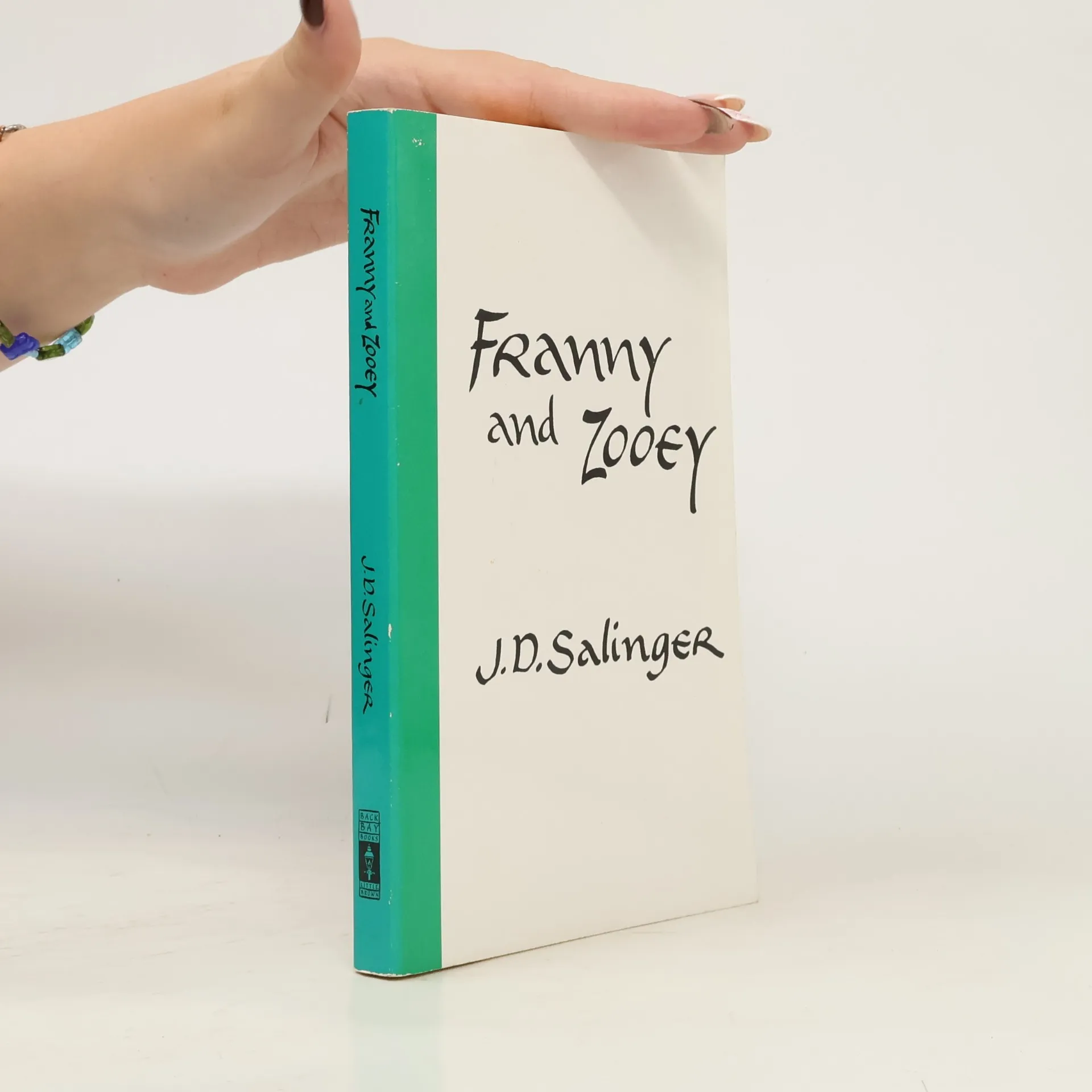
Franny and Zooey
- 208 pages
- 8 hours of reading
‘Everything everybody does is so—I don’t know—not wrong, or even mean, or even stupid necessarily. But just so tiny and meaningless and—sad-making. And the worst part is, if you go bohemian or something crazy like that, you’re conforming just as much only in a different way.’First published in The New Yorker as two sequential stories, ‘Franny’ and ‘Zooey’ offer a dual portrait of the two youngest members of J. D. Salinger’s fictional Glass family.Franny Glass is a pretty, effervescent college student on a date with her intellectually confident boyfriend, Lane. They appear to be the perfect couple, but as they struggle to communicate with each other about the things they really care about, slowly their true feelings come to the surface. The second story in this book, ‘Zooey’, plunges us into the world of her ethereal, sophisticated family. When Franny’s emotional and spiritual doubts reach new heights, her older brother Zooey, a misanthropic former child genius, offers her consolation and brotherly advice.Written in Salinger’s typically irreverent style, these two stories offer a touching snapshot of the distraught mindset of early adulthood and are full of the insightful emotional observations and witty turns of phrase that have helped make Salinger’s reputation what it is today.