

Explore the latest books of this year!
Bookbot

Gabriel de Guilleragues

    This author is perhaps best known as the anonymous author of "Letters of a Portuguese Nun," a collection of intimate love letters first published in 1669. The novel, written in epistolary form, explores the destructive nature of passion and the crushing impact of unrequited love. The work is considered an early example of the psychological novel, delving into the inner world of its narrator to analyze her growing despair and heartbreak.

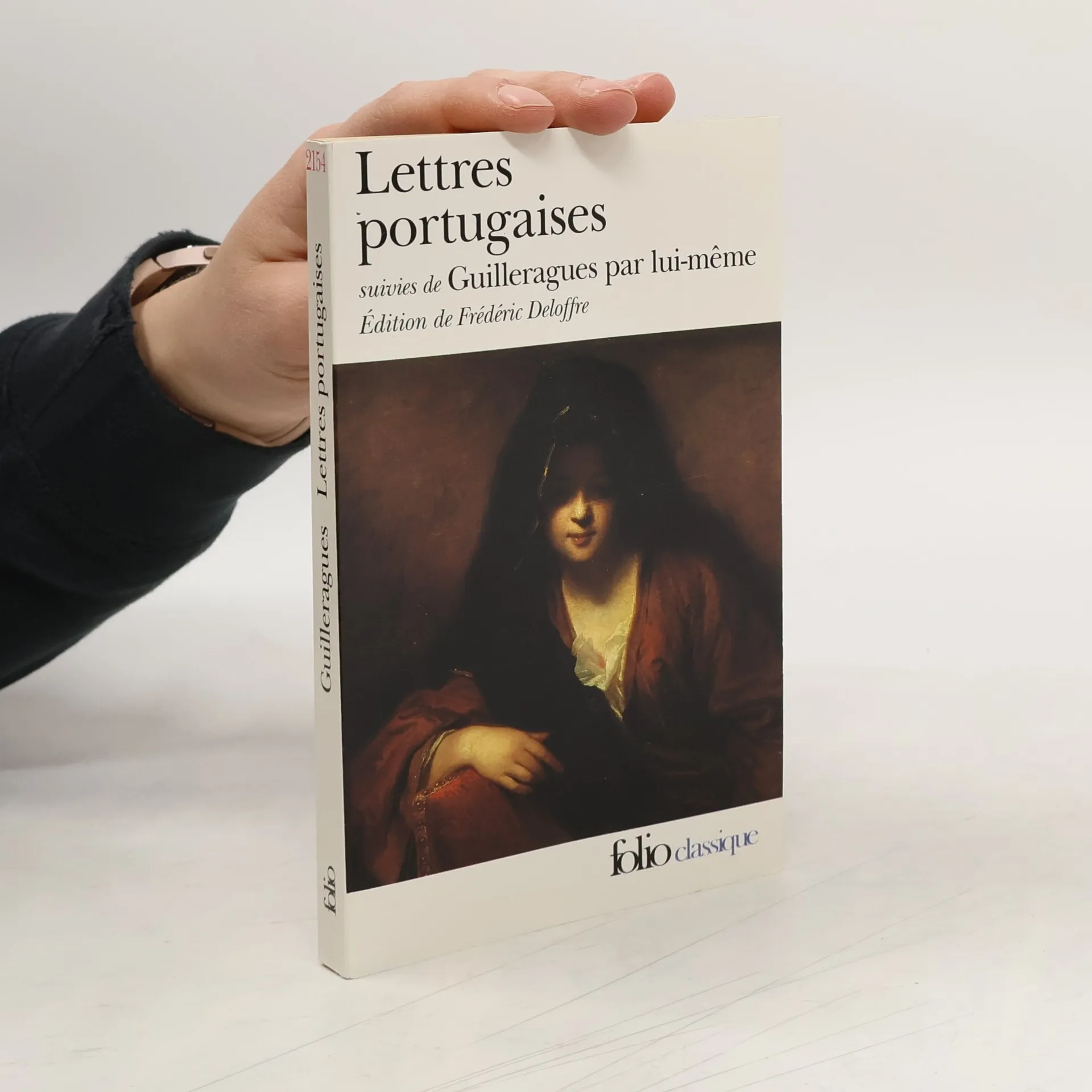
    Lettres portugaises suivies de Guilleragues par lui-même
    The Love Letters of a Portuguese Nun
    • The Love Letters of a Portuguese Nun

      • 48 pages
      • 2 hours of reading

      Stendhal wrote in " Life of Rossini" " It is necessary to have loved as implacably as the Portuguese Nun, and with all the unquenchable ardour of which she has left us so vivid an echo in her immortal Letters" First published in 1668 by then small Parisian bookseller Claude Barbin, the Love Letters of a Portuguese Nun (known in French as " Portuguese Letters translated into French" or " Portuguese Letters" ) witnessed immediate success. It is one of the first fictional epistolary novels that inspired many to come in French literature, such as Dangerous Liaisons by Pierre Choderlos de Laclos and Julie by Jean-Jacques Rousseau. The Love Letters comprise of five love letters written by a Portuguese nun cloistered in the Franciscan convent of Beja to the French officer who went to Portugal to support the Portuguese in their war of independence against the Spanish and had loved her and left her. The letters showcase a remarkable depth of psychological insight into the inner workings of a woman in love, bearing witness to a gradual yet pivotal development of self-awareness and an elegantly controlled depiction of passion.

      The Love Letters of a Portuguese Nun2003
      3.3
    • "Considère, mon amour, jusqu'à quel excès tu as manqué de prévoyance. Ah ! Malheureux ! Tu as été trahi, et tu m'as trahie par des espérances trompeuses. Une passion sur laquelle tu avais fait tant de projets de plaisirs, ne te cause présentement qu'un mortel désespoir, qui ne peut être comparé qu'à la cruauté de l'absence qui le cause. Quoi ? Cette absence, à laquelle ma douleur, tout ingénieuse qu'elle est, ne peut donner un nom assez funeste, me privera donc pour toujours de regarder ces yeux dans lesquels je voyais tant d'amour, et qui me faisaient connaître des mouvements qui me comblaient de joie, qui me tenaient lieu de toutes choses, et qui enfin me suffisaient ?"

      Lettres portugaises suivies de Guilleragues par lui-même1990
      3.0