

Explore the latest books of this year!
Bookbot

John R. Krebs

    Einführung in die Verhaltensökologie
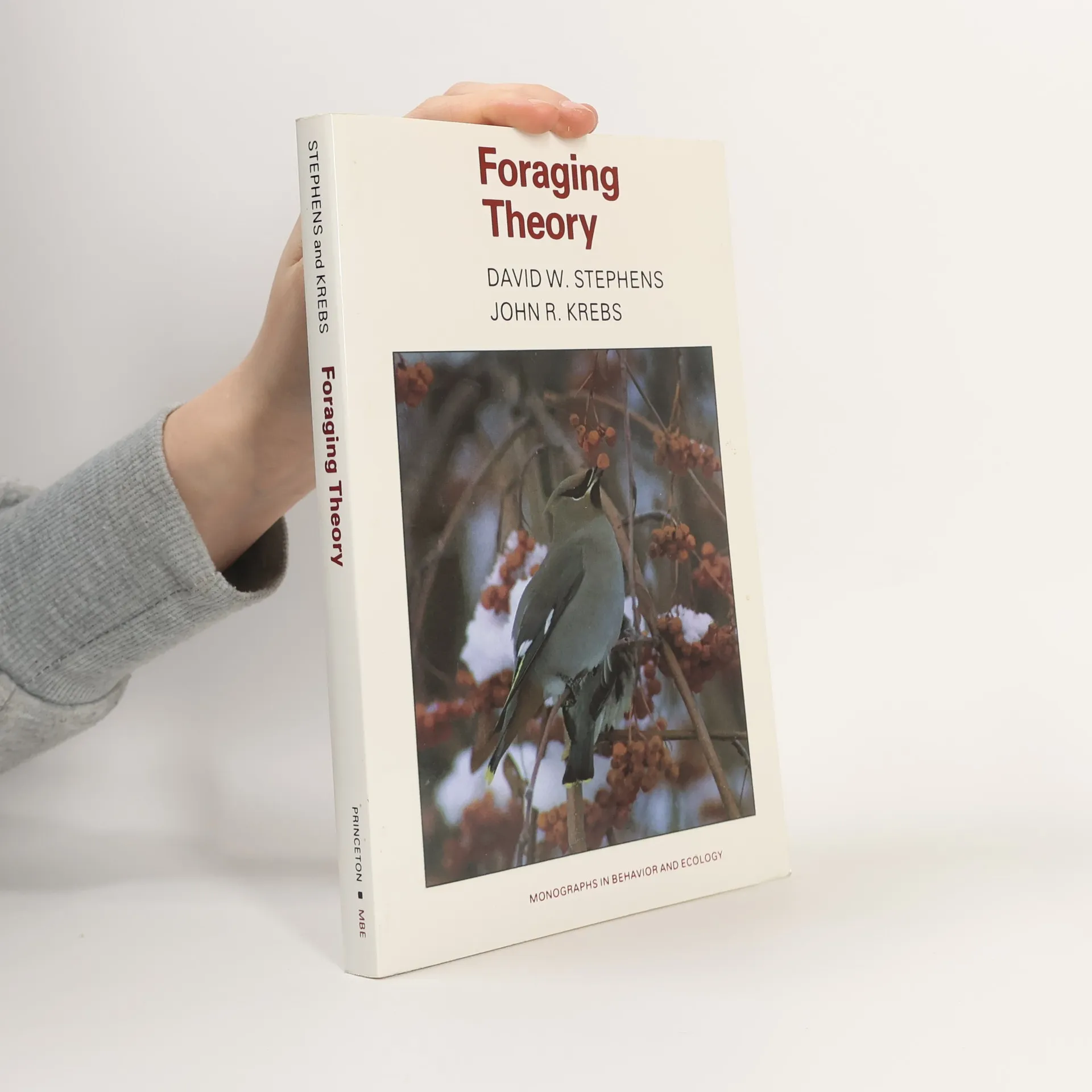
    Foraging Theory
    • Foraging Theory

      • 262 pages
      • 10 hours of reading

      This account of the current state of foraging theory is also a valuable description of the use of optimality theory in behavioral ecology in general. Organizing and introducing the main research themes in economic analyses of animal feeding behavior, the authors analyze the empirical evidence bearing on foraging models and answer criticisms of optimality modeling. They explain the rationale for applying optimality models to the strategies and mechanics of foraging and present the basic "average-rate maximizing" models and their extensions.The work discusses new directions in foraging research: incorporating incomplete information and risk-sensitive behavior in foraging models; analyzing trade-offs, such as nutrient requirements and the threat of being eaten while foraging; formulating dynamic models; and building constrained optimization models that assume that foragers can use only simple "rules of thumb." As an analysis of these and earlier research developments and as a contribution to debates about the role of theory in evolutionary biology. Foraging Theory will appeal to a wide range of readers, from students to research professionals, in behavioral ecology, population and community ecology, animal behavior, and animal psychology, and especially to those planning empirical tests of foraging models.

      Foraging Theory
      4.2
    • Einführung in die Verhaltensökologie

      • 356 pages
      • 13 hours of reading

      Warum leben einige Tiere einzelgängerisch und andere in Gruppen? Warum wählen Krähen nur große Muscheln zum Essen aus? Warum opfern sich Honigbienen bis zum Tod zum Schutz ihres Stocks? Warum putzen sich Affen gegenseitig? Warum singen Drosseln im Frühling? Das Buch ist eine Einführung in die Verhaltensökologie und bietet eine reflexive ökologische Betrachtung der Tierverhaltensweisen, die viele Mängel der Prinzipien der natürlichen Selektion korrigiert. Das Konzept des Überlebenswerts ist eines der Schlüsselkonzepte der Verhaltensökologie und hilft uns, Fragen zu verstehen, die scheinbar im Widerspruch zu den Prinzipien der natürlichen Selektion stehen, wie zum Beispiel, wie sich die Gruppenstruktur von Tierpopulationen entwickelt und erhält. Wie wird das evolutionäre Verhalten von Altruismus gerechtfertigt, das grundsätzlich zur Zerstörung des genetischen Erbes des Individuums führt? Das Lesen dieses Buches eröffnet neue Perspektiven auf die Mechanismen sozialen Verhaltens beim Menschen und wirft Licht auf die ökologischen und evolutionären Grundlagen vieler Verhaltensweisen und sogar sozialer Institutionen des Menschen.

      Einführung in die Verhaltensökologie