

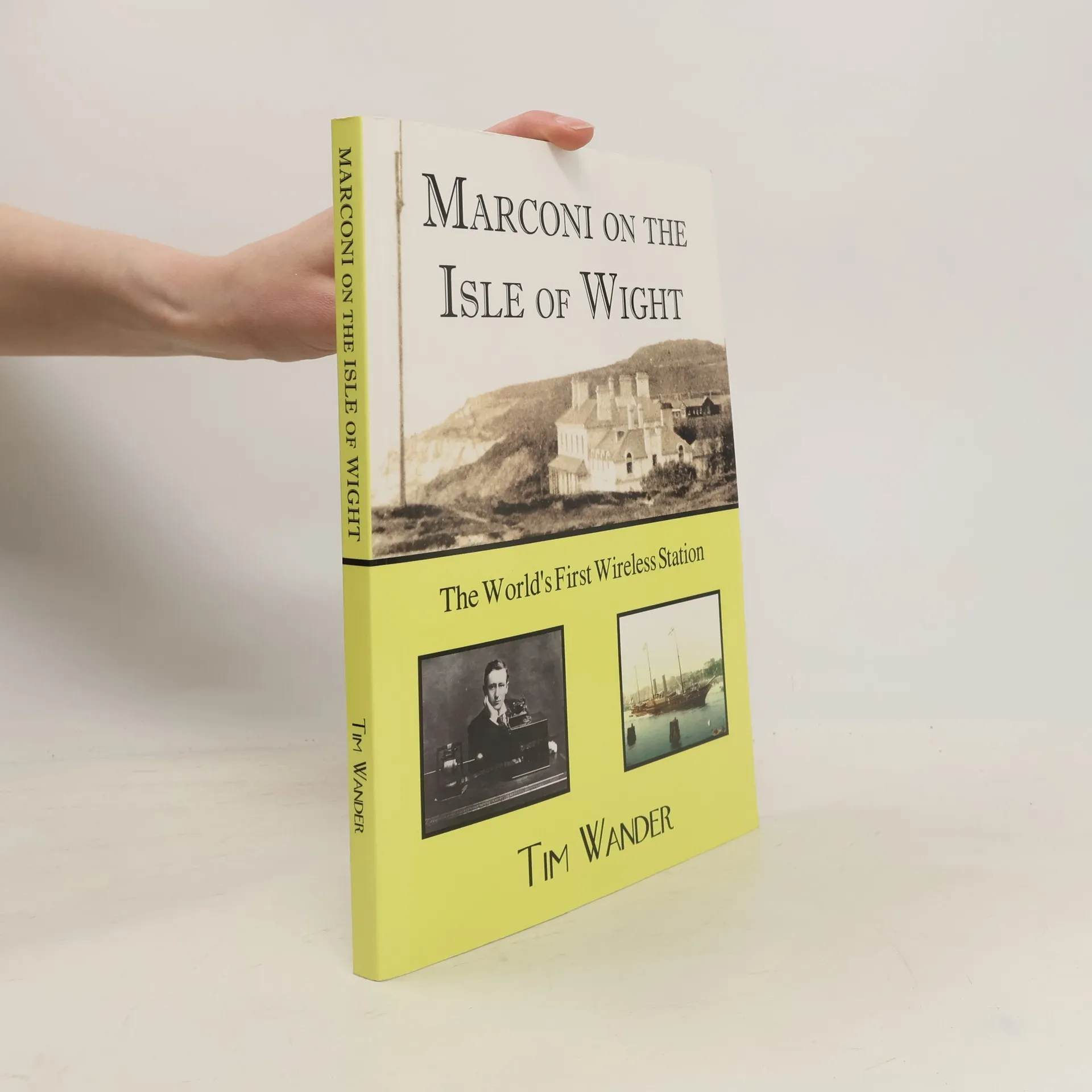
Marconi on the Isle of Wight
- 234 pages
- 9 hours of reading
In November 1897, twenty-three-year-old Italian inventor Guglielmo Marconi arrived at the Royal Needles Hotel on the Isle of Wight to conduct his wireless experiments. The hotel proprietors welcomed his proposal to rent rooms during the winter months. Using funds from his newly formed Wireless Telegraph & Signal Company, Marconi converted the billiard room into a workspace, installing his equipment and a spark transmitter. He hired small ships equipped with wireless aerials and receivers, and a 168-foot mast was erected at the hotel with the help of local men. On December 6, 1897, Marconi began his wireless experiments, including private demonstrations for Queen Victoria and the Royal family at Osborne House and on the Royal Yacht. For the next two and a half years, the world's first permanent wireless station operated from the Isle of Wight. By 1900, seeking more space and privacy, Marconi relocated his equipment to Knowles Farm in Niton, where he developed the science of tuning, allowing multiple wireless signals to be separated without interference. In January 1901, transmissions from Niton reached Lizard Point in Cornwall, a record 196 miles away, paving the way for transatlantic communication. This young engineer's experiments on a small island laid the foundation for modern global communication, radio broadcasting, mobile phones, and the internet, forever changing the world.