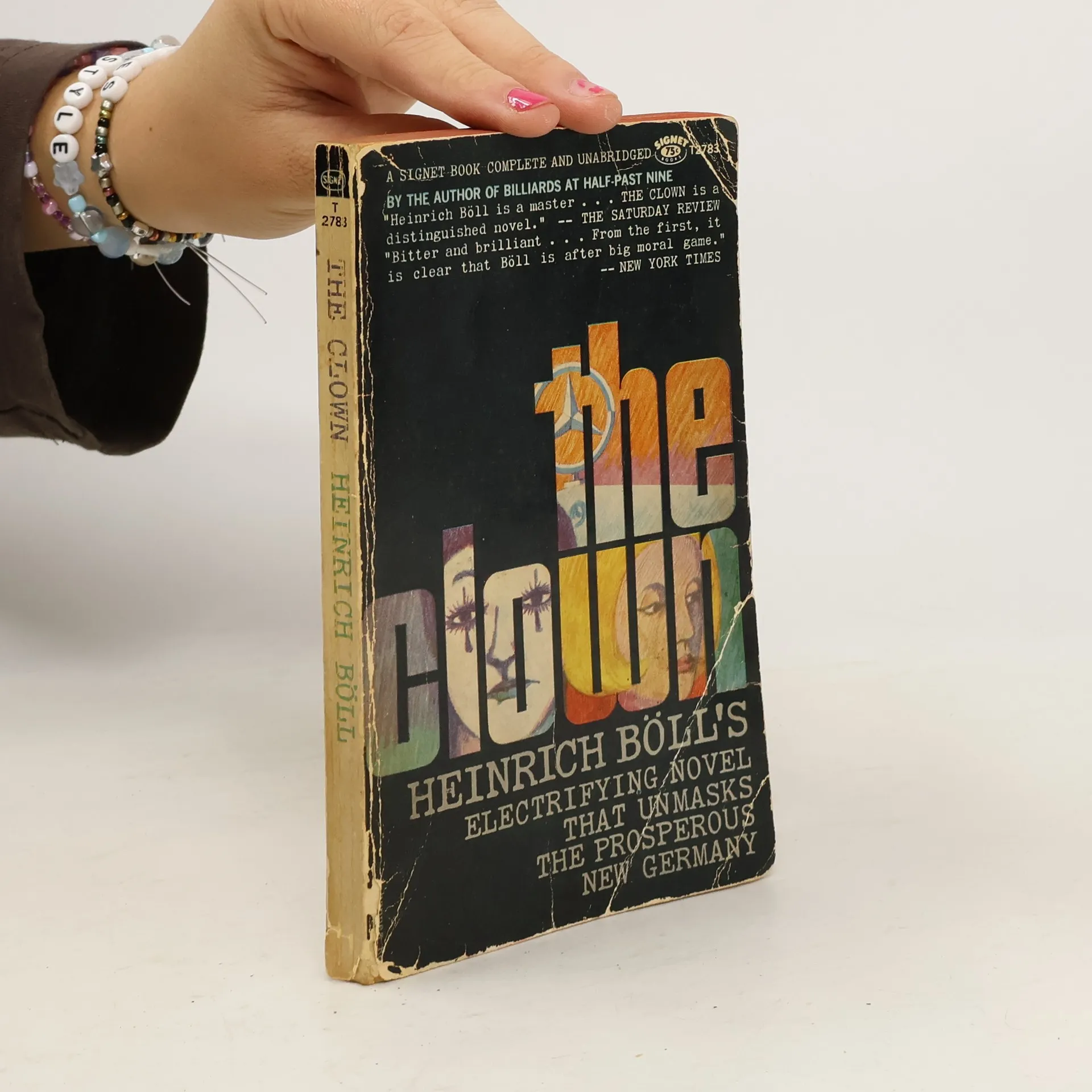
Some authors tell tragic stories with humor, as Heinrich Böll does in his novel "The Clown." This work narrates in the first person the life of Hans Schnier, an apolitical and agnostic young clown who faces a series of adversities: his career collapses, his health and spirits wane, and he finds himself alone in a hotel with few resources and friends. The situation worsens when his wife, Marie, leaves him, prompting him to reflect on his life and the reasons behind their separation. Böll places Schnier in a post-war Germany, marked by rigid social morals and ecclesiastical hypocrisy that he critiques through his protagonist. Throughout the novel, Schnier shares his thoughts, memories, and conversations in search of support, often clashing with euphemistic individuals. Böll, a fervent Catholic and Nobel Prize winner in Literature, portrays the complexity of the clown's existence, showing that behind laughter can lie a life full of suffering. His melancholic, ironic, and raw style invites reflection on the duality between appearance and reality.
Sonja Đerasimović Books