



Explore the latest books of this year!
Bookbot

David Rieff

    September 28, 1952

    David Rieff is an American polemicist and pundit whose work scrutinizes complex global issues. His books have consistently addressed themes of immigration, international conflict, and humanitarianism. Rieff's writing is distinguished by its sharp observation and incisive analysis, often delving into the intricate ethical dilemmas inherent in these critical subjects.

    Going to Miami
    Going to Miami
    A Bed for the Night Humanitarianism in Crisis
    A Bed For The Night
    Swimming in a Sea of Death
    Divorcing
    • Divorcing

      • 264 pages
      • 10 hours of reading

      Now back in print for the first time since 1969, a stunning novel about childhood, marriage, and divorce by one of the most interesting minds of the twentieth century. Dream and reality overlap in Divorcing, a book in which divorce is not just a question of a broken marriage but names a rift that runs right through the inner and outer worlds of Sophie Blind, its brilliant but desperate protagonist. Can the rift be mended? Perhaps in the form of a novel, one that goes back from present-day New York to Sophie’s childhood in pre–World War II Budapest, that revisits the divorce between her Freudian father and her fickle mother, and finds a place for a host of further tensions and contradictions in her present life. The question that haunts Divorcing, however, is whether any novel can be fleet and bitter and true and light enough to gather up all the darkness of a given life. Susan Taubes’s startlingly original novel was published in 1969 but largely ignored at the time; after the author’s tragic early death, it was forgotten. Its republication presents a chance to discover a splintered, glancing, caustic, and lyrical work by a dazzlingly intense and inventive writer.

      Divorcing
      4.0
    • Swimming in a Sea of Death

      • 179 pages
      • 7 hours of reading

      Presents an account of Susan Sontag's final months, written by her son and drawing on previously unpublished letters and journals. This book writes about being by her side during that last year and at her death, and about the author's own contradictory emotions: his guilt for not consoling her enough.

      Swimming in a Sea of Death
      3.7
    • A Bed For The Night

      • 352 pages
      • 13 hours of reading

      Timely and controversial, A Bed for the Night reveals how humanitarian organizations trying to bring relief in an ever more violent and dangerous world are often betrayed and misused, and have increasingly lost sight of their purpose.

      A Bed For The Night
      3.7
    • Going to Miami

      Exiles, Tourists, and Refugees in the New America

      • 230 pages
      • 9 hours of reading

      The author removes Miami's masks, exploring the flashy tourist shops, the conservative Cuban community, the struggling Haitian and black populations, and the resentful Anglo community. Accurately depicts the new variations of opportunity and immigration found in this changing city.

      Going to Miami
    • Going to Miami

      Exiles, Tourists and Refugees in the New America

      • 230 pages
      • 9 hours of reading

      In impressionistic and personal moments, Rieff captures the mood of Miami, maintaining a pleasantly naïve stance that marks a good travel writer. His insightful narrative offers firsthand impressions of the city, reflecting on its transformation since the 1960s and its identity as America's New Havana, influenced by the image of Miami Vice. He engages with influential Cuban leaders, from moderates to anti-Castro figures, while exploring the famed Calle Ocho. Rieff's approach is anti-travelogue, focusing on states of mind rather than expert testimony, drawing insights from casual conversations and cultural observations. His work restores faith in the foreignness of America, providing a shrewd guide to a city often misunderstood and over-glamorized, particularly its vibrant Cuban community. The narrative serves as a personal reflection on Miami in the mid-1980s, a time when the Cuban exile population significantly reshaped the city. Rieff believes Miami foreshadows America's future demographic shifts, highlighting the growing influence of the Spanish language and the diverse tapestry of the nation's populace. David Rieff is a seasoned journalist and author, contributing to major publications and residing in New York City.

      Going to Miami
    • Going to Miami

      Exiles, Tourists and Refugees in the New America

      • 320 pages
      • 12 hours of reading

      This is a personal narrative as well as a book about Miami at the moment in the mid-1980s when the transformation of the city by its Cuban exile population was achieving critical mass. Rieff looks at Miami as America's New Havana, with a nod to the image fostered by TV's Miami Vice - an easy-going recital of his visits with Miami's most influential Cuban leaders, ranging from moderates to possibly murderous, anti-Castro politicos, along with tours of the city's now-famed Calle Ocho.

      Going to Miami
    • Going to Miami

      exiles, tourists, and refugees in the New America

      • 240 pages
      • 9 hours of reading

      The author removes Miami's masks, exploring the flashy tourist shops, the conservative Cuban community, the struggling Haitian and black populations, and the resentful Anglo community. Accurately depicts the new variations of opportunity and immigration found in this changing city.

      Going to Miami
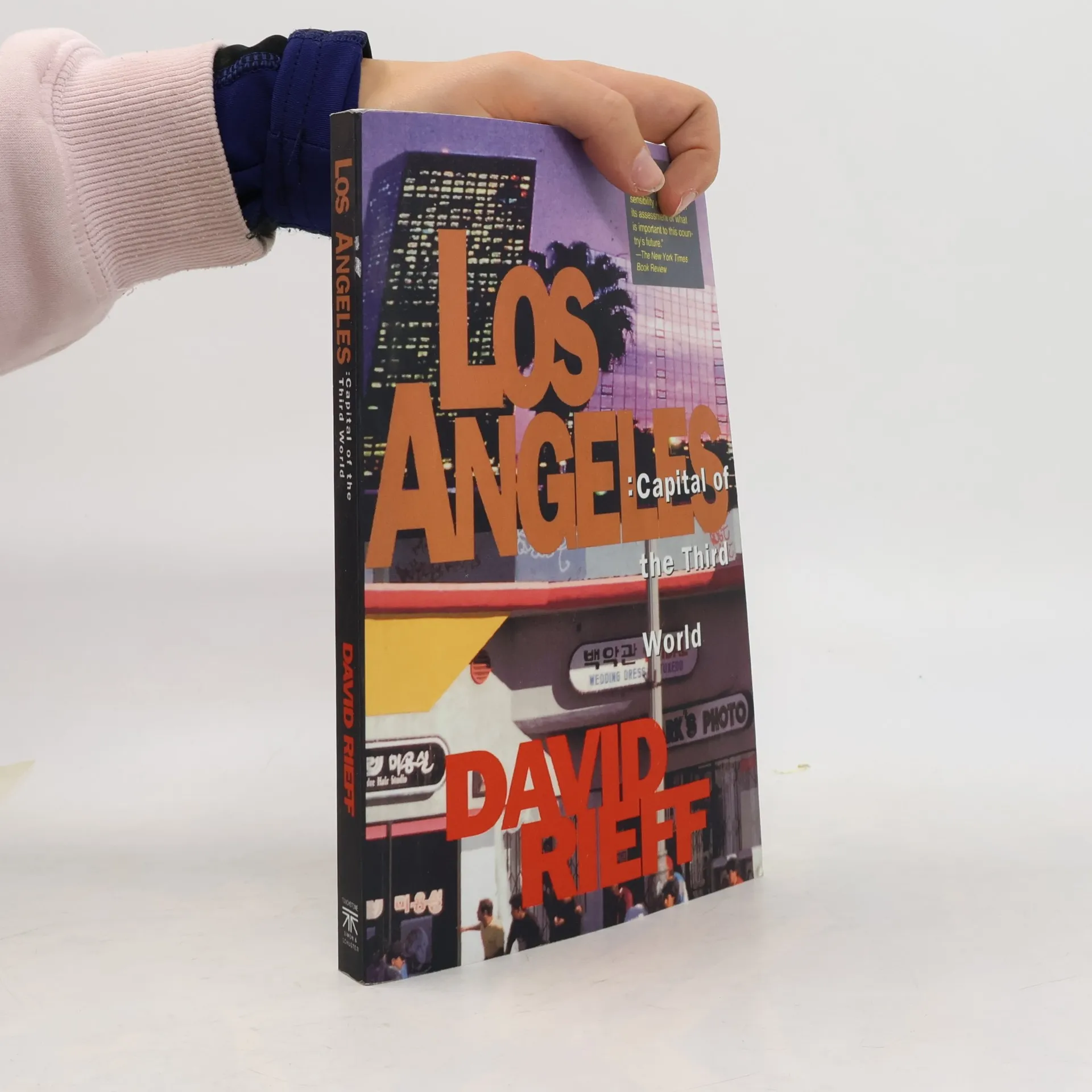
    • Los Angeles

      Capital of the Third World

      • 272 pages
      • 10 hours of reading

      Writing before the riots of 1992, Rieff found not a city of dreams but a city of bitter contradictions. A city that, like the United States itself, was being transformed by immigrants and refugees from Latin America and East Asia from an extension of Europe to a diverse patchwork of the peoples of the world. This is an L.A. that has never been described before. With a new afterword.

      Los Angeles
    • Schlachthaus

      • 338 pages
      • 12 hours of reading

      Bosnien ist ein Schlachthaus geworden, der Krieg ein Vernichtungskrieg gegen eine Minderheit, die bosnischen Moslems. Er hätte verhindert werden können ..

      Schlachthaus
    • Présente, sous forme d'un abécédaire composé de 150 articles rédigés par des journalistes et des juristes internationaux, les conflits contemporains avec leurs infractions graves et leurs conduites criminelles : Croatie (1991), Bosnie (1992), Rwanda (1994), Tchétchénie (1995), etc., ainsi que l'action du droit international humanitaire

      Crimes de guerre : ce gue nous devons savoir
    • ¿Por qué hemos fracasado en abordar la crisis del hambre en el siglo XXI? En 2000, líderes y expertos acordaron que erradicar el hambre era esencial para el nuevo milenio. Sin embargo, en la última década, los precios de alimentos básicos como el trigo, la soja y el arroz han aumentado drásticamente, contribuyendo a la pobreza y el descontento político en diversas regiones. Esta crisis alimentaria ha dejado a mil millones de personas viviendo con menos de un dólar al día en un estado de hambre constante. El destacado experto en ayuda humanitaria y desarrollo David Rieff investiga las causas de esta crisis de seguridad alimentaria y los fracasos en su respuesta. Además de la falta de acción frente al cambio climático y la mala gobernanza, Rieff señala la creciente privatización de la ayuda, con organizaciones como la Fundación Gates superando a la OMS en asistencia alimentaria. La llegada de activistas que promueven soluciones empresariales ha despojado al desarrollo de su urgencia política. Rieff sostiene que la crisis de escasez de alimentos debe ser vista como un desafío político que todos estamos fallando en confrontar y exige una reevaluación de las desigualdades fundamentales en el mundo.

      El oprobio del hambre: alimentos, justicia y dinero en el siglo XXI