

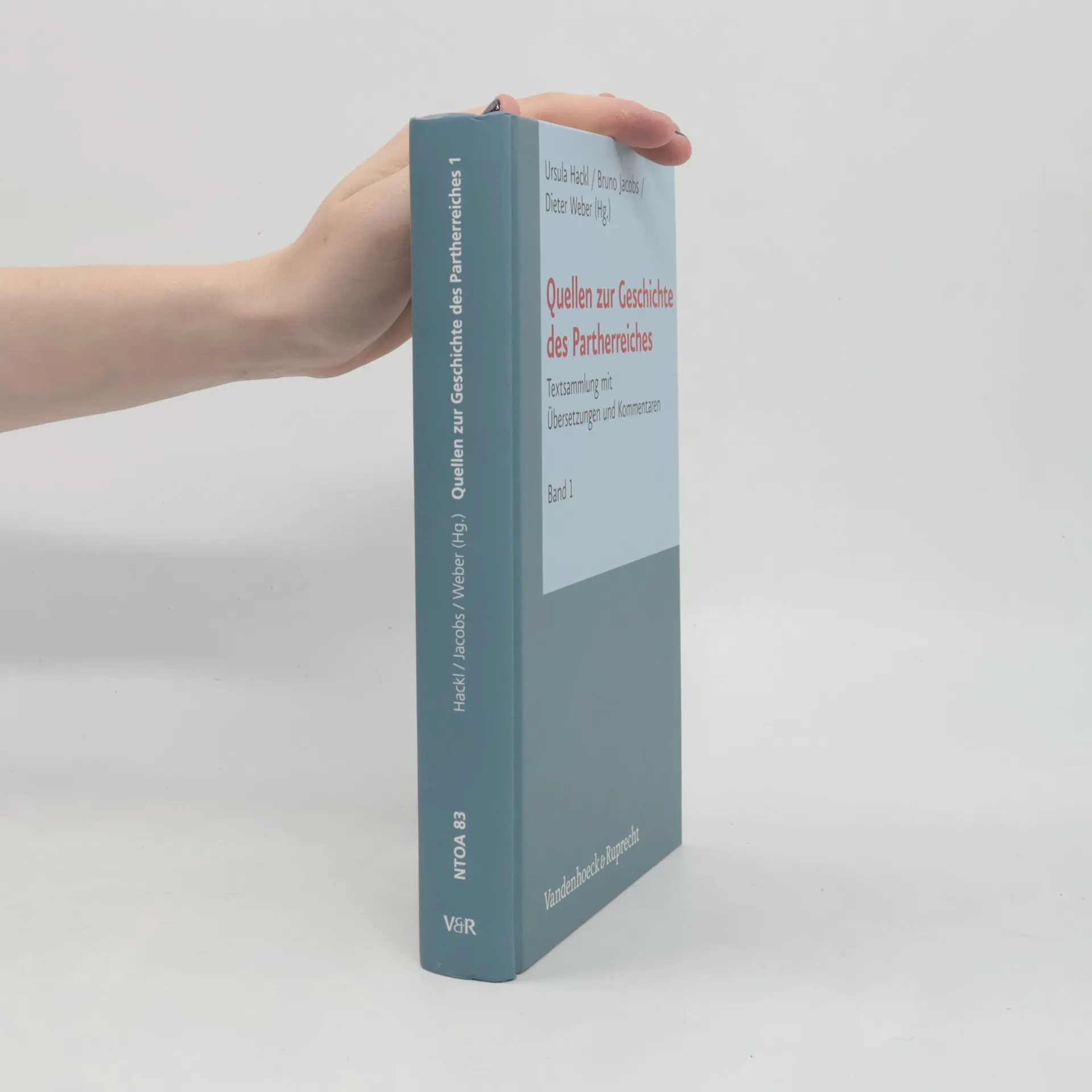
Novum Testamentum et Orbis Antiquus/Studien zur Umwelt des Neuen Testaments (NTOA/StUNT) - 83: Quellen zur Geschichte des Partherreiches
Textsammlung mit Übersetzungen und Kommentaren
- 256 pages
- 9 hours of reading
The Parthian Empire, existing from the late third century BC to the early third century AD, was governed by the Arsacid dynasty and expanded its territory from the Caspian Sea to the Indian Ocean and the Euphrates River. Its history has been documented in various languages, including Greek, Latin, and Chinese. This diverse array of sources is compiled and translated into German, offering a scientific comparison of the texts. The Parthians, steppe nomads from the Transcaspian region, conquered the Seleucid satrapy of Parthia around the late third century BC. Under the Arsacids, they gradually took over Seleucid territories, reaching the Euphrates, which marked the boundary with the Roman Empire by the mid-first century BC. The Parthian Empire was influenced by multiple factors, including the Hellenistic culture established by the Seleucids, local traditions of long-standing inhabitants like the Babylonians and Medes, and interactions with various nomadic tribes and neighboring cultures, including Jews, Syrians, and Armenians. The complex relationships with Rome, characterized by alliances and conflicts, further enriched this historical tapestry. The sources on the Parthians are multifaceted, requiring interdisciplinary analysis for a comprehensive understanding. The three volumes present these texts and provide commentary, enhancing our knowledge of the empire's history, internal structure, and socio-economic and cultural condi