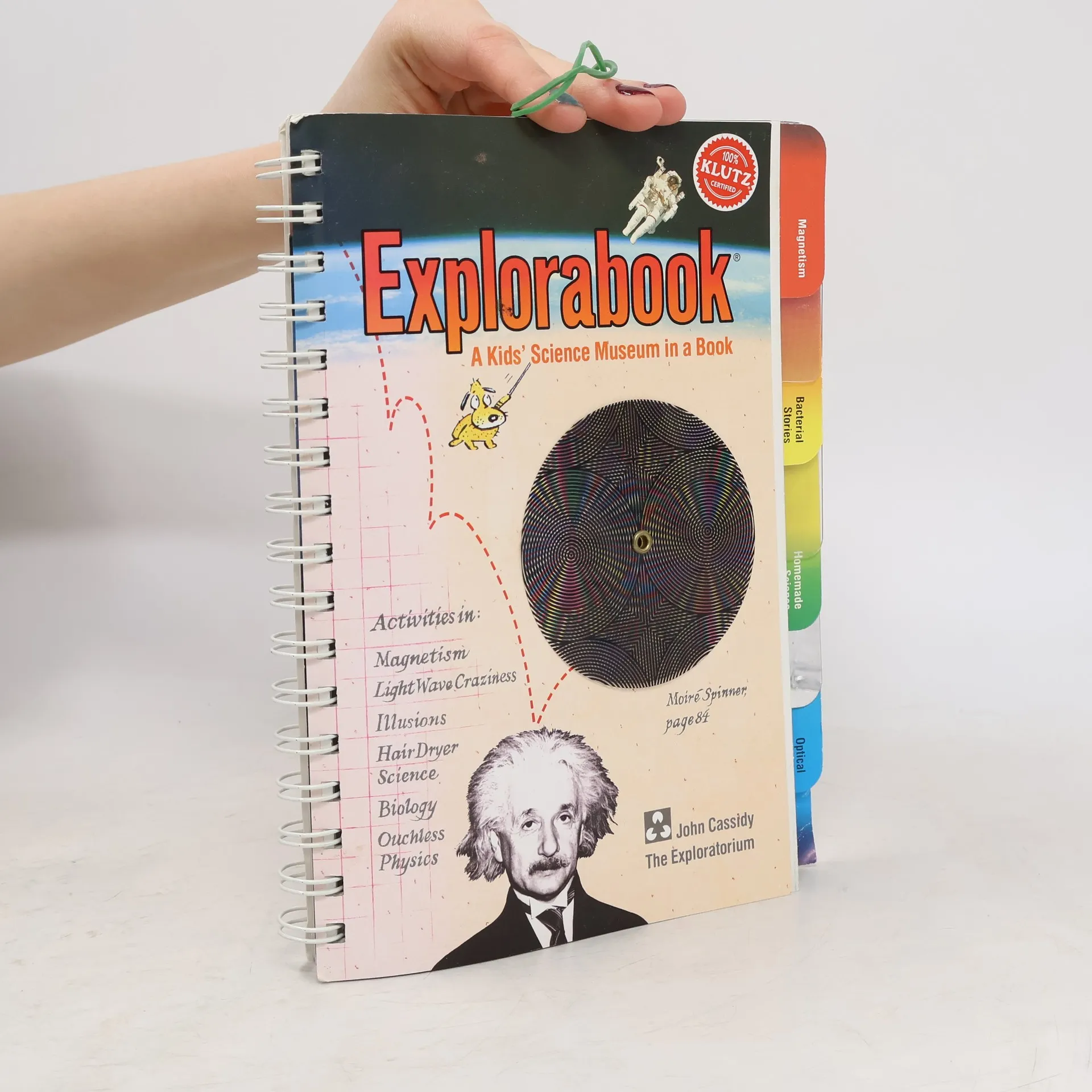
The San Francisco Exploratorium squeezed between the covers of a book! The "pages" reflect, magnify, or grow as you follow the instructions. Seven subjects are covered, including light wave craziness, ouchless physics, and hair dryer science.
John Cassidy Books
January 1, 1963
John Cassidy is a journalist who writes about economic and political topics. His work frequently focuses on financial markets and their impact on society. Cassidy's style is known for its analytical depth and his ability to clearly explain complex issues. His writing offers readers a penetrating look into the modern economy.


The classic holler-along music collection for ages four to forever. We've sold over a million copies of these recordings, and they still get more out-of the-blue raves and crayon-drawn endorsements than most anything else we do. Nancy Cassidy's Gold-Record-winning tunes are available on cassettes packaged with beautifully illustrated books of lyrics and music, or all by themselves on compact disc.
How Markets Fail Logic of Economic Calamities. Farrar, Straus and Giroux, 2009.
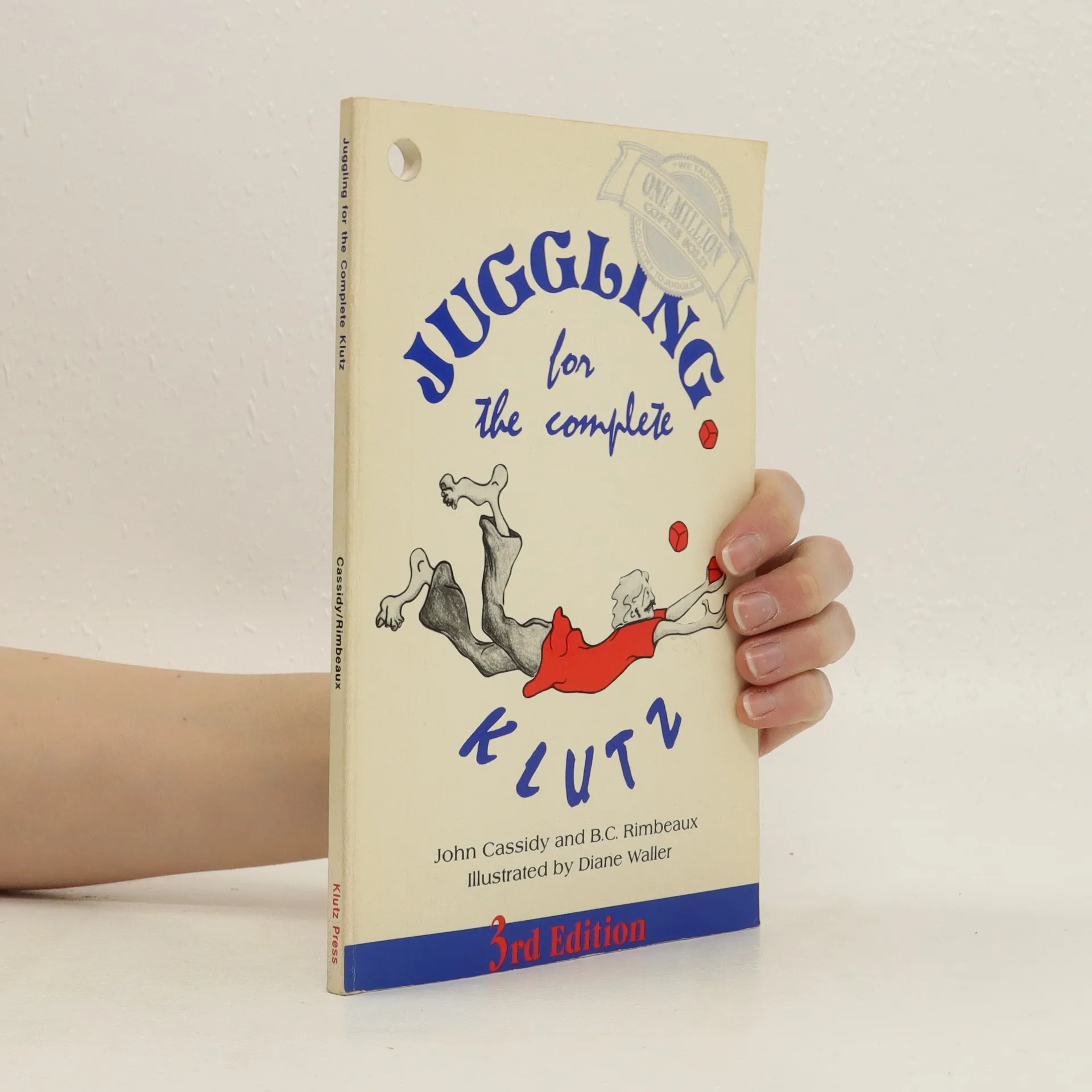
Learn how to juggle with this amusing how-to book.
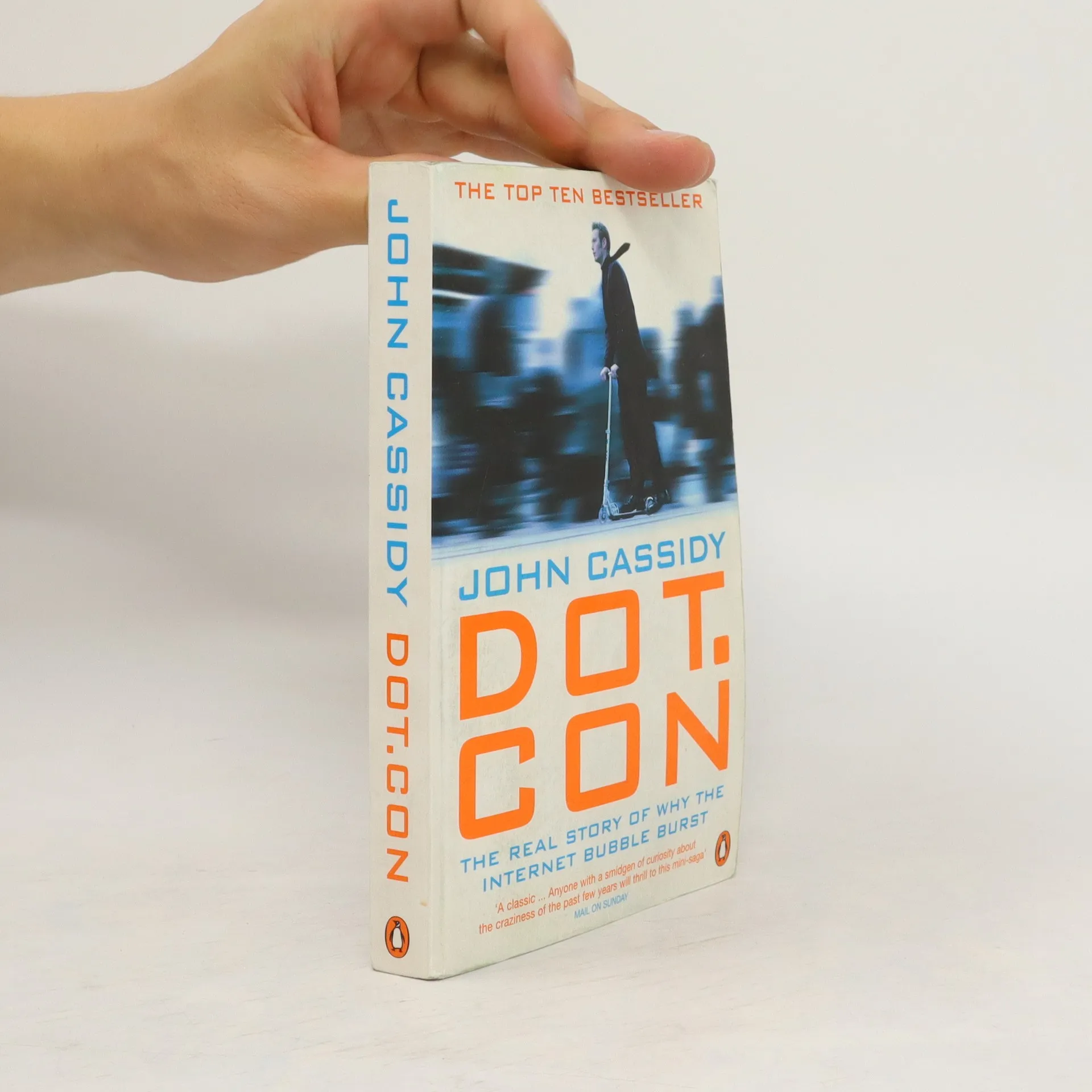
Dot.con
- 416 pages
- 15 hours of reading
This is a sceptical history of the internet/stock market boom. John Cassidy argues that what we have just witnessed wasn't simply a stock market bubble; it was a social and cultural phenomenon driven by broad historical forces. Cassidy explains how these forces combined to produce the buying hysteria that drove the prices of loss-making companies into the stratosphere. Much has been made of Alan Greenspan's phrase irrational exuberance, but Cassidy shows that there was nothing irrational about what happened. The people involved - fund managers, stock analysts, journalists and pundits - were simply acting in their own self-interest.
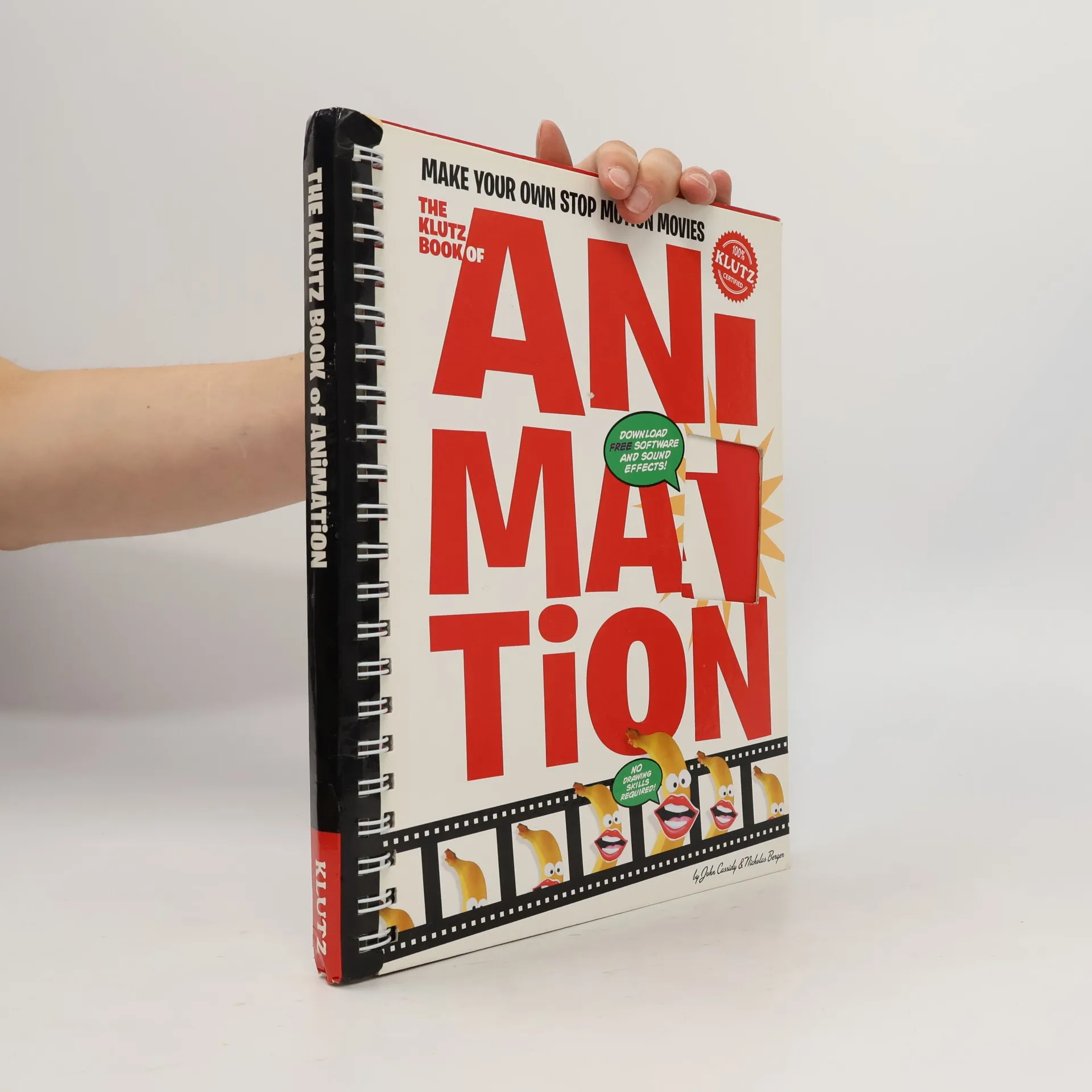
The Klutz Book of Animation
- 72 pages
- 3 hours of reading
The Klutz Book of Animation is a complete how-to treatment of stop-motion magic, from practical instruction to ready-to-shoot scripts. The software you Have fun
Book of Animation. How to Make Movie Magic
- 64 pages
- 3 hours of reading
Exploring the evolution of global capitalism, this book presents a unique narrative through the perspectives of its critics. It spans from colonialism and the Industrial Revolution to contemporary challenges like ecological crises and artificial intelligence. By featuring both well-known figures such as Marx and lesser-known critics like William Thompson and Flora Tristan, the narrative offers a rich tapestry of economic thought. Blending biography and history, it sheds light on the roots of today's pressing economic debates and movements.
Ce livre s'adresse à ceux qui savent à peine où se trouve la pointe d'un crayon... Non, votre cas n'est pas désespéré ! Cette méthode va faire éclater au grand jour vos talents : elle accompagnera vos progrès dans la bonne humeur en vous donnant aussi des idées, des conseils et des encouragements. Dessinez, c'est forcément réussi ! Ou alors, c'est la faute de votre dessin...
Der Kapitalismus und seine Kritiker
Eine Geschichte von der Industriellen Revolution bis zur Künstlichen Intelligenz | »Ein Meisterwerk« The New York Times
- 720 pages
- 26 hours of reading
Wie lässt sich eine gerechte, zukunftsfähige Gesellschaft denken? Diese zentrale Frage eint Kapitalismuskritiker durch die Jahrhunderte. Rasant und gewinnbringend porträtiert John Cassidy die wichtigsten Denker und Denkerinnen, deren Ideen für die Gegenwart genauso relevant sind wie vor 250 Jahren. Von Adam Smiths Kolonialkritik über Rosa Luxemburgs sozialistische Utopie bis zu den ökologischen Visionen des indischen Ökonomen J. C. Kumarappa entfaltet Cassidy ein faszinierendes Panorama, das von den Anfängen der industriellen Revolution im 18. Jahrhundert bis zur Ära der künstlichen Intelligenz reicht. Mit erzählerischer Brillanz und analytischer Schärfe macht er sichtbar, wie die Debatten um Gier, Innovation, Ausbeutung und soziale Gerechtigkeit seit jeher in den gesellschaftlichen Wandel eingreifen – und wie aktuell sie bis heute sind.
Jak selhávají trhy. Logika ekonomických kalamit
- 420 pages
- 15 hours of reading
Půl století rozvíjejí ekonomové po celém světě elegantní teorie o tom, jak trhy usnadňují inovace, jak vytvářejí bohatství a jak efektivně alokují zdroje, které má společnost k dispozici. Co se ale stane, když trhy selhávají? Když nás zavádějí až k bublinám na trhu s cennými papíry, ke křiklavým nerovnostem, ke znečištěným řekám nebo k úvěrovým krizím? V knize Jak selhávají trhy (How Markets Fail) americký publicista John Cassidy popisuje stoupající vliv "utopické ekonomie" - myšlení, které je slepé k tomu, jak jednají skuteční lidé, a které popírá existenci spousty způsobů, jimiž může neregulovaný volný trh vyvolat katastrofu. Cassidy kombinuje reportážní postupy založené na faktech a srozumitelné vysvětlování ekonomických teorií, aby upozornil na to, že za současné ekonomické krize je úporné setrvávání na starých ortodoxních "pravdách" nejen pošetilé -, ale vysloveně nebezpečné.