An updated study of the 1988 terrorist attack describes the tragedy, documents the struggle the authors have endured to learn the truth about the bombing of Pan Am Flight 103, which killed their daughter Theo, and provides a close-up look at the recent trial of alleged Libyan terrorists. Reprint.
Daniel Cohen Books
June 16, 1953 – August 20, 2023





How populism is fueled by the demise of the industrial order and the emergence of a new digital society ruled by algorithms In the revolutionary excitement of the 1960s, young people around the world called for a radical shift away from the old industrial order, imagining a future of technological liberation and unfettered prosperity. Industrial society did collapse, and a digital economy has risen to take its place, yet many have been left feeling marginalized and deprived of the possibility of a better life. The Inglorious Years explores the many ways we have been let down by the rising tide of technology, showing how our new interconnectivity is not fulfilling its promise. In this revelatory book, economist Daniel Cohen describes how today's postindustrial society is transforming us all into sequences of data that can be manipulated by algorithms from anywhere on the planet. As yesterday's assembly line was replaced by working online, the leftist protests of the 1960s have given way to angry protests by the populist right. Cohen demonstrates how the digital economy creates the same mix of promises and disappointments as the old industrial order, and how it revives questions about society that are as relevant to us today as they were to the ancients. Brilliant and provocative, The Inglorious Years discusses what the new digital society holds in store for us, and reveals how can we once again regain control of our lives.
African Studies is not an isolated field in American higher education; it intersects with economics, literature, history, philosophy, and art, reflecting both ancient and modern global narratives. This book addresses the vital question of why Africa should be studied within American universities, featuring insights from distinguished scholars in the social sciences and humanities. Their responses highlight the significance of African research in academia. For instance, Paul Collier illustrates how African economic studies enhance our understanding of small open economies and contribute to microeconomic theory. Art historian Suzanne Blier applies her discipline's concepts to analyze social practices in Africa, while Christopher L. Miller discusses Africa's enriching effects on European and American literary theory. Political scientist Richard Sklar emphasizes Africa's role in political modernization and pluralism. These essays, alongside contributions from experts in various fields, demonstrate the profound influence of African research on academic discourse. Contrary to the perception of Africa as distant and exotic, these powerful essays reveal its integral role in shaping scholarly understanding. This volume serves as a compelling testament to Africa's essential place in American education, challenging the academic community to reconsider the significance of African studies in relation to core and peripheral knowledge.
Homo Numericus
- 172 pages
- 7 hours of reading
The author of "The Prosperity of Vice" and other bestsellers examines with joyful ferocity this so-called "civilization" that disrupts our lives. Love? Now it's Tinder! The office? It's remote work! A new job? Algorithms are the recruiters! Political parties? It's all on Twitter! At the center of this new world is Homo Numericus, a being overwhelmed by contradictions. He wants to control everything, yet he is irrational and impulsive, driven to addictive behaviors by the very algorithms that monitor every detail of his existence. Should we despair? Not necessarily. The digital revolution was born from the expectations of a society that dreamed of infinite knowledge, wanting every voice to be heard. Without revealed truth, liberated from the hierarchies of the past. Finding a way to achieve this utopia is also the ambition of this book.
Horror Movies
- 80 pages
- 3 hours of reading
"The book traces the history of horror films"--Jacket
Real Vampires
- 114 pages
- 4 hours of reading
Argues that vampires are not merely creatures of fiction, and provides instances of real-life encounters with vampires from Middle Europe to Middle America, from medieval to modern times.
History of the Oscars
- 192 pages
- 7 hours of reading
Encyclopedia of Movie Stars
- 256 pages
- 9 hours of reading
A collection of the biographies of more than 1,000 movie stars includes the great actors, the lesser-known figures, and character actors. Filmographies.
Hamlyn Book of Computer Questions and Answers
- 127 pages
- 5 hours of reading
La mondialisation et ses ennemis
- 263 pages
- 10 hours of reading
La mondialisation actuelle est la troisième mondialisation. Les deux premières, la conquête de l'Amérique au XVIe siècle, puis celle des comptoirs anglais au XIXe, se sont terminées en tragédie pour les populations concernées. Les ennemis de la mondialisation se recrutent aujourd'hui dans deux camps que tout oppose. mais qui se nourrissent de ce témoignage de l'histoire. Celui des " mollahs " qui résistent à " l'occidentalisation du monde ". et celui des anticapitalistes qui luttent contre l'exploitation des peuples. Le premier groupe mène, une guerre des civilisations, le second, une lutte des classes à l'échelle planétaire. Ce livre montre que leur combat commun se trompe de cible. La véritable faille de la troisième mondialisation est ailleurs : elle fait naître des attentes auxquelles elle est incapable de répondre. La conscience planétaire est mondialisée, tandis que les forces économiques sont en retard sur celle-ci. C'est parce qu'elle n'advient pas, et non parce qu'elle est déjà advenue. que la mondialisation aiguise les frustrations. Se méprendre sur ce point, c'est construire la critique du monde contemporain sur un formidable malentendu.
Das Heilige Land Jesu behandelt sowohl die Heilsgeschichte als auch die Geographie des Heils, die Geographie Israels, wo Gott sich den Juden offenbart hat und wo der Sohn Gottes geboren wurde und sein Leben für uns hingab. Dieses Buch kann genutzt werden, um einen Christen auf eine Reise ins Heilige Land vorzubereiten und anschließend die Orte, an denen unser Herr wandelte, durch die Bilder, Illustrationen und Beschreibungen in diesem Buch wieder zu besuchen. Auch diejenigen, die das Heilige Land nicht besuchen können, können dieses Buch nutzen, um ihren Horizont zu erweitern und ihren Glauben zu vertiefen.
Il faut dire que les temps ont changé...
Chronique (fiévreuse) d'une mutation qui inquiète
- 224 pages
- 8 hours of reading
Nous sommes en train de comprendre ce qui s'est passé depuis cinquante ans. L'hystérie du monde du travail, la grande protestation des peuples, l'enfermement des nouvelles générations dans une espèce de présent perpétuel, sont les conséquences de l'effondrement d'une civilisation: celle de la société industrielle. L'une après l'autre, les utopies de gauche et de droite se sont fracassées sur une réalité qu'il est désormais possible de désigner par son nom : la société digitale. Elle nous transforme en une série d'informations qu'un logiciel peut traiter à partir de n'importe quel point du globe. Une immense frayeur traverse la société. Le travail à la chaine d'hier a-t-il laissé la place à la dictature des algorithmes? Les réseaux sociaux sont-ils le moyen d'un nouveau formatage des esprits? Par un formidable retour en arrière, les questions de l'ancien monde sont en train de resurgir au coeur du nouveau. Les temps changent, mais vont-ils dans la bonne direction? Ce livre iconoclaste permet de comprendre le désarroi dont le populisme est l'expression. Il décrypte d'une façon lumineuse des événements dont le sens nous échappe parfois, tout en ayant l'ambition de veiller à la défense des valeurs humanistes au nom desquelles le nouveau monde a, aussi, été créé.
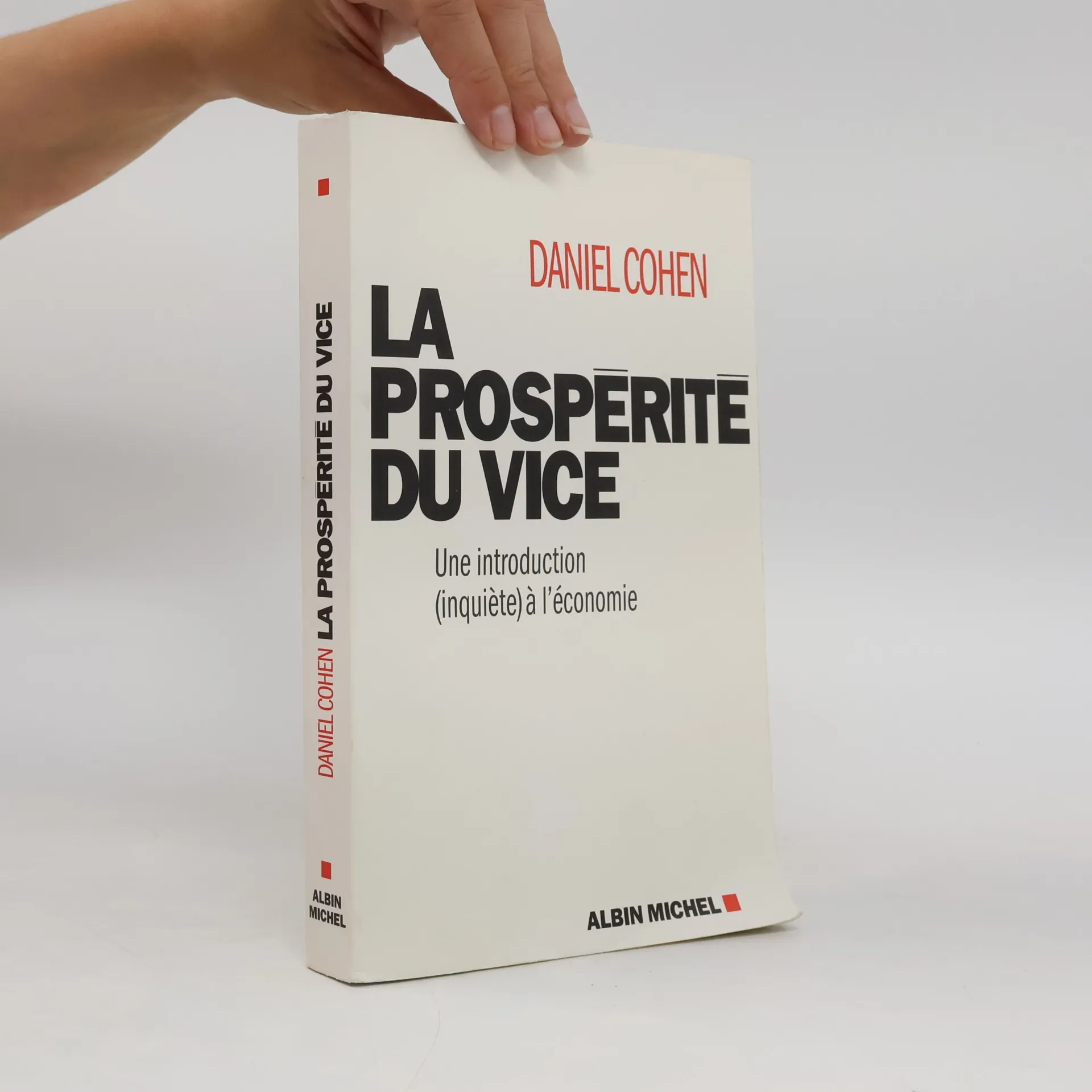
Are robust economic growth and tight social cohesion something of the past, or is contemporary stagnation simply part of a long economic cycle that is bound to bring brighter days? Should government step in to boost productivity and income, or does economic globalization necessitate a new laissez-faire model for the twenty-first century? The Prosperity of Vice elucidates the current debates on these and other questions in a fast-paced and incisive tour of the dominant ideas in political economy, summarizing historical and theoretical perspectives on the causes of economic growth in the United States, Western Europe, Japan and elsewhere as the twentieth century draws to a close. Daniel Cohen discusses the effects of the slowdown of productivity in Europe and the United States and explains the origin of the apparent trade-off between unemployment in Europe and wage inequalities in the United States. On questions of economic policy and the competing academic views (new classical and Keynesian) on the efficiency of government intervention, Cohen inverts the Keynesian belief that governmentintervention causes growth, and explains why waves of government interventions(including wars) usually follow upward economic trends (rather than create it). But he also advocates government discretion rather than government neutrality by showing the disastrous consequences of a hands-off approach to debt, inflation and social security.
" Tout est faux ou presque des peurs qui attribuent à la "mondialisation " les crises que connaissent les pays riches. Les transformations en cours s'observent en effet dans n'importe lequel des métiers, des secteurs, qu'ils soient en contact ou pas avec l'économie mondiale. " Par ce diagnostic, l'auteur invite à réinterpréter les transformations du monde contemporain à l'aube d'une nouvelle révolution industrielle. C'est à celle-ci qu'il faut imputer la responsabilité du chômage et des inégalités contemporaines, et non au commerce, aujourd'hui encore si mince, avec les pays pauvres. Ce renversement de perspective oblige à repenser les moyens de combattre la crise. Ce livre d'une grande clarté a été salué par la presse comme "le livre le plus claire et le moins ennuyeux que l'on ait eu depuis longtemps " (Sabine Delanglade, L'Express).
Les infortunes de la prospérité
- 230 pages
- 9 hours of reading
Ce livre s'emploie à démontrer que c'est la croissance économique d'après-guerre qui a permis le développement de l'Etat-Providence, et non pas le contraire, à savoir que c'est la hausse des dépenses publiques qui aurait été cause de la croissance. Montrant aussi que les "Trentes Glorieuses" ont été un "accident" de l'histoire économique, il invite à repenser le lien entre politique et politique économique.
Homo economicus, prophète (égaré) des temps nouveaux
- 212 pages
- 8 hours of reading
Sous l'égide d'une nouvelle civilisation-monde, dominée par un capitalisme exubérant, la société devient beaucoup plus compétitive. L'obsession des chiffres se diffuse et la manie du classement (écoles, hôpitaux, chercheurs, cadres, employés...) s'est installée partout. Sur Facebook, les enfants mettent leur vie privée en scène sous le regard et le jugement des autres, chacun cherchant à avoir le plus d'amis possibles. Les firmes organisent une concurrence nouvelle entre leurs salariés, sous-traitant les tâches inutiles, licenciant ceux qui ne peuvent pas suivre. Un monde néo-darwinien, où les plus faibles sont éliminés et soumis au mépris des vainqueurs, est en train de s'imposer. Adossé aux promesses ambigües de la révolution numérique en cours, un scénario crépusculaire se lit entre les lignes de ce monde en devenir. En y ajoutant les bouleversements rendus possibles par la génétique le défi est immense. Rien n'est pourtant inéluctable dans ces évolutions. Les métaphores tirées du monde naturel n'ont de pertinence que pour ceux qui en profitent. A l'heure où des milliards d'humains se pressent aux portes du modèle occidental, l'urgence est de repenser de fond en comble le rapport entre la quête d'un bonheur individuel - pas forcément inaccessible ! - et la marche efficace de nos sociétés modernes. Un nouvel essai provoquant qui nous rend plus intelligent.
Le livre mondial des inventions 2000
- 284 pages
- 10 hours of reading
Imaginer, chercher, inventer, trouver : depuis deux millions d'années, l'humanité crée. Des outils, des armes, des vêtements, puis des machines, des moteurs, et des objets qui transforment notre quotidien. Cette saga met en lumière des hommes et des femmes qui propulsent l'humanité vers l'avenir. Dans cette édition, douze personnalités préfacent chaque chapitre, partageant leur vision du troisième millénaire : Jean-Jacques Annaud (Cinéma), Patrick Baudry (Espace), Daniel Cohen (Médecine et génétique), et d'autres figures emblématiques. L'illustrateur Emile Bravo offre également une perspective unique, imaginant le futur en réponse aux visions de Robida sur l'an 2000. En plus, une nouvelle maquette présente une chronologie illustrée des inventions marquantes de notre histoire, un sondage sur les inventions favorites, et une sélection des créations les plus insolites. Ce livre est une célébration du génie humain et de son incroyable capacité à innover et transformer le monde.
Die Welt bleibt klein und unsere Bedürfnisse sind grenzenlos
- 208 pages
- 8 hours of reading
Sozialer Ausgleich statt WachstumsdiktatAlle Anzeichen sind bereits da: Angst, Abschottung und Fremdenfeindlichkeit. Wenn wir keine Antworten auf die Frage finden, wie wir ohne Wirtschaftswachstum leben wollen, wird der Westen in Gewalt und Hoffnungslosigkeit versinken. Wir können nicht länger Sündenböcke suchen und unseren Wohlstand auf die Ärmsten der Gesellschaft gründen. Daniel Cohen, einer der führenden Ökonomen Europas und Experte für Staatsverschuldung, liefert eine brillante Analyse und wichtige Denkanstöße wie wir dem Wachstumsdilemma entkommen können.
Globalisierung als politische Herausforderung
- 211 pages
- 8 hours of reading
Der alte Menschheitstraum einer gerechten globalen Entwicklung von Wirtschaft, Gesellschaft und Staat steht im Mittelpunkt des Buches von Daniel Cohen. Der ausgezeichnete Ökonom wendet sich entschieden gegen Fatalismus und zeigt, unter welchen Bedingungen die Globalisierung sich zu einem langfristigen Friedensprojekt entwickeln kann. Die Rolle der Politik und die Notwendigkeit steigender Löhne als Voraussetzung für eine makroökonomische Wachstumsdynamik sind zentrale Aspekte seiner Analyse. Cohen belegt durch den Vergleich unterschiedlicher Entwicklungsstrategien, dass kapitalistisches Wirtschaften und internationaler Warenaustausch allein keinen Fortschritt und Wohlstand bringen. Eine menschenorientierte Globalisierungspolitik muss auf den Aufbau egalitär ausgerichteter Bildungs- und Sozialsysteme sowie auf die Entwicklung eines institutionellen Rahmens aus Menschenrechten, Demokratie und Rechtsstaatlichkeit hinarbeiten. Anhand umfassender Zahlen relativiert Cohen die wirtschaftliche Bedeutung des globalen Warenaustausches und betont, dass es auch im Zeitalter der Globalisierung die ureigenste Aufgabe eines jeden Staates ist, durch eine schlüssige Wirtschafts- und Finanzpolitik für das Wohl seiner Bürger zu sorgen.
Le socialisme à l'épreuve du capitalisme
- 384 pages
- 14 hours of reading
Le socialisme s'est d�fini historiquement par une critique du capitalisme et de la soci�t� qu'il fa�onne. Irrationnel, comme en t�moigne la s�v�rit� de ses crises, injuste en mati�re de r�partition, ali�nant moralement, le syst�me capitaliste plonge les individus dans les � eaux glac�es du calcul �go�ste �. Ce sont l� les trois grandes critiques formul�es tr�s t�t par les socialistes. Mais quelle alternative proposer ? Les d�bats autour de cette question centrale n'ont jamais cess� depuis les origines du socialisme.Pour Daniel Cohen, Alain Bergounioux et les 23 contributeurs de ce volume, une bonne part des probl�mes identitaires dont souffre aujourd'hui le socialisme en Europe tient � cette question toujours non r�solue et d'autant plus cruciale � l'heure o� le capitalisme financier traverse une nouvelle crise profonde.Retracer cette histoire, du point de vue doctrinal, �videmment, mais aussi politique, c'est proc�der � un indispensable droit d'inventaire. C'est �galement trouver les cl�s de la p�rennit� du socialisme d�mocratique et des conditions de son renouveau.