
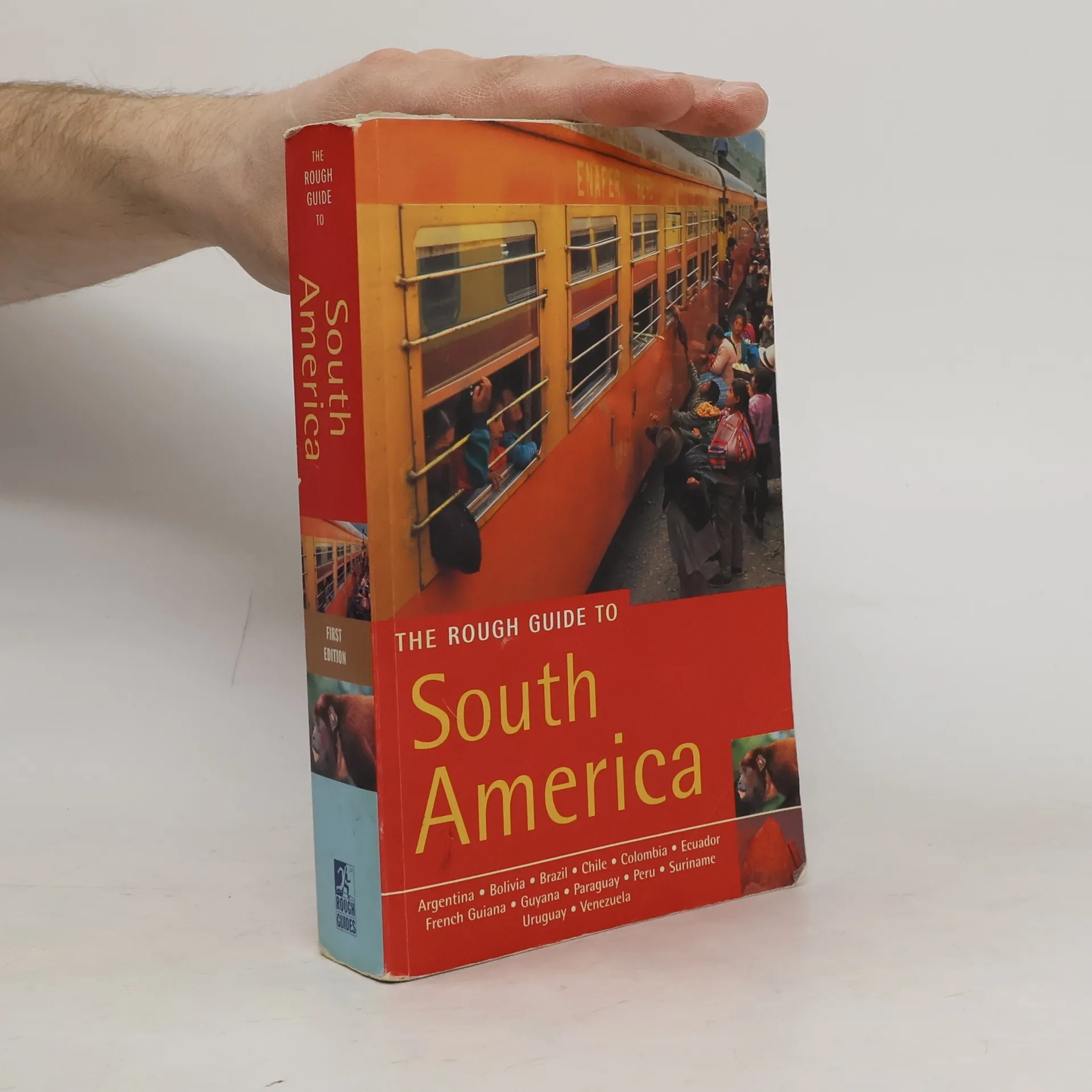
The Rough Guide to Ecuador & the Galápagos Islands
- 441 pages
- 16 hours of reading
Offers recommendations for accomodations, shopping, itineraries, and restaurants in Ecuador and the Galápagos Islands.


Offers recommendations for accomodations, shopping, itineraries, and restaurants in Ecuador and the Galápagos Islands.
Ancient Egypt has gripped the popular imagination like no other country and the lure of its pyramids and the Nile are a magnet for visitors from all over the world. This book provides a concise and fascinating journey from the country’s earliest beginnings right up to the present day. A Traveller’s History of Egypt communicates the magic of the pharaohs alongside a level-headed discussion of Islam for the benefit of modern travellers. The book will span the entire history of Egypt, from the murkiest origins of prehistory right up to the latest developments – all in a style that is as entertaining as it is well-informed. There are few books on the country that attempt this feat, but to do so is perhaps more important today than it has ever been, at a time when an understanding of contemporary Egypt is not merely an advantage for travel there, but a necessity. It will make sense of the major controversies and guide the reader carefully where Egyptologists cannot agree – whether it is the dates of certain kings or the positioning of whole dynasties. A full chronology of major events, a cross-reference historical gazetteer, a list of pharaohs, rulers and presidents, a bibliography, index and historical maps, will add to its accessibility, and afford it the most useful elements of a reference book.
In addition to options in all price ranges for dining and accommodations, this guide features practical information on Ecuador's history, culture, indigenous peoples, and environmental issues. of color photos. 44 maps.
The Rough Guide to Ecuador is your ultimate handbook to this fascinating and dramatically diverse country with complete coverage of the Galapagos islands. A full colour introduction gives an insight into the country''s many highlights from snorkelling in the Galapagos to exploring Quito''s colonial churches. There is plenty of practical advice on a range of activities from learning Spanish in Quito to climbing Volcan Cotopaxi. There are up-to-the-minute reviews of all the best places to stay, eat and drink, plus a brand-new ''Authors'' Picks'' feature to highlight the very best options. The guide includes over fifty maps and expert background on Ecuador''s history, culture, indigenous peoples and environmental issues.The Rough Guide to Ecuador is your perfect companion to this unique country.
A travel guide featuring maps and highlights of Ecuador's attractions, including Quito's colonial center, Zumbahua's markets, and the Amazon rainforest. It offers recommendations for the best hotels, restaurants, bars, cafes, nightlife, and shopping throughout Ecuador.
INTRODUCTION Stretching from the shores of the Caribbean to the icy waters off Tierra del Fuego, South America is a vast and remarkable mosaic of climates, landscapes and peoples. Almost twice the size of Europe, the continent takes in an enormous geographic and cultural diversity, comprising enormous primeval rainforests, vibrant metropolises, stunning mountain ranges, vast desert plains and remote indigenous villages. The thirteen countries that make up South America are fascinating in equal parts for their supranational commonalities and for their differences within individual borders.Geographic realities, earlysettlement patterns, French, Dutch, English and, especially Spanish and Portuguese colonization and their legacies of independent states, have moulded a continent where differences within countries can appear greater than between them. Brazil’s huge northern region, for example, has far more in common – language aside – with the neighbouring portions of the Amazon basin located within Peru or Colombia than it does, say, with Rio de Janeiro. Extreme social and economic disparities are striking, nowhere more so than in the cities where extreme wealth can exist side by side with extreme poverty, the once burgeoning middle classes being squeezed out of existence. South America shares a common history based on its original Amerindian population, European colonization, slavery and immig! ration. Indigenous peoples – whose ancestors migrated to South America thousands of years ago and went on to develop complex societies and rich cultures – are still presences in many parts of the continent, in particular in the central Andes, the Amazon basin and Paraguay. At the beginning of the sixteenth century Spanish and Portuguese explorers established settlements in South America, and soon the continent was divided between European powers – mainly by Spain and Portugal, but with England, France and Holland also staking small territorial claims. To Europe, South America was a land of fabled wealth, but it was seen to lack a sufficient or suitable supply of labour. The colonizing powers soon turned to Africa, and by the mid-nineteenth century millions of enslaved Africans had been introduced to toil in South America’s mines and sugar plantations. With the independence of the former Spanish and Portuguese colonies in the early nineteenth century followed by the gradual suppression of the slave trade and the emancipation of slaves, South America became a target of mass immigration. Irish and German farmers were placed on Argentina’s and Chile’s "Indian frontiers", Italian and Japanese were directed to Brazil’s expanding coffee plantations, while tin, copper and gold mines throughout the continent attracted Cornish miners. Meanwhile, skilled and unskilled workers from throughout Europe headed for burgeoning cities, playing vital roles in the development of South America’s transportation, power and banking networks and industrial capacity. Immigration even played a vital role in the Guianas – the continent’s last European colonies – with the importation by sugar plantations of tens of thousands of East Indian, Javanese and indentured labourers from other lands.