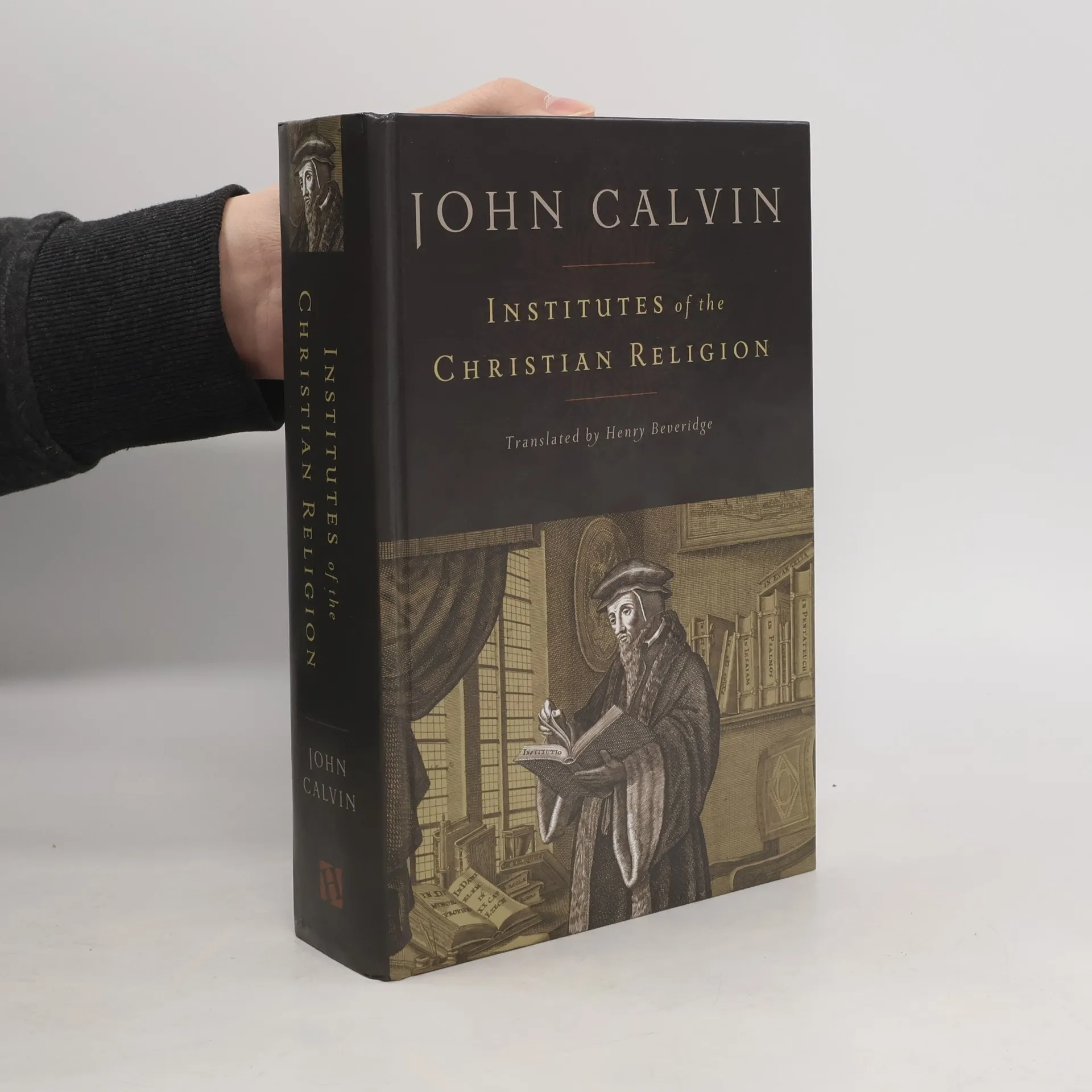
Institutes of the Christian Religion This limited edition of John Calvin's Reformation classic, "Institutes of the Christian Religion," commemorates the 500th anniversary of Calvin's birth in 1509.This beautiful new jacketed cloth volume features: - An eight-page, four-color insert on coated stock, including a frontispiece featuring the title page of the original publication and a timeline of the Reformation and of John Calvin's life... Full description
This is a pre-1923 historical reproduction that was curated for quality. Quality assurance was conducted on each of these books in an attempt to remove books with imperfections introduced by the digitization process. Though we have made best efforts - the books may have occasional errors that do not impede the reading experience. We believe this work is culturally important and have elected to bring the book back into print as part of our continuing commitment to the preservation of printed works worldwide.
In this excerpt, the narrative captures the moment when Jesus enters Jerusalem, stirring the city’s inhabitants who inquire about his identity. The crowds proclaim him as the prophet from Nazareth. Upon entering the temple, Jesus confronts the commercial activities taking place, driving out the merchants and declaring that the temple should be a house of prayer, not a den of robbers. He then heals the blind and lame who come to him. The scene shifts to Mark’s account, where Jesus, after surveying the temple, leaves for Bethany with his disciples. The following day, he encounters a fig tree that bears no fruit, despite its leaves, and curses it, declaring that no one will eat from it again. In Luke’s version, some Pharisees urge Jesus to silence his disciples, but he responds that if they remain quiet, even the stones will cry out. This text is part of a larger historical work, meticulously reconstructed by Forgotten Books, which aims to preserve the original format while addressing imperfections in the aged copies. The publisher emphasizes its commitment to maintaining the integrity of historical texts.
Calvin’s Commentaries are classics of the first order, essential reading for anyone studying a Bible text. Reading Calvin nearly always leads to new insights on a passage. Philip Schaff said of Calvin that he “was an exegetical genius of the first order. His commentaries are unsurpassed for originality, depth, perspicuity, soundness and permanent value. He combined in a very rare degree all the essential qualities of an exegete—grammatical knowledge, spiritual insight, acute perception, sound judgment, and practical tact.”Based on the Calvin Translation Society edition, this version of the Commentaries is optimized for use on a Kindle. Links to commentary on passages are represented compactly in the Table of Contents so you can find commentary on a passage with minimal paging.This edition features an artistic cover, a new promotional introduction, an index of scripture references, links for scripture references to the appropriate passages, and a hierarchical table of contents which makes it possible to navigate to any part of the book with a minimum of page turns.
Unlike some other reproductions of classic texts (1) We have not used OCR(Optical Character Recognition), as this leads to bad quality books with introduced typos. (2) In books where there are images such as portraits, maps, sketches etc We have endeavoured to keep the quality of these images, so they represent accurately the original artefact. Although occasionally there may be certain imperfections with these old texts, we feel they deserve to be made available for future generations to enjoy.
The power of John Calvin's study of the first thirteen chapters of Acts is captured in this superb translation by W. J. G. McDonald. Precise and authoritative, yet lucid and very readable, this volume will enrich all who are interested in understanding th
Die Theologie des Römerbriefes bildet das Fundament der protestantischen Lehre, besonders bei Calvin, dessen Kommentar zwischen 1536 und 1538 entstand. Er prägt nicht nur sein Schriftverständnis, sondern auch zentrale dogmatische Fragen wie Prädestination und das Verhältnis der Kirche zu Israel. Calvins Kommentar gilt als besonders klar und prägnant, übertrifft frühere Auslegungen und integriert humanistische Einflüsse. Seine rhetorische Methode zielt darauf ab, die Leser durch präzise Argumentation zu überzeugen und zeigt, dass die Schrift allgemeine Wahrheit kommunizieren möchte.
Johannes Calvin (1509-1564) war ein bedeutender französischer Theologe und Reformator, der den Calvinismus prägte. Seine Lehren zur Prädestination und Gottes Souveränität beeinflussten viele Kirchen weltweit. Er war ein produktiver Schriftsteller und polemischer Denker, der auch die Zehn Gebote thematisierte.
Johannes Calvin (1509-1564) war ein einflussreicher französischer Theologe und Reformator, der das System des Calvinismus prägte. Seine Lehren zur Prädestination und Gottes Souveränität beeinflussten viele Kirchen weltweit. Neben seiner "Unterweisung in der christlichen Religion" verfasste er zahlreiche theologische Werke, einschließlich einer Auslegung des Johannesevangeliums.
Johannes Calvin (1509-1564) war ein französischer Theologe und Reformator, der den Calvinismus prägte, insbesondere die Lehren von Prädestination und Gottes Souveränität. Er war ein produktiver Schriftsteller und polemischer Denker, dessen Briefe und Werke, einschließlich seiner "Unterweisung in der christlichen Religion", weitreichenden Einfluss hatten. Dies ist der zweite von drei Bänden seines Briefwechsels.
Johannes Calvin (1509-1564) war ein einflussreicher französischer Theologe und Reformator, der das System des Calvinismus prägte. Seine Lehren über Prädestination und Gottes Souveränität beeinflussten zahlreiche Kirchen weltweit. Neben seiner "Unterweisung in der christlichen Religion" verfasste er auch Kommentare zu biblischen Büchern, einschließlich Philemon und Titus.
Calvins Hauptwerk ist eine der bedeutendsten Schriften der Christenheit und bietet eine umfassende theologischen Sicht des christlichen Glaubens. Die lesefreundliche Übersetzung von Otto Weber richtet sich an Interessierte an Calvin sowie an die Theologie der Reformatoren, einschließlich Fachleuten und Lehrenden.
Johannes Calvin (1509-1564) war ein einflussreicher französischer Theologe und Reformator, der das System des Calvinismus prägte. Seine Lehren zur Prädestination und Gottes Souveränität beeinflussten viele Kirchen weltweit. Neben seiner "Unterweisung in der christlichen Religion" verfasste er zahlreiche theologische Werke, einschließlich Kommentaren zum Römerbrief.
Johannes Calvin (1509-1564) war ein einflussreicher französischer Theologe und Reformator, der den Calvinismus prägte. Er entwickelte Lehren zur Prädestination und Gottes Souveränität. In diesem zweiten Band seiner Werke behandelt er den Propheten Jesaja und ist bekannt für seine theologischen Schriften und Briefe an andere Reformatoren.
Johannes Calvin (1509-1564) war ein französischer Theologe und Reformator, der den Calvinismus prägte, insbesondere die Lehren von Prädestination und Gottes Souveränität. Er war ein produktiver Schriftsteller und polemischer Denker, dessen Briefe und Werke, einschließlich seiner "Unterweisung in der christlichen Religion", weitreichenden Einfluss hatten. Dies ist der dritte Band seines Briefwechsels.
Johannes Calvin war ein französischer Theologe und Reformator, der das System des Calvinismus prägte. Er lehrte Prädestination und die Souveränität Gottes. Calvin war ein produktiver Schriftsteller und führte zahlreiche theologische Debatten. In diesem Werk behandelt er die Briefe an die Hebräer und Philipper.
Johannes Calvin (1509-1564) war ein einflussreicher französischer Theologe und Reformator, der den Calvinismus prägte. Er entwickelte Lehren zur Prädestination und Gottes Souveränität. Bekannt für seine polemischen Schriften, verfasste er zahlreiche theologische Werke, darunter Kommentare zum Propheten Jesaja. Dies ist der erste von zwei Bänden.
Johannes Calvin (1509-1564) war ein französischer Theologe und Reformator, der den Calvinismus prägte, insbesondere die Lehren von Prädestination und Gottes Souveränität. Er war ein produktiver Schriftsteller und polemischer Denker, dessen Briefe und Werke, einschließlich seiner "Unterweisung in der christlichen Religion", weitreichenden Einfluss hatten. Dies ist der erste von drei Bänden seines Briefwechsels.
Johannes Calvin (1509-1564) war ein bedeutender französischer Theologe und Reformator, der das calvinistische System der christlichen Theologie prägte. Seine Lehren zur Prädestination und Gottes Souveränität beeinflussten zahlreiche Kirchen weltweit. In diesem Werk behandelt er die Apostelgeschichte und verfasste zahlreiche theologische Schriften.
Johannes Calvin (1509-1564) war ein bedeutender französischer Theologe und Reformator, der den Calvinismus prägte. Er lehrte Prädestination und die Souveränität Gottes. Calvin war ein produktiver Schriftsteller und polemischer Denker, der mit anderen Reformatoren korrespondierte. In diesem Werk analysiert er die Briefe von Judas, Jakobus und Johannes.
Johannes Calvin (1509-1564) war ein französischer Theologe und Reformator, der das System des Calvinismus prägte. Er lehrte Prädestination und die Souveränität Gottes. Calvin war ein produktiver Schriftsteller und führte zahlreiche theologische Debatten. In diesem Werk behandelt er die Petrusbriefe der Bibel.
Johannes Calvin (1509-1564) war ein einflussreicher französischer Theologe und Reformator, der das System des Calvinismus prägte. Er lehrte Prädestination und Gottes Souveränität. Bekannt für seine polemischen Schriften, verfasste er zahlreiche theologische Werke, darunter Kommentare zu den Psalmen. Dies ist der erste Band seiner Psalmenauslegung.
Johannes Calvin (1509-1564) war ein bedeutender französischer Theologe und Reformator, der das System des Calvinismus prägte. Seine Lehren über Prädestination und Gottes Souveränität beeinflussten zahlreiche Kirchen weltweit. In diesem Werk analysiert er die Briefe an die Epheser und Galater und bietet tiefgehende theologische Einsichten.
'Gottes Herrlichkeit leuchtet in der Schöpfung auf', schreibt Johannes Calvin. Der Reformator wird oft als der harte, unbarmherzige und auch schwierige Theologe dargestellt. Dabei wird meistens übersehen, dass er die Gabe hatte, poetisch und bildhaft zu formulieren. Diese 'andere Seite' des Reformers zeigt das vorliegende Geschenkbuch. Seine Aussagen zur Schöpfung und zum Menschen sind auch noch heute aktuell. In Verbindung mit schönen Fotografien durch den Jahreslauf ist dies ein anspruchsvolles Geschenk für christlich orientierte Leserinnen und Leser zum Calvin-Jahr.
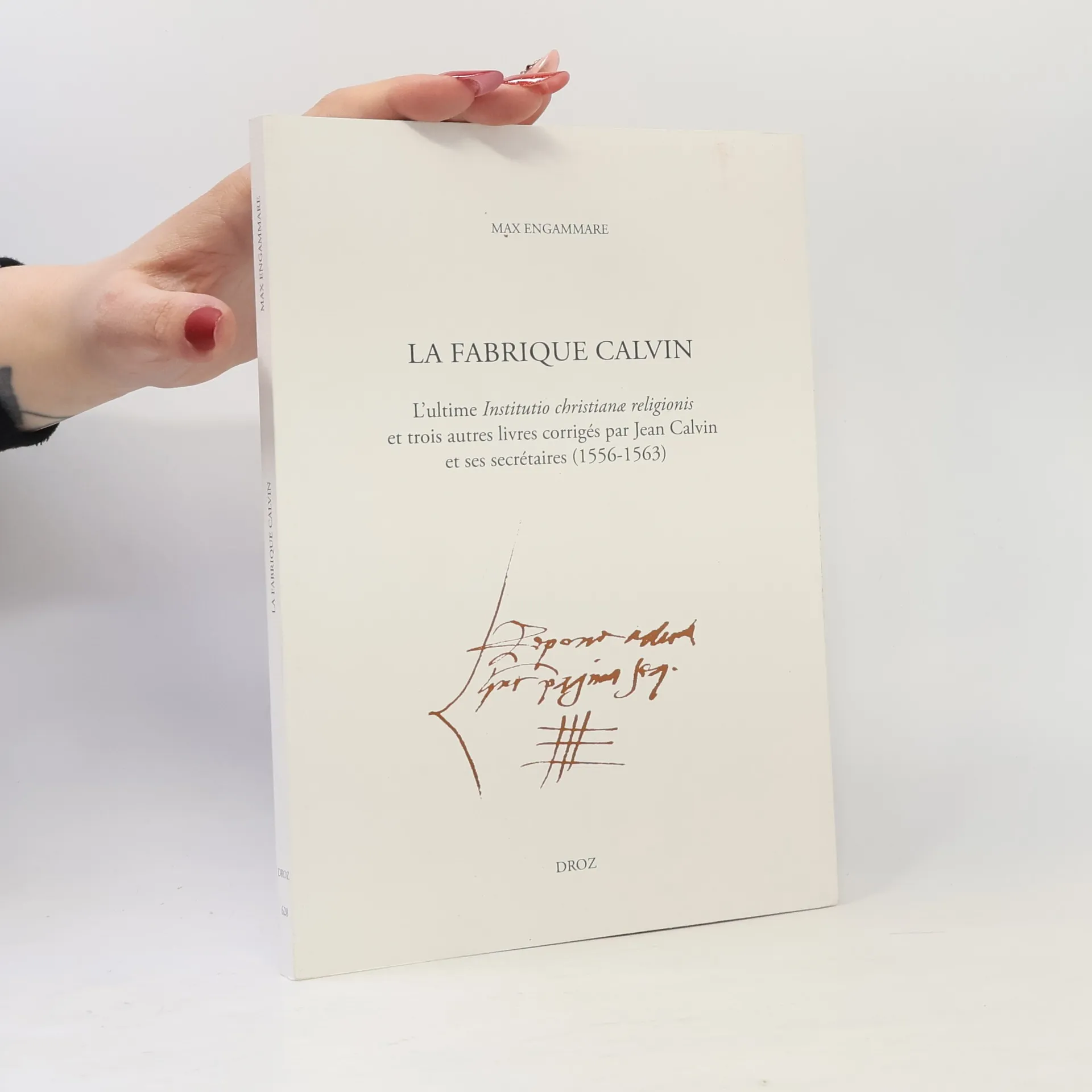
L'ultime Institutio christianae religionis et trois autres livres corrigés par Jean Calvin et ses secrétaires (1556-1563)
224 pages
8 hours of reading
En décembre 2019 et au cours de l'année 2020, Max Engammare a eu l'opportunité de découvrir quatre livres latins de Calvin, annotés par lui et deux secrétaires, dont son frère Antoine. Ces œuvres incluent l'Institution de la religion chrétienne, le commentaire sur les Psaumes, la seconde version du commentaire sur Ésaïe et le commentaire des Épîtres pauliniennes. En parallèle de son travail chez Droz, il a mené une enquête sur les premiers acheteurs, comme Jean Crespin, avant de rédiger cet ouvrage. Le lecteur découvrira pour la première fois le processus de travail de Calvin, ses corrections et son souci de laisser une œuvre affinée, à l'image des humanistes tels qu'Érasme et Montaigne. Des inflexions de sa pensée théologique et des éclaircissements précieux sont également mis en lumière. L'auteur présente ce qu'il appelle la Fabrique Calvin, où le Réformateur a établi des stratégies pour préserver son activité intellectuelle et spirituelle. Toutes les annotations importantes sont fournies et traduites, tandis que les 104 annotations de son exemplaire de la dernière version latine de l'Institution sont notées, annotées et traduites en annexe.
V úvodu svého spisku (1566) švýcarský reformátor Jan Kalvín píše: Svátost Večeře našeho Pána Ježíše již dlouho obestírají závažné omyly a navíc se v posledních letech stala také předmětem různic a vášnivých sporů. Není potom divu, že mnoho slabých svědomí dnes neví, čeho se držet, zmítá se v pochybnostech a bezradně vyčkává, až se spory se vyřeší a Boží služebníci dospějí k nějaké dohodě. Pochopení tajemství večeře Páně úzce souvisí s naší spásou a je velmi nebezpečné nemít v této věci náležitou jistotu. Situace se od té doby mnoho nezměnila, a proto je Kalvínovo pojednání živou výzvou i pro naši současnost. Dokládají to i průvodní statě překladatele Miloše Rejchrta. Úvodní studie "Příspěvek Jana Kalvína k protestantskému pojetí večeře Páně" se ohlíží do minulosti a uvádí čtenáře do historických souvislostí, naopak studie závěrečná, s názvem "Chvála apendixu aneb Kalvín to věděl", vychází ze současnosti a zabývá se otázkou, jak večeři Páně praktikujeme a chápeme dnes a zda je pro nás s
V březnu 1536 vyšla v Basileji Instituce křesťanského náboženství. Napsal ji sedmadvacetiletý Jan Kalvín; tímto činem vstupoval na sráznou cestu reformátora. Kalvínova Instituce, zejména její první vydání, jež se nyní dostává v přetlumočení profesora Komenského fakulty Dr. F. M. Dobiáše do rukou českému čtenáři, byla myšlena jednak jako ohnivý protest proti utlačování a vyhlazování vyznavačů evangelia, jednak jako příručka, uvádějící do podstatného obsahu biblické zvěsti. První účel připomíná jmenovitě výmluvný list francouzskému králi Františku I., předeslaný celému oddílu, jeden z nejmohutnějších dokladů k dějinám zápasu o svobodu a spravedlnost mezi lidmi. Druhému a nejvlastnějšímu poslání knihy vyhovuje její logická členěnost methodicky výchovná. „Třebaže svaté Písmo obsahuje dokonalé učení,“ napsal sám původce Instituce, „učení, k němuž nelze pranic přičiniti, přece ten, kdo není v Písmu vycvičen, potřebuje uvedení a zacvičení, aby našel to, co se v Písmu má hledat… Proto jsem napsal tuto knihu, a to latinsky, aby mohla sloužiti všem vzdělancům ze všech národů.“ Jako summa nejhlavnějších důsledků reformačního vystižení biblické zvěsti zůstala Kalvínova Instituce knihou živou. (am)