Explore the latest books of this year!
Bookbot

John Brockman

    February 16, 1941

    This author has spanned art, science, books, software, and the internet throughout his extensive career. In the 1960s, he laid the groundwork for "intermedia kinetic environments" across art, theater, and commerce. He founded the Edge Foundation and edits the acclaimed website Edge, a platform where leading thinkers analyze cutting-edge science, defining what he terms the "Third Culture." His work explores the intersection of diverse fields, highlighting the profound connections between disciplines and the vanguard of contemporary thought.

    John Brockman
    The Universe
    The Third Culture
    Possible minds : twenty-five ways of looking at AI
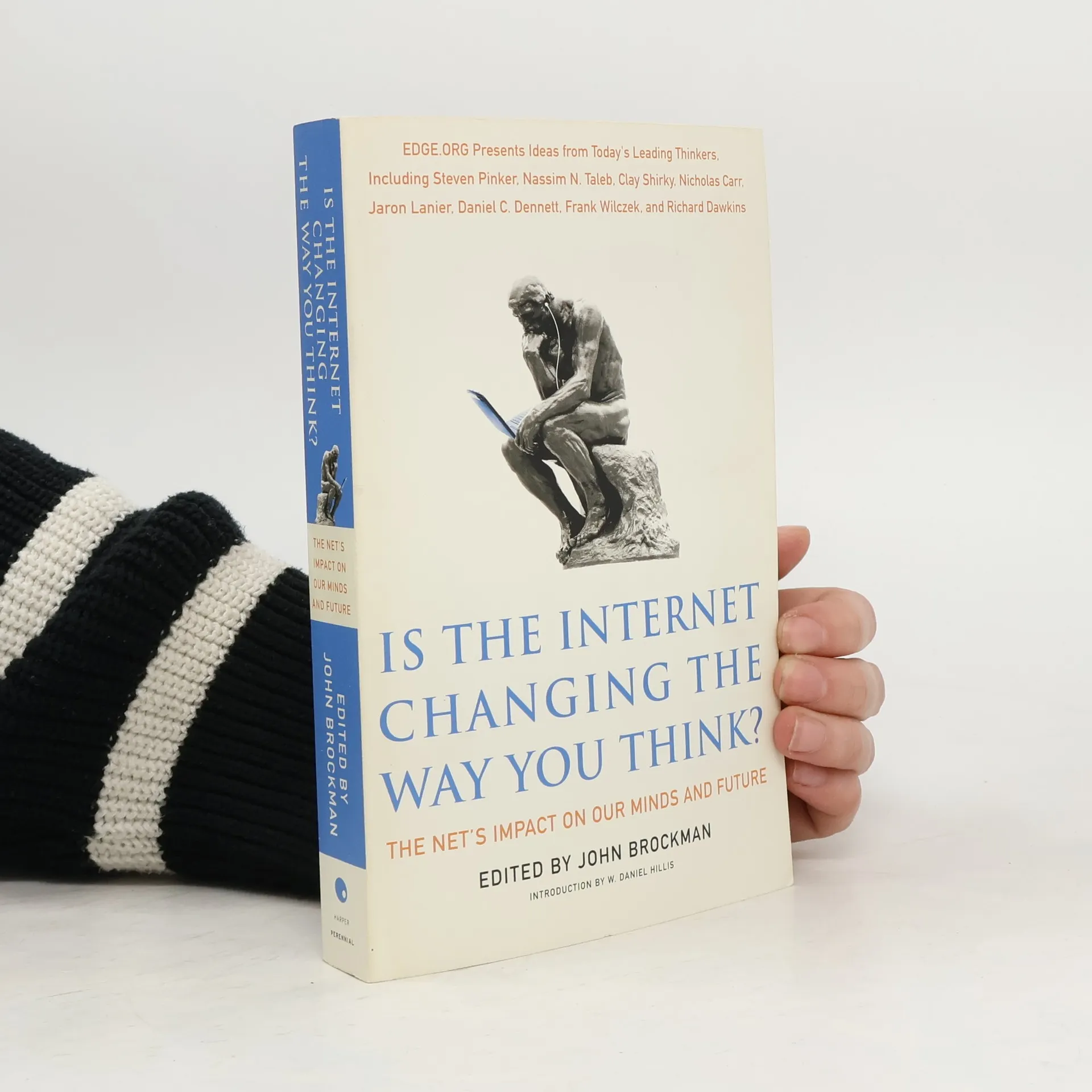
    How is the Internet Changing the Way You Think?
    This explains everything : deep, beautiful, and elegant theories of how the world woks
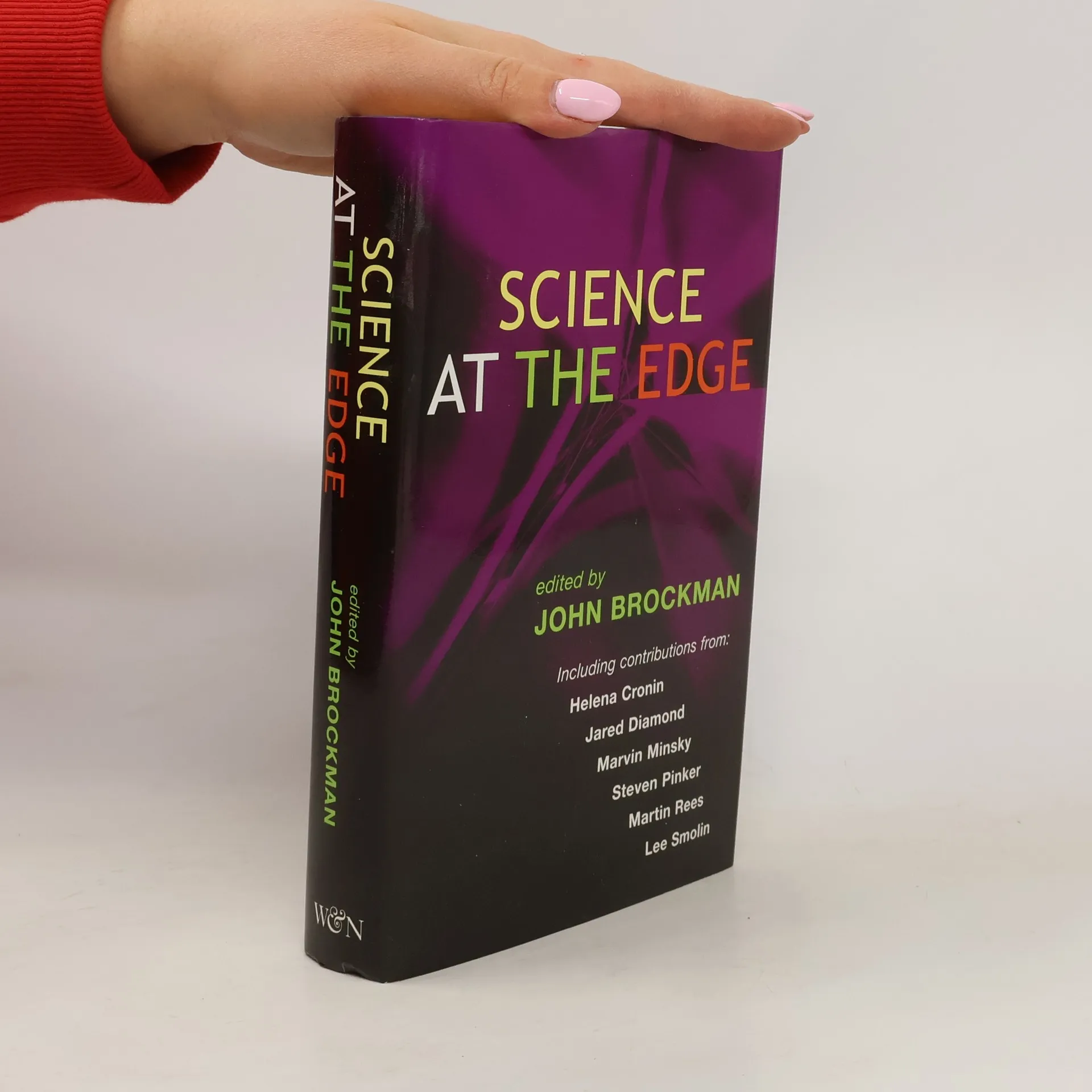
    Science at the Edge
    • Science at the Edge

      • 408 pages
      • 15 hours of reading

      Who are the cutting-edge thinkers of today?John Brockman argues that scientists - through their research and writing - are creating a 'third culture' that recalls the Rennaissance ideal of a single intellectual whole. Combining this holistic awareness of the humanities and science, these are the men and women shaping modern thought.The result of conversations with twenty-two of today's top intellectuals, the book includes contributions from Jared Diamond on population theory; Steven Pinker on human nature; Martin Rees on the future of the universe.SCIENCE AT THE EDGE introduces us to the best scientific minds of the 21st century, giving insight and debate into how best to take humanity forward.
      Science at the Edge
      3.5
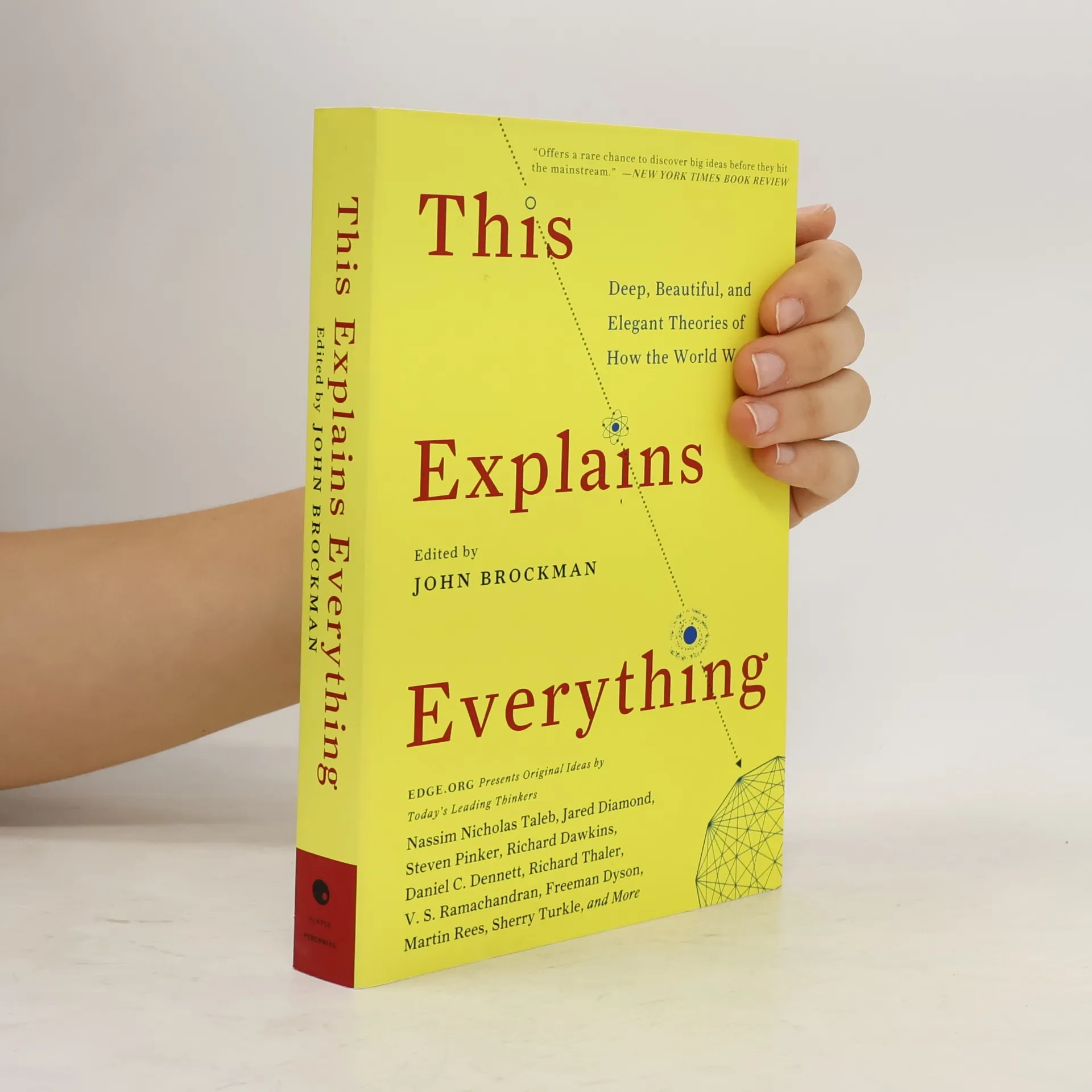
    • In This Explains Everything, John Brockman, founder and publisher of Edge.org, asked experts in numerous fields and disciplines to come up with their favorite explanations for everyday occurrences. Why do we recognize patterns? Is there such a thing as positive stress? Are we genetically programmed to be in conflict with each other? Those are just some of the 150 questions that the world's best scientific minds answer with elegant simplicity. With contributions from Jared Diamond, Richard Dawkins, Nassim Taleb, Brian Eno, Steven Pinker, and more, everything is explained in fun, uncomplicated terms that make the most complex concepts easy to comprehend.

      This explains everything : deep, beautiful, and elegant theories of how the world woks
      3.0
    • A lively and eclectic sequence of more than 150 concise and intellectually challenging essays in which the world's leading thinkers reflect on how the internet has changed their modes of thought.

      How is the Internet Changing the Way You Think?
      3.7
    • Science world luminary John Brockman assembles twenty-five of the most important scientific minds, people who have been thinking about the field artificial intelligence for most of their careers, for an unparalleled round-table examination about mind, thinking, intelligence and what it means to be human

      Possible minds : twenty-five ways of looking at AI
      4.1
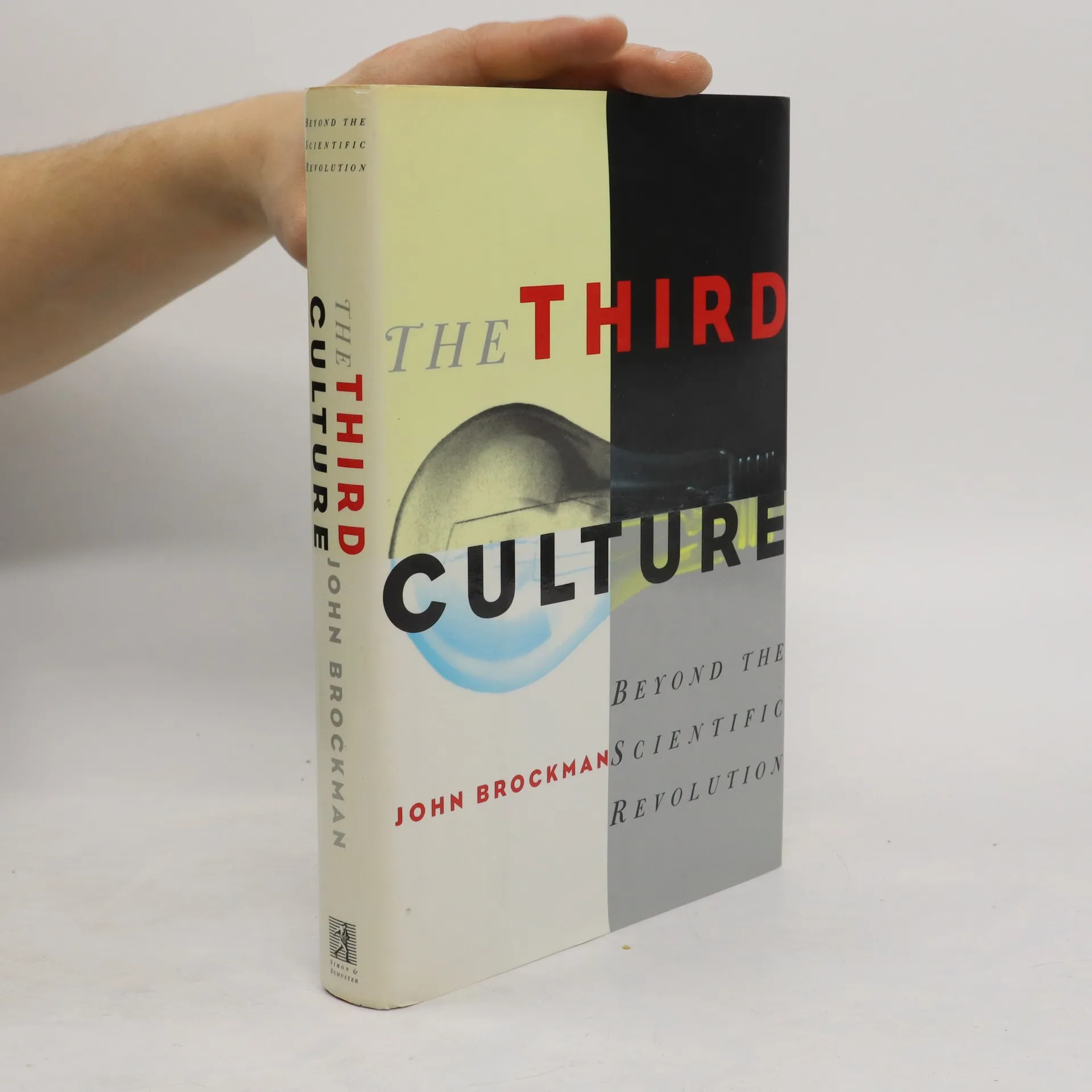
    • The Third Culture

      • 413 pages
      • 15 hours of reading

      The Third Culture is an eye-opening look at the intellectual culture of today - in which science, not literature or philosophy, takes center stage in the debate over human nature and the nature of the universe. Thirty-five years ago, C. P. Snow, in a now famous essay, wrote about the polarization of the "two cultures" - literary intellectuals on the one hand, and scientists on the other. Although he hoped for the emergence of a "third culture" that would bridge the gap, it is only recently - when books such as Daniel C. Dennett's Consciousness Explained, Stephen Jay Gould's Wonderful Life, Stephen Hawking's A Brief History of Time, Roger Penrose's The Emperor's New Mind, and Steven Pinker's The Language Instinct became bestsellers - that science has changed the intellectual landscape.

      The Third Culture
      3.7
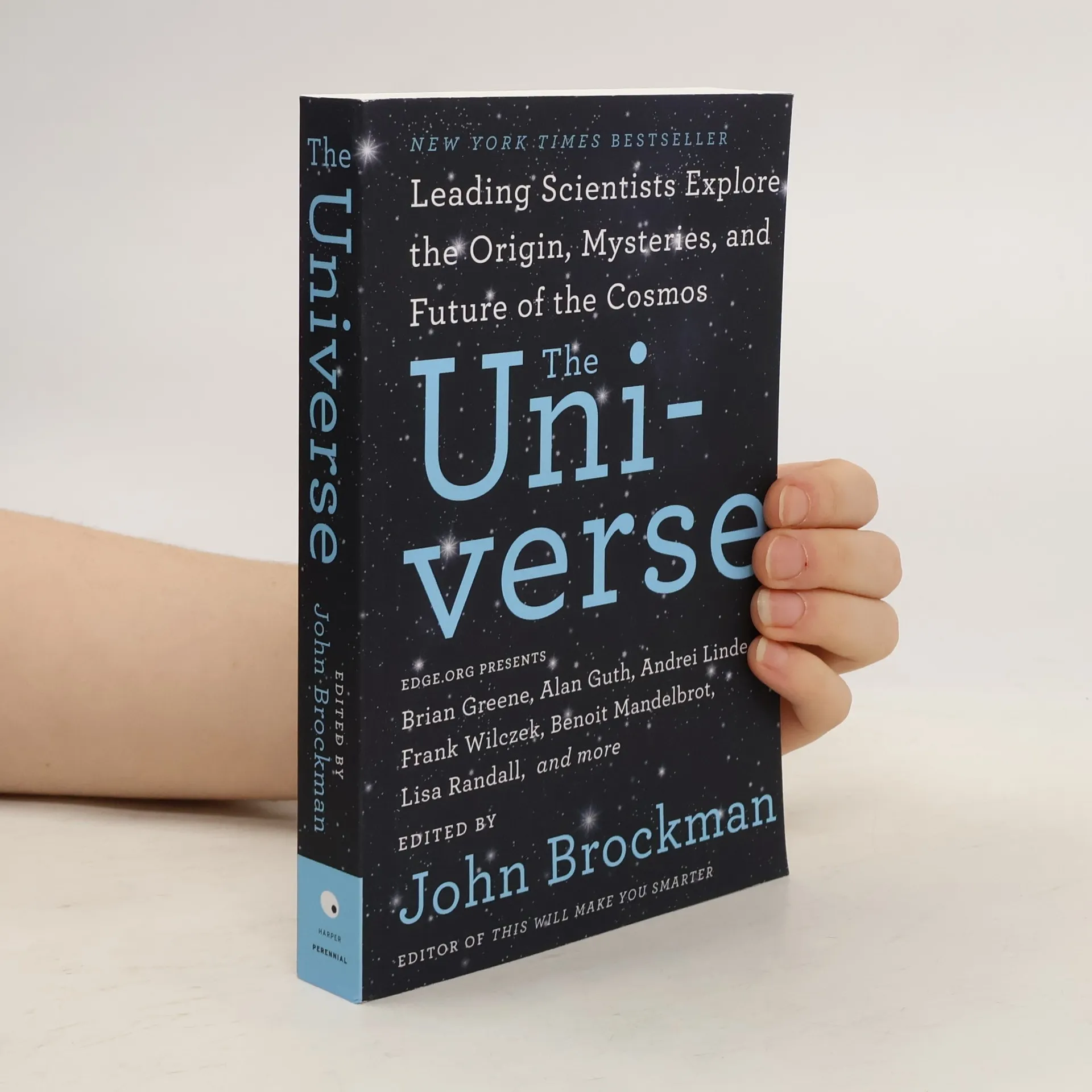
    • The Universe

      • 379 pages
      • 14 hours of reading

      John Brockman brings together the world's best-known physicists and science writers—including Brian Greene, Walter Isaacson, Nobel Prize-winner Frank Wilczek, Benoit Mandelbrot, and Martin Rees—to explain the universe in all wondrous splendor. In The Universe, today's most influential science writers explain the science behind our evolving understanding of the universe and everything in it, including the cutting edge research and discoveries that are shaping our knowledge. Lee Smolin reveals how math and cosmology are helping us create a theory of the whole universe. Benoit Mandelbrot looks back on a career devoted to fractal geometry. Neil Turok analyzes the fundamental laws of nature, what came before the big bang, and the possibility of a unified theory. Seth Lloyd investigates the impact of computational revolutions and the informational revolution. Lawrence Krauss provides fresh insight into gravity, dark matter, and the energy of empty space. Brian Greene and Walter Isaacson illuminate the genius who revolutionized modern science: Albert Einstein. And much more. Explore the universe with some of today's greatest minds: what it is, how it came into being, and what may happen next.

      The Universe
      4.0
    • My Einstein

      • 288 pages
      • 11 hours of reading

      Albert Einstein’s bold mark on our understanding of the world, which has persisted now for more than a century, shows no sign of fading. On the contrary, Einstein and his work promise to inspire, enlighten, and confound us for decades—indeed, for centuries—to come.In this fascinating volume, today’s foremost scientists discuss their own versions and visions of how he has influenced their worldviews, their ideas, their science, and their professional and personal lives. These twenty-four essays are a testament to the power of scientific legacy and are essential reading for scientist and layperson alike.Contributors • Roger Highfield on the Einstein myth• John Archibald Wheeler on his meetings with Einstein• Gino C. Segrè, Lee Smolin, and Anton Zeilinger on Einstein’s difficulties with quantum theory• Leon M. Lederman on the special theory of relativity• Frank J. Tipler on why Einstein should be seen as a scientific reactionary rather than a scientific revolutionary

      My Einstein
      3.9
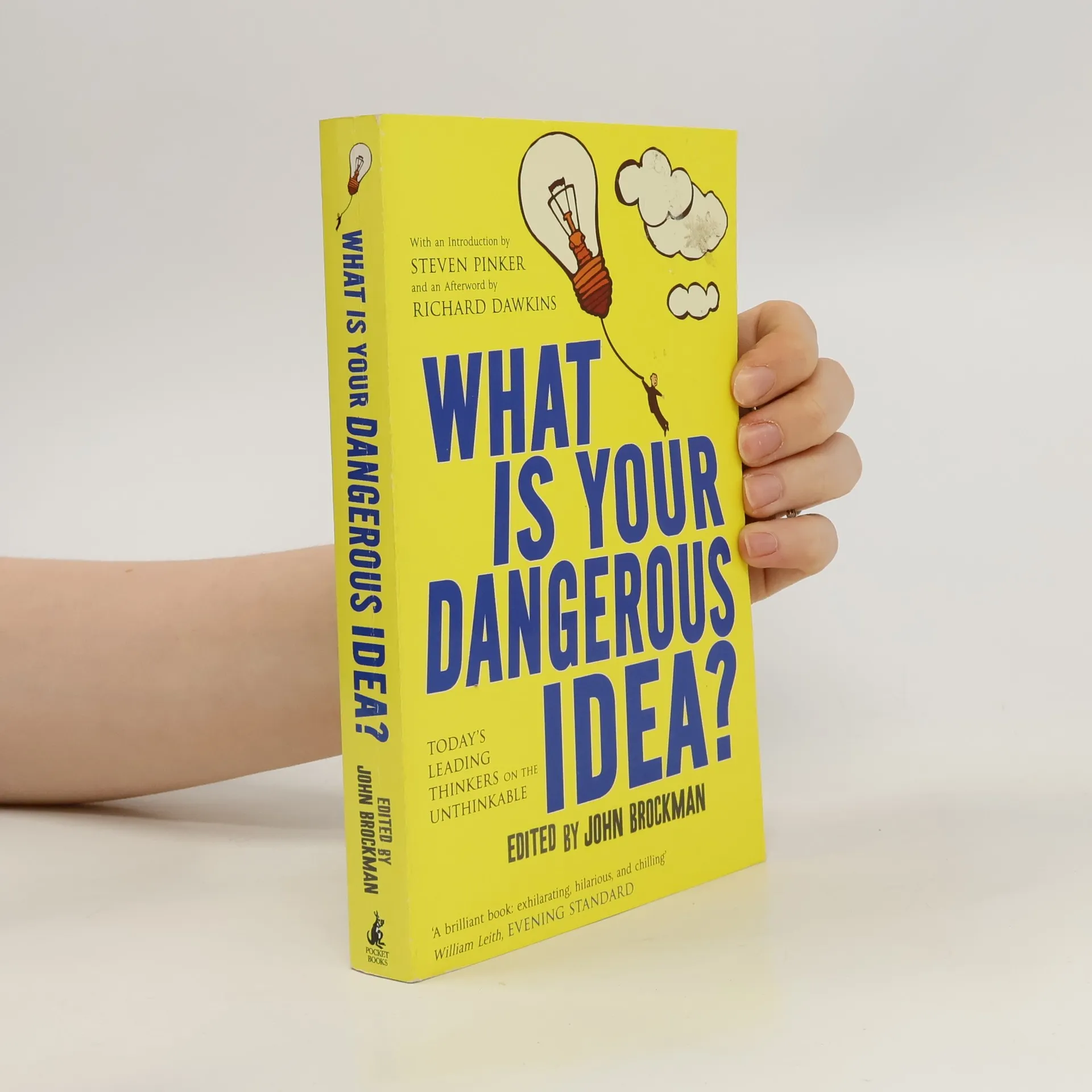
    • What is your dangerous idea?

      • 320 pages
      • 12 hours of reading

      The history of science is replete with ideas that were considered socially, morally or emotionally dangerous in their time. The Copernican and Darwinian revolutions are obvious examples - radical, brilliant insights that did not so much push the envelope as rip it into shreds. These ideas were dangerous because they challenged our comfort zone. But what are the dangerous ideas of the twenty-first century? Which theories do the world's leading thinkers and scientists regard as too hot to handle - not because the idea might be false, but because it might turn out to be true? Collecting together the very best contributions to the renowned Edge.org question from the most eminent respondents, What is Your Dangerous Idea? is another endlessly fascinating and provocative insight into the bleeding-edge of intellectual endeavour

      What is your dangerous idea?
      3.8
    • Today's most visionary thinkers reveal cutting-edge scientific ideas and breakthroughs essential for understanding our world. Scientific advancements transform our comprehension across various fields, including technology, medical research, neuroscience, psychology, physics, economics, anthropology, climatology, and genetics. However, amidst the overwhelming information, identifying truly revolutionary concepts can be challenging. To highlight significant new theories and discoveries, John Brockman, publisher of Edge.org, posed a crucial question to 198 leading minds: What recent scientific news do you find most interesting, and why is it important? Insights include Pulitzer Prize-winning author Jared Diamond discussing complex problems, Carlo Rovelli on black holes, and Steven Pinker on human progress quantification. TED curator Chris J. Anderson reflects on the global brain's growth, while Lisa Randall emphasizes the true measure of breakthroughs. Nobel laureate Frank Wilczek explains how mastery of matter will shape the century, and philosopher Rebecca Goldstein addresses the underestimation of female genius. Music legend Peter Gabriel advocates for bridging imagination and reality, and Freeman Dyson highlights how small upstarts can rival billion-dollar projects. Additional contributions come from Nobel laureate John C. Mather, Bill Joy, Kevin Kelly, Alison Gopnik, Matt Ridley, George Church, Jim Holt, and anthropologist H

      Know this. Today's most interesting and important scientific ideas, discoveries, and developments
      3.8
    • This will make you smarter

      • 448 pages
      • 16 hours of reading

      This title includes contributions from Richard Dawkins, Stephen Pinker, Daniel Dennett and Brian Eno among many others. It offers ideas, strategies and arguments that will help all of us understand our world and its future.

      This will make you smarter
      3.8
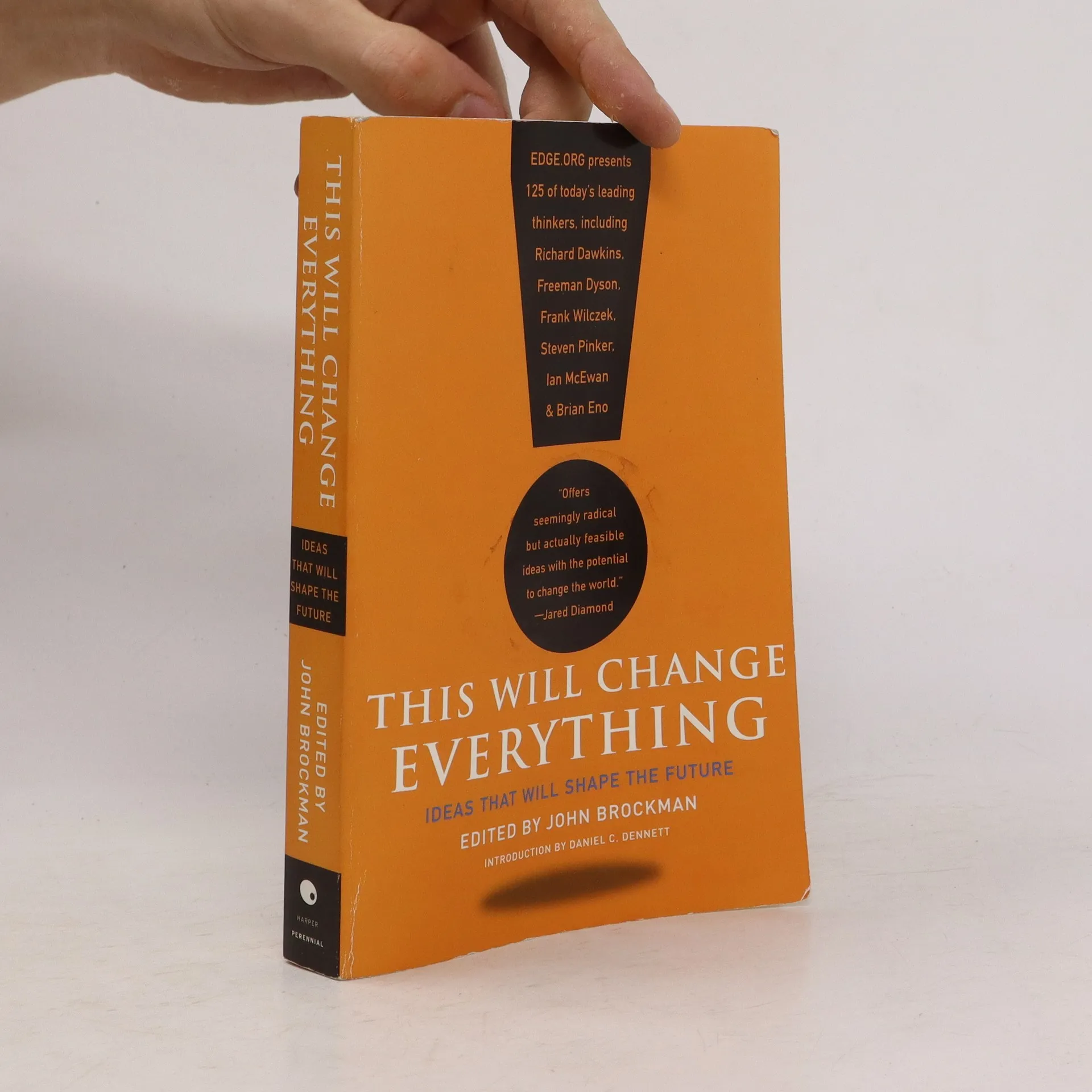
    • This Will Change Everything

      • 390 pages
      • 14 hours of reading

      “ This Will Change Everything offers seemingly radical but actually feasible ideas with the potential to change the world.”—Jared Diamond, Pulitzer Prize-winning author of Guns, Germs, and Steel Editor John Brockman continues in the same vein as his popular compilations What Are You Optimistic About and What Have You Changed Your Mind About with This Will Change Every thing. Brockman asks 150 intellectual superstars “what game-changing scientific ideas and developments do you expect to live to see?” Their fascinating responses are collected here, from bestselling author of Atonement Ian McEwan to Nobel Prize-winning physicist Frank Wilczek to electronic music pioneer Brian Eno to writer, actor, director, and activist Alan Alda.

      This Will Change Everything
      3.8
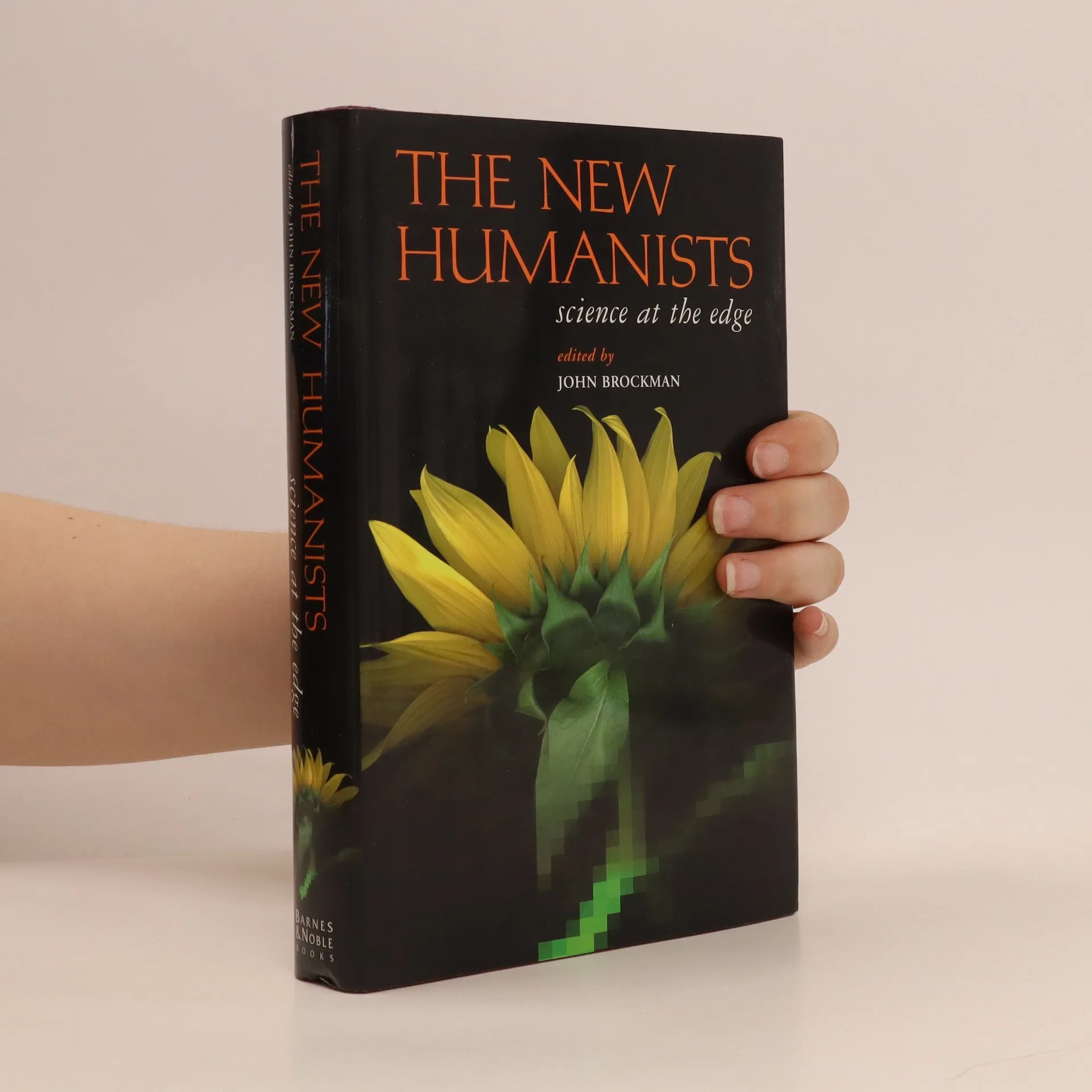
    • The New Humanists

      • 416 pages
      • 15 hours of reading

      Collects essays by a variety of top scientists discussing the unique contributions each of them are making to the development of modern thought, in an anthology that seeks to forge links between science and the humanities.

      The New Humanists
      3.7
    • What Have You Changed Your Mind About?

      Today's Leading Minds Rethink Everything

      • 416 pages
      • 15 hours of reading

      The narrative explores the theme of adaptability and the evolution of thought, emphasizing that even the most brilliant minds can reconsider their beliefs and decisions. It delves into the complexities of human reasoning, illustrating how experiences and new information can lead to significant shifts in perspective. Through various examples, the book highlights the importance of being open to change and the value of questioning one's own assumptions.

      What Have You Changed Your Mind About?
      3.7
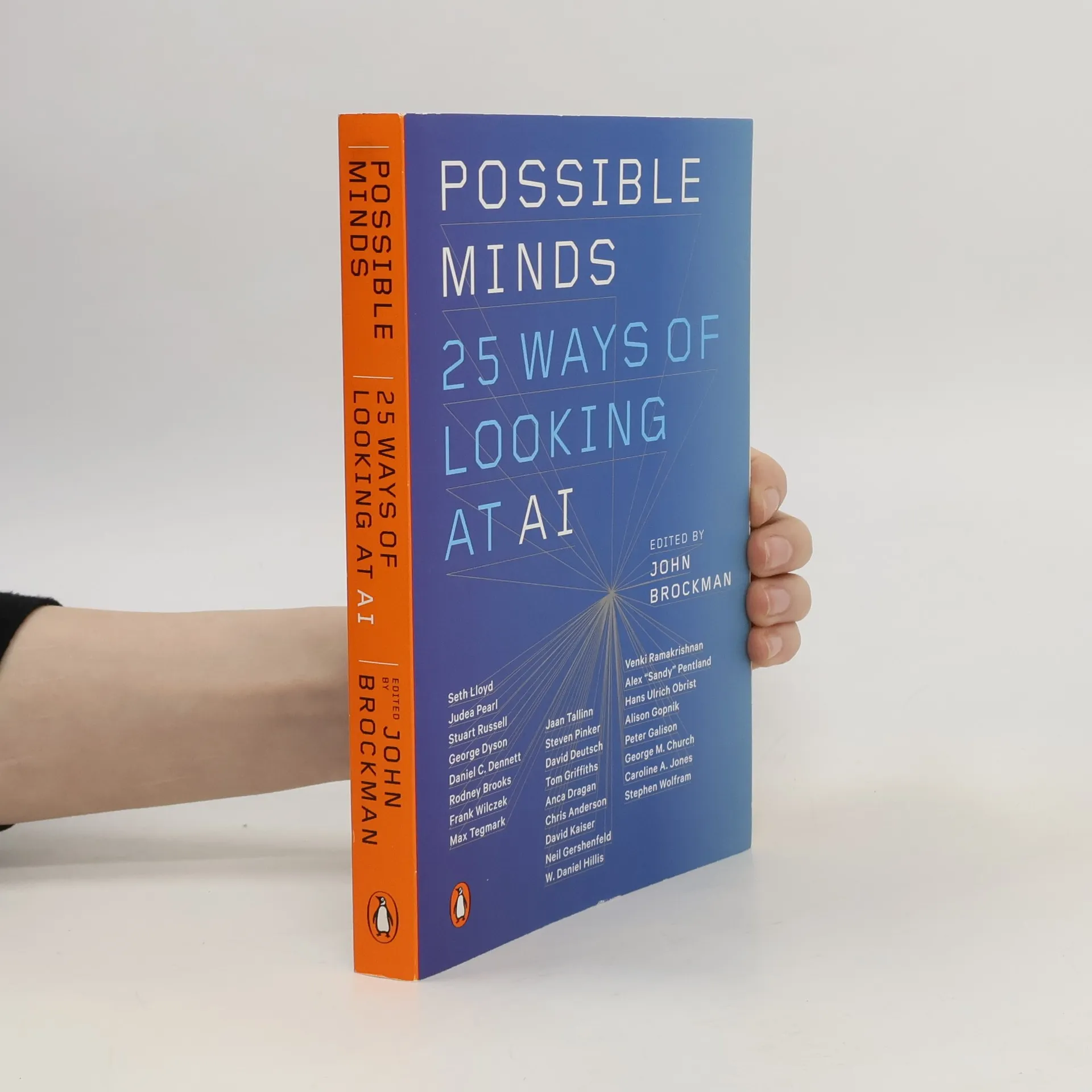
    • Possible Minds

      • 320 pages
      • 12 hours of reading

      Science world luminary John Brockman assembles twenty-five of the most important scientific minds, people who have been thinking about the field artificial intelligence for most of their careers, for an unparalleled round- table examination about mind, thinking, intelligence and what it means to be human--

      Possible Minds
      3.7
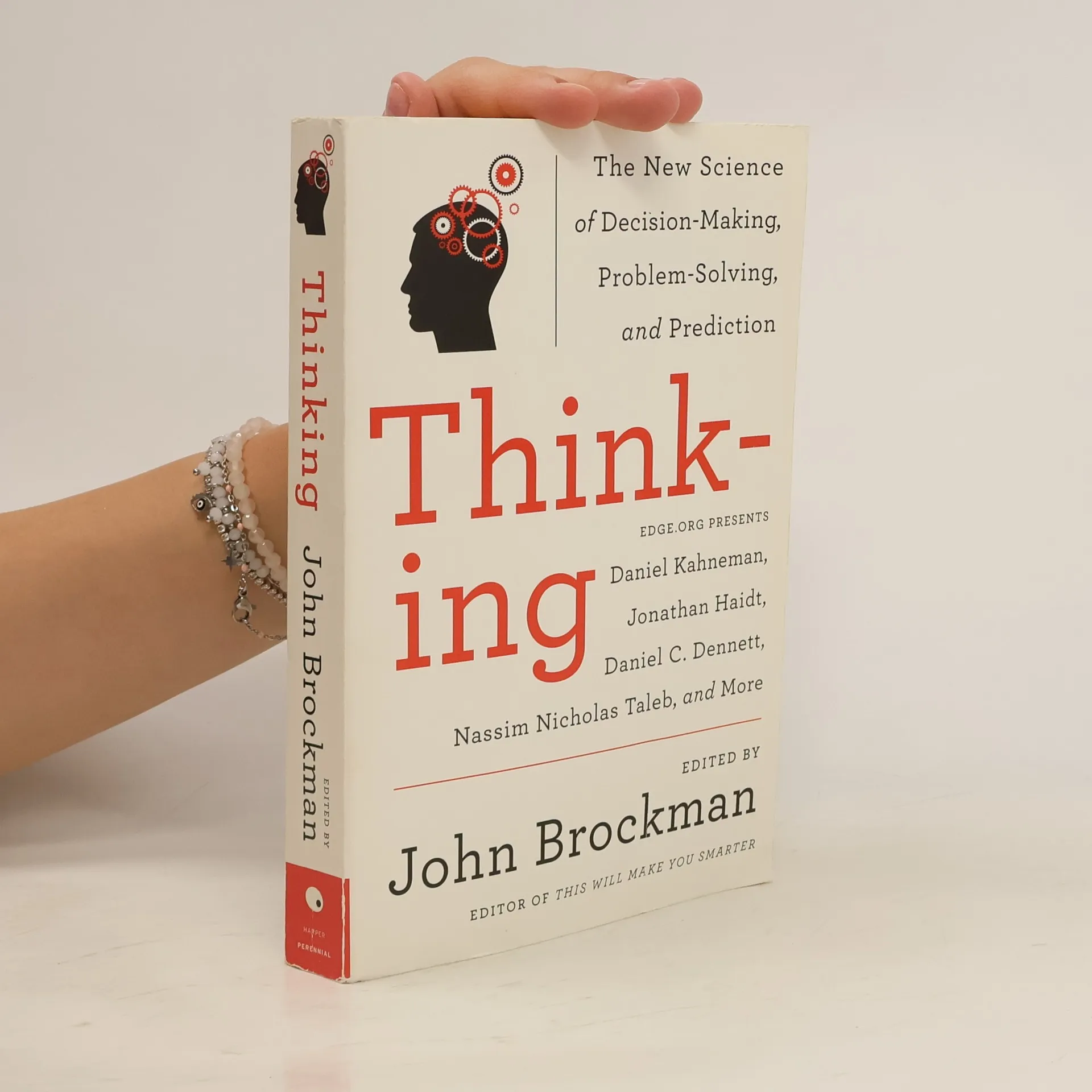
    • Thinking

      • 424 pages
      • 15 hours of reading

      Unlock your mind From the bestselling authors of Thinking, Fast and Slow; The Black Swan; and Stumbling on Happiness comes a cutting-edge exploration of the mysteries of rational thought, decision-making, intuition, morality, willpower, problem-solving, prediction, forecasting, unconscious behavior, and beyond. Edited by John Brockman, publisher of Edge.org ("The world's smartest website"—The Guardian), Thinking presents original ideas by today's leading psychologists, neuroscientists, and philosophers who are radically expanding our understanding of human thought. Daniel Kahneman on the power (and pitfalls) of human intuition and "unconscious" thinking • Daniel Gilbert on desire, prediction, and why getting what we want doesn't always make us happy • Nassim Nicholas Taleb on the limitations of statistics in guiding decision-making • Vilayanur Ramachandran on the scientific underpinnings of human nature • Simon Baron-Cohen on the startling effects of testosterone on the brain • Daniel C. Dennett on decoding the architecture of the "normal" human mind • Sarah-Jayne Blakemore on mental disorders and the crucial developmental phase of adolescence • Jonathan Haidt, Sam Harris, and Roy Baumeister on the science of morality, ethics, and the emerging synthesis of evolutionary and biological thinking • Gerd Gigerenzer on rationality and what informs our choices

      Thinking
      3.7
    • What are You Optimistic About?

      • 400 pages
      • 14 hours of reading

      In an age too often marked by anxiety and pessimism, the worlds leading scientific thinkers offer their hopeful visions for the future.

      What are You Optimistic About?
      3.7
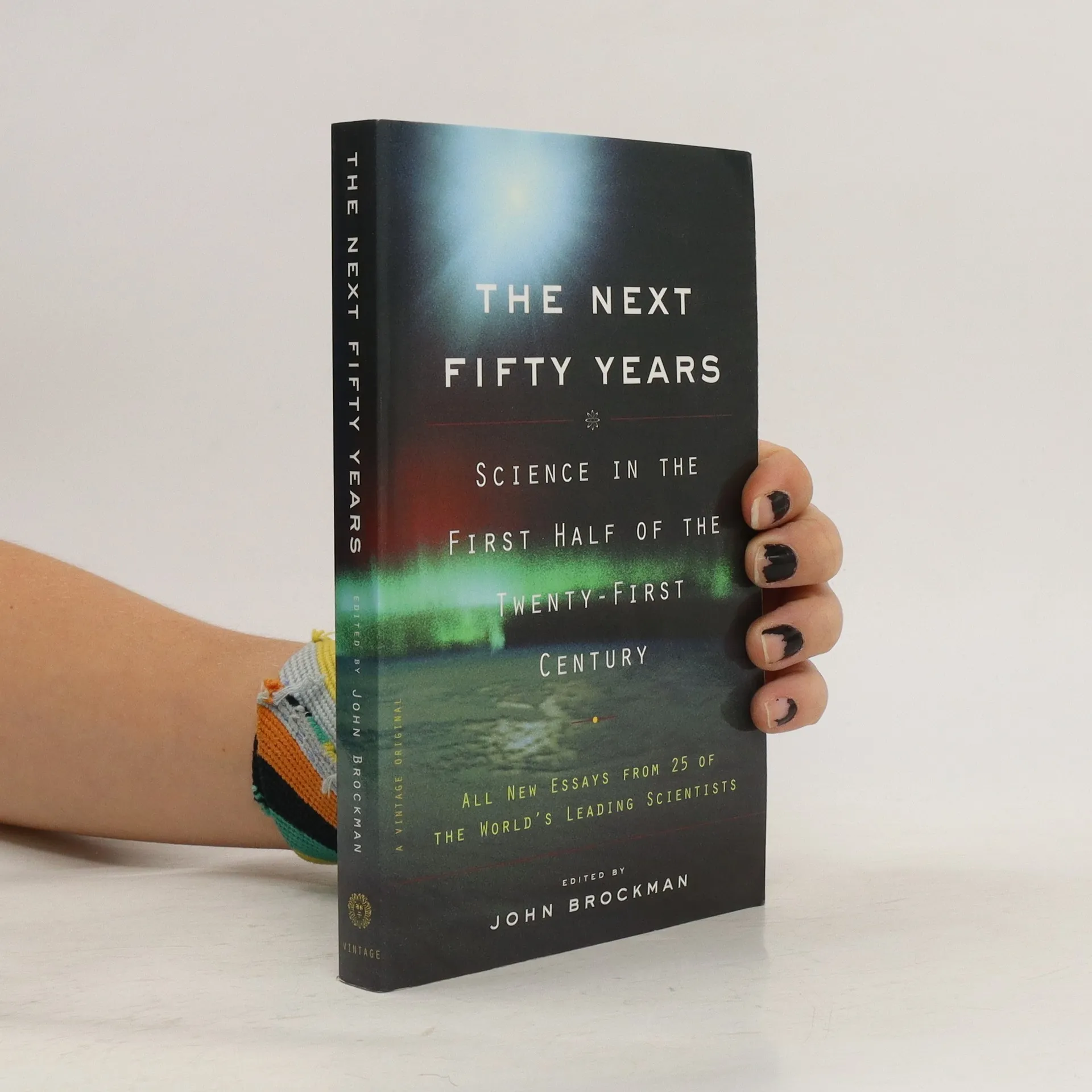
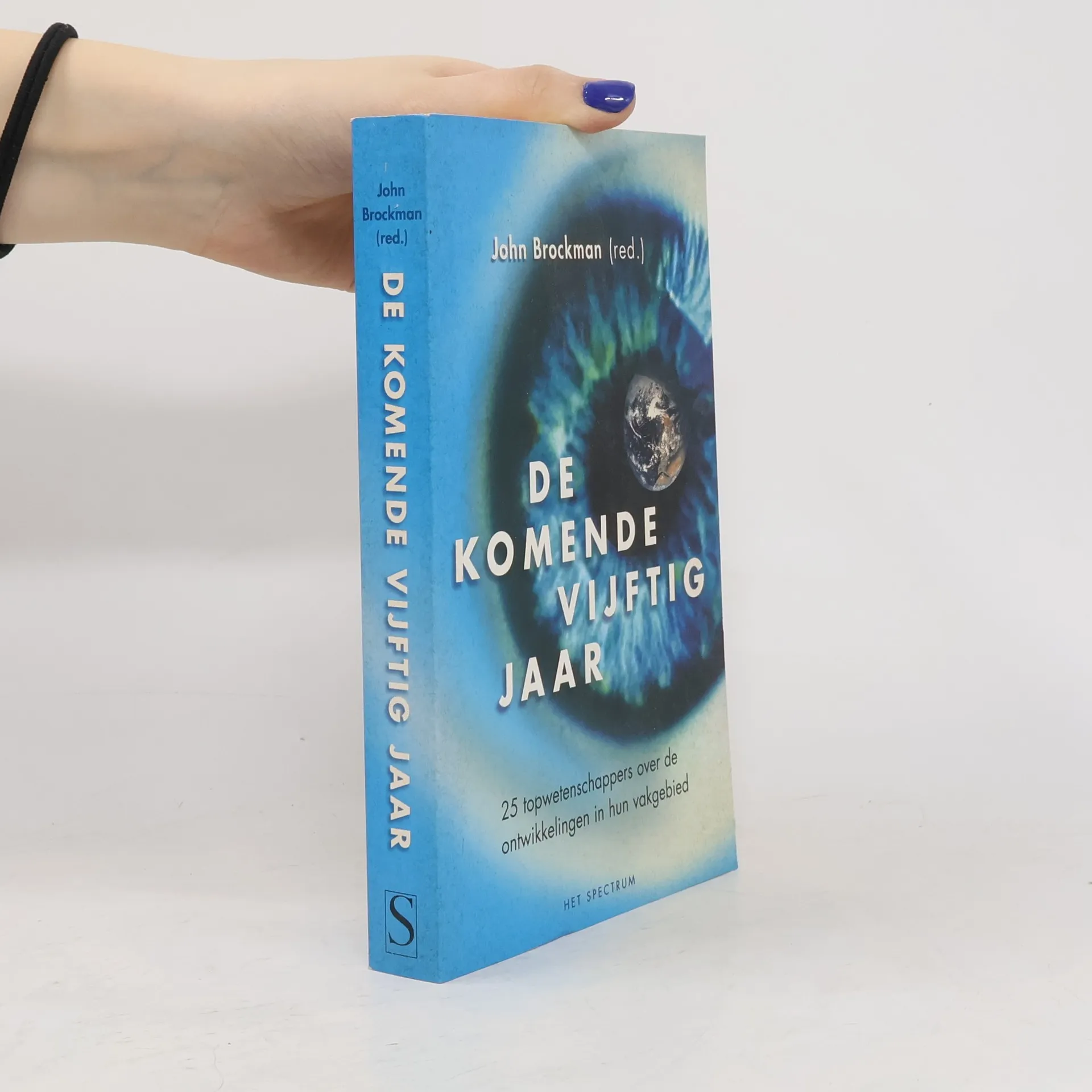
    • The Next Fifty Years

      • 301 pages
      • 11 hours of reading

      A brilliant ensemble of visionary scientists presents twenty-five original essays exploring advances in science and technology anticipated within our lifetimes. Theoretical physicist Paul Davies discusses the potential for establishing a human presence on Mars by 2050. Psychologist Mihaly Csikszentmihalyi examines the implications of engineering high-IQ, genetically happy babies. Psychiatrist Nancy Etcoff delves into research on emotion-sensing jewelry that could monitor our moods and suggest when to take anti-depressants. Evolutionary biologist Richard Dawkins considers the likelihood of obtaining genome printouts that predict our natural lifespan, raising questions about access for insurance companies and governments. This unprecedented collection not only investigates the practical possibilities of the near future but also addresses the social and political ramifications of these developments. Additional essays are contributed by notable figures such as Lee Smolin, Martin Rees, Ian Stewart, and many others, each offering unique insights into the strange new world that lies ahead.

      The Next Fifty Years
      3.6
    • How is the internet changing the way you think? That is one of the dominant questions of our time, one which affects almost every aspect of our life and future. And it's exactly what John Brockman, publisher of Edge.org, posed to more than 150 of the world's most influential minds. Brilliant, farsighted, and fascinating, Is the Internet Changing the Way You Think? is an essential guide to the Net-based world.

      Is the Internet Changing the Way You Think?
      3.6
    • This Idea Must Die

      • 592 pages
      • 21 hours of reading

      The bestselling editor of This Explains Everything brings together 175 of the world's most brilliant minds to tackle Edge.org's 2014 question: What scientific idea has become a relic blocking human progress? Each year, John Brockman, publisher of Edge.org-The world's smartest website (The Guardian)-challenges some of the world's greatest scientists, artists, and philosophers to answer a provocative question crucial to our time. In 2014 he asked 175 brilliant minds to ponder: What scientific idea needs to be put aside in order to make room for new ideas to advance? The answers are as surprising as they are illuminating.In : Steven Pinker dismantles the working theory of human behavior Richard Dawkins renounces essentialism Sherry Turkle reevaluates our expectations of artificial intelligence Geoffrey West challenges the concept of a Theory of Everything Andrei Linde suggests that our universe and its laws may not be as unique as we think Martin Rees explains why scientific understanding is a limitless goal Nina Jablonski argues to rid ourselves of the concept of race Alan Guth rethinks the origins of the universe Hans Ulrich Obrist warns against glorifying unlimited economic growth and much more. Profound, engaging, thoughtful, and groundbreaking, This Idea Must Die will change your perceptions and understanding of our world today ...and tomorrow.

      This Idea Must Die
      3.5
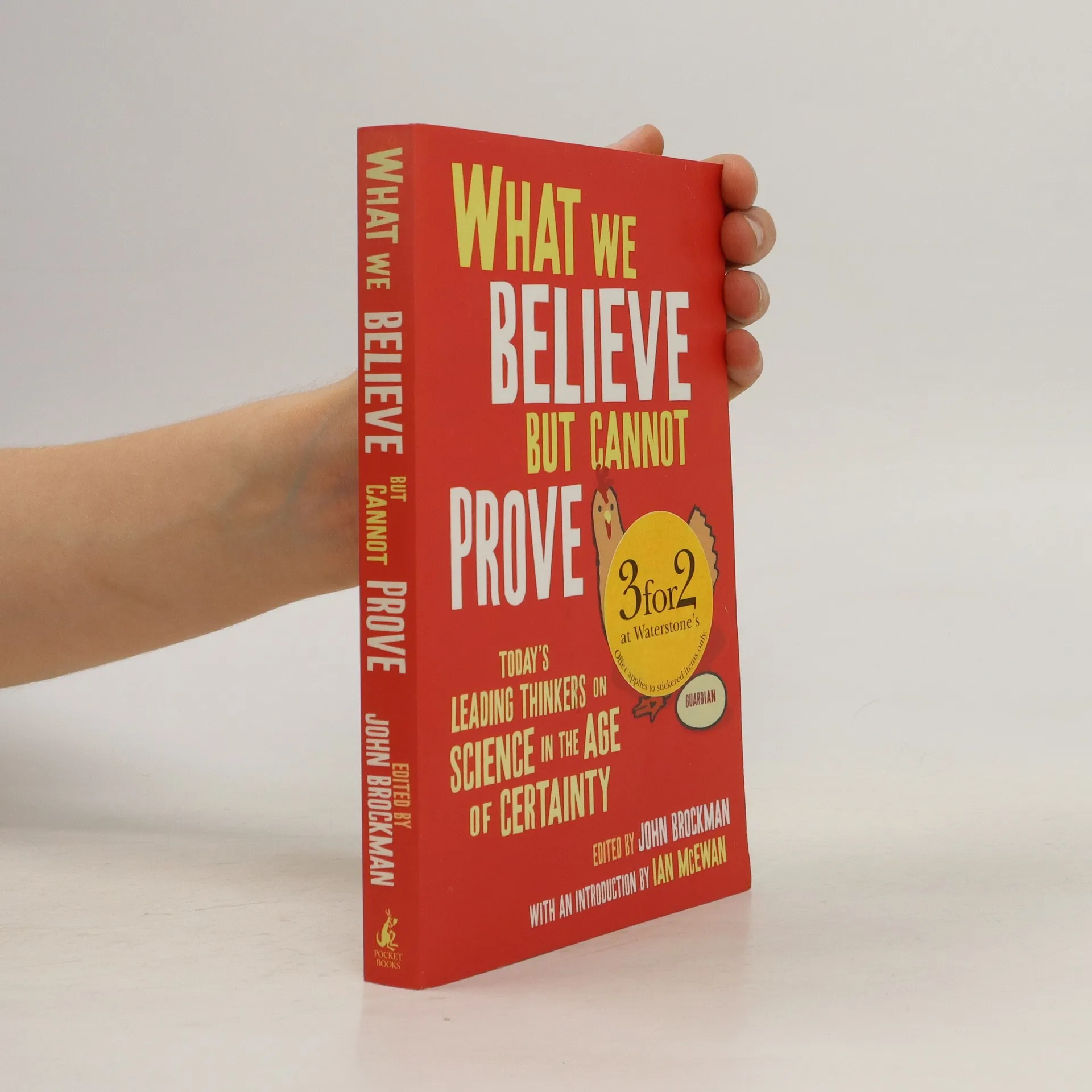
    • What We Believe But Cannot Prove

      • 288 pages
      • 11 hours of reading

      ""What do you believe is true even though you cannot prove it?"" This was the question posed by John Brockman to a group of leading scientists and thinkers via his Edge.org website. The subsequent answers created a media storm and prompted a fiery debate about all aspects of science, technology and even the nature of ""proof"". WHAT WE BELIEVE BUT CANNOT PROVE brings together the very best answers from the most eminent contributors. Here is Ian McEwan on the absence of an afterlife; Richard Dawkins on the relationship between design and evolution; and Jared Diamond on when humans first reached the Americas. Other contributions from luminaries like Steven Pinker, John Horgan and Martin Rees span the whole range of scientific endeavour and human experience, from the future of computing to the origins of intelligence; from insights into childhood behaviour to cutting-edge cosmology. Thought-provoking and hugely compelling, this collection is both a fascinating insight into the instinctive beliefs of some of the most brilliant minds alive today -- and an invitation to answer the question yourself . . .

      What We Believe But Cannot Prove
      3.4
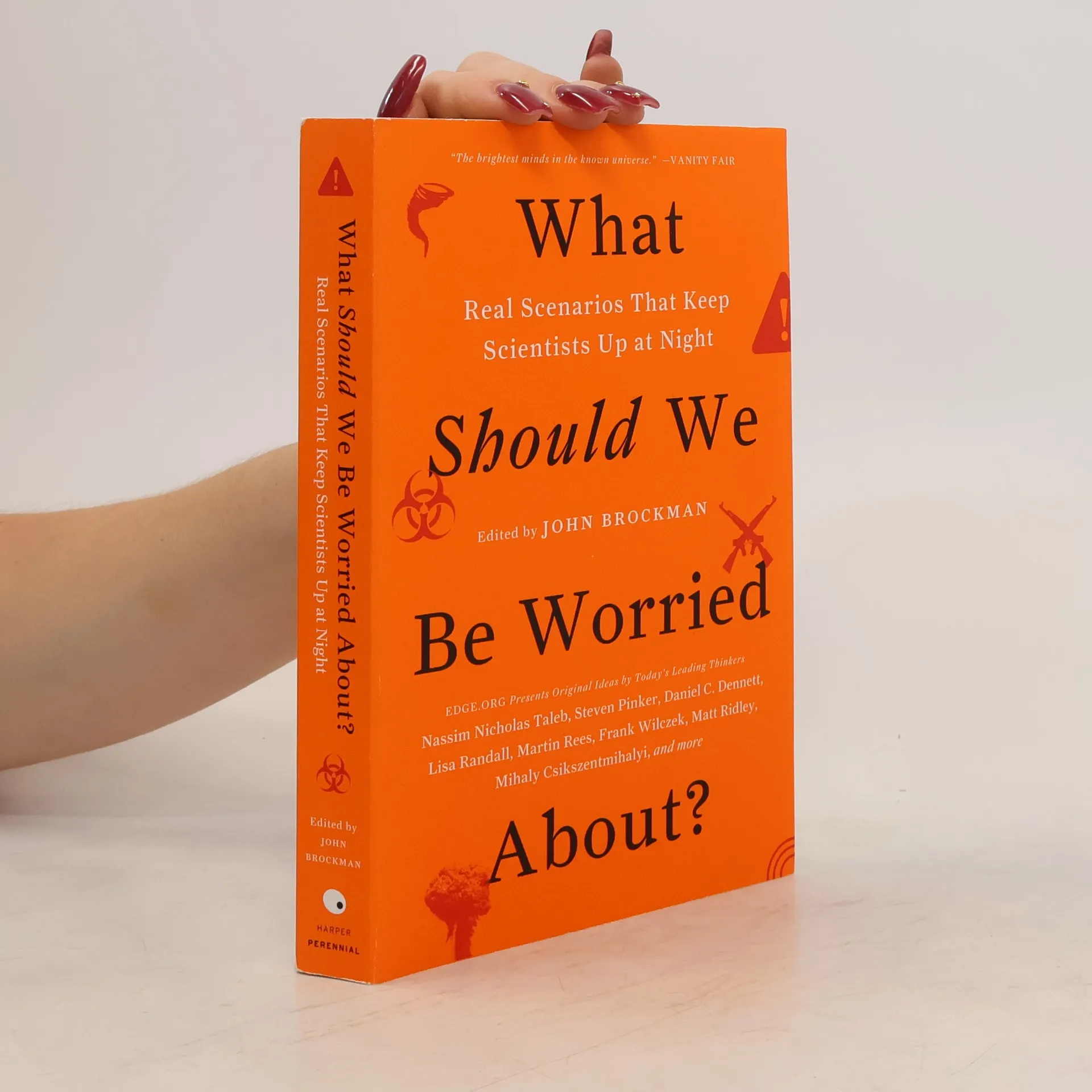
    • Drawing from the horizons of science, today's leading thinkers reveal hidden threats that often go unnoticed, while addressing the false fears that distract us. John Brockman, publisher of Edge.org, posed a critical question to influential minds: What scientific concerns should we truly be worried about? The responses encompass diverse fields such as neuroscience, economics, philosophy, and biology, presenting 150 ideas that can transform our understanding of the world. Contributors include Steven Pinker, who highlights real risk factors for war, and Mihaly Csikszentmihalyi, who warns of a coming virtual abyss. Nobel laureate Frank Wilczek discusses missed opportunities to avert global catastrophe, while Seth Lloyd calculates the potential of a financial black hole. Other thinkers, like Alison Gopnik and Nassim Nicholas Taleb, examine the loss of childhood and the superior risk understanding of firefighters compared to economic experts. Matt Ridley addresses the resurgence of superstition, and Jennifer Jacquet raises concerns about human-induced environmental damage. Douglas Rushkoff and Nicholas Carr reflect on the implications of a homogenized human experience and the "patience deficit," respectively. Additionally, experts like Helen Fisher, Lawrence Krauss, and Susan Blackmore explore the fate of humanity and the universe. This collection invites readers to confront pressing issues that are often overlooked.

      What should we be worried about? : real scenarios that keep scientists up at night
      3.4
    • What to Think About Machines That Think

      • 541 pages
      • 19 hours of reading

      'Once again, cultural wizard John Brockman has stirred up the intellectual waters with a provocative question, designed to tease the best out of intellectuals. ... Excellent.' New Scientist

      What to Think About Machines That Think
      3.4
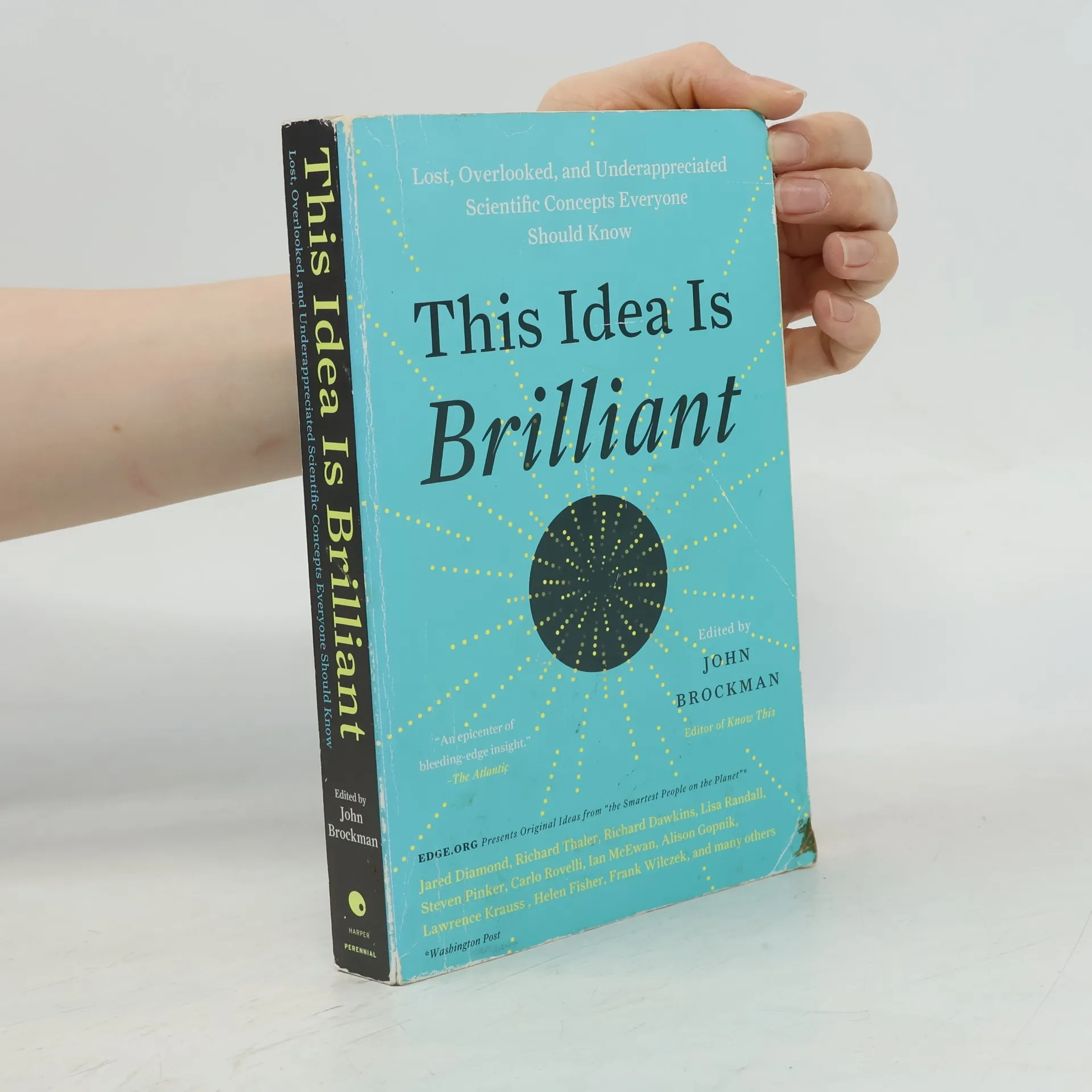
    • Brilliant but overlooked ideas are explored by today’s most innovative thinkers, including Steven Pinker, Jared Diamond, and Richard Dawkins. This collection features insights from 205 influential minds across various fields—physicists, economists, psychologists, and more—prompted by John Brockman’s question: What scientific term or concept should be more widely known? Readers will embark on a journey through bold and underappreciated scientific concepts that enrich understanding. Contributions include Jared Diamond discussing the lost brilliance of common sense, Richard Dawkins on reconstructing ecological history, and Rebecca Newberger Goldstein on expanding reality beyond the tangible. Carlo Rovelli explores the interconnected fabric of information, while Ian McEwan delves into the Navier-Stokes equations that influence weather and design. Other notable voices include Lawrence M. Krauss on uncertainty, Richard Thaler on the "premortem" concept, and Brian Eno on confirmation bias in the digital age. Rory Sutherland highlights the impact of sex appeal, and Lisa Randall emphasizes the power of the obvious. Additionally, Kevin Kelly shares insights on optimizing success, and Frank Wilczek discusses the creative potential of complementarity. This anthology also features thoughts from Sam Harris, Alison Gopnik, and many others, offering a rich tapestry of ideas that challenge conventional thinking.

      This idea is brilliant: Lost, overlooked and underappreciated scientific concepts everyone should know
    • Neuigkeiten von morgen

      Die führenden Wissenschaftler unserer Zeit über die wichtigsten Ideen, Entdeckungen und Erfindungen der Zukunft

      • 640 pages
      • 23 hours of reading

      20 Jahre »The Edge« – Mit Beiträgen u. a. von Steven Pinker, Alison Gopnik, Jared Diamond, Martin J. Rees, Carlo Rovelli, Jonathan Haid, Lisa Randall und Hans Ulrich Obrist. Seit zwei Jahrzehnten versammelt John Brockman jährlich die angesehensten Wissenschaftler und Intellektuellen unserer Zeit in einem Band. Wissenschaftliche Entwicklungen verändern unseren Blick und unser Verständnis von der Welt immer wieder radikal, egal ob es sich dabei um Fortschritte in der Technologie, um medizinische Forschung oder die neuesten Entdeckungen aus den Bereichen Neurowissenschaften, Psychologie, Physik, Wirtschaft, Genetik oder Umweltschutz und Klimawandel handelt. Da es heute schwer ist, aus der Flut aller täglichen Informationen die wichtigsten herauszufiltern, versammelt der bekannte Visionär und Herausgeber John Brockman Stimmen der führenden Wissenschaftler und Intellektuellen unserer Zeit in einem Band, um zu zeigen, was bereits morgen unser Leben bestimmen kann.

      Neuigkeiten von morgen
      4.0
    • О чем книга О самых невероятных, оригинальных научно-фантастических идеях, которые в будущем, возможно, станут реальностью. О том, как самые разные ученые, оказывается, способны поверить в любые гипотезы и поведать всем нам о своих идеях, связанных с новыми областями эволюционной биологии, генетики, компьютерных наук, нейрофизиологии, психологии и физики... Почему книга достойна прочтения Лучшие умы XXI века предлагают необычное видение возможностей науки и технического прогресса. Книга отвечает на самые разные вопросы, - начиная с того, что же такое сознание человека, и кончая тем, одиноки ли мы во Вселенной, - интересующие не только мировое научное сообщество, но и каждого из нас. Ведь все мы, так или иначе, задаемся вопросами мироздания. Уникальная возможность познакомиться с тем, каким образом ученые сегодня находят путь к истине. Для кого эта книга Для всех, кто чувствует ритм нашего времени - времени научно-технического бума, и кому интересно узнать, во что можно и нужно верить, даже если это пока еще не доказано.

      Во что мы верим, но не можем доказать. Интеллектуалы XXI века о современной науке
      3.0
    • Faszinierende Einblicke in die Köpfe der weltweit führenden Wissenschaftler aus unterschiedlichsten Disziplinen: ihre Antworten auf die Frage, wovon sie fest überzeugt sind, obwohl sie den wissenschaftlichen Nachweis noch nicht erbringen können, überraschen zugleich durch ihre Originalität und Ernsthaftigkeit: dass Kakerlaken über Bewusstsein verfügen, über die Verbindung von Design und Evolution, über intelligentes Leben in unserem Universum und was Vorfreude dem Zen-Buddhismus voraushat.

      Das Wissen von morgen
      2.5
    • Der bekannte Visionär und Herausgeber der Internetzeitschrift »Edge« John Brockman fragt die führenden Wissenschaftler, Philosophen und Künstler unserer Zeit, was sie von denkenden Maschinen halten. Stephen Hawking warnt davor, dass die Weiterentwicklung der Künstlichen Intelligenz das Ende der Menschheit bedeute. Andere hingegen feiern das neue Zeitalter der Superintelligenz, da menschliche Kapazitäten mittels intelligenter Maschinen enorm ausgeweitet würden. Sicher ist, dass KI aus dem Bereich der Science-Fiction Einzug in die Realität, ja in unseren Alltag gefunden hat. Mit Beiträgen u. a. von Steven Pinker, Martin Rees, Rolf Dobelli, George Dyson, Hans Ulrich Obrist, Gerd Gigerenzer, Andrian Kreye und Haim Harari. »Eine äußerst anregende Lektüre.« Brain Pickings

      Was sollen wir von künstlicher Intelligenz halten?
      3.5
    • Frisst die industrialisierte Kommunikation des 21. Jahrhunderts unser Denken? Hört der Mensch zu denken auf, wenn Maschinen es tun? Übertragen wir unsere Entscheidungen an Computer? Sind wir von ihnen abhängig? Der Literaturagent John Brockmann hat führenden Erforschern und Entwicklern der Netzkultur, aber auch Wissenschaftlern und Künstlern die Frage gestellt, welchen Einfluss das Internet auf ihr und unser Denken hat. Eine spannende Debatte u. a. mit Maria Abramovic, Nicholas Christakis, George Dyson, Olafur Eliasson, Brian Eno, David Gelernter, Seth Lloyd, Steven Pinker, Ernst Pöppel, Lisa Randall, Lee Smolin, Ai Weiwei und Anton Zeilinger

      Wie hat das Internet Ihr Denken verändert?
      3.2
    • Was macht uns schlauer?

      Die führenden Wissenschaftler unserer Zeit über neue Strategien, unser Wissen zu erweitern

      Der große Visionär, Wissenschaftsaktivist und Literaturagent John Brockmann hat den führenden Köpfen aus unterschiedlichsten Disziplinen die Frage gestellt, welche neuen wissenschaftlichen Konzepte und Ideen unser Wissen wesentlich erweitern werden. Hierbei sind die Naturwissenschaften ebenso wie die Philosophie, die Künste und die Rechts- und die Wirtschaftswissenschaften angesprochen. Eine spannende Debatte u. a. mit Daniel Kahneman, Richard Dawkins, Brian Eno, J. Craig Venter, Martin Rees, Ernst Pöppel, Gerd Gigerenzer, Nicholas Christakis, Lisa Randall, Hans Ulrich Obrist, Steven Pinker und George Dyson. »Man muss Brockman und den Wissenschaftlern dankbar sein. Viel zu selten werden Fragen diskutiert, die an unserem Selbstverständnis als Mensch rütteln oder Überzeugungen und mit ihnen Deutungshoheiten und Herrschaftsstrukturen in Frage stellen.«Deutschlandradio Kultur

      Was macht uns schlauer?
      3.0
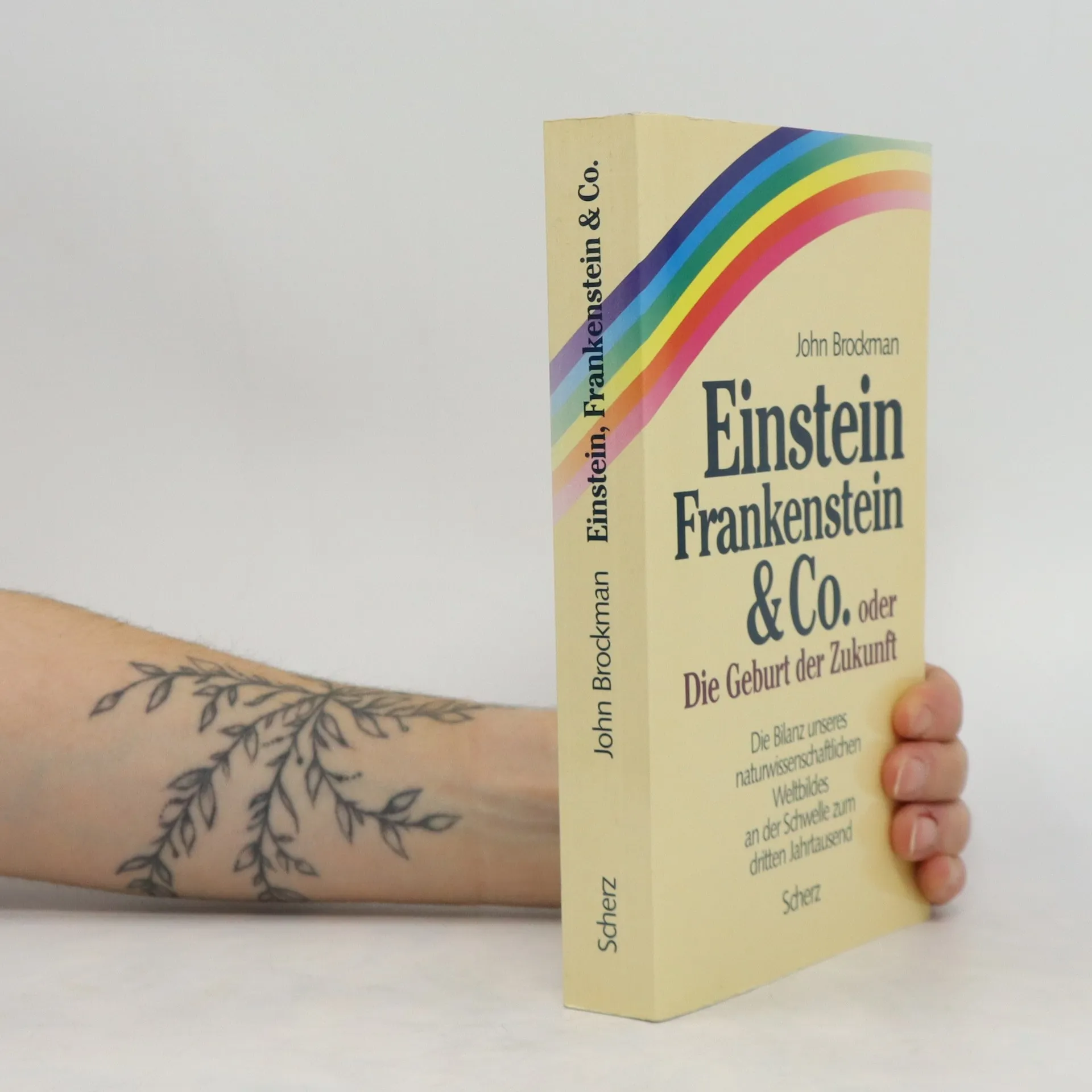
    • Die nächsten fünfzig Jahre

      • 400 pages
      • 14 hours of reading

      Die Naturwissenschaften durchdringen immer stärker unseren Alltag. Wie sie in den nächsten Jahrzehnten unser Leben verändern werden, zeigt John Brockman, der für dieses Buch führende Wissenschaftler der Welt in die Zukunft blicken lässt.

      Die nächsten fünfzig Jahre
    • Rosnące możliwości sztucznej inteligencji od lat budzą niepokój. Uzależniamy się od nowoczesnych technologii, ale doskonałe metody uczenia maszynowego i potężna moc obliczeniowa skłaniają do refleksji: dokąd zmierza ten rozwój? Jakie będą konsekwencje dla przyszłości społeczeństwa? Czy grozi nam wyginięcie lub zniewolenie przez maszyny lub polityków pragnących władzy? AI staje się kluczowym tematem współczesności, a świat, jaki znamy, może wkrótce przestać istnieć. Jakie wybory czekają ludzkość i czy będą one trafne? Ponad 60 lat po publikacji Cybernetyki Norberta Wienera, 25 wyjątkowych umysłów postanowiło ponownie zbadać jego koncepcje. Efektem kilkuletnich dyskusji na temat umysłu, myślenia, inteligencji i sensu człowieczeństwa jest zbiór 25 esejów, który stanowi wszechstronne wprowadzenie do kluczowych problemów związanych z AI. Wartość tego dzieła tkwi w zderzeniu różnych poglądów: autorami są wybitni informatycy, robotycy, fizycy, a także przedstawiciele kultury, filozofii i psychologii. To lektura, która zmusza do szerszego spojrzenia na jedno z najważniejszych wyzwań naszych czasów.

      Człowiek na rozdrożu. Sztuczna inteligencja
    • Großreinemachen in der Wissenschaft: Die klügsten Köpfe der Welt zeigen, welche Ideen und Theorien sie für entbehrlich, überkommen oder schlicht für falsch halten. In der Welt der Wissenschaft werden Ideen und Theorien laufend überprüft, verfeinert und angepasst. Und doch gibt es eine Reihe von Vorstellungen, die heute nicht mehr aktuell sind – und sich trotzdem hartnäckig in den Köpfen der Menschen halten. Der bekannte Visionär John Brockman hat daher die führenden Wissenschaftler unserer Zeit gefragt, welche Idee sie am liebsten aufs Altenteil schicken würden. Mit Beiträgen u. a. von Jared Diamond, Richard Dawkins, Alison Gopnik, Hans Ulrich Obrist, Helen Fisher, Stephen Pinker, Sherry Turkle, Andrian Kreye, Laura Betzig, Nicholas A. Christakis, Steward Brand, Anton Zeilinger und Ian McEwan. Sie legen damit ein breites Mosaik aus veralteten Konzepten vor, die uns klarmachen, wie sehr sich die Welt der Wissenschaft ständig in Veränderung befindet.

      Welche wissenschaftliche Idee ist reif für den Ruhestand?
    • Wie funktioniert die Welt?

      Die führenden Wissenschaftler unserer Zeit stellen die brillantesten Theorien vor

      Brillante Theorien in der Wissenschaft - das sind solche, die tiefe und komplexe Fragen einfach, elegant und überraschend beantworten. Doch welche sind das? John Brockman, Wissenschaftsaktivist, Visionär und Literaturagent hat die führenden Wissenschaftler der Welt gefragt, welche Theorie sie am brillantesten finden. Entstanden ist ein kurzweiliges, unterhaltsames und inspirierendes Panorama aus allen Bereichen der Wissenschaft; mit Beiträgen u.a. von Richard Dawkins, Steven Pinker, Gerd Gigerenzer, Anton Zeilinger, Lisa Randall, Brian Eno, Eric R. Kandel, Ernst Pöppel, Jared Diamond, Douglas Coupland und vielen anderen. ”Wichtige, scharfsinnige und ambitionierte Fragen ... von einer atemberaubenden Bandbreite.“ New Scientist ”Bietet die seltene Chance, große Ideen zu entdecken, bevor sie Mainstream werden“ The New York Times.

      Wie funktioniert die Welt?
    • Nachworte

      Gedanken des Wegbereiters der Dritten Kultur. Mit einem Vorwort von Hans Ulrich Obrist

      • 330 pages
      • 12 hours of reading
      Nachworte
    • Ako sa veci majú

      • 252 pages
      • 9 hours of reading

      Knihu s podtitulom Sprievodca myšlienkami modernej vedy zostavili editori J. Brockman a K. Matsonová so širokým záberom tém - od fyziky ku kozmológii, od biológie k antropológii, od filozofie k psychológii. Nájdeme tu eseje autorov: Marian Stamp Dawkinsonová, Mary Catherine Batesonová, Richard Dawkins, Paul Davies, P. W. Atkins, Robert Shapiro, Jack Cohen, Lewis Wolpert, Lynn Margulisová, Stephen Jay Gould, Patrick Bateson, Steve Jones, Peter Ward, Anne Fausto-Sterlingová, Daniel C. Dennett, Hao Wang, Wiliam H. Calvin, Michael S. Gazzaniga, Pascal Boyer, Nicholas Humphrey, Roger C. Schank, Dan Sperber, Steven Rose, David Gelernter, Sherry Turkleová, Lee Smolin, Alan H. Guth, Ian Stewart, W. Daniel Hillis, Freeman Dyson, Joel E. Cohen, Niles Eldredge, Martin Rees.

      Ako sa veci majú
      5.0
    • Příštích padesát let

      • 269 pages
      • 10 hours of reading

      Tento významný projekt přináší v 25 původních esejích pohled na příštích padesát let pokroku lidského vědění a dopadů tohoto pokroku na osud lidstva. Nejde o módní prognostické fantazírování, které by jen prodloužilo křivku současných trendů, ani o hádání z křišťálové koule: přední vědci a myslitelé z těch nejexponovanějších oborů zde podávají kvalifikovaný vhled do vnitřní struktury a dynamiky rozvoje svých specializací i jejich mezioborových vazeb vývoje, z něhož vyjdou revoluční změny blízké budoucnosti. Autor projektu a pořadatel knihy je zakladatelem Edge Foundation, diskusního fóra pro mezioborovou spolupráci špičkových vědců.

      Příštích padesát let
      4.4
    • Čeho bychom se měli obávat? Co nás má nejvíce znepokojovat? Tak zní otázka, kterou John Brockman, provozovatel webu Edge.org („Nejchytřejší webové stránky na světě“ – The Guardian), položil několika desítkám nejvlivnějších odborníků na světě. Požádal je, aby se svěřili s tím, čím se nejvíce trápí, co jim dělá největší starosti, a aby ukázali, proč by těmto tématům měla být věnována pozornost. 150 esejů na toto téma, které kniha obsahuje, zabírá celou šíři přírodovědných i humanitních oblastí. Zastoupení autoři jsou význačnými postavami na poli neurovědy, ekonomie, filozofie, fyziky, psychologie, biologie a dalších věd. Obavy si děláme proto, že předvídáme budoucnost. Před pociťováním obav nás nic neochrání, nicméně věda nás může ponaučit, jak si dělat obavy lépe a kdy si je přestat dělat. Otázky často inspirují nepředvídatelné odpovědi, které nás vyprovokují k myšlenkám, jimiž bychom se nejspíše nezabývali.

      Čeho bychom se měli obávat?
      3.9