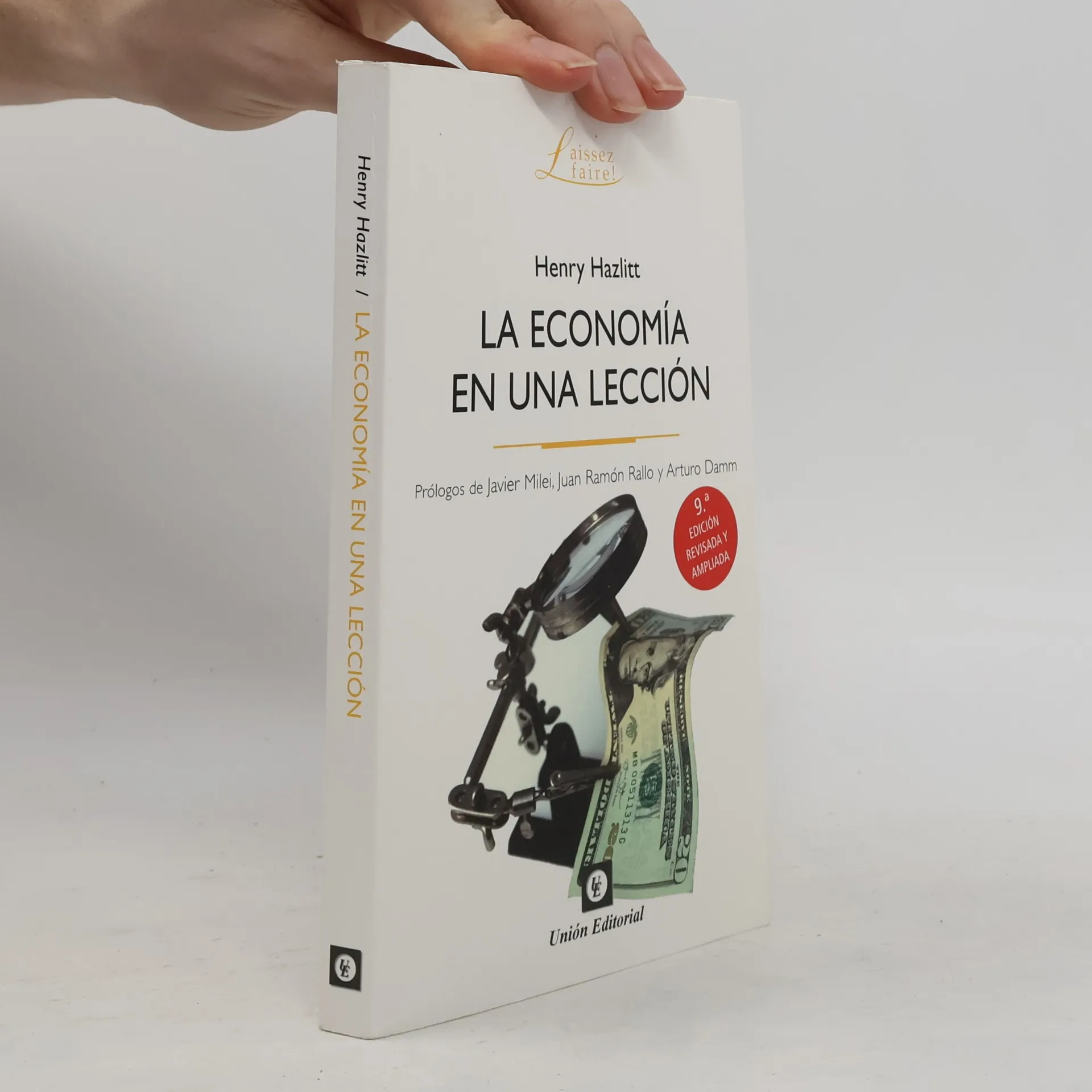
Laissez faire!: La economía en una lección
Prólogos de Javier Milei, Juan Ramón Rallo y Arturo Damm - 9.ª edición revisada y ampliada
- 276 pages
- 10 hours of reading


Henry Hazlitt was a pivotal thinker who bridged philosophy, economics, and journalism. Through his incisive writing on free market economics, he popularized key economic ideas and became a significant voice in the libertarian movement. His work is distinguished by its clear and accessible exposition of complex economic principles. Hazlitt's essays and books continue to inspire readers and economists alike to consider the principles of free markets and individual liberty.

Prólogos de Javier Milei, Juan Ramón Rallo y Arturo Damm - 9.ª edición revisada y ampliada
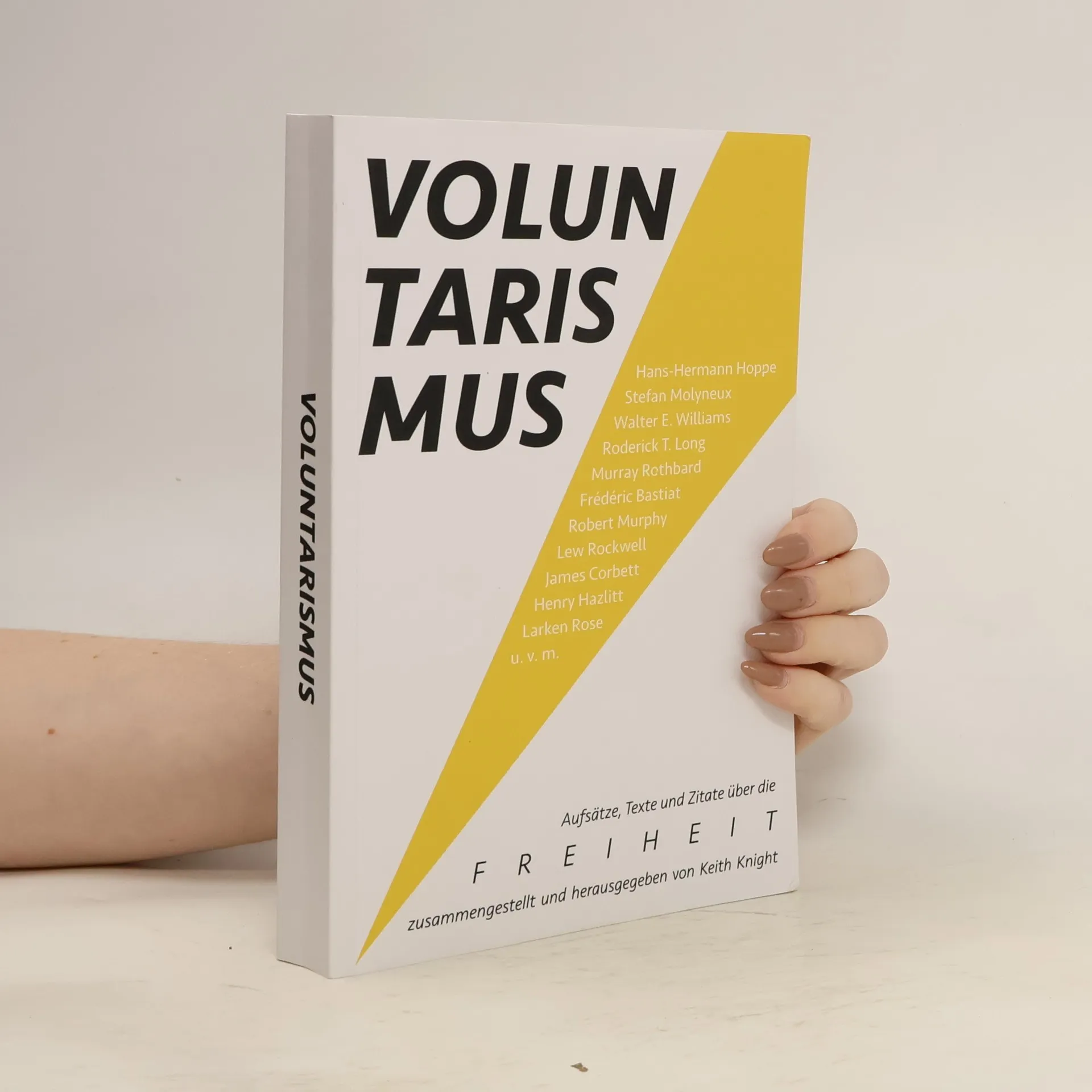
Aufsätze, Texte und Zitate über die Freiheit
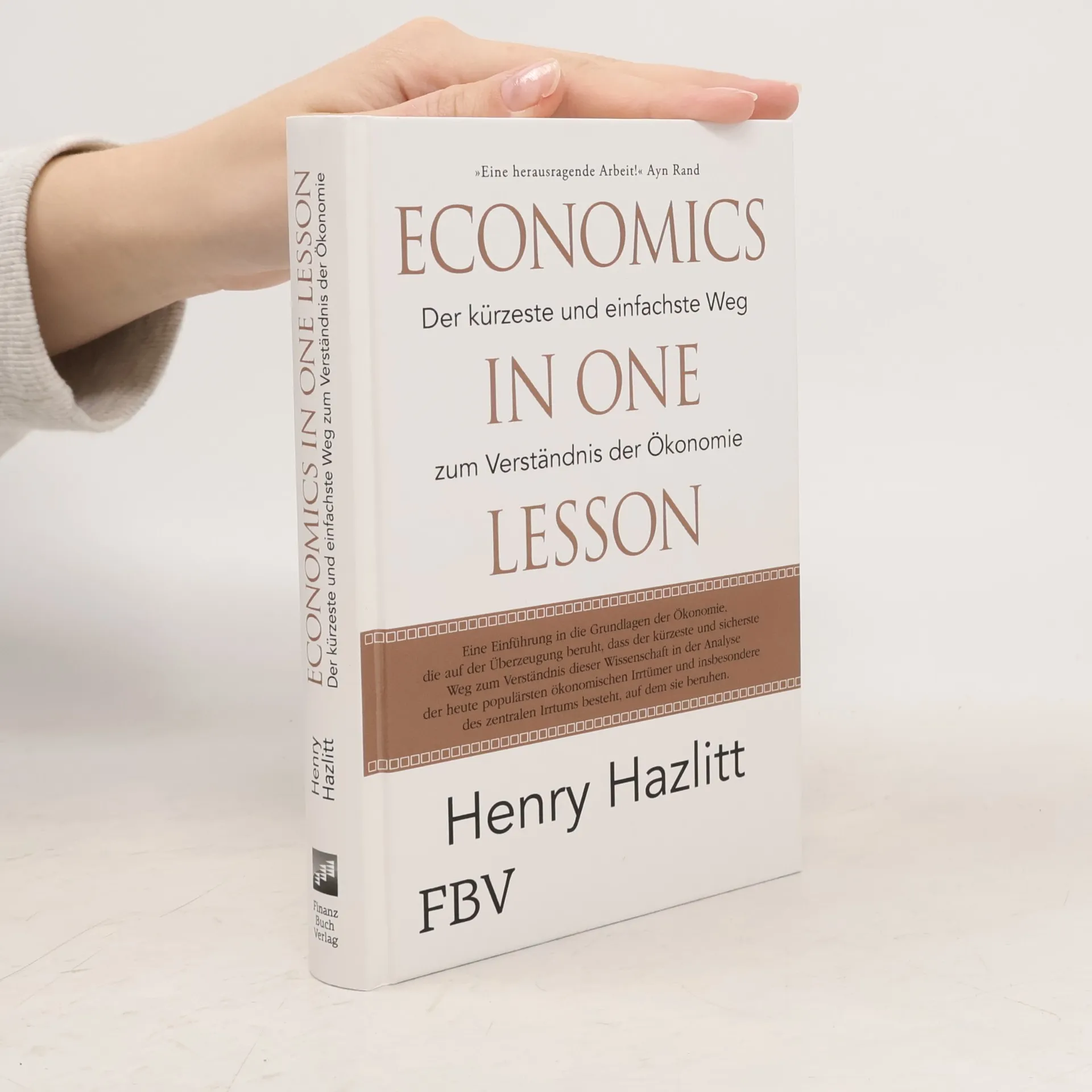
Der kürzeste und einfachste Weg zum Verständnis der Ökonomie
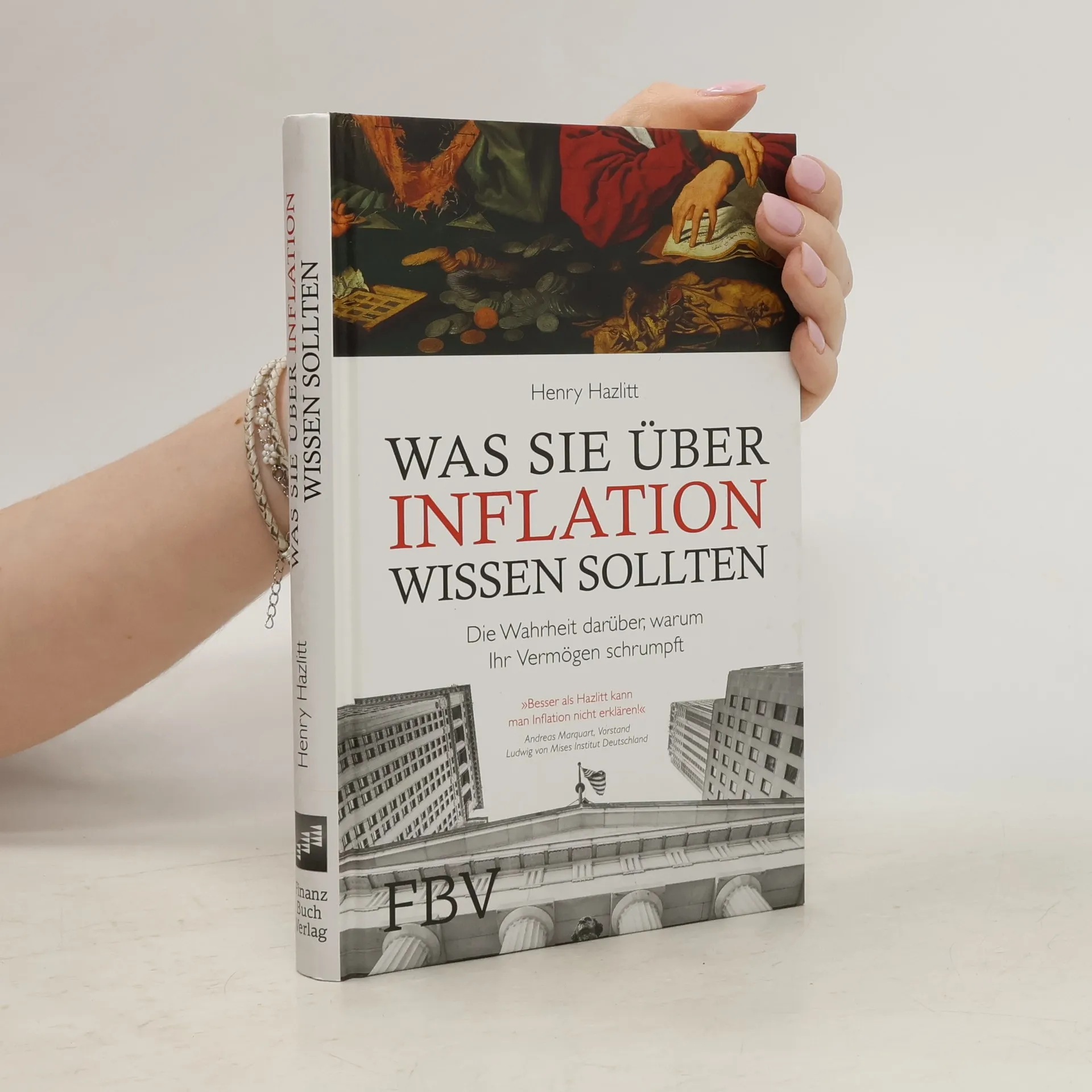
Die Wahrheit darüber, warum Ihr Vermögen schrumpft
Die Inflation hat Deutschland wieder fest im Griff und die EZB denkt gar nicht an einen Ausstieg aus der ultralockeren Geldpolitik. Inflation – fast selbstverständlich hat jeder schon einmal davon gehört. Aber was sie für Sie selbst oder eine ganze Volkswirtschaft wirklich bedeutet und wie Sie sich letztendlich vor ihr und ihren Folgen schützen können, weiß oft niemand so genau. Henry Hazlitt – einer der brillantesten Intellektuellen des 20. Jahrhunderts – erläutert auf für jeden verständliche und anschauliche Art die Bedeutung einer Inflation, aber auch die Möglichkeit, einen Nutzen aus ihr zu ziehen. Vor allem aber geht Hazlitt auf die Rolle des Staates bei der Geldentwertung ein. Inwieweit ist er für die Ursachen verantwortlich, wie wirksam sind seine Gegenstrategien und profitiert er sogar von einer Inflation? Der seit Jahren vergriffene Klassiker von 1968 endlich wieder lieferbar.
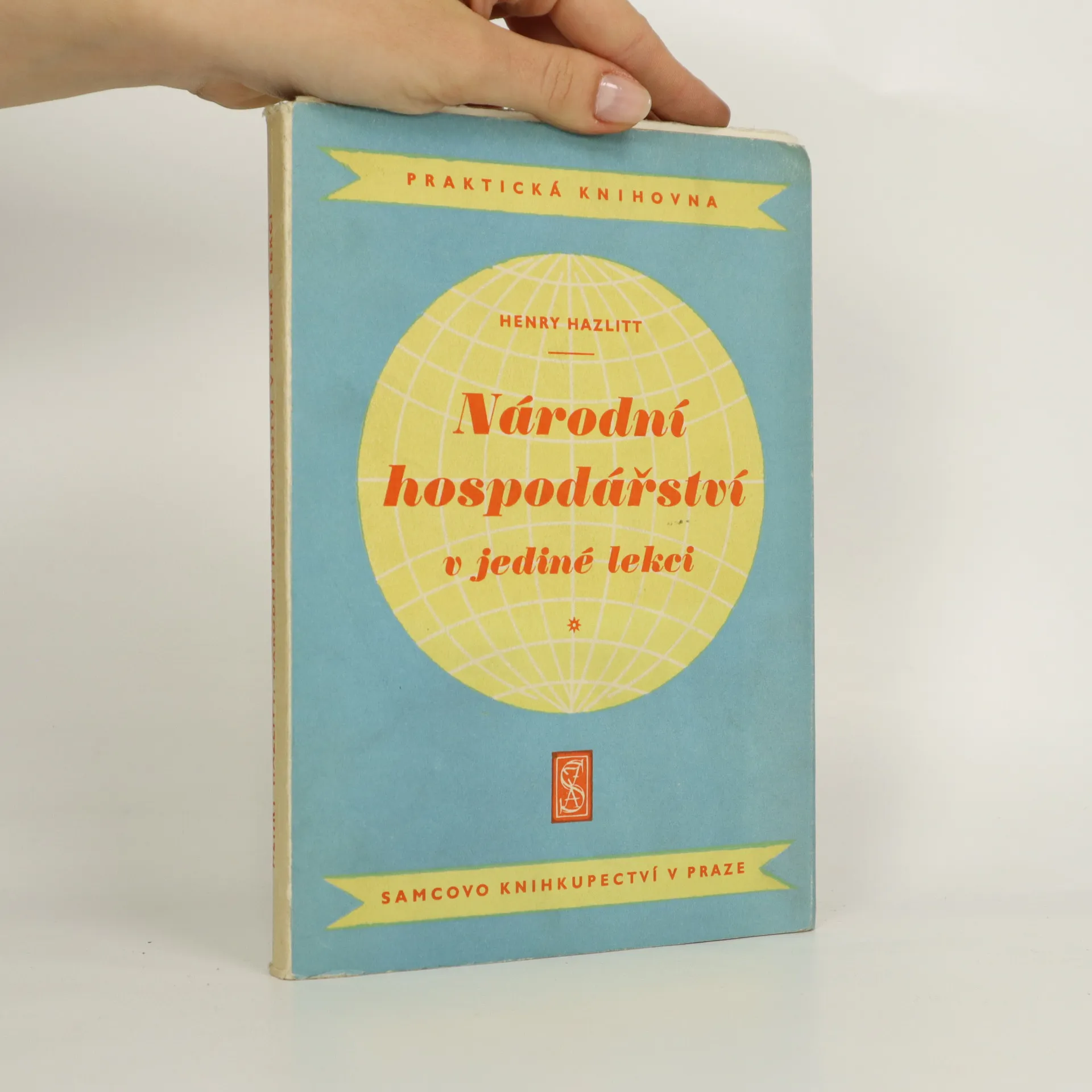
Pokud by kapitalismus neexistoval, bylo by nezbytné ho vynalézt – a tento objev by se právem zařadil mezi největší objevy v dějinách lidstva. To je hlavním poselstvím mé knihy. Ale protože je kapitalismus zkrátka pojmenováním pro svobodu v ekonomické sféře, poselství knihy lze rozšířit: touha po svobodě nemůže být nikdy permanentně vymazána.
Hazlitt worked as a journalist for the New York Sun , The Nation , the New York Times , and Newsweek . He is credited with bringing Austrian economics to an English-speaking audience. Hazlitt was a prolific writer, authoring some 25 books in his lifetime.
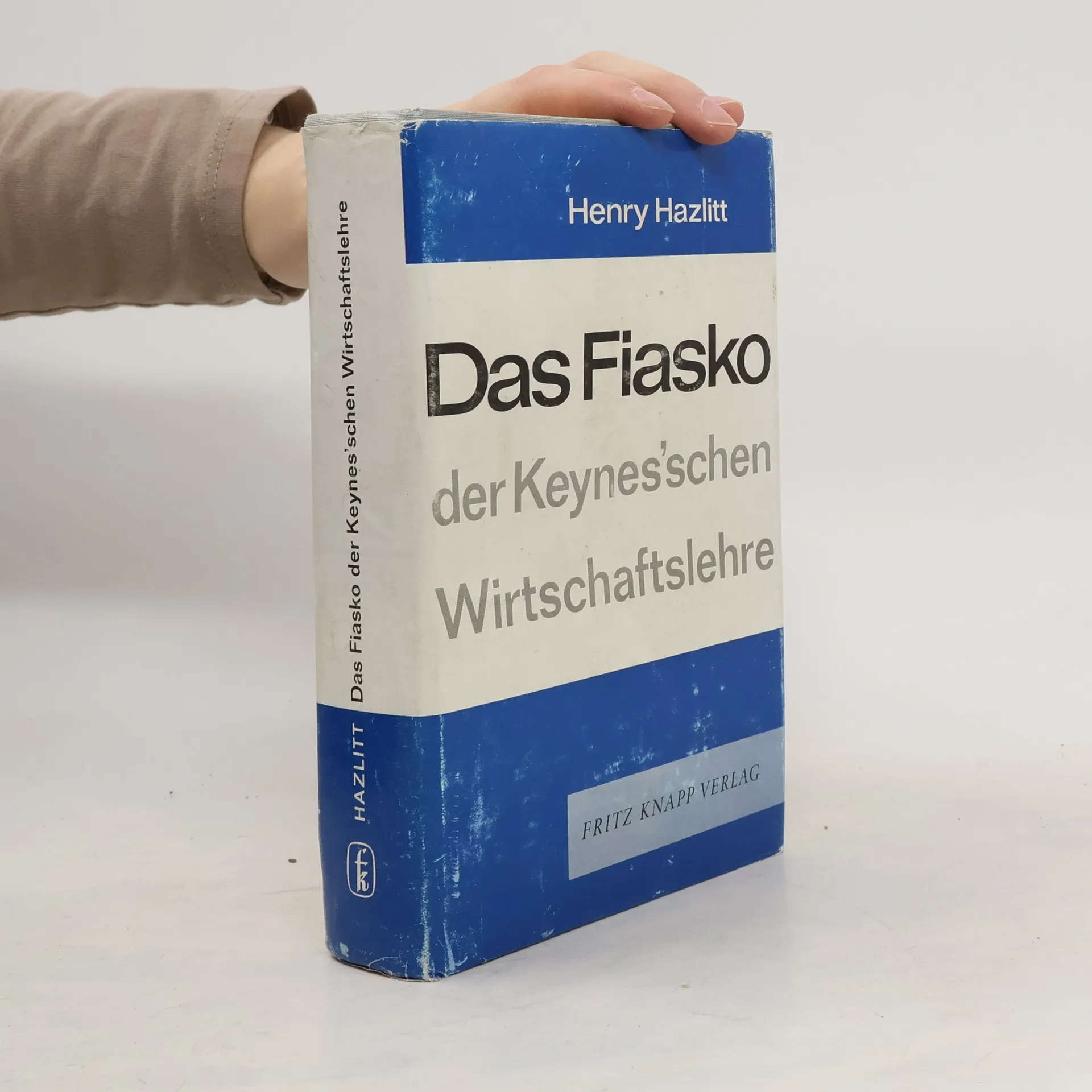
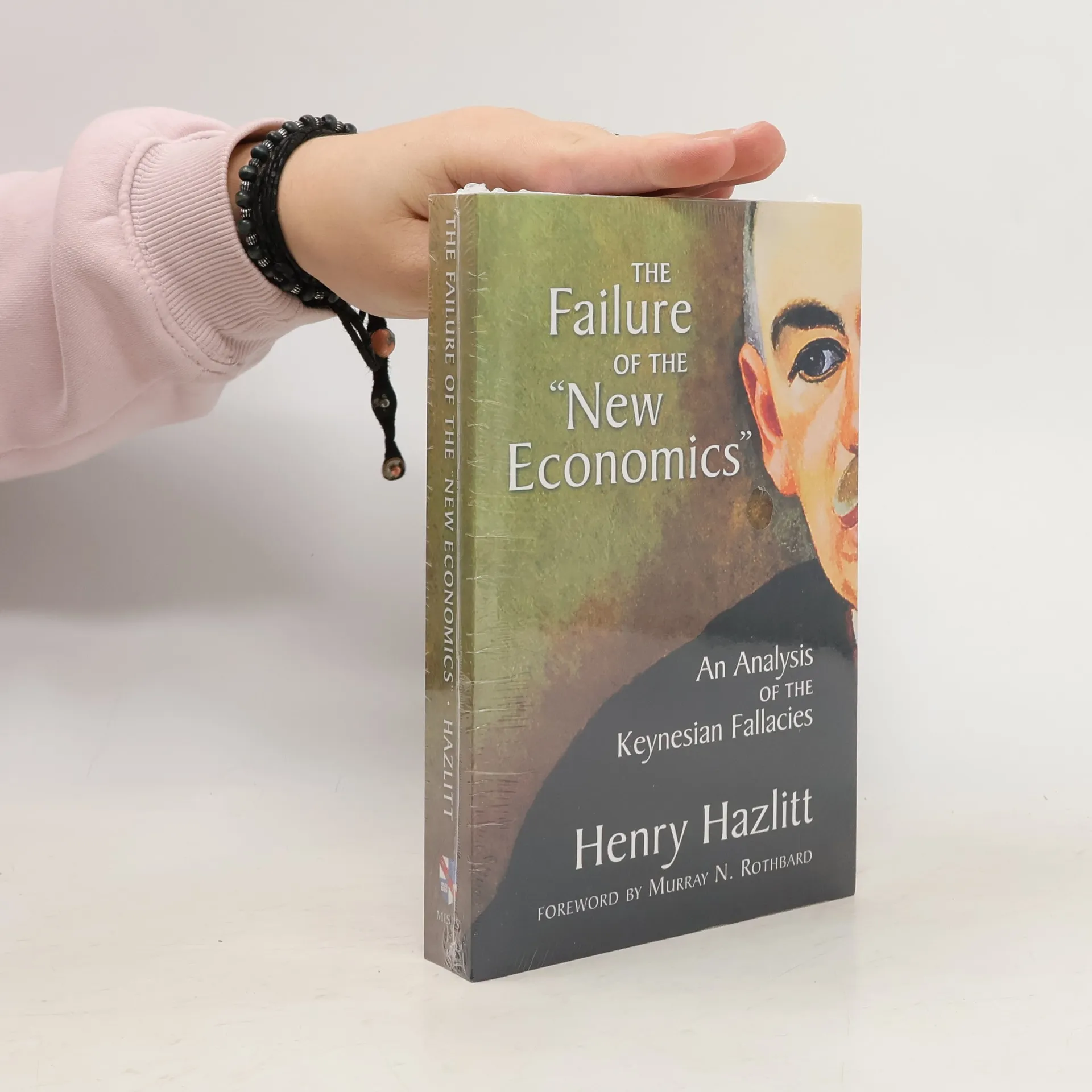
Henry Hazlitt did the seemingly impossible, something that was and is a magnificent service to all people everywhere. He wrote a line-by-line commentary and refutation of one of the most destructive, fallacious, and convoluted books of the century. The target here is John Maynard Keynes's General Theory, the book that appeared in 1936 and swept all before it. In economic science, Keynes changed everything. He supposedly demonstrated that prices don't work, that private investment is unstable, that sound money is intolerable, and that government was needed to shore up the system and save it. It was simply astonishing how economists the world over put up with this, but it happened. He converted a whole generation in the late period of the Great Depression. By the 1950s, almost everyone was Keynesian. But Hazlitt, the nation's economics teacher, would have none of it. And he did the hard work of actually going through the book to evaluate its logic according to Austrian-
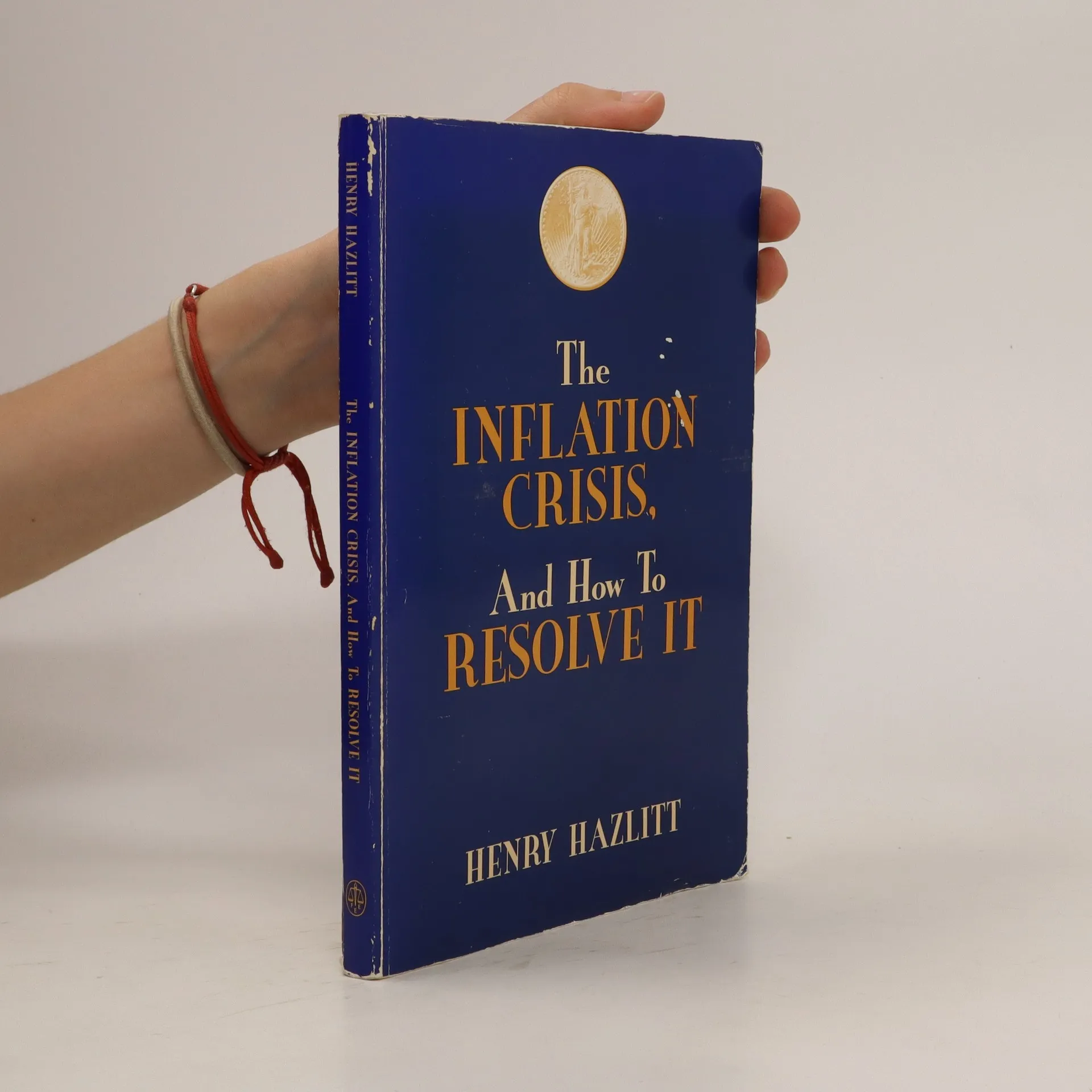
An excellent volume by an eminent journalist and author which presents a history of inflation, an explanation of its causes, an analysis of the misconceptions and fallacies that prevail about it, the outlook for more of it, and advice regarding what the reader can and cannot do to protect himself or herself against it. The author recognizes the strength of the political forces that continue it, and the urgent need of the re-establishment of an international gold standard. A first-rate analysis for everyone seeking protection against the consequences of inflation. Originally published by Arlington House in 1978.
The Shortest & Surest Way to Understand Basic Economics
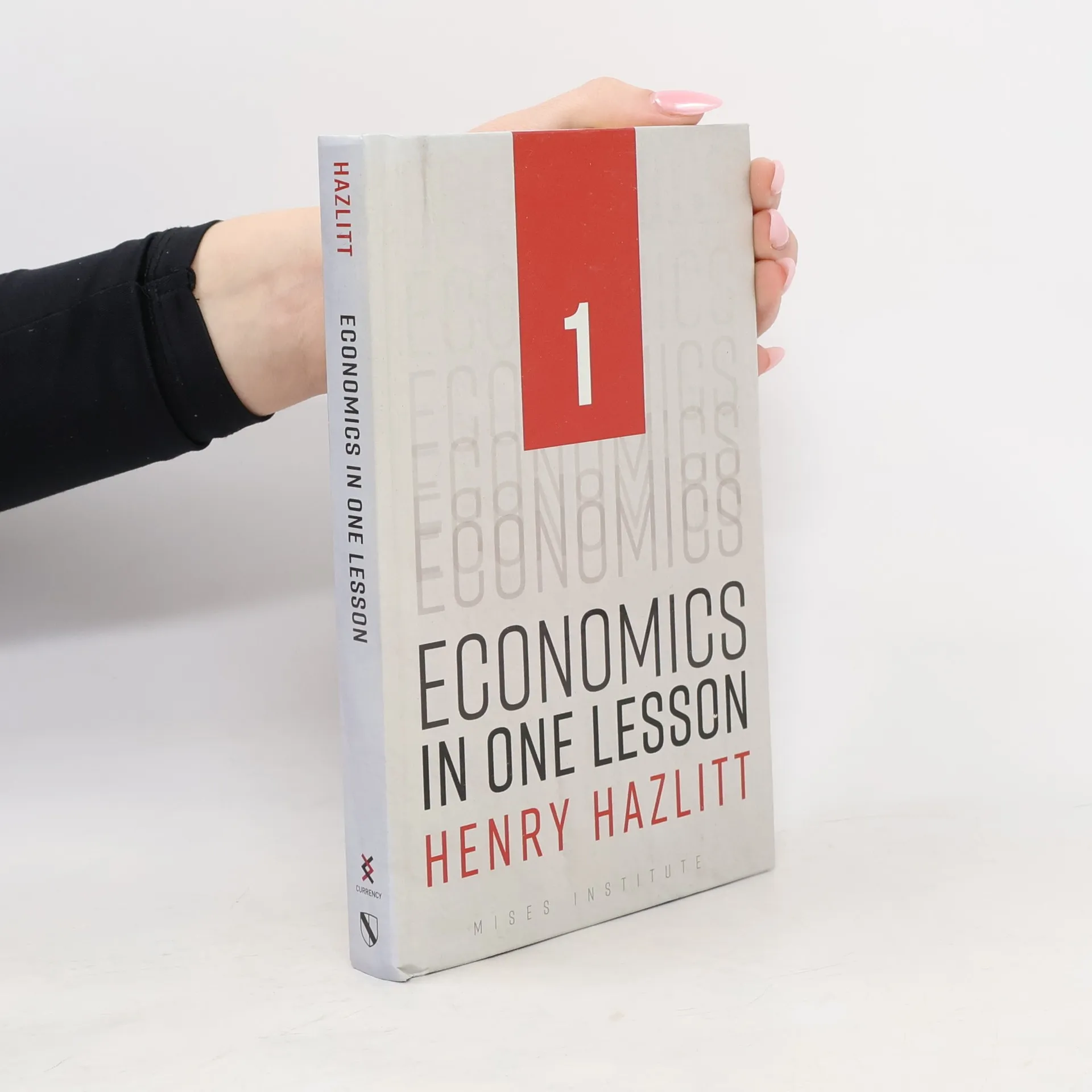
A million copy seller, Henry Hazlitt’s Economics in One Lesson is a classic economic primer. But it is also much more, having become a fundamental influence on modern “libertarian” economics of the type espoused by Ron Paul and others. Considered among the leading economic thinkers of the “Austrian School,” which includes Carl Menger, Ludwig von Mises, Friedrich (F.A.) Hayek, and others, Henry Hazlitt (1894-1993), was a libertarian philosopher, an economist, and a journalist. He was the founding vice-president of the Foundation for Economic Education and an early editor of The Freeman magazine, an influential libertarian publication. Hazlitt wrote Economics in One Lesson , his seminal work, in 1946. Concise and instructive, it is also deceptively prescient and far-reaching in its efforts to dissemble economic fallacies that are so prevalent they have almost become a new orthodoxy. Many current economic commentators across the political spectrum have credited Hazlitt with foreseeing the collapse of the global economy which occurred more than 50 years after the initial publication of Economics in One Lesson . Hazlitt’s focus on non-governmental solutions, strong — and strongly reasoned — anti-deficit position, and general emphasis on free markets, economic liberty of individuals, and the dangers of government intervention make Economics in One Lesson , every bit as relevant and valuable today as it has been since publication.