

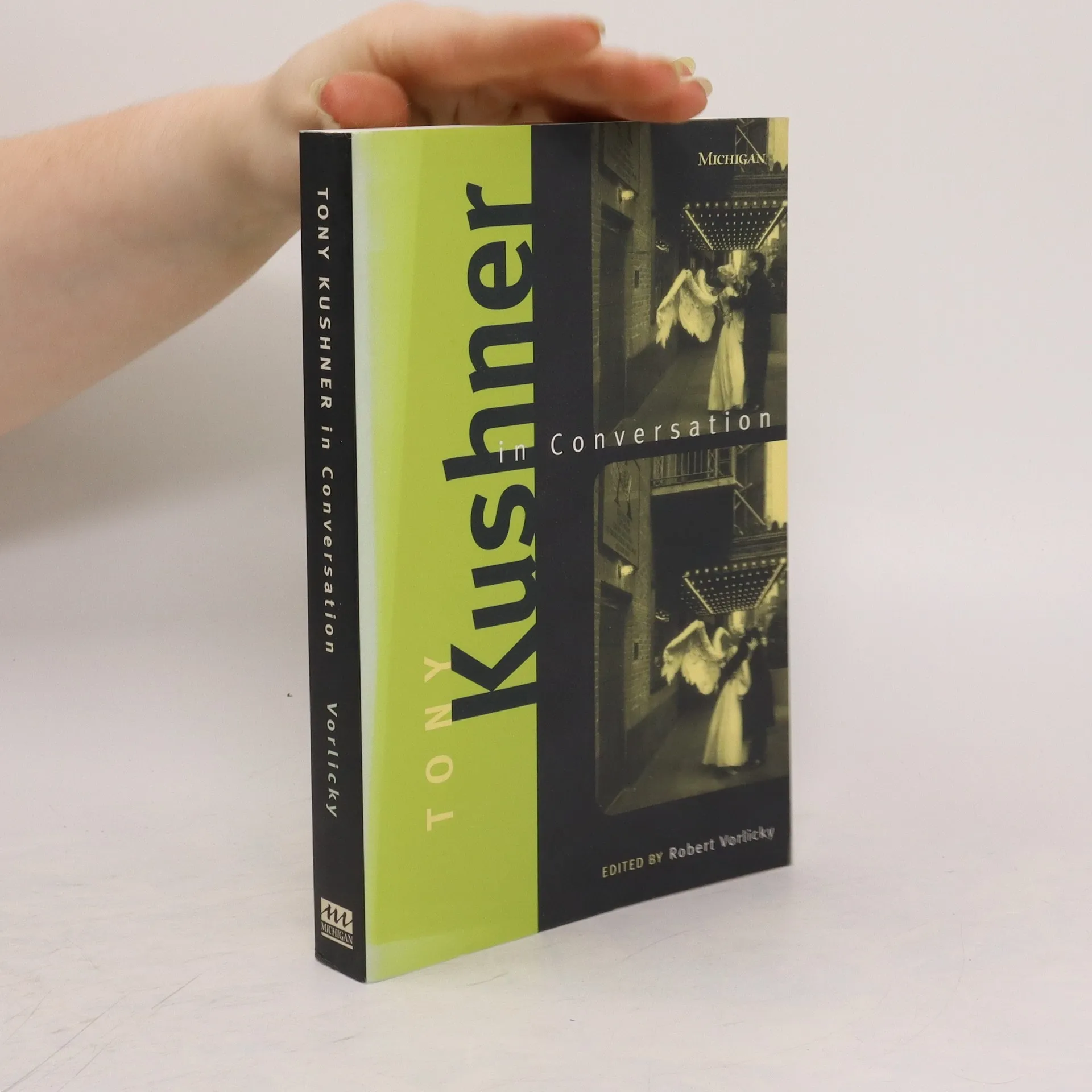


Tony Kushner is an American playwright whose works often grapple with complex social and political themes. His writing is characterized by its ambitious scope, epic scale, and profound human insight. Kushner fearlessly explores ethical dilemmas and moral ambiguities, prompting readers and audiences to consider the intricacies of the human experience. His distinctive voice and literary prowess mark him as a significant figure in contemporary drama.
Angels in America is a play in two parts by American playwright Tony Kushner. The play is a complex, often metaphorical, and at times symbolic examination of AIDS and homosexuality in America in the 1980s. Certain major and minor characters are supernatural beings (angels) or deceased persons (ghosts). The play contains multiple roles for several of the actors. Initially and primarily focusing on a gay couple in Manhattan, the play also has several other storylines, some of which occasionally intersect.
As a young gay man leading a closeted life in the 1960s American South, Toland Polk tries his best to keep a low profile. He’s aware of the racial injustice all around him—the segregationist politicians, the corrupt cops, the violent Klan members—but he feels powerless to make a difference. That all changes when he crosses paths with an impassioned coed named Ginger Raines.Ginger introduces him to a lively and diverse group of civil rights activists, folk singers, and night club performers—men and women who live authentically despite the conformist values of their hometown. Emboldened by this new community, Toland joins the local protests and even finds the courage to venture into a gay bar.No longer content to stay on the sidelines, Toland joins his friends as they fight against bigotry. But in Clayfield, Alabama, that can be dangerous—even deadly.
An illustrated retelling of the Czech opera in which a brother and sister find a way to outwit the bullying, bellowing, hurdy-gurdy grinder named Brundibar who will not let them earn money by singing in the town square
Gus Marcantonio, a retired longshoreman, summons his adult children home to the family's Brooklyn brownstone to discuss his recent decision to commit suicide. With his trademark mix of soaring intellect, searing emotion, and biting wit, legendary playwright Tony Kushner unfurls an epic tale of revolution, radicalism, family, love, sex, politics, real estate, unions and debts both unpaid and unpayable. With sweeping themes as hefty as its title, "IHo" (as it has been nicknamed) explores the dense and vexing issues that stem from the betrayal of a failed ideology and the challenges of family connectedness. This cerebral mammoth of a play asks what is left when the long-held belief systems that construct and inform one's identity prove to be empty.
Menagerie was Williams's first popular success and launched the brilliant, if somewhat controversial, career of our pre-eminent lyric playwright. Since its premiere in Chicago in 1944, with the legendary Laurette Taylor in the role of Amanda, the play has been the bravura piece for great actresses from Jessica Tandy to Joanne Woodward, and is studied and performed in classrooms and theatres around the world. The Glass Menagerie (in the reading text the author preferred) is now available only in its New Directions Paperbook edition. A new introduction by prominent Williams scholar Robert Bray, editor of The Tennessee Williams Annual Review, reappraises the play more than half a century after it won the New York Drama Critics Circle Award: "More than fifty years after telling his story of a family whose lives form a triangle of quiet desperation, Williams's mellifluous voice still resonates deeply and universally." This edition of The Glass Menagerie also includes Williams's essay on the impact of sudden fame on a struggling writer, "The Catastrophe of Success," as well as a short section of Williams's own "Production Notes." The cover features the classic line drawing by Alvin Lustig, originally done for the 1949 New Directions edition.
This is the first study to place Jewish refugee movementsfrom Nazism into a
wider framework of global forced migration from the latenineteenth through to
the twenty first century.