Der Pulitzer-Preisträger und Bestsellerautor Jared Diamond geht in seinem neuen Buch der Frage nach, wann Anführer tatsächlich einen Einfluss haben – und wann nicht. Wenn wir uns Geschichte erzählen, dann konzentrieren wir uns oft auf diejenigen, die an der Spitze standen: Welche Entscheidungen traf Napoleon , warum konnte Jesus so viele Menschen erreichen und was wäre geschehen, wenn Stauffenbergs Attentat auf Adolf Hitler erfolgreich gewesen wäre? Doch wie viel Einfluss Anführer wirklich haben, das ist gar nicht so genau geklärt. Ob in der Politik , in der Wirtschaft , im Sport oder in der Religion : Oft genug stehen Einzelne riesigen, behäbigen Systemen gegenüber, die sie kaum befehligen können. Anhand von zahlreichen Einzelbiographien – von Rachel Carson über Elon Musk bis hin zu Jesus Christus – und mit Blick auf umfassende Studien untersucht Diamond, wann ein Führungswechsel oder die Weitsicht eines Einzelnen tatsächlich einen Unterschied machen kann. Ein Buch für alle, die aus der Geschichte lernen wollen.
Jared Diamond Book order (chronological)
Jared Diamond is an author who delves into the interconnectedness of history, biology, and the geography of human societies. His work explores the deep forces that have shaped human civilization over millennia. Diamond approaches the analysis of complex societal phenomena with scientific rigor, yet maintains an accessible and engaging narrative style. His aim is to offer readers fresh perspectives on how our world came to be as it is.





In twenty short books, Penguin brings you the classics of the environmental movement. This is Jared Diamond's haunting account of visiting the mysterious stone statues of Easter Island, showing how a remote civilization destroyed itself by exploiting its own natural resources—and why we must heed this warning. Over the past 75 years, a new canon has emerged. As life on Earth has become irrevocably altered by humans, visionary thinkers around the world have raised their voices to defend the planet, and affirm our place at the heart of its restoration. Their words have endured through the decades, becoming the classics of a movement. Together, these books show the richness of environmental thought, and point the way to a fairer, saner, greener world.
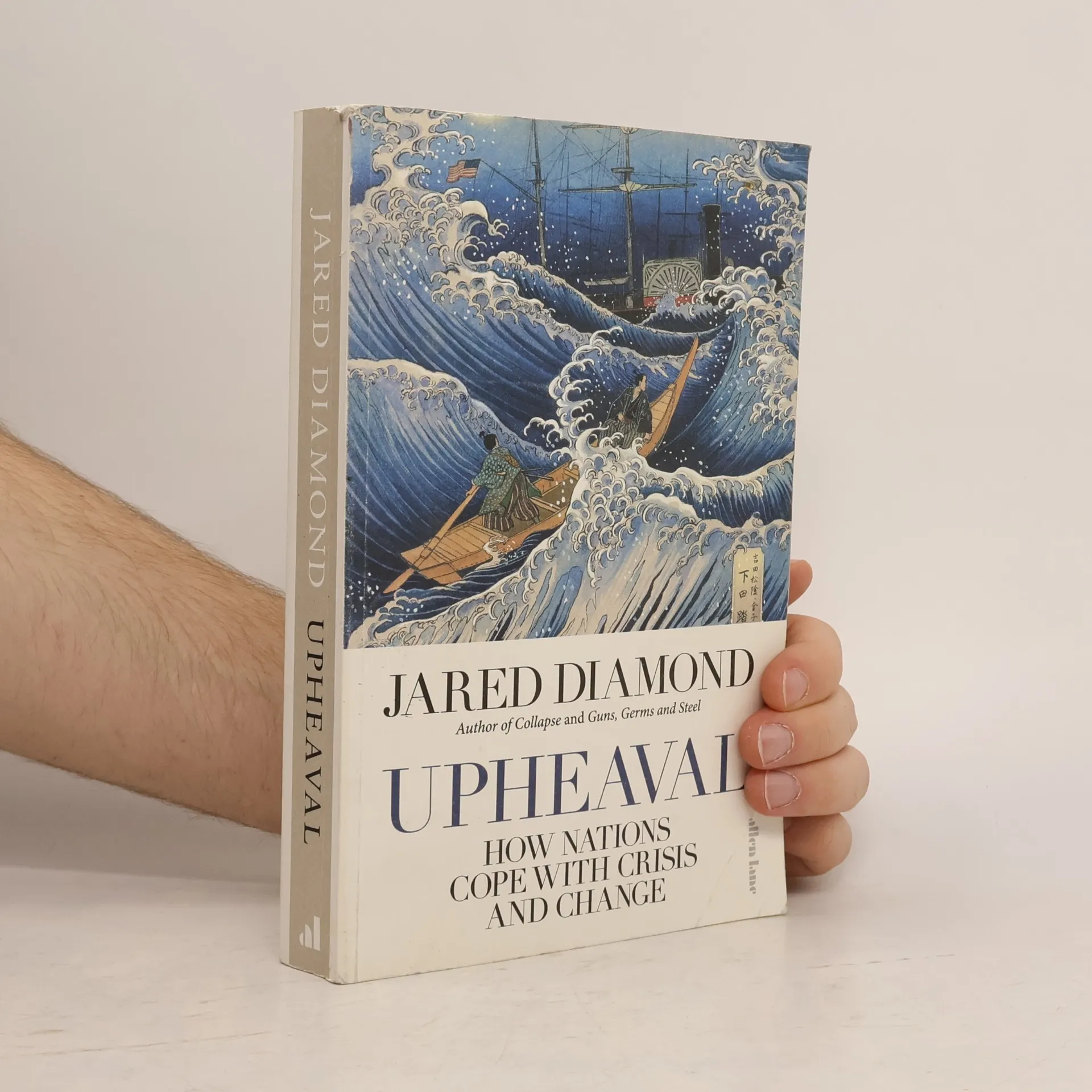
In his third book, Jared Diamond explores how successful nations recover from crises by adopting selective changes, a coping mechanism often associated with individuals. He compares the experiences of six countries that have faced significant upheavals, including Japan's forced opening by U.S. Commodore Perry, Finland's defense against the Soviet Union, and the turmoil in Chile and Indonesia, along with Germany and Austria's post-World War Two transformations. Drawing on his firsthand experiences and language skills in five of these nations, Diamond presents their histories and coping strategies, which include acknowledging responsibility, honest self-appraisal, and learning from other nations. He also examines whether the United States, Japan, and the world are effectively addressing their current crises and if lessons from the past can guide them. By integrating a psychological perspective with history, geography, biology, and anthropology, Diamond reveals the factors that influence how nations and individuals respond to significant challenges. The result is an epic yet deeply personal exploration of resilience and recovery in the face of adversity.
Ружья, Микробы и Сталь - Ruzh'ya, Mikroby i Stal'
- 768 pages
- 27 hours of reading
В этой книге Джаред объединяет открытия, сочетая археологию и эпидемиологию с историей и географией. Для автора очевидно, что экологические и географические факторы сформировали современный мир. Он объясняет, как и почему человеческие общества разных континентов следовали различным путям развития, и исследует причины доминирования и подчинения. 'Ружья, Микробы и Сталь' опровергает расистские теории и показывает, что превосходство Европы и Азии обусловлено их географией, более благоприятной для земледелия, одомашнивания животных и обмена информацией. Книга также демонстрирует, как история и биология могут поддерживать друг друга для глубокого понимания человеческой сущности.
Edge.org: Wetenschappelijke parels
Het belangrijkste wetenschappelijke nieuws volgens 193 'briljante geesten'
- 528 pages
- 19 hours of reading
Bijna dagelijks worden we geconfronteerd met nieuwe inzichten en weetjes, variërend van wereldbelang tot drijfzand. Of het nu gaat om dieetvoorschriften, experimentele medicijnen, technologische doorbraken of klimaatvoorspellingen, het is voor leken vaak onmogelijk om waardevolle informatie te onderscheiden van onzin. Wat zijn de ontdekkingen die écht invloed hebben op onze toekomst? John Brockman, oprichter van edge.org, vroeg invloedrijke wetenschappers en denkers naar het meest interessante recente wetenschappelijke nieuws. Steven Pinker wijst op de kwantificering van menselijke vooruitgang als een opmerkelijke ontwikkeling. Chris Anderson is onder de indruk van het sociale experiment dat internet vertegenwoordigt en de opkomst van een wereldwijd collectief bewustzijn. Max Tegmark waarschuwt dat technologische en wetenschappelijke vooruitgang de leercurve van onze wijsheid overstijgt, wat zorgwekkend is, vooral bij gevoelige onderwerpen zoals kernwapens. Peter Gabriel benadrukt hoe hersenwetenschap de grens tussen fantasie en werkelijkheid vervaagt. Daarnaast delen ook John C. Mather, Bill Joy, Michael Shermer, Matt Ridley, George Church en anderen hun inzichten, wat een breed scala aan perspectieven biedt op de huidige wetenschappelijke ontwikkelingen.
Guns, Germs, and Steel
The Fates of Human Societies - 20th Anniversary Edition
- 480 pages
- 17 hours of reading
For use in schools and libraries only. In a Pulitzer Prize-winning book, the author dismantles racially based theories of human history by revealing the environmental factors he feels are responsible for history's broadest patterns. Reissue.
Da te solo a tutto il mondo. Un ornitologo osserva le società umane
- 126 pages
- 5 hours of reading
The World Until Yesterday
- 512 pages
- 18 hours of reading
The no. 1 bestselling author of Collapse and Guns, Germs and Steel explores the profound lessons that traditional societies offer us todayOver the past 500 years, the West achieved global dominance, but do Westerners necessarily have better ideas about how to raise children, care for the elderly, or simply live well? In this epic journey into our past, Jared Diamond reveals that traditional societies around the world offer an extraordinary window into how our ancestors lived for the majority of human history - until virtually yesterday, in evolutionary terms. Drawing on decades of his own fieldwork, Diamond explores how tribal people approach essential human problems, from health and diet to conflict resolution and language, and discovers they have much to teach us.Jared Diamond is the Pulitzer Prize-winning author of the seminal million-copy-bestseller Guns, Germs, and Steel, which was named one of TIME's best non-fiction books of all time, and Collapse, a #1 international bestseller. A professor of geography at UCLA and noted polymath, Diamond's work has been influential in the fields of anthropology, biology, ornithology, ecology and history, among others.
This explains everything : deep, beautiful, and elegant theories of how the world woks
- 432 pages
- 16 hours of reading
In This Explains Everything, John Brockman, founder and publisher of Edge.org, asked experts in numerous fields and disciplines to come up with their favorite explanations for everyday occurrences. Why do we recognize patterns? Is there such a thing as positive stress? Are we genetically programmed to be in conflict with each other? Those are just some of the 150 questions that the world's best scientific minds answer with elegant simplicity. With contributions from Jared Diamond, Richard Dawkins, Nassim Taleb, Brian Eno, Steven Pinker, and more, everything is explained in fun, uncomplicated terms that make the most complex concepts easy to comprehend.
Talks about the mysterious collapse of past civilizations - and what this means for the future. Bringing together evidence from many sources and piecing together the myriad influences, from climate to culture, that make societies self-destruct, this book shows how unlike our ancestors we can benefit from our knowledge of the past.
Guns, germs and steel: A short history of everybody for the last 13,000 years
- 480 pages
- 17 hours of reading
This book answers the most obvious, the most important, yet the most difficult question about human history: why history unfolded so differently on different continents. Geography and biography, not race, moulded the contrasting fates of Europeans, Asians
Why Is Sex Fun? The Evolution of Human Sexuality
- 176 pages
- 7 hours of reading
Why are humans one of the few species to have sex in private? Why are human females the only mammals to go through menopause? Why is the human penis so unnecessarily large? There is no more knowledgeable authority than the award-winning author of The Third Chimpanzee to answer these intriguing questions. Here is a delightfully entertaining and enlightening look at the unique sex lives of humans.
Den mänskliga apans uppgång och fall
- 416 pages
- 15 hours of reading
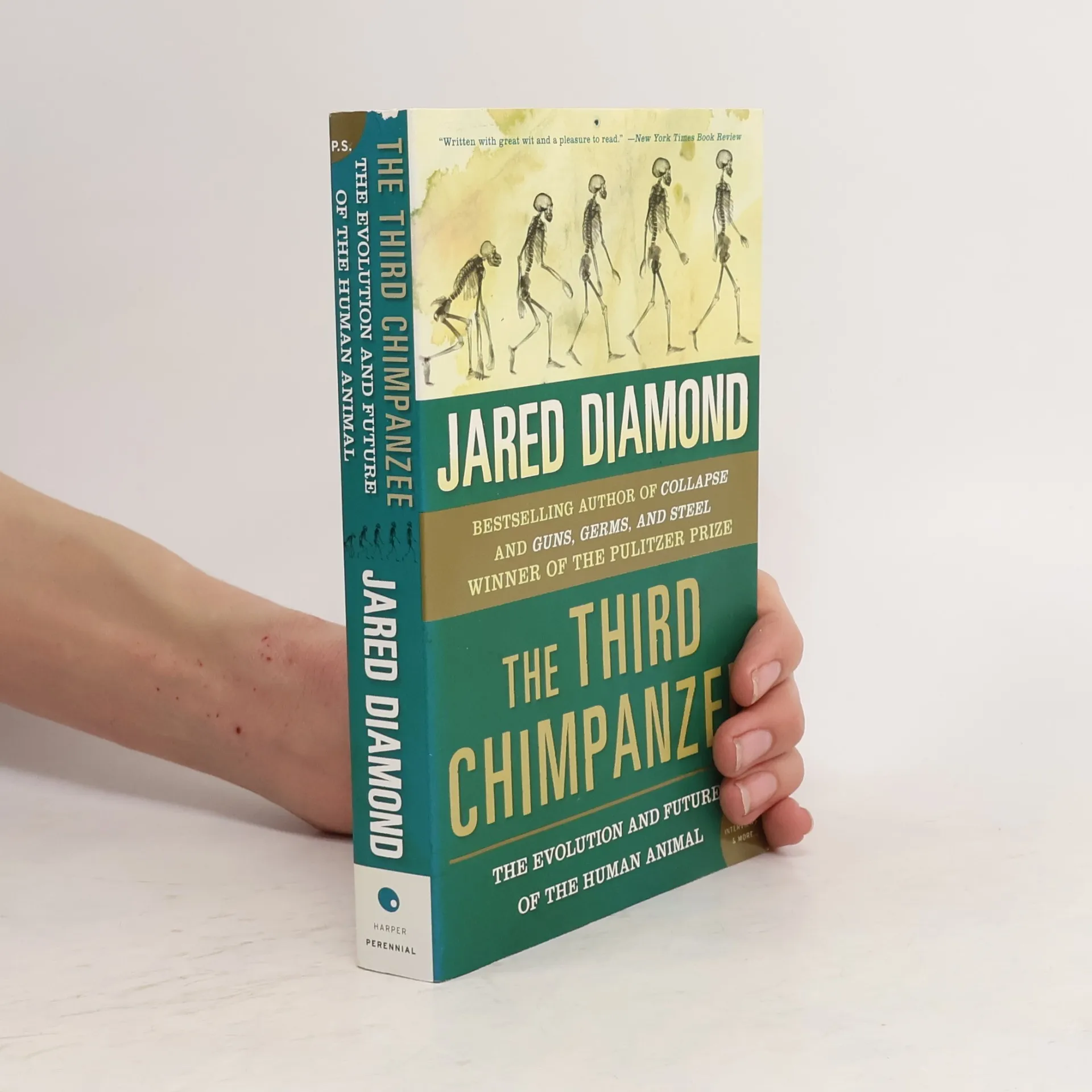
The Development of an Extraordinary Species We human beings share 98 percent of our genes with chimpanzees. Yet humans are the dominant species on the planet -- having founded civilizations and religions, developed intricate and diverse forms of communication, learned science, built cities, and created breathtaking works of art -- while chimps remain animals concerned primarily with the basic necessities of survival. What is it about that two percent difference in DNA that has created such a divergence between evolutionary cousins? In this fascinating, provocative, passionate, funny, endlessly entertaining work, renowned Pulitzer Prize–winning author and scientist Jared Diamond explores how the extraordinary human animal, in a remarkably short time, developed the capacity to rule the world . . . and the means to irrevocably destroy it.