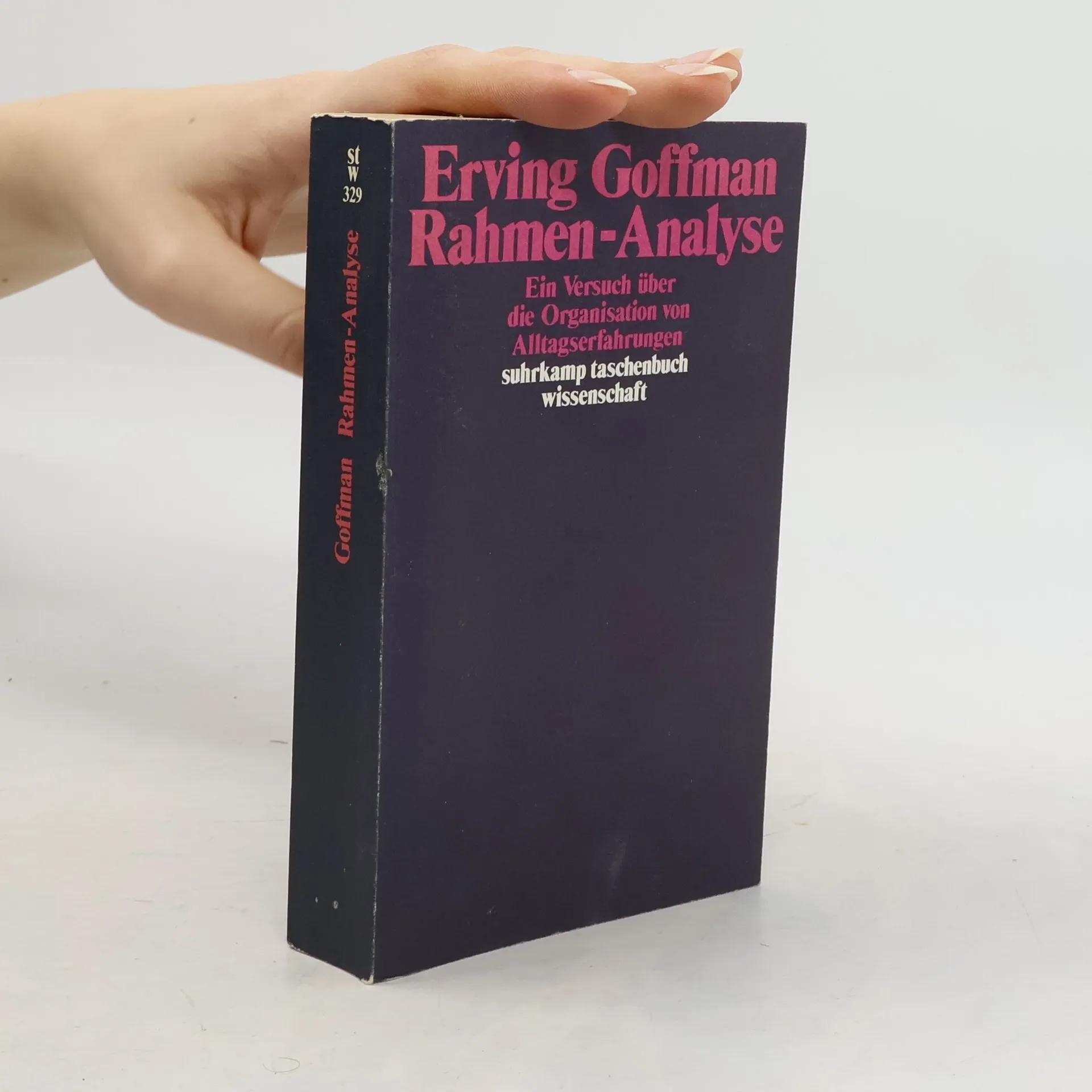
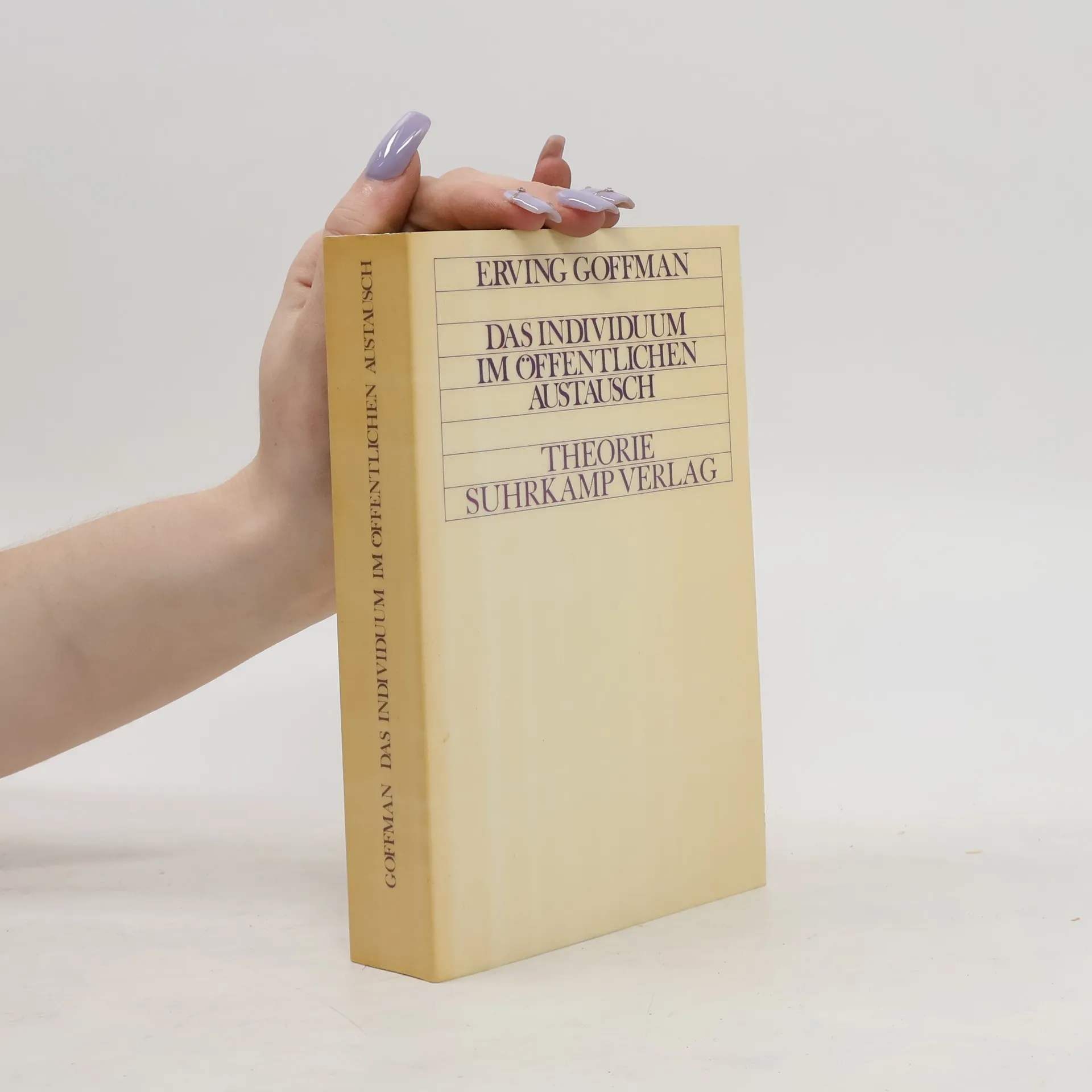
Erving Goffman Books
Erving Goffman was a Canadian sociologist and writer renowned for his profound analysis of social interaction through a dramaturgical lens. His work delved into symbolic interaction, social order, and impression management, drawing inspiration from thinkers like Durkheim, Freud, and Mead. Goffman's theories remain highly influential today, offering critical insights into the relationship between individual behavior and the reproduction of social systems, solidifying his status as a major 20th-century sociological thinker.






Asylums: Essays on the social situation of mental patients and other inmates
- 386 pages
- 14 hours of reading
Asylums is an analysis of life in "total institutions" -- closed worlds such as prisons, army training camps, naval vessels, boarding schools, monastaries, nursing homes and mental hospitals -- where the inmates are regimented, surrounded by other inmates, and unable to leave the premises. It describes what these institutions make of the inmate, and what he or she can make of life inside them. Special attention is focused on mental hospitals, drawing on the author's year of field work at St. Elizabeth's in Washington, D.C., one of America's most well-known institutions. It is the thesis of this book that the most important factor in forming a mental-hospital patient is the institution, not the illness, and that the patient's reactions and adjustments are those of inmates in other types of institutions as well.The first essay is a general portrait of life in a total instituion. The other three consider special aspects of this the initial effects of institutionlization on the inmate's previous social relationships; the ways of adapting once in the institution; and the role of the staff in presenting to the inmate the facts of his or her situation.
Relations in Public
- 464 pages
- 17 hours of reading
The narrative explores the evolving perception of safety in public spaces, highlighting how recent events have transformed the sense of security that once defined these environments. It delves into the psychological impact of this shift, examining societal changes and the implications for individual behavior and community dynamics. Through personal stories and broader societal analysis, the book invites readers to reflect on the meaning of safety and the challenges of navigating public life in today's world.
Erving Goffman effectively extends his argument in favor of a diagnosis of deviant behavior which takes account of the whole social situation.
"Not then, men and their moments. Rather, moments and their men," writes Erving Goffman in the introduction to his groundbreaking 1967 Interaction Ritual, a study of face-to-face interaction in natural settings, that class of events which occurs during co-presence and by virtue of co-presence. The ultimate behavioral materials are the glances, gestures, positionings, and verbal statements that people continuously feed into situations, whether intended or not. This is an interesting account of daily social interaction viewed with a new perspective for the logic of our behavior in ordinary circumstances.
The Presentation of Self in Everyday Life
- 259 pages
- 10 hours of reading
A notable contribution to our understanding of ourselves. This book explores the realm of human behavior in social situations and the way that we appear to others. Dr. Goffman uses the metaphor of theatrical performance as a framework. Each person in everyday social intercourse presents himself and his activity to others, attempts to guide and control the impressions they form of him, and employs certain techniques in order to sustain his performance, just as an actor presents a character to an audience. The discussions of these social techniques offered here are based upon detailed research and observation of social customs in many regions.
Stigma
- 176 pages
- 7 hours of reading
The dwarf, the disfigured, the blind man, the homosexual, the ex-mental patient and the member of a racial or religious minority all share one characteristic: they are all socially "abnormal", and therefore in danger of being considered less then human. Whether ordinary people react by rejection, by over-hearty acceptance or by plain embarressment, their main concern is with such an individual's deviance, not with the whole of his personality. "Stigma" is a study of situations where normal and abnormal meet, and of the ways in which a stigmatized person can develop a more positive social and personal identity.
Erving Goffman will influence the thinking and perceptions of generations to come. In Frame Analysis, the brilliant theorist writes about the ways in which people determine their answers to the questions “What is going on here?” and “Under what circumstances do we think things are real?”
This book brings together five of Goffman's seminal essays: Replies and Responses, Response Cries, Footing, The Lecture, and Radio Talk.
AuszugIn diesem Buch werden zwei wichtige Texte dieses bedeutenden Soziologen erstmals in deutscher Übersetzung zugänglich gemacht. »Die Interaktionsordnung« ist der letzte von ihm selbst veröf- fentlichte Text, in dem er seine Theorie der Interaktion prägnant zusammenfaßt. Im zweiten Text »Das Arrangement der Geschlechter« leuchtet Goffman seine Entdeckung der Eigengesetzlichkeit zwischenmenschlicher Interaktion in ihrer Bedeutung für das Verhältnis der Geschlechter aus.
Rahmen-Analyse
- 620 pages
- 22 hours of reading
Erving Goffman untersucht in diesem Buch die allgemeinen Merkmale und Strukturen alltäglicher Interaktionspraktiken.
Le sens commun. Asiles
- 452 pages
- 16 hours of reading
"Avant de devenir professeur de sociologie à l'université de Berkeley, Erving Goffman s'est fait, trois années durant, l'ethnologue scrupuleux des malades mentaux internés dans les hôpitaux psychiatriques. Il présente dans Asiles une interprétation en profondeur de la vie hospitalière qui situe les pratiques thérapeutiques quotidiennes dans leur cadre le plus objectif, celui d'une " institution totalitaire ", c'est-à-dire d'un établissement investi, comme la prison ou le camp de concentration par exemple, de la fonction ambiguë de neutraliser ou de réadapter à l'ordre social un type particulièrement inquiétant de déviants. La tension, et souvent la contradiction, qui existe entre l'exigence thérapeutique et ces impératifs de sécurité et de contrôle social rend compte du mode conflictuel de l'existence asilaire et des malentendus de la vie quotidienne au sein de l'hôpital. Par-delà les troubles de sa subjectivité, le malade mental est ainsi aliéné au second degré, parce que la maladie est institutionnalisée dans un espace social qui lui impose les déterminations majeures de la servitude."--Site web de l'éditeur
Selbst und Interaktion - Situation und Gesellschaft
Ausgewählte Schriften I
- 500 pages
- 18 hours of reading
Erving Goffman ist einer der einflussreichsten Soziologen des 20. Jahrhunderts. Seine Konzepte haben weit über die Grenzen der Soziologie hinaus in den Kanon verschiedener Disziplinen Eingang gefunden. Teils als mangelhaft beklagte Übersetzungen sowie die fehlende Rezeption unbekannterer Texte verstellen jedoch die Einsicht in das umfassende Potenzial seines Gesamtwerks. Die von René Salomon und Andreas Göbel zusammengestellten Schriften enthalten Erst- und Neuübersetzungen von Brigitte Luchesi, welche die gesamte Werkbiografie umfassen. Eine wissenschaftliche Kommentierung der Texte macht werkübergreifende Zusammenhänge und spezifische Übersetzungsentscheidungen sichtbar. Dies ermöglicht eine neue Kontextualisierung der Goffman'schen Theorien und gibt Einblick in Kontinuitäten und Diskontinuitäten seines Denkens.
Geschlecht und Werbung
- 327 pages
- 12 hours of reading
Der Band versammelt Aufsätze, in denen sich Goffman mit verschiedenen Aspekten der Kommunikation auseinandersetzt. Er tut dies in der ihm eigenen, höchst originellen und geistvollen Weise - vor allem aber analytisch folgenreich. Genau genommen handelt es sich um eine Fortführung und Ausarbeitung desjenigen Ansatzes, mit dem seine Rahmenanalyse endet. Goffman wendet sich hier dem Sprechen in alltäglichen Situationen zu. Seine besondere Beachtung nonverbaler Aspekte macht deutlich, dass Sprechen immer Teil einer sozialen Situation ist, was bei der Analyse von Kommunikation nicht außer Acht gelassen werden darf. Das Buch richtet sich an alle, die sich mit Sprache, Interaktion und sozialen Situationen beschäftigen - vor allem in der Soziologie, der Linguistik und der Ethnologie. Erving Goffman (1922-1982) lehrte an der Universität von Pennsylvania Anthropologie und Soziologie und ist inzwischen ein Klassiker der Soziologie der sich mit anthropologischen, sozialpsychologischen und psychiatrischen Problemen des sozialen, insbesondere sozial abweichenden Verhaltens beschäftigte. Goffmans Arbeiten wie "Wir alle spielen Theater", "Rahmenanalyse" oder "Geschlecht und Werbung" wurden von allen kulturwissenschaftlichen Disziplinen rezipiert.