Explore the latest books of this year!
Bookbot

David Ewing Duncan Book order (chronological)

    David Ewing Duncan is a celebrated author whose works delve into complex subjects with incisive intelligence. His writing is distinguished by its ability to transform intricate scientific and societal issues into compelling narratives. Duncan explores the profound implications of technological advancements and their impact on the human condition. His work prompts readers to consider the future and our place within it.

    David Ewing Duncan
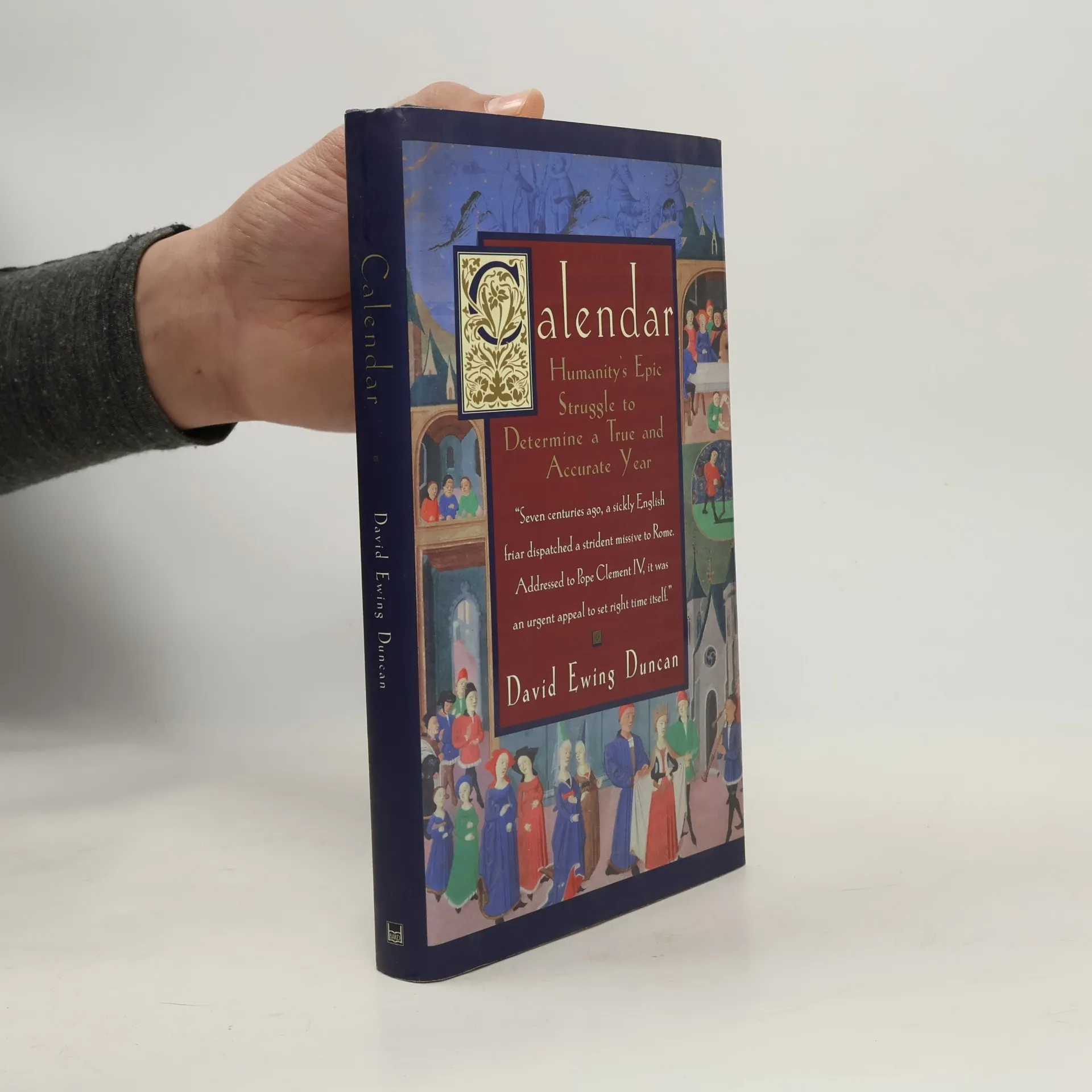
    Calendar
    Talking to Robots
    • Talking to Robots

      • 320 pages
      • 12 hours of reading

      What robot and AI systems are being built and imagined right now? What do they say about us, their creators? Will they usher in a fantastic new future, or destroy us? What do some of our greatest thinkers, from physicist Brian Greene and futurist Kevin Kelly to inventor Dean Kamen, geneticist George Church, and filmmaker Tiffany Shlain, anticipate about our human-robot future? For even as robots and A.I. intrigue us and make us anxious about the future, our fascination with robots has always been about more than the potential of the technology -- it's also about what robots tell us about being human

      Talking to Robots2019
      3.8
    • Calendar

      Humanity's Epic Struggle to Determine a True and Accurate Year

      • 266 pages
      • 10 hours of reading

      The adventure spans the world from Stonehenge to astronomically aligned pyramids at Giza, from Mayan observatories at Chichen Itza to the atomic clock in Washington, the world's official timekeeper since the 1960s. We visit cultures from Vedic India and Cleopatra's Egypt to Byzantium and the Elizabethan court; and meet an impressive cast of historic personages from Julius Caesar to Omar Khayyam, and giants of science from Galileo and Copernicus to Stephen Hawking. Our present calendar system predates the invention of the telescope, the mechanical clock, and the concept ol zero and its development is one of the great untold stories of science and history. How did Pope Gregory set right a calendar which was in error by at least ten lull days? What did time mean to a farmer on the Rhine in 800 A.D.? What was daily life like in the Middle Ages, when the general population reckoned births and marriages by seasons, wars, kings'' reigns, and saints' days? In short, how did the world

      Calendar1998
      3.9