

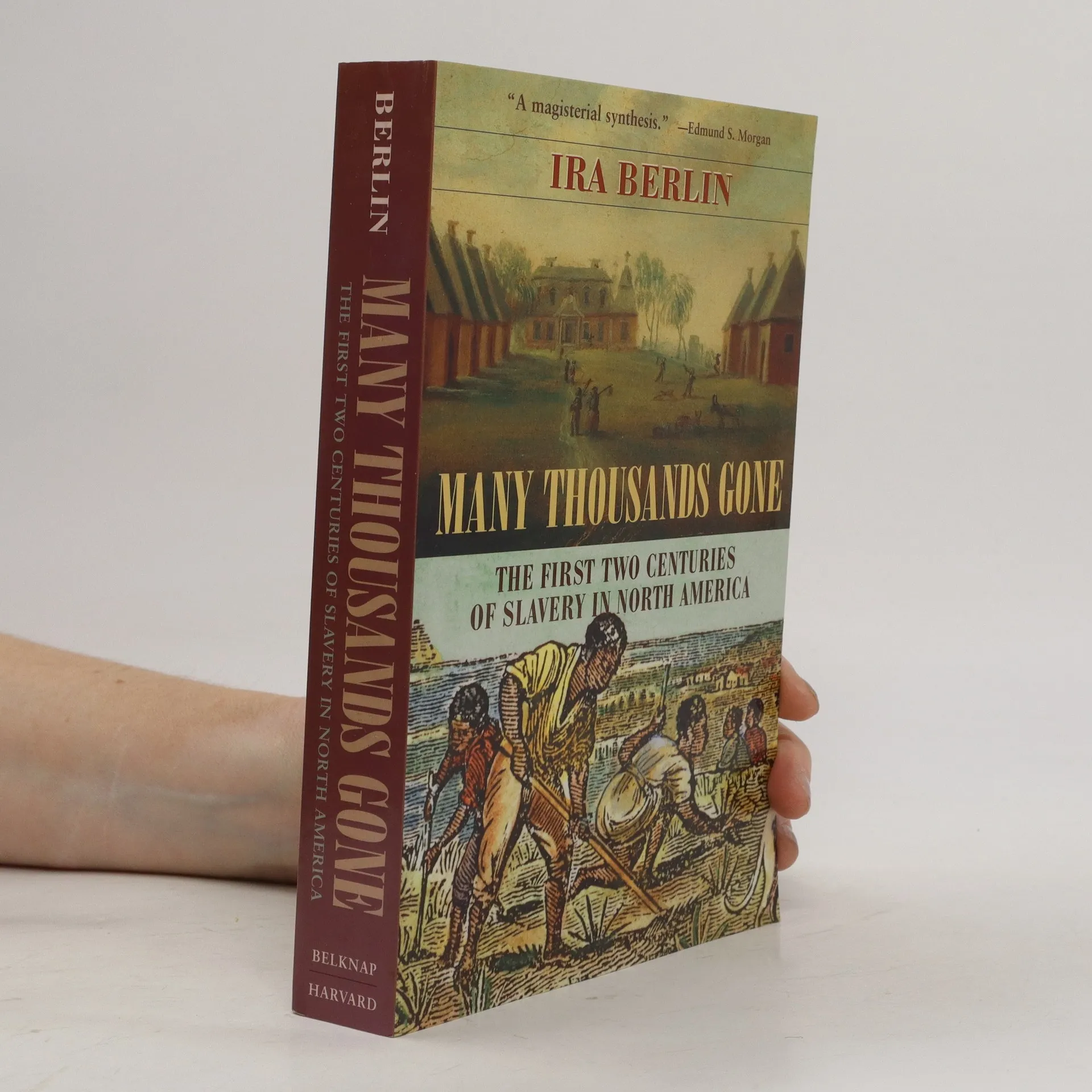
Today, many Americans associate slavery primarily with cotton, the deep South, and the African-American church. However, at the start of the nineteenth century, after nearly two centuries of African-American life in mainland North America, few slaves grew cotton, resided in the deep South, or practiced Christianity. This work traces the evolution of black society from the early seventeenth century through the Revolution. Ira Berlin, a prominent historian, reintegrates slaves into the narrative of the American working class and the broader national tapestry. African Americans labored as field hands on tobacco and rice plantations, skilled artisans in port cities, and soldiers on the frontier, striving to create their own world under challenging circumstances. Spanning from the North to the Chesapeake Bay and the Mississippi Valley, the narrative reveals the diverse forms of slavery and freedom before cotton's dominance. The transition from creole slaves—who worked alongside owners, free blacks, and indentured whites—to plantation generations highlights the grueling labor that defined their society and the preservation of African traditions. As labor dynamics evolved, so too did the relationships between slaves and masters, and between slaves and society. Berlin illustrates how the meanings of slavery and race were continuously renegotiated as the nation moved toward independence and confronted Enlightenment ideals.
Ira Berlin Books
January 1, 1941 – June 5, 2018
Ira Berlin was a distinguished historian specializing in American slavery. His work delved into the complex themes of bondage and its impact on American society. Berlin was known for his deep research and insightful analyses that illuminated this crucial chapter of American history. His contributions to understanding the past were profound and lasting.


Many Thousand Gone: The First Two Centuries of Slavery in North America
- 512 pages
- 18 hours of reading
Ranging from the early 1600s to the beginning of the nineteenth century, a panoramic survey of the lives of blacks under slavery reveals the changing nature of slavery as the first generations of creole slaves gave way to the plantation workers. UP.