

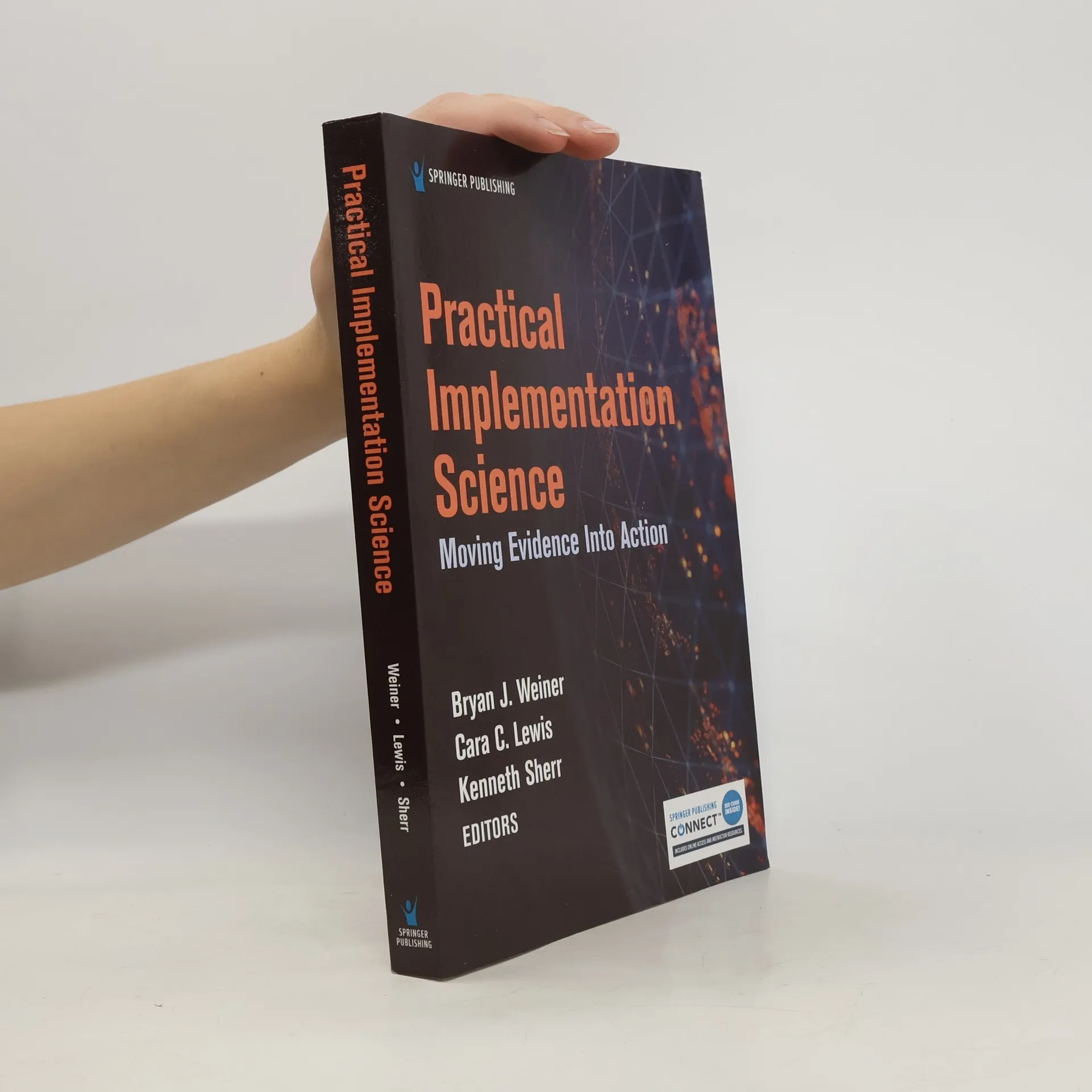
Awarded First Place in the AJN 2022 Book of the Year Awards in the Community/Public Health Category, this text is ideal for a master’s-level implementation science course. It addresses the need for building skills among trainees focused on implementation practice rather than research, preparing them to collaborate with scientists to enhance effective implementation in public health and health systems. Designed for graduate health professionals and advanced undergraduates, it offers an engaging and accessible approach to mastering the steps of using implementation science to improve public health. The textbook illustrates how to effectively implement evidence-based practices through relevant theories, frameworks, models, tools, and research findings. Real-world case studies across public health and health policy provide essential context, particularly for communities in low-to-middle-income countries. Organized around the steps of planning, executing, and evaluating implementation efforts, it covers assessing the knowledge-practice gap, selecting and adapting evidence-based practices, engaging stakeholders, and evaluating efforts. Each chapter features a "how to" approach, learning objectives, summaries, and emphasized key points, making it suitable for students in public health, health policy, nursing, medicine, and social work. This text aims to bridge the gap from scientific evidence to effective practice.
Kenneth J. Sherry Book order (chronological)

Bpmn Pocket Reference
- 126 pages
- 5 hours of reading
The BPMN Pocket Reference is a guide to each BPMN notation as described in the Version 2.0 specification. The individual notations are described clearly using individual graphical diagrams showing how they are depicted. Each notation is explained with a brief description and examples of use. Notations can be easily referenced by the detailed table of contents giving the exact page of the notation and examples. The book is divided into 20 chapters: Activity Notations, Task Types, Call Activities, Connectors, Messages, Conversations, Choreography, Artefacts, Gateways, Process Pools and Swimlanes, Start Events, End Events, Inline Intermediate Events, Boundary Intermediate Events, Escalation Events, Signal Events, Cancel Events, Error Events, Compensation Events and Collapsed Event Sub-Process.