

Explore the latest books of this year!
Bookbot

John Gerring

    January 1, 1962

    John Gerring is a Professor of Political Science at Boston University. His research focuses on political institutions and the methodologies of political science, seeking to understand how institutional arrangements influence political outcomes. He strives to overcome the limitations of traditional approaches to comparative politics through innovative methodological tools.

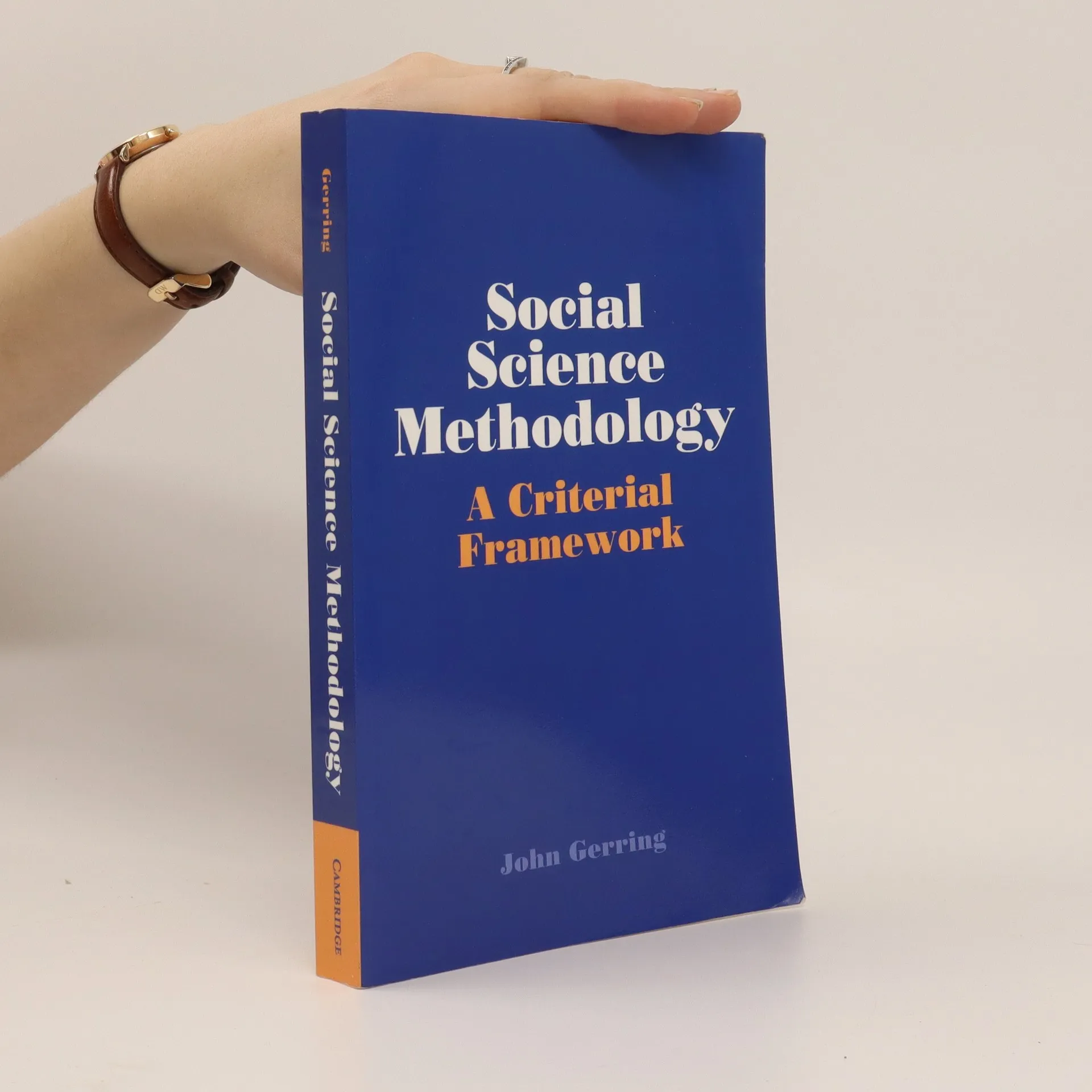
    Social Science Methodology
    Case Study Research
    Applied social science methodology
    • Applied social science methodology

      • 442 pages
      • 16 hours of reading

      This textbook provides a clear, concise, and comprehensive introduction to methodological issues encountered by the various social science disciplines. It emphasizes applications, with detailed examples, so that readers can put these methods to work in their research. Within a unified framework, John Gerring and Dino Christenson integrate a variety of methods - descriptive and causal, observational and experimental, qualitative and quantitative. The text covers a wide range of topics including research design, data-gathering techniques, statistics, theoretical frameworks, and social science writing. It is designed both for those attempting to make sense of social science, as well as those aiming to conduct original research. The text is accompanied by online practice questions, exercises, examples, and additional resources, including related readings and websites. An essential resource for undergraduate and postgraduate programs in communications, criminal justice, economics, business, finance, management, education, environmental policy, international development, law, political science, public health, public policy, social work, sociology, and urban planning.

      Applied social science methodology
      4.5
    • Case Study Research

      Principles and Practices

      • 278 pages
      • 10 hours of reading

      Case Study Principles and Practices aims to provide a general understanding of the case study method as well as specific tools for its successful implementation. These tools can be utilized in all fields where the case study method is prominent, including business, anthropology, communications, economics, education, medicine, political science, social work, and sociology. Topics include the definition of a 'case study,' the strengths and weaknesses of this distinctive method, strategies for choosing cases, an experimental template for understanding research design, and the role of singular observations in case study research. It is argued that a diversity of approaches - experimental, observational, qualitative, quantitative, ethnographic - may be successfully integrated into case study research. This book breaks down traditional boundaries between qualitative and quantitative, experimental and nonexperimental, positivist and interpretivist.

      Case Study Research
      3.9
    • Social Science Methodology

      • 320 pages
      • 12 hours of reading

      This book is an introduction to methodological issues in the social sciences that is appropriate for advanced undergraduates, graduate students, and general readers with some background in social science subjects. It is a concise and readable guide to doing and evaluating work in anthropology, economics, history, political science, psychology, and sociology.

      Social Science Methodology
      3.7