




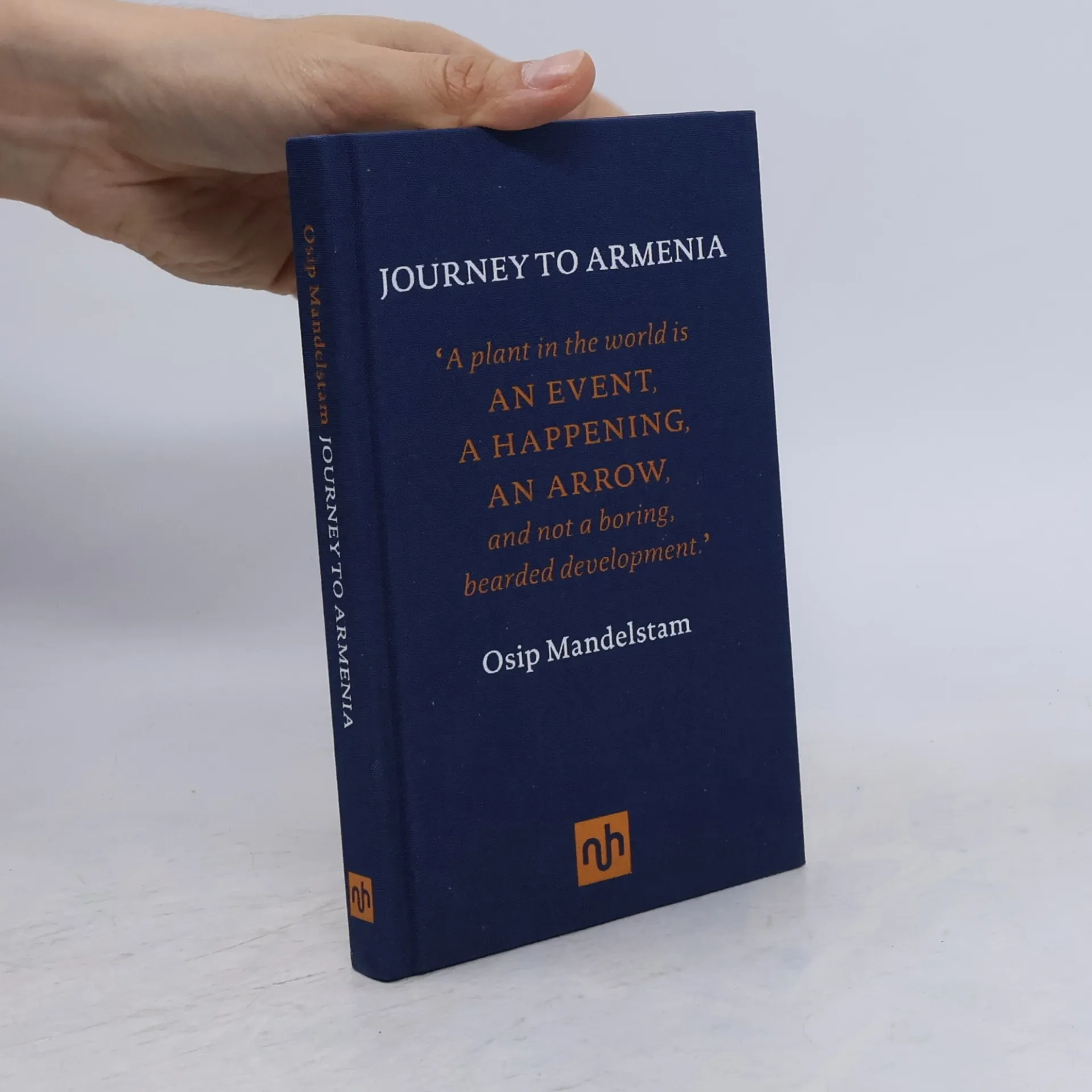
Journey to Armenia
- 192 pages
- 7 hours of reading
The last published work of a great poet who wrote a few lines attacking Stalin and was shortly thereafter exiled to Siberia where he died near Vladivostok six years later. An inimitable volume, Journey to Armenia is a travel book in name only. Osip Mandelstam visited Armenia in 1930, and during the eight months of his stay, he rediscovered his poetic voice and was inspired to write an experimental meditation on the country and its ancient culture. This edition also includes the companion piece, “Conversation About Dante,” which Seamus Heaney called “Osip Mandelstam’s astonishing fantasia on poetic creation.” An incomparable apologia for poetic freedom and a challenge to the Bolshevik establishment, the essay was dictated by the poet to his wife, Nadezhda Mandelstam, in 1934 and 1935, during the last phase of his itinerant life. It has close ties to Journey to Armenia.