
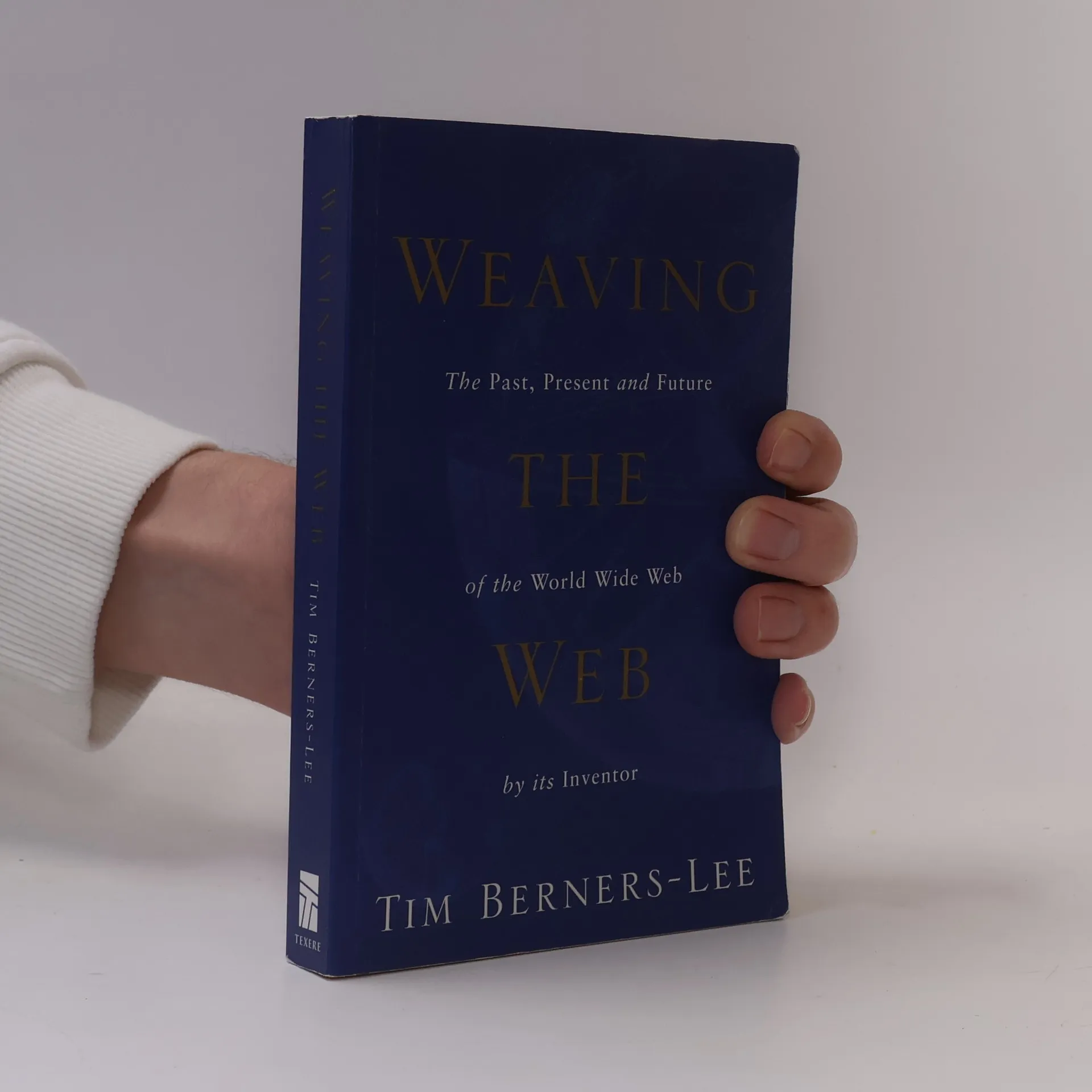
"Tim Berners-Lee, the inventor of the World Wide Web, has been hailed by Time magazine as one of the 100 greatest minds of this century. His creation has already changed the way people do business, entertain themselves, exchange ideas, and socialize with one another."--BOOK JACKET. "Berners-Lee offers insights to help readers understand the true nature of the Web, enabling them to use it to their fullest advantage. He shares his views on such critical issues as censorship, privacy, the increasing power of software companies in the online world, and the need to find the ideal balance between the commercial and social forces on the Web. His criticism of the Web's current state makes clear that there is still much work to be done. Finally, Berners-Lee presents his own plan for the Web's future, one that calls for the active support and participation of programmers, computer manufacturers, and social organizations to make it happen."--BOOK JACKET.
Mark Fischetti Books


Weaving the Web
The Past, Present and Future of the World Wide Web by Its Inventor
- 272 pages
- 10 hours of reading
Building the Internet was the collective achievement of hundreds of engineers and scientists. The intriguing thing about the World Wide Web is that, alone among Internet technologies, it was conceived and created by a single individual--the English physicist Tim Berners-Lee. He articulated the vision of a global universe of linked documents, wrote the first browser and server programs and came up with the protocols and acronynms (HTTP, URL, HTML, WWW) which are now part of all our lives. <p> Given the way the Web has become the dominant communications technology of our time, one could argue that Berners-Lee is the guy who invented the future. Yet up to now he has remained reticent about how he did it. <i>Weaving the Web</i> is therefore the definitive account of how the World Wide Web came to be. No one else could have written this book--the history of the Web straight from the source. Yet it's a characteristically modest and self-effacing book, in which Berners-Lee relegates the story of how he came to create the Web to the first 90 pages. They make riveting reading as they tell a story of ingenuity and persistence and vision; but most of all they tell a remarkable parable about civic values. The Intellectual Property Rights embodied in the Web could have made Berners-Lee the richest man in history. Yet he turned his back on the money and set his creation free. He was determined from the outset that the Web should belong not to him but to us. </p><p> The remaining 130 pages are devoted to an account of how he implemented this commitment to the public domain by setting up the World Wide Web Consortium--the organisation he created to ensure that that the Web continues to develop without becoming the proprietary reserve of the powerful corporations which aspire to control it. Through this account--of protocol wars and technical disputes and unbearable pressures--runs a consistent vision challenging the prevailing orthodoxy that regards the Web simply as a wonderful new way of doing business. Of course, it is a new way of doing business--but in Berners-Lee's view that is perhaps the least interesting thing about the Web. He continues to view the Web as he has always seen it--as a medium that can codify the sum total of human knowledge and understanding. <i>Weaving the Web</i> is an unforgettable testimony to that heroic vision. --<i>John Naughton</i></p>