Econometric Analysis of Cross Section and Panel Data
- 776 pages
- 28 hours of reading
A comprehensive state-of-the-art text on microeconometric methods.



A comprehensive state-of-the-art text on microeconometric methods.
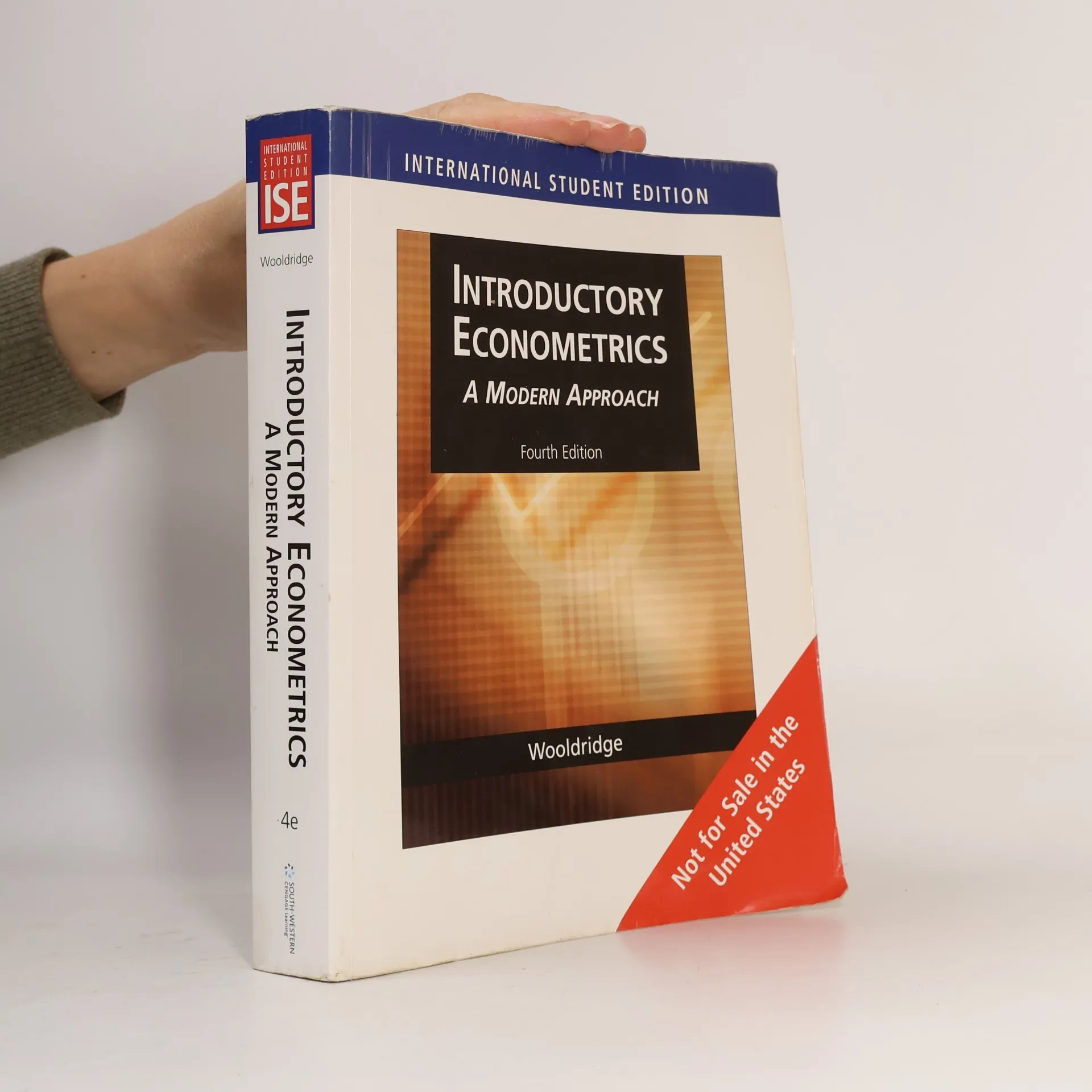
INTRODUCTORY ECONOMETRICS: A MODERN APPROACH, 4e International Edition illustrates how empirical researchers think about and apply econometric methods in real-world practice. The text's unique approach reflects the fact that undergraduate econometrics has moved beyond just a set of abstract tools to being genuinely useful for answering questions in business, policy evaluation, and forecasting environments. The systematic approach, which reduces clutter by introducing assumptions only as they are needed, makes absorbing the material easier and leads to better econometric practices. Its unique organization separates topics by the kinds of data being analyzed , leading to an appreciation for the important issues that arise in drawing conclusions from the different kinds of data economists use. Packed with relevant applications, INTRODUCTORY ECONOMETRICS offers a wealth of interesting data sets that can be used to reproduce the examples in the text or as the starting point for original research projects.