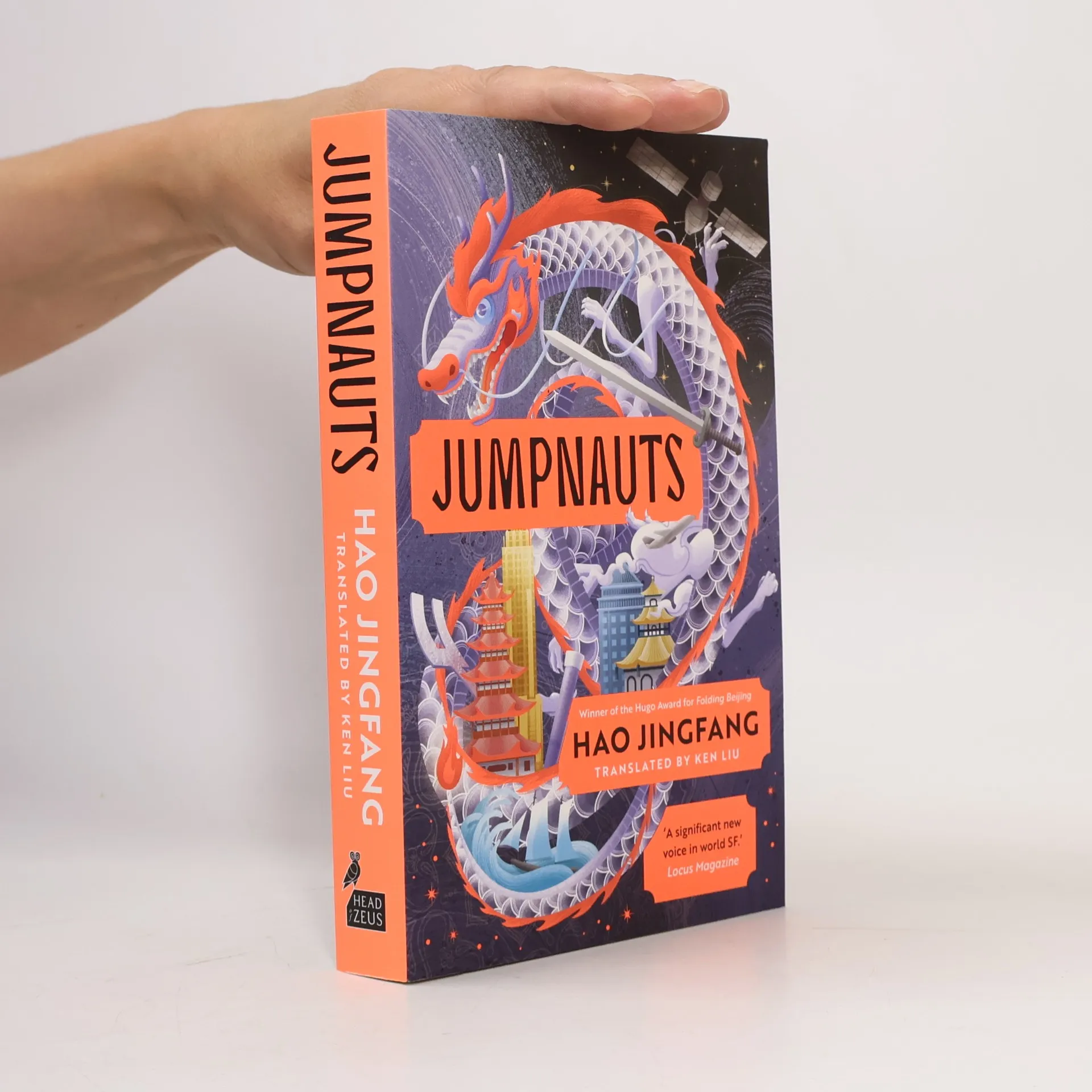
Hao Jingfang is an author who bridges the realms of science and humanities in her work. Her fiction often delves into complex social and economic questions through a speculative lens. With a background in physics and economics, she brings a unique intellectual rigor to her narratives. Her style is characterized by its precision and ability to craft thought-provoking worlds that resonate with readers.
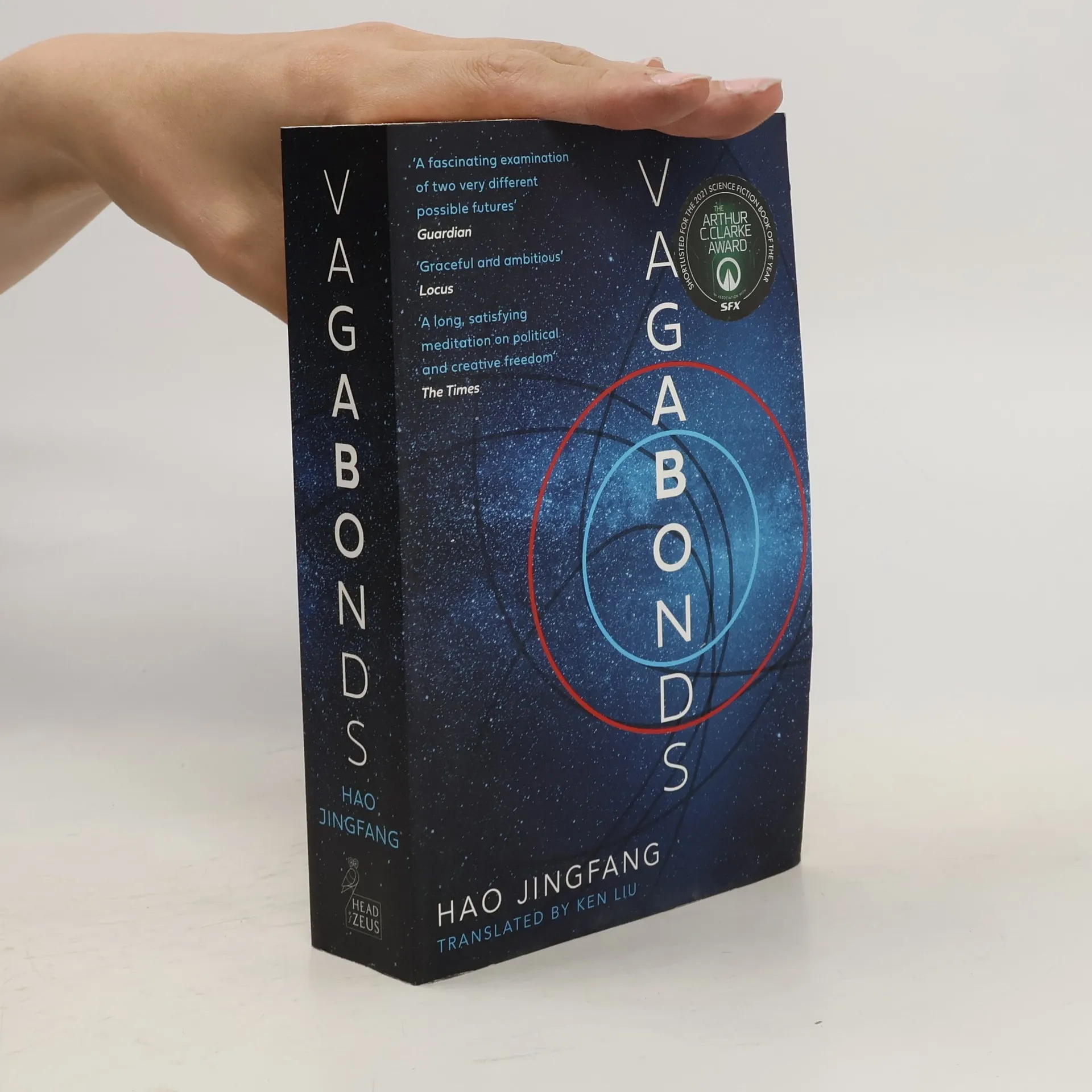
Set in a divided world of 2080, where the Pacific League and Atlantic Alliance are on the brink of conflict, a mysterious signal from deep space emerges. Three young scientists unite to decode this signal, uncovering truths that intertwine with humanity's history. Their groundbreaking discoveries challenge the very fabric of our understanding of past, present, and future, potentially altering the course of civilization. This first contact science fiction novel explores the delicate balance between technological advancement and historical legacy.
In diesem Sammelband präsentieren fünfzehn bekannte chinesische Science-Fiction-Autorinnen und -Autoren kreative Ideen zur Künstlichen Intelligenz. Die Geschichten reichen von einer Sprachwissenschaftlerin, die einen Plüsch-Seehund mit eigener Sprache untersucht, bis zu einem König, der einen Geschichtenroboter bauen lässt.
Broken Stars, edited by Ken Liu, is his second anthology of Chinese short speculative fiction, following Invisible Planets. This collection is the most comprehensive yet available in English, showcasing a thrilling array of stories that reflect the burgeoning interest in Chinese science fiction. It features both well-known authors like Liu Cixin and Hao Jingfang, as well as those making their English-language debut. Most stories were originally published in Chinese during the 2010s and range from short-shorts to novellas, evoking a wide emotional spectrum.
The anthology includes familiar subgenres such as hard SF, cyberpunk, and space opera, while also delving into narratives deeply rooted in Chinese culture, including alternate histories and time travel. It does not claim to be "representative" or "comprehensive," but it highlights the vibrancy and diversity of contemporary Chinese science fiction. Additionally, three essays at the end explore the history of Chinese science fiction publishing, the current state of fandom, and the impact of growing interest in the genre on previously obscure writers. This collection promises to captivate readers eager to explore the richness of Chinese speculative fiction.
The first novel from the Hugo Award-winning author of 'Folding Beijing', translated by Ken Liu. Can the void between two worlds be bridged? AD2201. Just over a century ago, the Martian colonies declared their independence. After a brief conflict, Earth and Mars cut ties, carving separate trajectories into the future, viewing each other with suspicion and even hatred. Five years ago, a group of Martian students were sent to Earth as goodwill ambassadors from the Red Planet. Now the young men and women are coming home, escorting a delegation of prominent Terrans to see if the two worlds can bridge the void that has opened up between them. Almost immediately, negotiations break down and old enmities erupt. How do you escape the gravity of the past? Luoying, one of the returning Martians, is caught amidst the political intrigue and philosophical warfare. Martians and Terrans, old friends and new mentors, statesmen and revolutionaries - everything and everyone challenges her, pushing her to declare her allegiance. Torn between her native land and the world on which she came of age, Luoying must discover the truth amid a web of lies spun by both sides, she must chart a course between history and the future, or face the destruction of everything she's ever loved.
Pechino è divisa in tre spazi e le ventiquattr'ore di ogni giorno sono state accuratamente organizzate per salvaguardare il tempo e l'aria che respira l'élite, composta da cinque degli ottanta milioni di persone che abitano la metropoli. Tutti gli altri, incastrati nella rigida stratificazione urbana, si spartiscono quello che rimane. Lao Dao è nato nella città pieghevole e lavora in discarica come suo padre. Vive nel sottosuolo, ma per consegnare una lettera in cambio di denaro si intrufolerà negli spazi della classe media e di quella alta, scoprendo l'esistenza di mondi diversi dal suo. Catastrofe ecologica, tecnologie di sorveglianza e disuguaglianze sociali stravolgono il tempo e lo spazio in "Pechino pieghevole", l'emblematico racconto che dà il titolo a questa raccolta, che si inserisce nell'«ultra-irrealismo» (chaohuan), il genere letterario ispirato dalla realtà allucinata della Cina odierna. Negli undici racconti, Hao esplora la fragilità umana alle prese con gli spettri del cambiamento e del possibile, l'intelligenza artificiale e l'automazione, costruendo una narrazione pervasa di sensibilità per quest'epoca di incertezza, solitudine e disorientamento. Se la science fiction è il realismo dei nostri tempi, Hao Jingfang rivela angolazioni inattese ed estreme da cui osservare il mondo futuro in cui già viviamo.