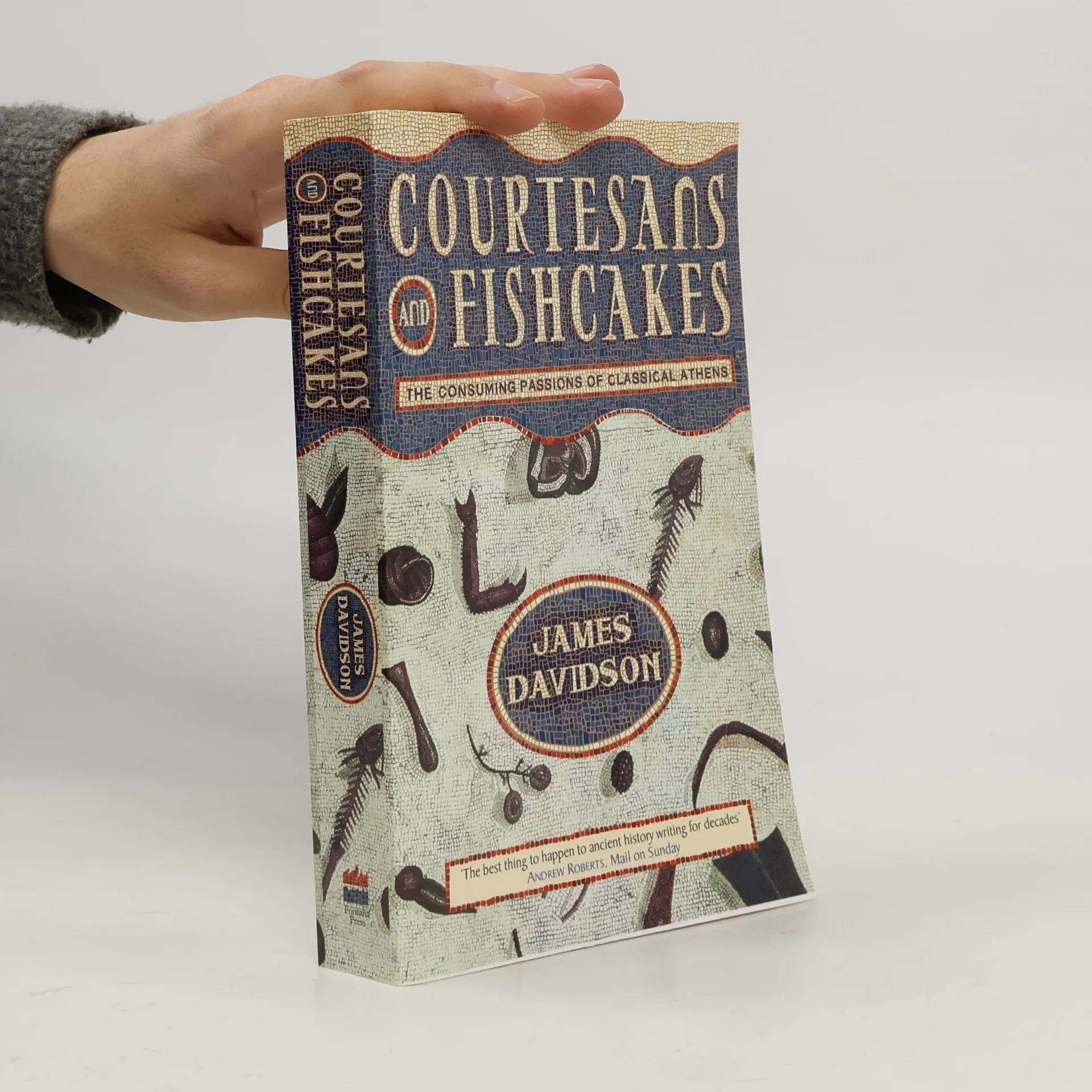
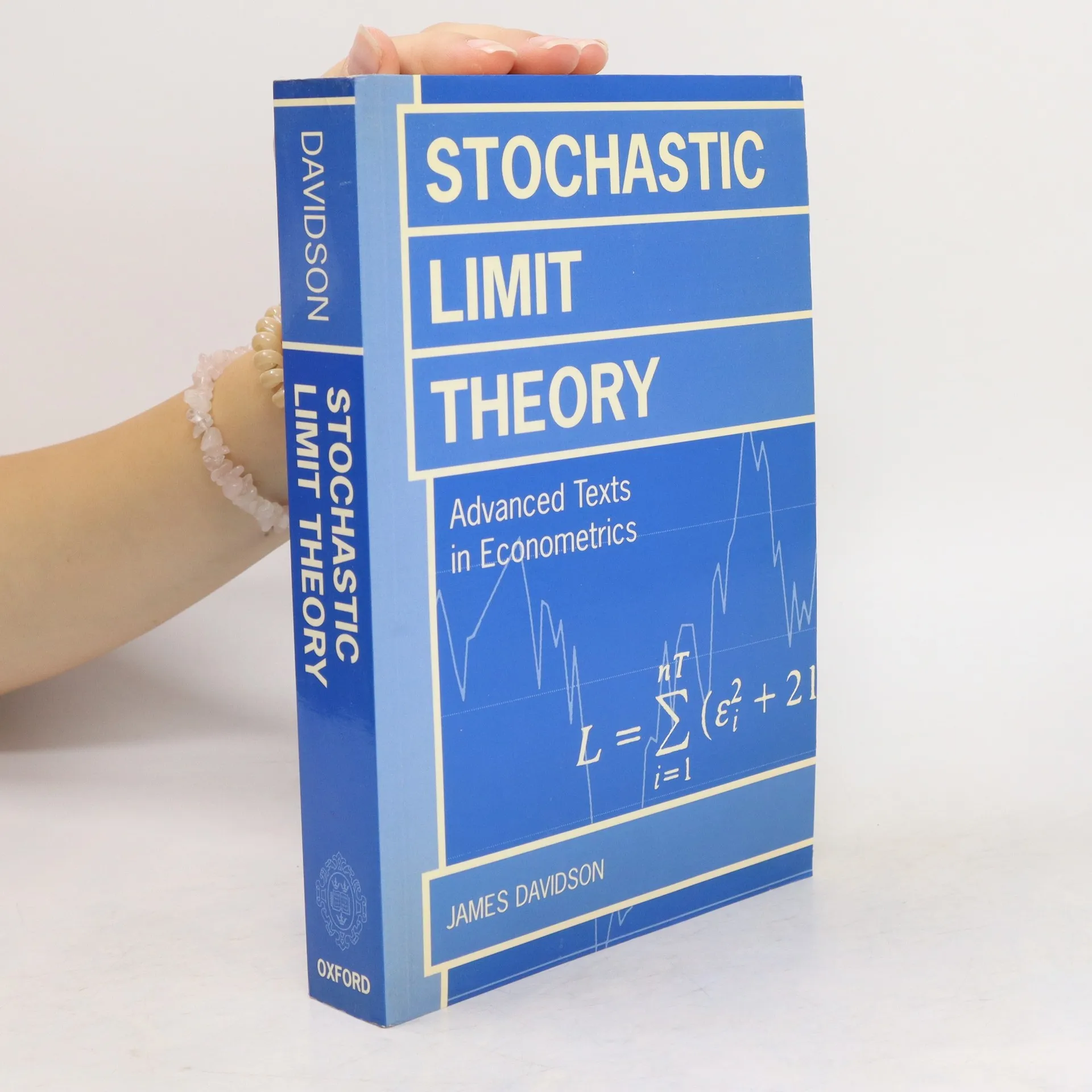
A Radical Reappraisal of Homosexuality In Ancient Greece
656 pages
23 hours of reading
This work offers a groundbreaking perspective on homosexuality in Ancient Greece, challenging traditional narratives and providing fresh insights into societal norms and practices. The young historian's analysis is celebrated for its depth and originality, positioning it as a significant contribution to the field of ancient history. Through meticulous research, the book sheds light on the complexities of sexual relationships in this historical context, making it an essential read for those interested in ancient cultures and LGBTQ+ history.
This book surveys recent developments in the rapidly expanding field of asymptotic distribution theory, placing special emphasis on the problems of time-dependence and heterogeneity. It is technically self-contained, with all but the most basic mathematical prerequisites being explained in their context.
Warum haben die Helden der Homerischen Epen keinen Fisch gegessen, und warum waren Fische und Meeresfrüchte in klassischem Athen Luxus? Was geschah im „Männerraum“ des Symposions, wenn die Regeln gebrochen wurden? Welche Rolle spielten die berühmten Hetären im Kontext von Fest und Genuss? James N. Davidson, Althistoriker an der University of Warwick, geht diesen Fragen detailliert nach. Anhand von Komödien, politischen Reden, Vasen und anderen Artefakten bietet er eine amüsante und tiefgründige Untersuchung des Alltagslebens im klassischen Athen. Besonders interessiert ihn die Sprache der Athener über Essen und Trinken sowie das Verhältnis von Selbstbeherrschung und Zügellosigkeit. Die Haltung des Einzelnen gegenüber Genuss ist politisch: Der verschwenderische Erbe kann zum Tyrannen werden, der die Demokratie bedroht. Auch der Vorwurf, im Privaten das Maß überschritten zu haben, konnte Karrieren gefährden. Dies gilt ebenso für Sexualität, die Davidson in Bezug auf Foucaults These der Unterwerfung „im Zeichen des Phallus“ analysiert. Er zeigt, dass Sexualität im klassischen Athen komplexer war, als moderne Vorstellungen vermuten lassen. Davidson bringt die Perspektiven ins Gleichgewicht und bietet Geschichtsschreibung, die uns sowohl über die Antike als auch über uns selbst lehrt.
Focusing on the vibrant lifestyle of ancient Athenians, this engaging history delves into their intense passions for food, wine, and sex. It offers a unique perspective on how these elements shaped their culture and society, revealing the significance of indulgence in their daily lives. The narrative is both entertaining and informative, providing insights into the social customs and pleasures that defined Athenian civilization.
Econometricians, while using mathematical theory such as probability and limit theory at a demanding level, often do not have the advantage of a strong mathematical training. Using maths texts requires econometricians to ignore much material, and decipher unfamiliar notation, before reaching results useful and comprehensible to them. James Davidson has succeeded in clearly and rigorously explaining this mathematics to the ecconometricians who are increasingly using it. This book will serve as a technically self-contained handbook for advanced graduate students of econometrics, doctoral students, and academic or business econometricians who wish to improve their command of the mathematical processes they use.A wide-ranging coverage of mathematics combines the latest work with a lucid exposition of basic theories. The text covers statistical methods including probability theory, stochastic processes and their dependence structure, central limit theorems, and asymptotic distribution theory. It provides results directly relevant to econometricins, and indicates further reading. Davidson has included new material and results in central limit theorems from his research. Thus the book will appeal both as a survey and a research monograph.--back cover