

Explore the latest books of this year!
Bookbot

James Owen Weatherall

    James Owen Weatherall is a physicist, philosopher, and mathematician whose work delves into the profound connections between science and philosophy. He explores how mathematical concepts shape our understanding of the universe and how philosophical questions influence scientific progress. Weatherall's writing is noted for its clarity and its ability to make complex ideas accessible to a broad audience.

    Modelling Scientific Communities
    The Misinformation Age
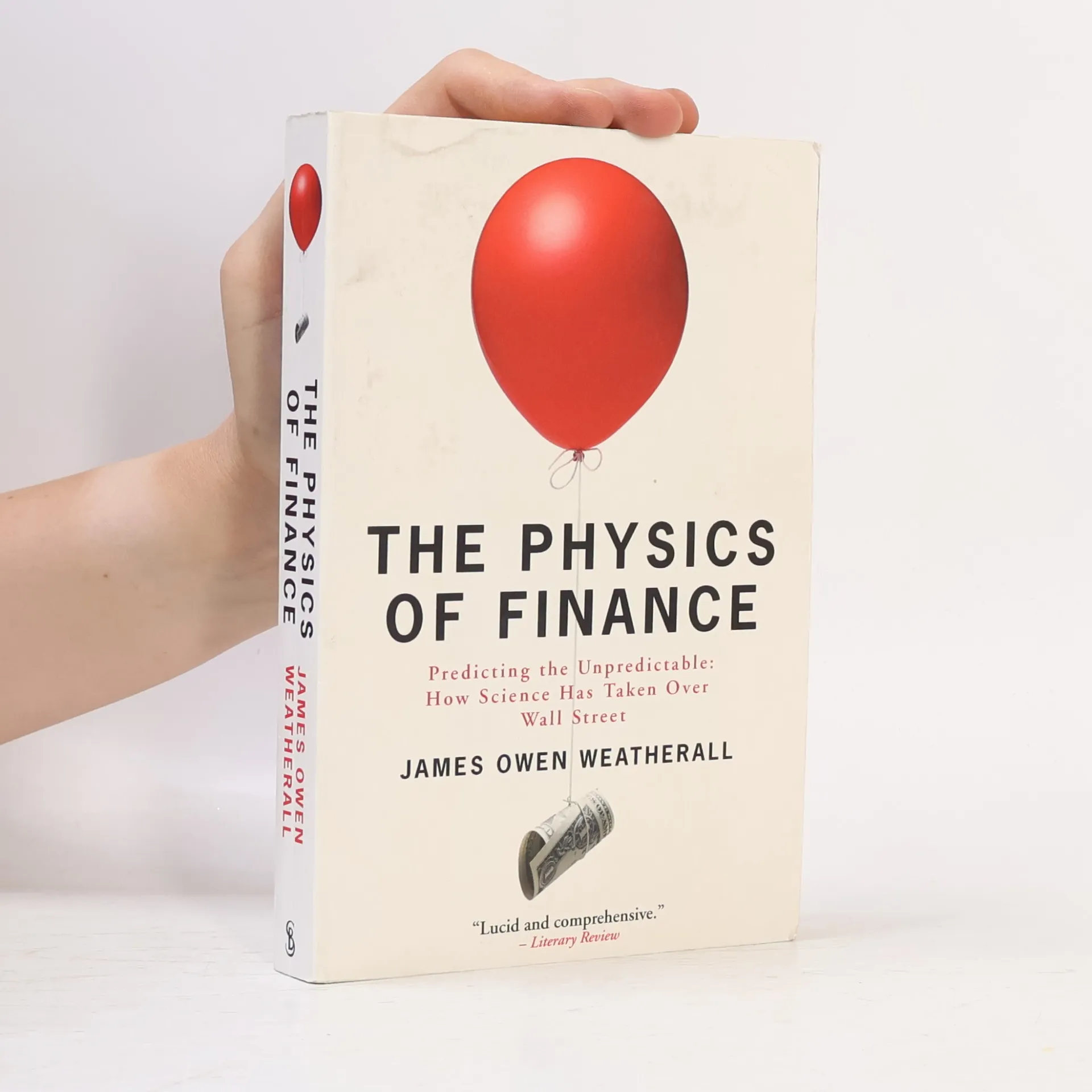
    The Physics of Wall Street
    The Origins of Unfairness
    Games in the Philosophy of Biology
    • Games in the Philosophy of Biology

      • 80 pages
      • 3 hours of reading

      Introduces game theory, before assessing working using signaling games to explore questions related to communication, meaning, language, and reference. O'Connor then addresses prosociality - strategic behavior that contributes to the successful functioning of social groups - using the prisoner's dilemma, stag hunt, and bargaining games.

      Games in the Philosophy of Biology
    • In almost every human society some people get more and others get less. Why is inequity the rule in human societies? Philosopher Cailin O'Connor reveals how cultural evolution works on social categories such as race and gender to generate unfairness

      The Origins of Unfairness
    • The Physics of Wall Street

      • 304 pages
      • 11 hours of reading
      4.0(49)Add rating

      A Harvard scholar argues that mathematical models can provide solutions to current economic challenges, explaining that the economic meltdown of 2008 was based on a misunderstanding of scientific models rather than on the models themselves.

      The Physics of Wall Street
    • The Misinformation Age

      • 280 pages
      • 10 hours of reading
      3.8(841)Add rating

      The social dynamics of alternative facts: why what you believe depends on who you know

      The Misinformation Age
    • Modelling Scientific Communities

      • 75 pages
      • 3 hours of reading

      This Element will overview research using models to understand scientific practice. It argues that while these models are epistemically useful, the best way to employ most of them to understand and improve science is in combination with empirical methods and other sorts of theorizing.

      Modelling Scientific Communities