

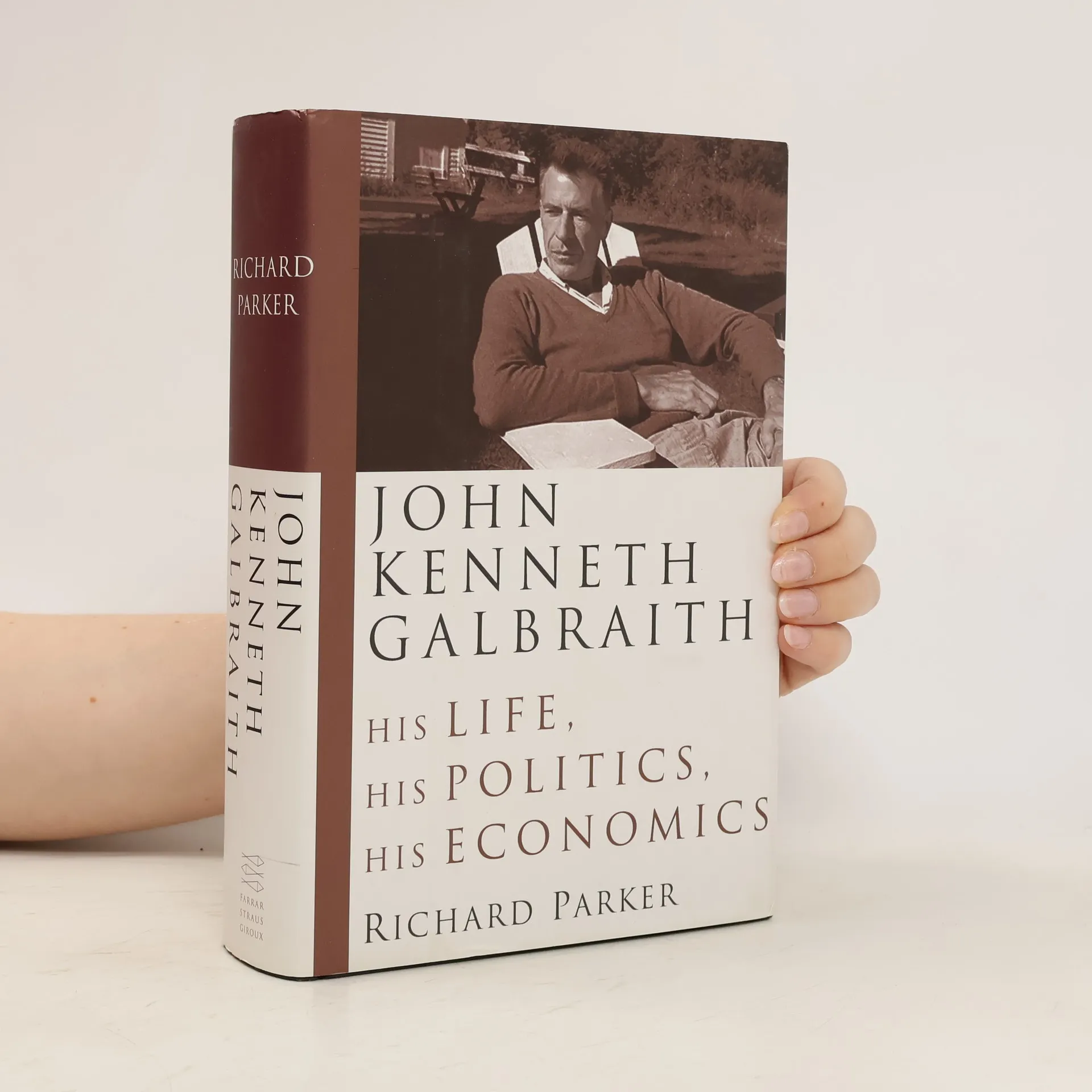
"John Kenneth Galbraith is America's most famous economist for good reason. A witty commentator on America's political follies and a versatile author of bestselling books that warn prophetically of the dangers of deregulated markets, corporate greed, and inattention to the costs of our military power, Galbraith always makes economics relevant to the crises of the day. This first authorized biography is, in Richard Parker's hands, an important reinterpretation both of public policy and of how economics is practiced." "Born in 1908 and raised on a small Canadian farm, Galbraith began to teach at Harvard in his twenties. In 1938 he left to work in New Deal Washington, eventually rising to become FDR's "price czar" during the war. Following his years as a writer at Fortune, where he did much to introduce the work of John Maynard Keynes to a wide audience, he returned to Harvard in 1949 and began writing the books that would make him famous." "Over the years, Galbraith developed a distinctive way of "doing economics," and it made him a critic both of conservatives and of many liberal economists. From his acerbic analysis of the nation's "private wealth and public squalor" in the 1950s to his denunciations of the Vietnam War, Galbraith regularly challenged the "conventional wisdom" (a phrase he coined)."--Jacket
Richard Parker Books




The Crossing
El Paso, the Southwest, and America's Forgotten Origin Story
- 448 pages
- 16 hours of reading
El Paso serves as a pivotal backdrop in American history, challenging the traditional East-to-West narrative. It highlights the city as a critical intersection of Indigenous cultures, European colonization, and immigration, marking it as the true starting point of the American story. The region was central to Native American trade routes, the Indian Wars, and significant Civil Rights battles, establishing a diverse, multi-ethnic community. Richard Parker's work redefines El Paso as a foundational element of the nation's history and a model for a more inclusive future.
Er ist dein Bruder
- 157 pages
- 6 hours of reading
Der Mythos von der Mittelschicht
- 181 pages
- 7 hours of reading