Peter J. Hammond Books
Peter J. Hammond is a distinguished economic theorist whose work delves deeply into mechanisms of allocation and efficient regulation. He explores the complex interplay between ethics and economic policy, particularly within contexts involving many agents and adverse selection. His research illuminates key issues in social choice and the economic impacts of migration.

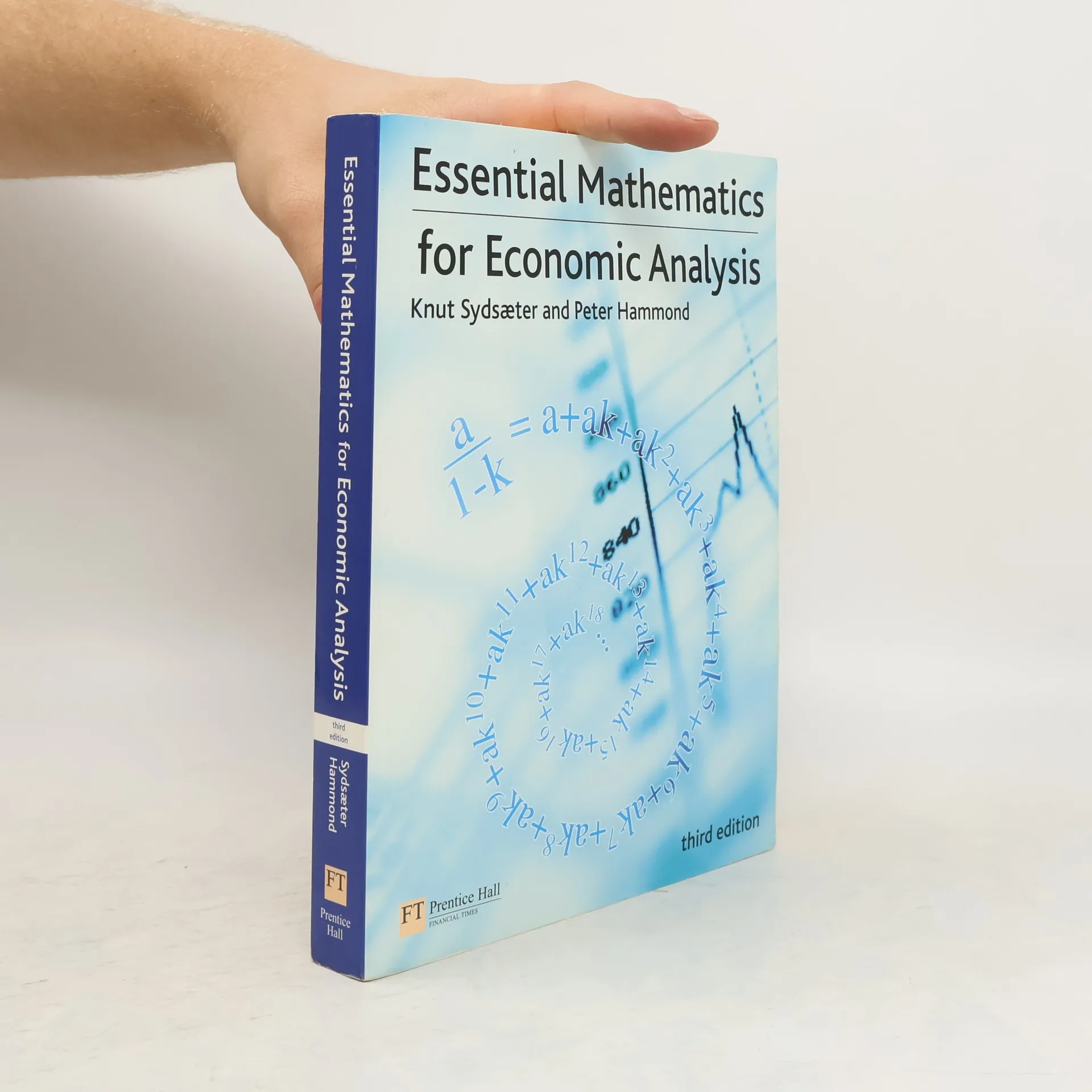

Essential Mathematics for Economic Analysis
- 736 pages
- 26 hours of reading
This text provides an invaluable introduction to the mathematical tools that undergraduate economists need. The coverage is comprehensive, ranging from elementary algebra to more advanced material, whilst focusing on all the core topics that are usually taught in undergraduate courses on mathematics for economists."--Publisher description
Mathematics for Economic Analysis
- 982 pages
- 35 hours of reading
An introduction to those parts of mathematical analysis and linear algebra which are most important to economists. This text focuses on the application of the essential mathematical ideas, rather than the economic theories, and features examples and problems on key ideas in microeconomics.
Slavery, Terrorism and Islam
- 296 pages
- 11 hours of reading
This well-illustrated book counters anti-Christian propaganda from various groups, delving into the historical ties between Islam and slavery. Dr. Peter Hammond reveals the impact of thirteen centuries of Islamic conquest and offers insights on converting Muslims to Christianity. A vital read for Christians and homeschooling families alike.
Richard III and the Bosworth Campaign
- 192 pages
- 7 hours of reading
On 22 August 1485 the forces of the Yorkist king Richard III and his Lancastrian opponent Henry Tudor, Earl of Richmond clashed at Bosworth Field in Leicestershire in one of the decisive battles of English history. Richard was defeated and killed. Henry took the crown as Henry VII, established the Tudor dynasty and set English history on a new course. For the last 500 years this, the most famous battle of the Wars of the Roses, has excited passionate interest and continuing controversy. Peter Hammond, in a vivid and perceptive account of the battle, retells the story of the tangled dynastic and personal rivalries that provoked the conflict, describes the preparations of the two converging armies and offers a gripping analysis of the contest itself. The latest documentary and archaeological evidence is considered, and the author weighs up the merits of conflicting interpretations of the battle and the battlefield. He also pays particular attention to the contrasting characters of
Your lecturer has created this personalised learning resource to support your studies. It contains Pearson content from our world-renowned textbook authors, and often also industry case studies and articles. It includes just the bits your lecturer knows you need nothing extra! They may also have included their own, bespoke, learning materials specific to your course. Pearson works closely with your university and your lecturers and we are committed to helping you learn.