

In any software project the analysis stage - documenting and designing requirements to meet the needs of the prospective users - is vital to the success of the project. This book provides a thorough introduction to analysis and where it fits into the software engineering process. The author applies his many years of experience both as a manager of software projects and as a consultant to numerous companies to illustrate succesful techniques and to identify potential pitfalls. The book is based on courses offered at Columbia University to a diverse audience of students and professionals. Throughout, the author is concerned to emphasize the stages of analysis and to identify many alternative modelling tools that an analyst can use. Particular emphasis is placed on Joint Application Development and on prototyping. Readers are assumed to have a reasonable understanding of computer concepts and terminology, and so this will be suitable for a first-level analysis course or it can be used by information systems professionals who need an in-depth understanding of the principles of the analysis and design process.
Arthur M. Langer Books
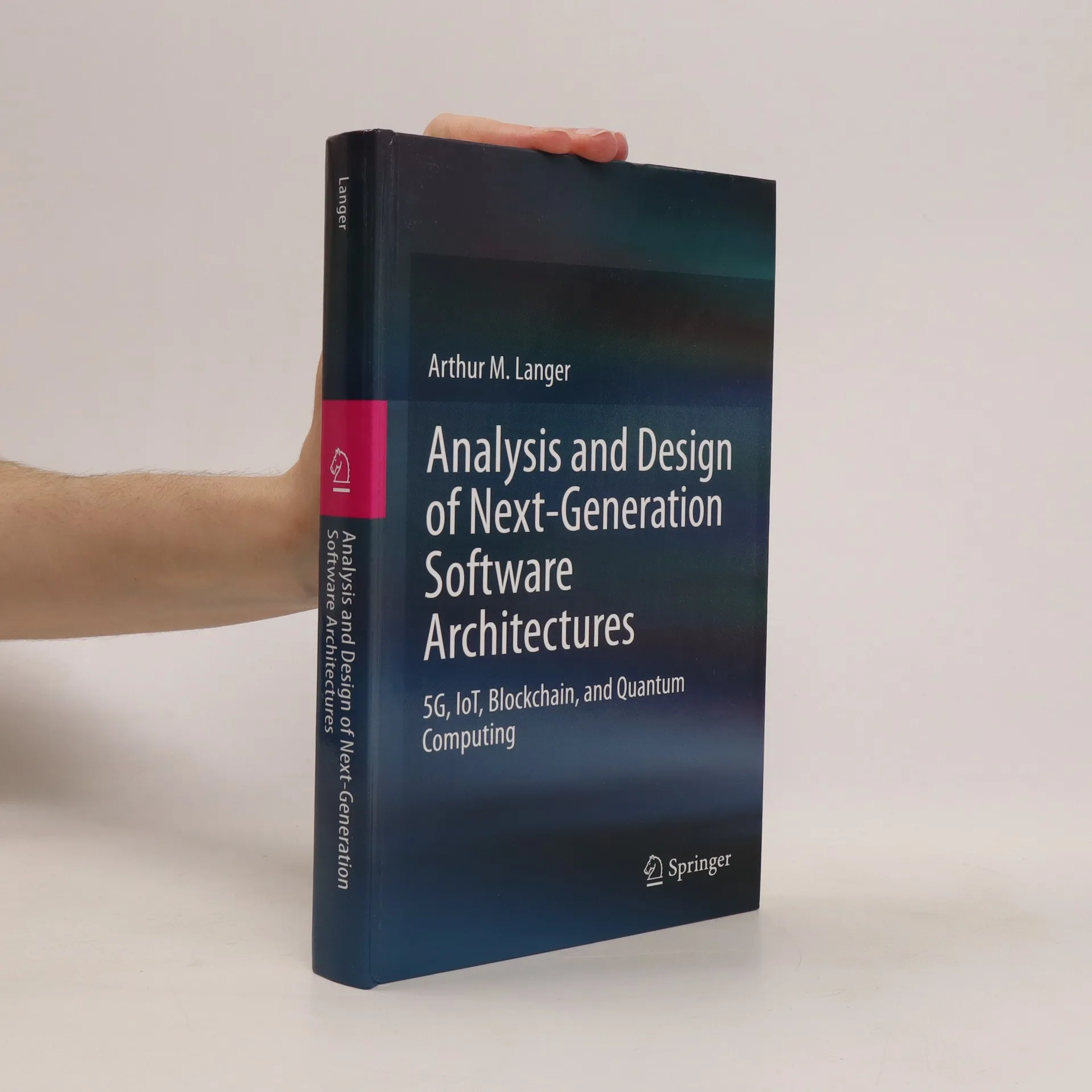

Analysis and Design of Next-Generation Software Architectures
5G, IoT, Blockchain, and Quantum Computing
- 308 pages
- 11 hours of reading
This book serves as a comprehensive guide for integrating applications within legacy systems, covering analysis, design, and implementation. It addresses the evolving requirements of next-generation software architectures, particularly in relation to the Internet of Things (IoT), cybersecurity, blockchain, cloud technologies, and quantum computing. As 5G wireless technology advances, transitioning legacy applications into new architectures becomes essential for businesses competing in a consumer-driven economy. Many organizations struggle with the complexities of shifting from centralized database systems to decentralized, networked environments. The next generation of software must operate independently across diverse devices and wireless networks, requiring a transformation of databases into linked list-based blockchain architectures. This involves critical decisions about data processing within the blockchain versus cloud systems. Additionally, aggregating data across extensive networks for predictive analysis poses significant challenges. Organizations will likely continue using packaged and open-source products, which must seamlessly integrate into new architectures while ensuring cyber compliance. The book outlines the roles of stakeholders, including IT departments, users, and vendors, and offers a step-by-step approach to enhance the success of re-engineering applications and selecting third-party products, making it v