This British economist and political scientist focuses on comparative economic and political development, particularly with a long-term perspective and a distinct interest in Latin America and Sub-Saharan Africa. His work delves into the structural factors that shape nations and societies. Through extensive research conducted across various countries, he seeks to understand the key forces influencing developmental trajectories. His approach is grounded in rigorous quantitative analysis and a deep understanding of historical and institutional contexts.
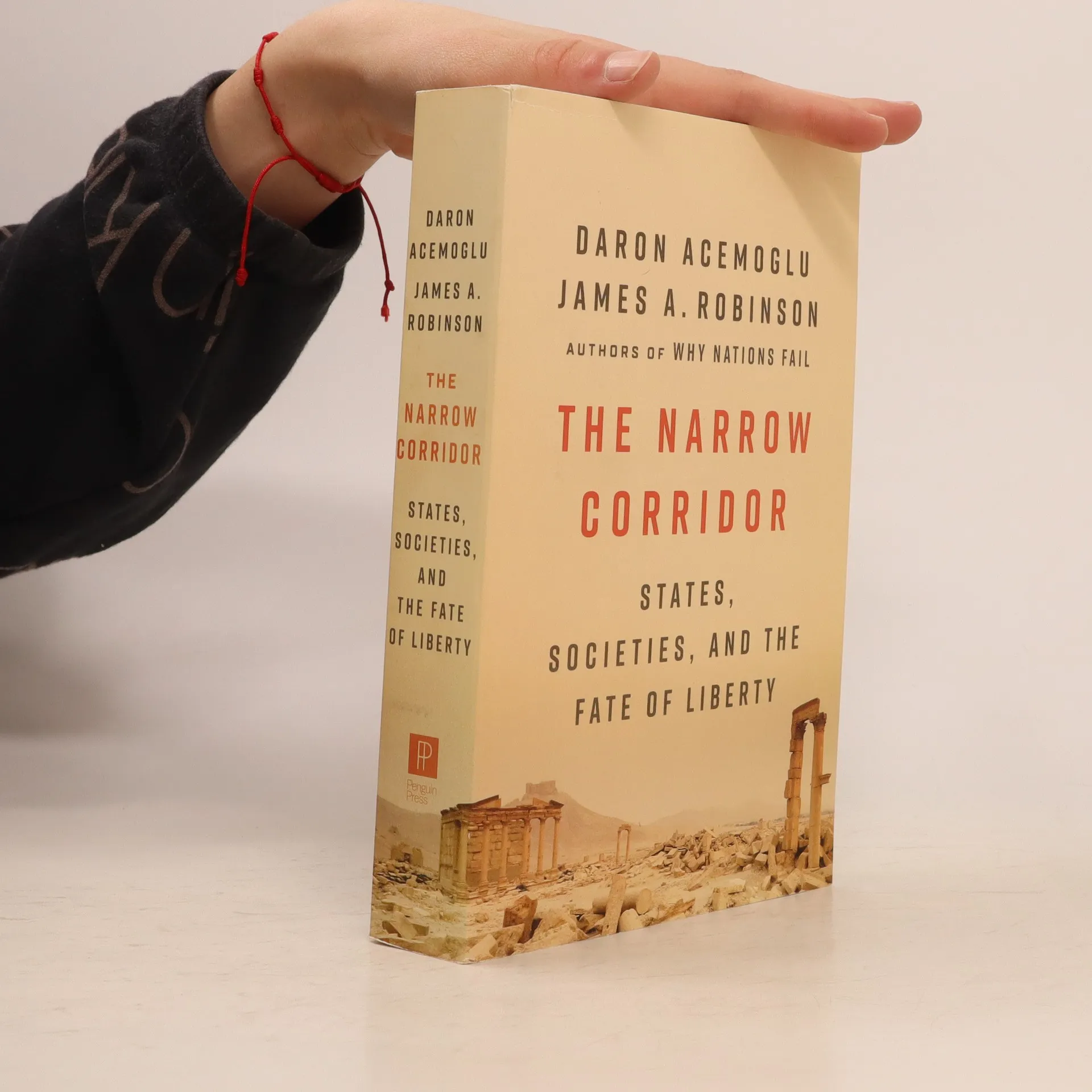
How does history end? -- The Red Queen -- Will to power -- Economics outside the corridor -- Allegory of good government -- The European scissors -- Mandate of Heaven -- Broken Red Queen -- Devil in the details -- What's the matter with Ferguson? -- The paper leviathan -- Wahhab's children -- Red Queen out of control -- Into the corridor -- Living with the leviathan.
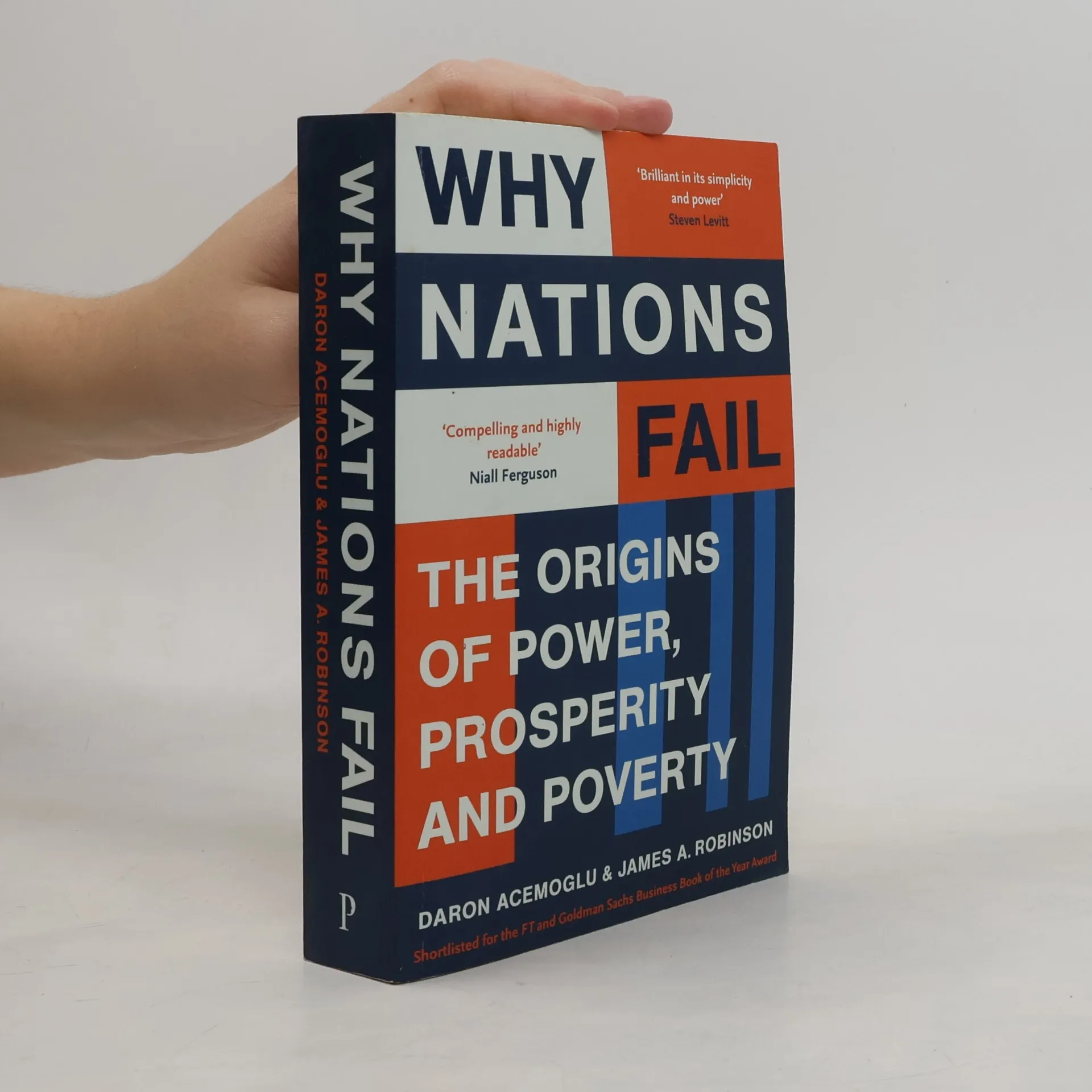
Shortlisted for the Financial Times and Goldman Sachs Business Book of the Year Award 2012.Why are some nations more prosperous than others? Why Nations Fail sets out to answer this question, with a compelling and elegantly argued new theory: that it is not down to climate, geography or culture, but because of institutions. Drawing on an extraordinary range of contemporary and historical examples, from ancient Rome through the Tudors to modern-day China, leading academics Daron Acemoglu and James A. Robinson show that to invest and prosper, people need to know that if they work hard, they can make money and actually keep it - and this means sound institutions that allow virtuous circles of innovation, expansion and peace.Based on fifteen years of research, and answering the competing arguments of authors ranging from Max Weber to Jeffrey Sachs and Jared Diamond, Acemoglu and Robinson step boldly into the territory of Francis Fukuyama and Ian Morris. They blend economics, politics, history and current affairs to provide a new, powerful and persuasive way of understanding wealth and poverty.
The book explores the factors that contribute to the establishment and sustainability of democracies across different countries. It delves into political, economic, and social elements that influence governance, examining case studies to highlight the varying paths nations take toward democratic development. Through a comprehensive analysis, it reveals the complexities behind democratic transitions and the challenges faced by non-democratic regimes.
James Robinson returns to the world of his acclaimed STARMAN series in this new graphic novel starring the antihero known as The Shade! An attack at the Starman museum kicks off a globe-hopping, centuries spanning quest that will irrevocably change The Shade's life, and ultimately shed light on his true origin! THE SHADE features art by some of comics' most acclaimed talents, including Darwyn Cooke ( DC: The New Frontier) , Frazer Irving ( Batman & Robin ), Gene Ha ( Superman: Action Comics ) Jill Thompson ( The Sandman ), Cully Hamner ( RED ) and Javier Pulido ( Spider-Man) . A must-have for any fan of STARMAN!
Почему одни страны богатые, а другие бедные — это нехудожественная книга, написанная турецко-американским экономистом Дароном Аджемоглу и Джеймсом Робинсоном. Книга обсуждает теории институциональной экономики, экономики развития и экономической истории, чтобы ответить на вопрос, почему страны развиваются по-разному, где одни достигают силы и процветания, в то время как другие терпят неудачу.
Человеческие институты, а не географическое или историческое положение, определяют, станет ли страна богатой или бедной. Институциональные изменения, открытость общества и готовность к креативному разрушению и верховенству закона способствуют экономическому развитию. Страны могут избежать бедности только при наличии эффективных экономических институтов и плюралистической политической системы.
Die Tempelruinen von Angkor Wat, die Pyramiden der Maya -Spuren einstmals blühender Kulturen. Warum nahm die Geschichte auf den verschiedenen Kontinenten einen so unterschiedlichen Verlauf? Der amerikanische Evolutionsbiologe Jared Diamond, der Politikwissenschaftler James Robinson und weitere renommierte Wissenschaftler ziehen historische Vergleiche und spüren den Kräften nach, die Geschichte in Bewegung versetzen.