

Exploring foundational political concepts, this collection features Mill's influential Essay on Government alongside essays addressing rights protection, the significance of education, the role of a free press, the secret ballot, and government punishment for rights violations. These writings showcase Mill's contributions to modern political thought and his advocacy for individual liberties and democratic principles.
James Mill Book order (chronological)
April 6, 1773 – June 23, 1836
James Mill, a Scottish historian and philosopher, is known for his monumental work on British India. Despite never visiting the subcontinent himself, he was the first to divide Indian history into Hindu, Muslim, and British periods. His writing, a classic of colonial self-congratulation, vehemently denounces Indian culture while extolling the British civilizing mission. This tripartite division of Indian history, though highly influential, is viewed critically in contemporary scholarship.
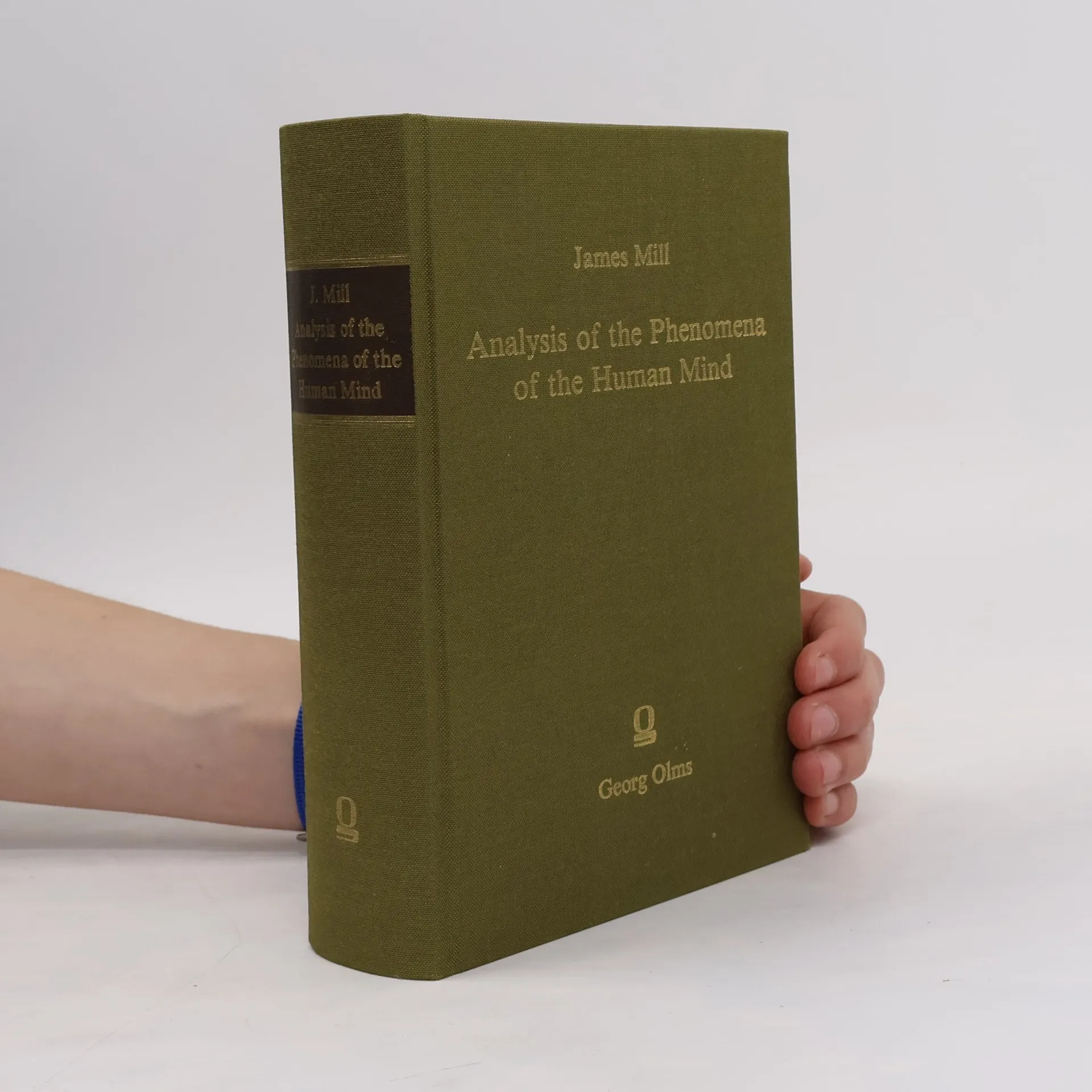

Analysis of the Phenomena of the Human Mind
- 856 pages
- 30 hours of reading
James Mill (1773 - 1836), British philosopher, political theorist, historian and psychologist was largely responsible for organizing the influential group of Bentham followers that became known as the 'philosophical radicals', which included David Ricardo, Joseph Hume, J.R. McCulloch, George Grote and John Austin. A prolific writer, Mill is remembered mainly as Bentham's chief disciple; for his influence on the radicals and in particular his son John Stuart Mill , the prominent utilitarian thinker. Thoemmes Press are making available two key philosophical works by this eminent early nineteenth-century intellectual figure. Analysis of the Phenomena of the Human Mind is Mill's best-known work on associationist epistemology. Influenced by Hobbes, Locke, Hume, and Hartley, whose theory of association he applied and developed further, and other French writers such as Condillac, Helvétius, and Cabanis, the work clearly represents a distinct stage in the development of the empirical school. Analysis vividly illustrates Mill's attempt to explain all mental phenomena in terms of association and is an indispensable resource for scholars of both psychology and philosophy.