

In August 1945 Great Britain, France, the USSR, and the United States established a tribunal at Nuremberg to try military and civilian leaders of the Nazi regime. G.M. Gilbert, the prison psychologist, had an unrivaled firsthand opportunity to watch and question the Nazi war criminals. With scientific dispassion he encouraged Göering, Speer, Hess, Ribbentrop, Frank, Jodl, Keitel, Streicher, and the others to reveal their innermost thoughts. In the process Gilbert exposed what motivated them to create the distorted Aryan utopia and the nightmarish worlds of Auschwitz, Dachau, and Buchenwald. Here are their day-to-day reactions to the trial proceedings; their off-the-record opinions of Hitler, the Third Reich, and each other; their views on slave labor, death camps, and the Jews; their testimony, feuds, and desperate maneuverings to dissociate themselves from the Third Reich's defeat and Nazi guilt. Dr. Gilbert's thorough knowledge of German, deliberately informal approach, and complete freedom of access at all times to the defendants give his spellbinding, chilling study an intimacy and insight that remains unequaled.
Gustave M. Gilbert Books
Gustave Gilbert was a psychologist and intelligence officer uniquely positioned with free access to all prisoners held in the Nuremberg jail. His unique vantage point allowed him to delve into the minds and motivations of Nazi leaders. Through his psychological insights, Gilbert offers readers a disquieting look into the psyche of those responsible for some of history's worst atrocities. His work provides a valuable contribution to understanding human nature and the darkness it can conceal.

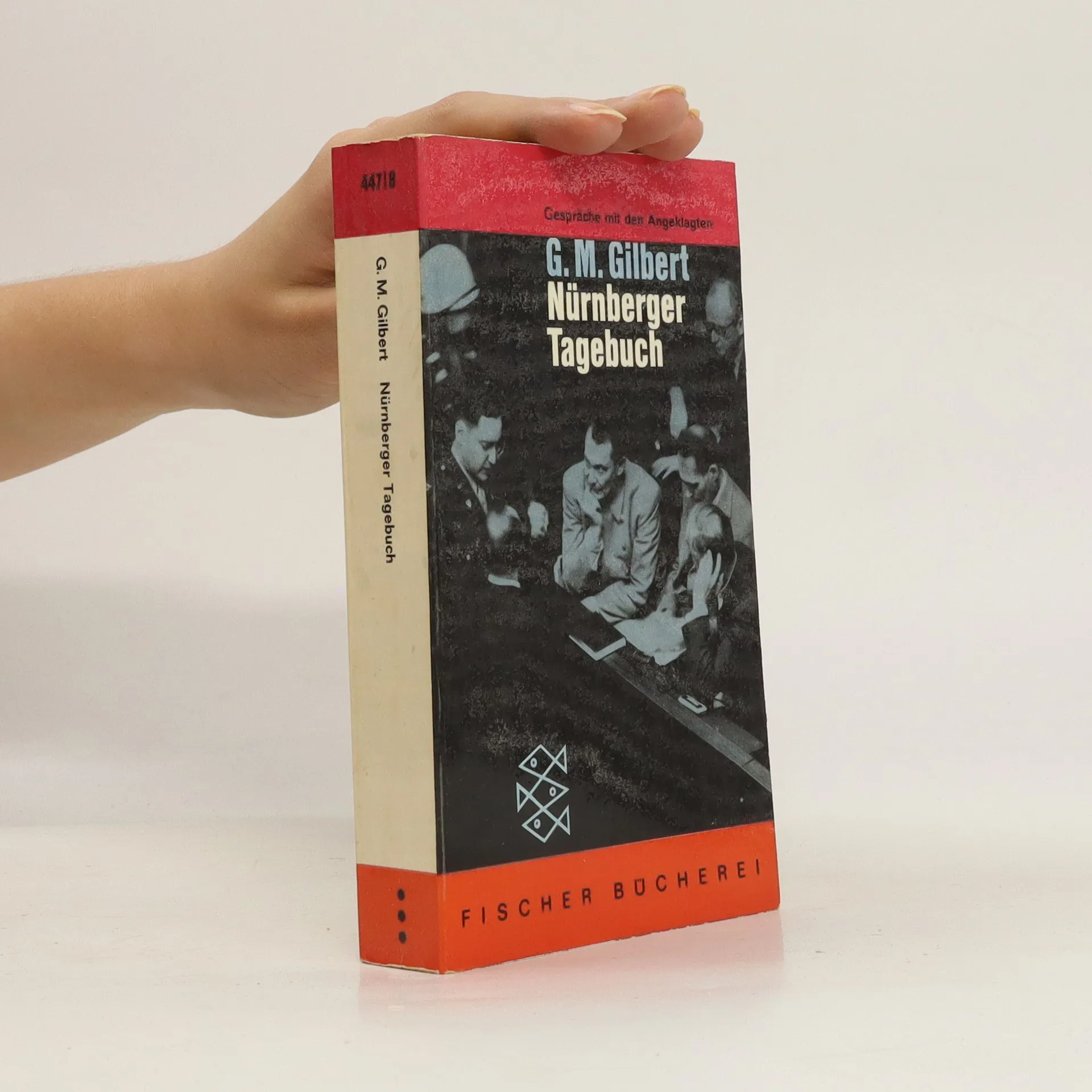

Americký vědec, který zastával funkci vězeňského psychologa při norimberském procesu, podává svědectví o charakteru a myšlení nacistických vůdců, souzených za válečné zločiny. Sleduje jejich reakce na obžalobu, která přineslaotřesné dokumenty o koncentračních táborech a nelidských zločinech na okupovaných územích, o jejich snaze svalit odpovědnost na Hitlera, Goebbelse, Himmlera a Bormanna, o jejich strachu před smrtí aj. 23-064-81