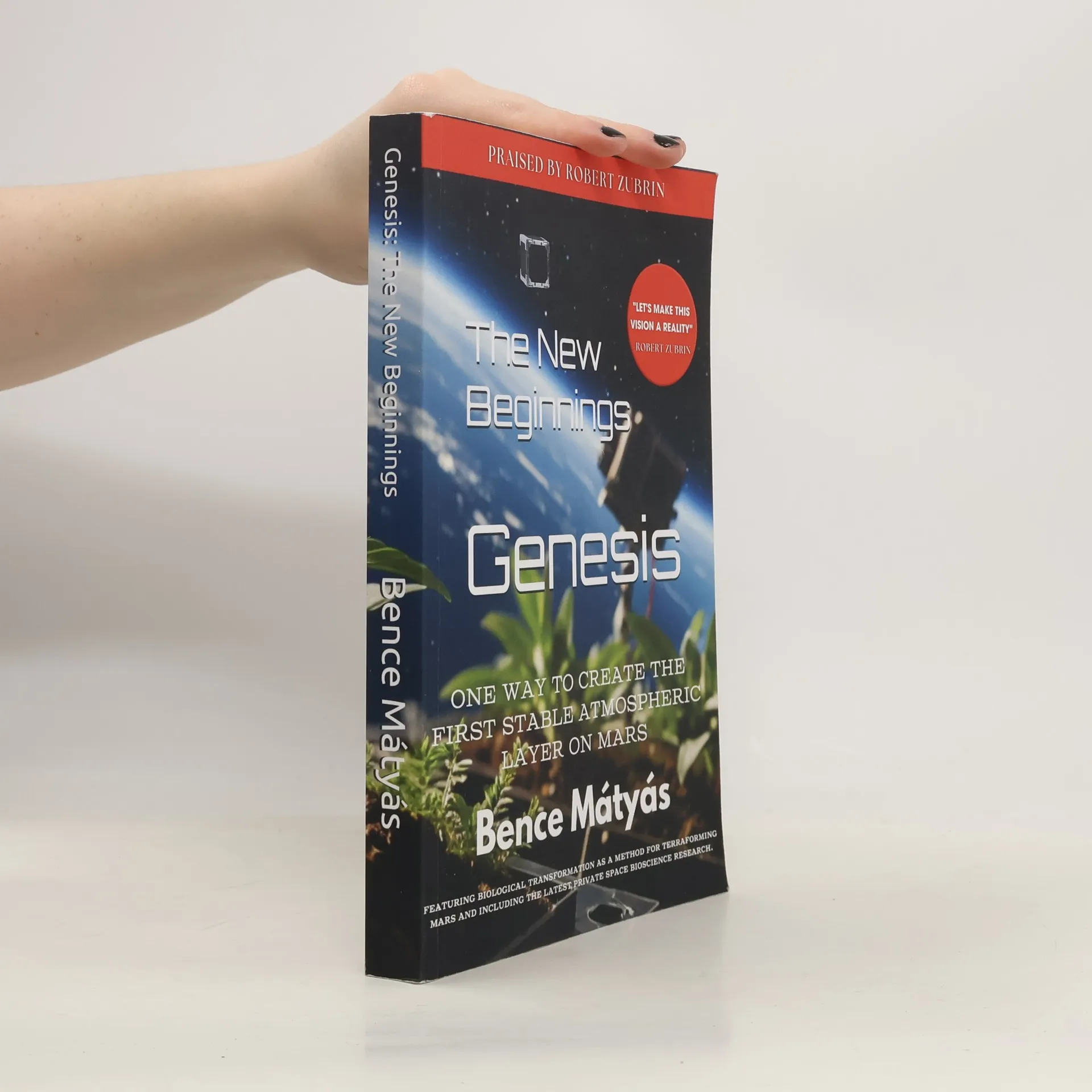
This book presents a visionary roadmap for Mars colonization, emphasizing soil biology and technological innovation. Bence Mátyás introduces concepts like microbial terraforming and Plant Transporting Rocket Capsules, outlining practical steps to establish an atmospheric layer on Mars. His experimental results align with Carl Sagan's findings, revealing a compelling connection between distinct approaches to gas production and atmospheric thickening timelines. Endorsed by Mars exploration advocate Robert Zubrin, the work offers a comprehensive framework for terraforming complexities. The second part focuses on MayaSat-1, the first orbital mission by Genesis SFL, which aims for a June 2025 launch aboard a SpaceX Falcon 9 rocket. This mission will carry biological experiments, gather data on life in microgravity, and ensure the retrieval of all experiments to Earth. Mátyás discusses plans for reusable microgravity laboratories and Mars-focused research. Bertalan Farkas, Hungary's first astronaut, contributes a foreword, sharing his insights from plant growth experiments aboard the Salyut 6 space station in 1980. With accessible explanations and innovative perspectives, the book bridges the technical challenges of space exploration with humanity's ambition to innovate beyond Earth. It is essential reading for anyone passionate about Mars colonization, sustainable space development, and the future of life in the universe.
Robert Zubrin Book order (chronological)
Robert Zubrin is an American aerospace engineer and author, renowned for his advocacy of human exploration of Mars. His work critically examines the technical and logistical hurdles that stand in the way of interplanetary travel. Zubrin's writings delve into innovative approaches designed to overcome the complexities of reaching other worlds. He aims to inspire and inform readers about the potential for expanding humanity's presence beyond Earth.


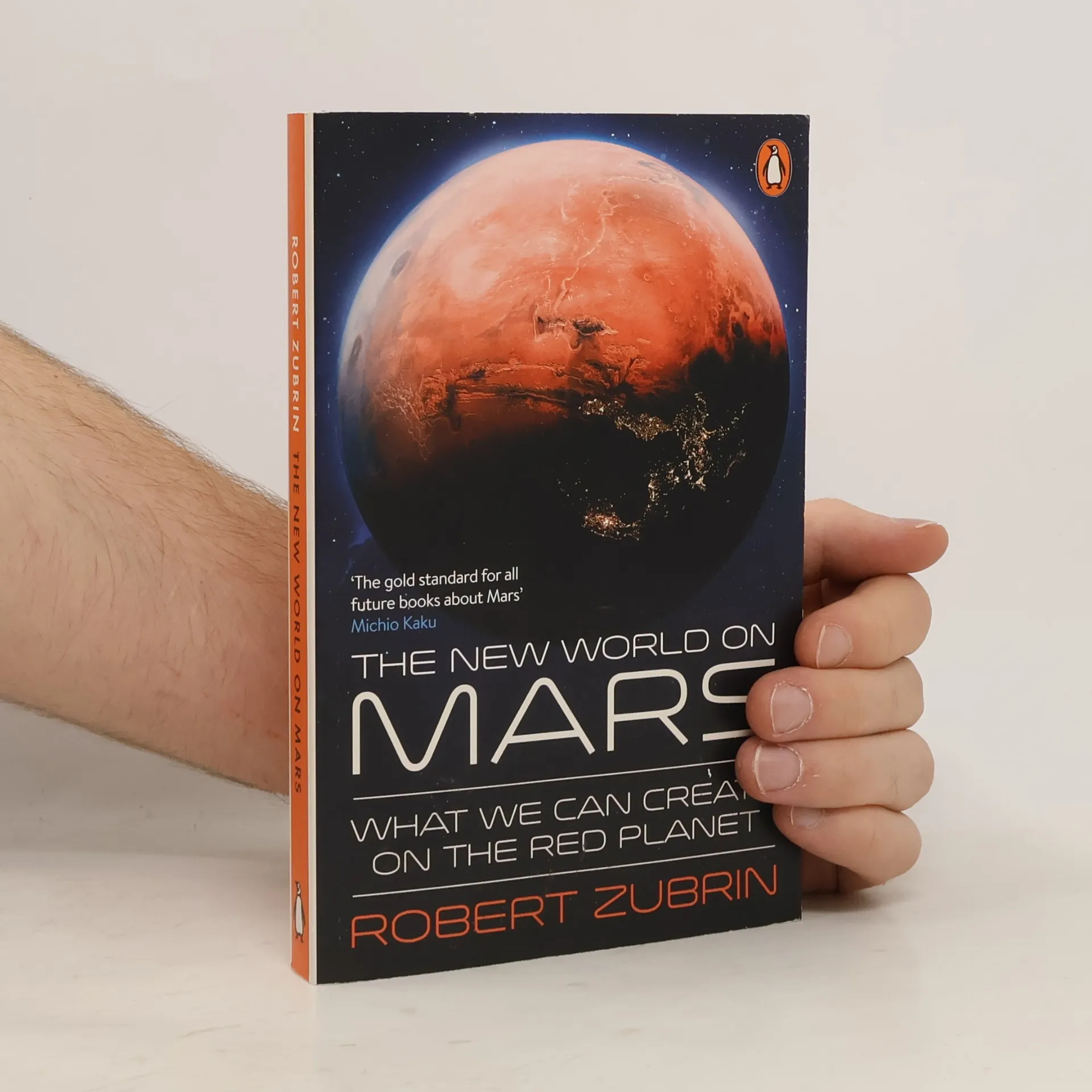

The New World on Mars
- 320 pages
- 12 hours of reading
Focusing on the future of space exploration, Robert Zubrin presents a compelling vision of a Martian civilization, drawing on the latest scientific advancements and research. As a leading authority on space and founder of the Mars Society, he outlines the potential for humanity to successfully colonize Mars, emphasizing the innovative technologies and strategies that will make this ambitious goal a reality. Through his insights, readers are invited to imagine the possibilities of life on another planet.
The Case for Space: How the Revolution in Spaceflight Opens Up a Future of Limitless Possibility
- 408 pages
- 15 hours of reading
"A new space race has begun. But the rivals in this case are not superpowers but competing entrepreneurs. These daring pioneers are creating a revolution in spaceflight that promises to transform the near future. Astronautical engineer Robert Zubrin spells out the potential of these new developments in an engrossing narrative that is visionary yet grounded by a deep understanding of the practical challenges. Fueled by the combined expertise of the old aerospace industry and the talents of Silicon Valley entrepreneurs, spaceflight is becoming cheaper. The new generation of space explorers has already achieved a major breakthrough by creating reusable rockets. Zubrin foresees more rapid innovation, including global travel from any point on Earth to another in an hour or less; orbital hotels; moon bases with incredible space observatories; human settlements on Mars, the asteroids, and the moons of the outer planets; and then, breaking all limits, pushing onward to the stars."--Publisher's website.
Merchants of Despair
Radical Environmentalists, Criminal Pseudo-Scientists, and the Fatal Cult of Antihumanism
There was a time when humanity looked in the mirror and saw something precious, worth protecting and fighting for—indeed, worth liberating. But now, we are beset on all sides by propaganda promoting a radically different viewpoint. According to this idea, human beings are a cancer upon the Earth, a horde of vermin whose aspirations and appetites are endangering the natural order. This is the core of antihumanism. Merchants of Despair traces the pedigree of this ideology and exposes its pernicious consequences in startling and horrifying detail. The book names the chief prophets and promoters of antihumanism over the last two centuries, from Thomas Malthus through Paul Ehrlich and Al Gore. It exposes the worst crimes perpetrated by the antihumanist movement, including eugenics campaigns in the United States and genocidal anti-development and population-control programs around the world. Combining riveting tales from history with powerful policy arguments, Merchants of Despair provides scientific refutations to all of antihumanism’s major pseudo-scientific claims, including its modern tirades against nuclear power, pesticides, population growth, biotech foods, resource depletion, and industrial development.
The reader chooses the course of an adventure in which a crew of astronauts--the youngest to ever make the journey--sets off on a mission to Mars.
On a marché sur Mars
- 378 pages
- 14 hours of reading
Ils sont cinq : un pilote d'élite de l'US Air Force, une femme ingénieur mécanicien qui a de l'or dans les mains, un brillant scientifique, un géologue texan et un historien porté sur l'aventure sélectionnés pour être les membres de la première expédition habitée vers Mars. Et, à ce titre, pour entrer dans l'Histoire... A bord de leur vaisseau spatial, tout ne se passe pas toujours pour le mieux : chacun des astronautes a une forte personnalité, et les frictions sont fréquentes. Mais tout est oublié lorsqu'ils foulent enfin le sol rouge de Mars... Au départ, cet exploit est salué comme il convient sur leur planète d'origine, mais l'opinion publique américaine en vient rapidement à critiquer les dépenses considérables engagées pour cette expédition. Le gouvernement abandonne alors purement et simplement les astronautes à un sort qui promet d'être tragique.
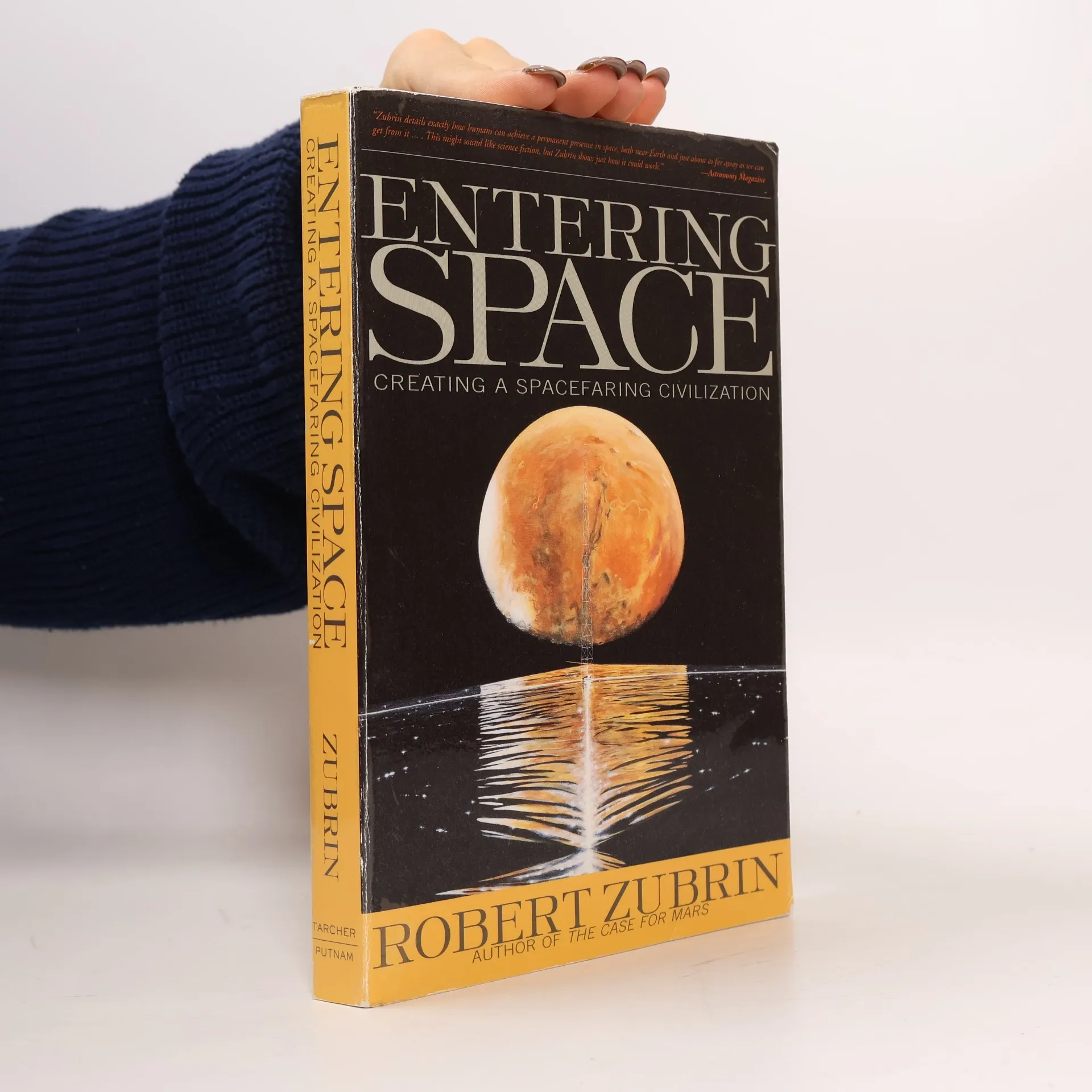
Entering Space: Creating a Spacefaring Civilization
Creating a Spacefaring Civilization
- 305 pages
- 11 hours of reading
"Robert Zubrin is a true engineering genius like the heroic engineers of the past."-- Frederick Turner, American Enterprise Using nuts-and-bolts engineering and a unique grasp of human history, Robert Zubrin takes us to the not-very-distant future, when our global society will branch out into the universe. From the current-day prospect of lunar bases and Mars settlements to the outer reaches of other galaxies, Zubrin delivers the most important and forward-looking work on space and the true possibilities of human exploration since Carl Sagan's Cosmos. Sagan himself said of Zubrin's humans-to-Mars plan, " Bob Zubrin really, nearly alone, changed our thinking on this issue." With Entering Space , he takes us further, into the prospect of human expansion to the outer planets of our own solar system--and beyond.
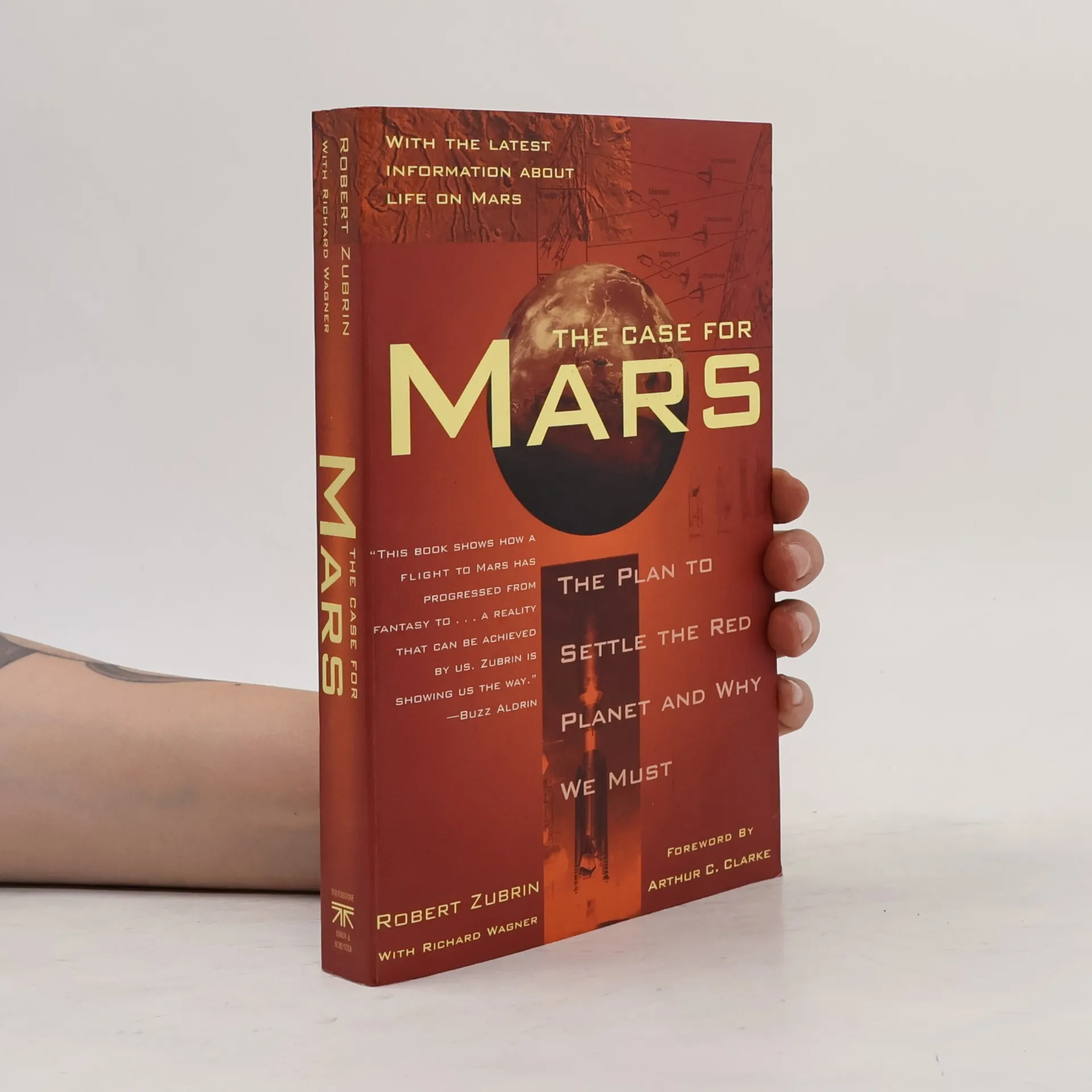
The Case for Mars
- 368 pages
- 13 hours of reading
Since the beginning of human history Mars has been an alluring dream--the stuff of legends, gods, and mystery. The planet most like ours, it has still been thought impossible to reach, let alone explore and inhabit.Now with the advent of a revolutionary new plan, all this has changed. leading space exploration authority Robert Zubrin has crafted a daring new blueprint, Mars Direct, presented here with illustrations, photographs, and engaging anecdotes.The Case for Mars is not a vision for the far future or one that will cost us impossible billions. It explains step-by-step how we can use present-day technology to send humans to Mars within ten years; actually produce fuel and oxygen on the planet's surface with Martian natural resources; how we can build bases and settlements; and how we can one day "terraform" Mars--a process that can alter the atmosphere of planets and pave the way for sustainable life.