

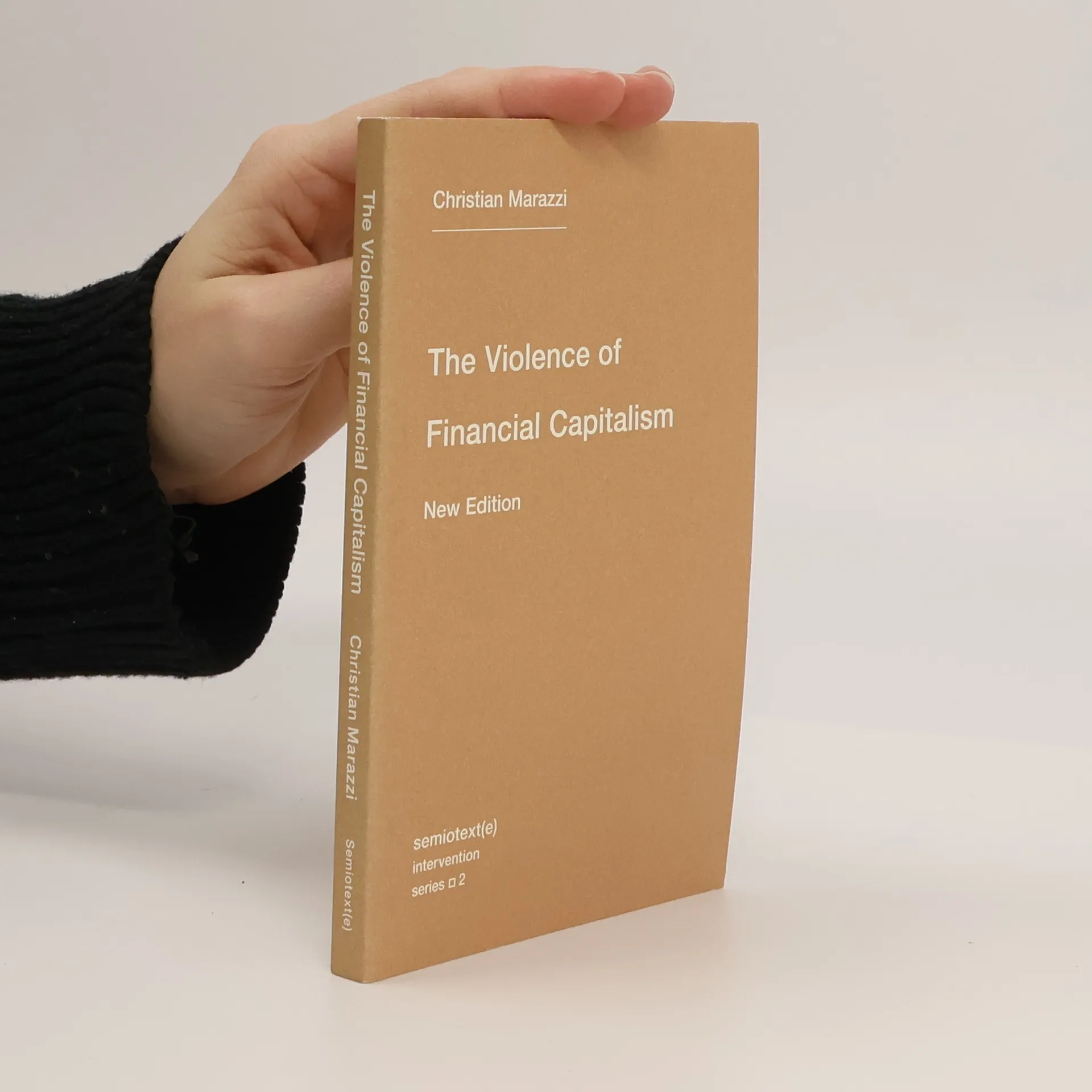
Semiotext(e) / Intervention Series - 2: The Violence of Financial Capitalism
New Edition
- 136 pages
- 5 hours of reading
This updated edition of a groundbreaking work on the global financial crisis presents a postfordist perspective. The 2010 English-language edition made this influential analysis accessible to a broader audience, and the new edition incorporates recent events, including the G20 summit in July 2010, which highlighted a consensus on reducing government spending. Marazzi, a prominent figure in the European postfordist movement, argues that financialization represents a new form of accumulation that reflects contemporary social and cognitive production rather than mere irregularities in traditional economic categories. He posits that the financial crisis is integral to modern accumulation rather than a simple lack of growth. Marazzi illustrates how individual debt and financial market management serve as techniques for governing the transformations of immaterial labor and social cooperation. The crisis has fundamentally challenged concepts of economic-political hegemony, prompting discussions about a new geomonetary order emerging globally. This work offers a fresh perspective on international economics and provides essential post-Marxist insights for addressing capitalism's latest manifestations. The edition includes a glossary of financial capitalism's specialized language, "Words in Crisis," and features a new afterword by Marazzi.