

Parameters
- 600 pages
- 21 hours of reading
More about the book
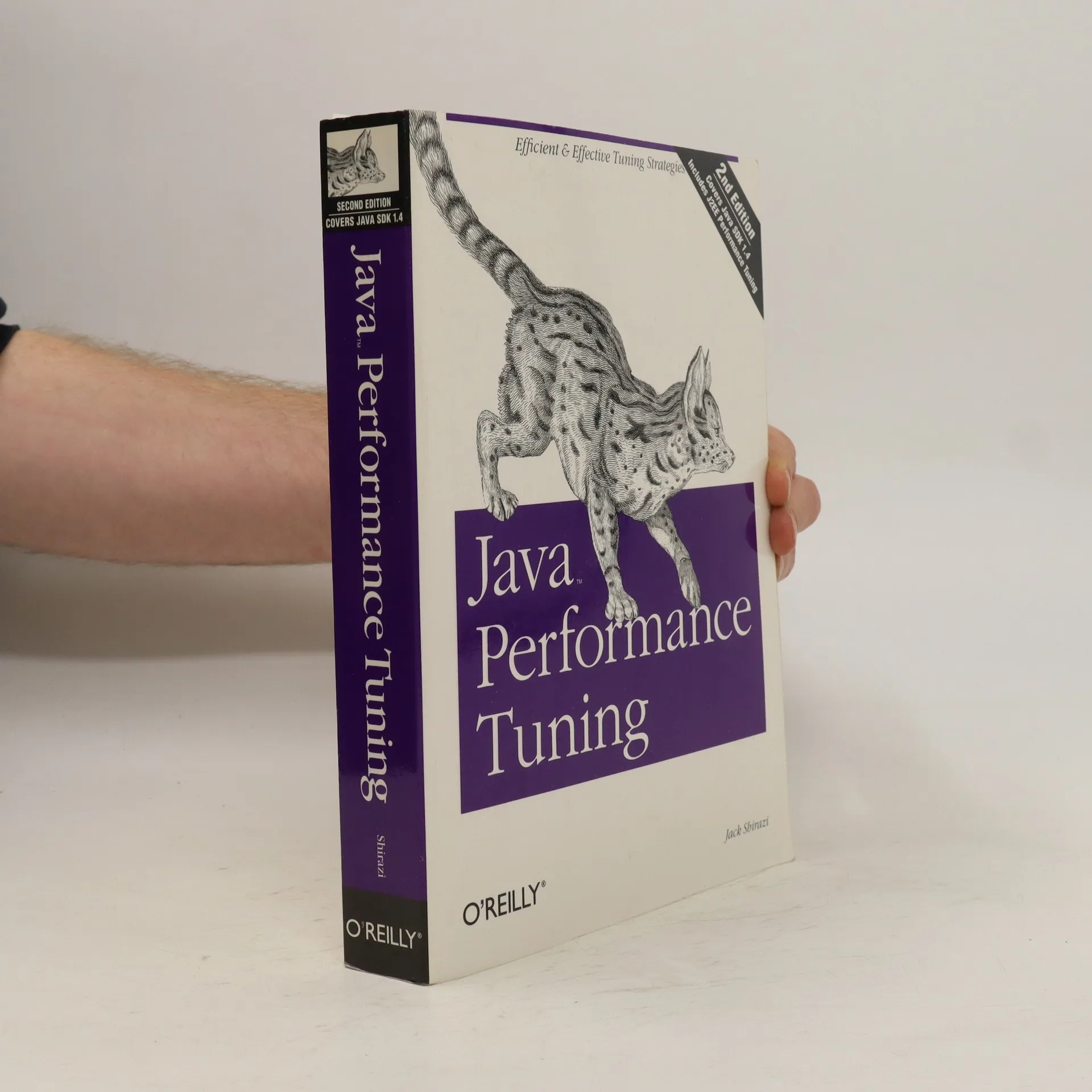
Java application performance is tied pretty heavily to the underlying Java Virtual Machine, and the new 1.4 version of Java has significant changes that mean previously used performance tips and strategies may no longer work. Significantly revised and expanded, this second edition not only covers Java 1.4, but adds new coverage of JDBC, NIO, Servlets, EJB and JavaServer Pages. Suitable for intermediate and advanced Java developers, this text also covers JDBC, RMI/CORBA, Servlets, JavaServer Pages and custom tag libraries, XML, internationalization, JavaMail, Enterprise JavaBeans and performance tuning. It should be a useful resource for teaching how to create a tuning strategy, how to use profiling tools to understand a program's behaviour, and how to avoid performance penalties from inefficient code, making them more efficient and effective. The result is code that's robust, maintainable and fast.


Book purchase
Java performance tuning, Jack Shirazi
- Language

- Released
- 2003
- product-detail.submit-box.info.binding
- (Paperback)
Payment methods
We’re missing your review here.
- Language
- English
- Authors
- Jack Shirazi
- Publisher
- O'Reilly
- Released
- 2003
- Format
- Paperback
- Pages
- 600
- ISBN10
- 0596003773
- ISBN13
- 9780596003777
- Series
- Tags
- Non-Fiction, Technology & Engineering, References & Manuals, Computers & Internet, Technology, Software
- Rating
- 3.65 out of 5
- Description
- Java application performance is tied pretty heavily to the underlying Java Virtual Machine, and the new 1.4 version of Java has significant changes that mean previously used performance tips and strategies may no longer work. Significantly revised and expanded, this second edition not only covers Java 1.4, but adds new coverage of JDBC, NIO, Servlets, EJB and JavaServer Pages. Suitable for intermediate and advanced Java developers, this text also covers JDBC, RMI/CORBA, Servlets, JavaServer Pages and custom tag libraries, XML, internationalization, JavaMail, Enterprise JavaBeans and performance tuning. It should be a useful resource for teaching how to create a tuning strategy, how to use profiling tools to understand a program's behaviour, and how to avoid performance penalties from inefficient code, making them more efficient and effective. The result is code that's robust, maintainable and fast.