


More about the book
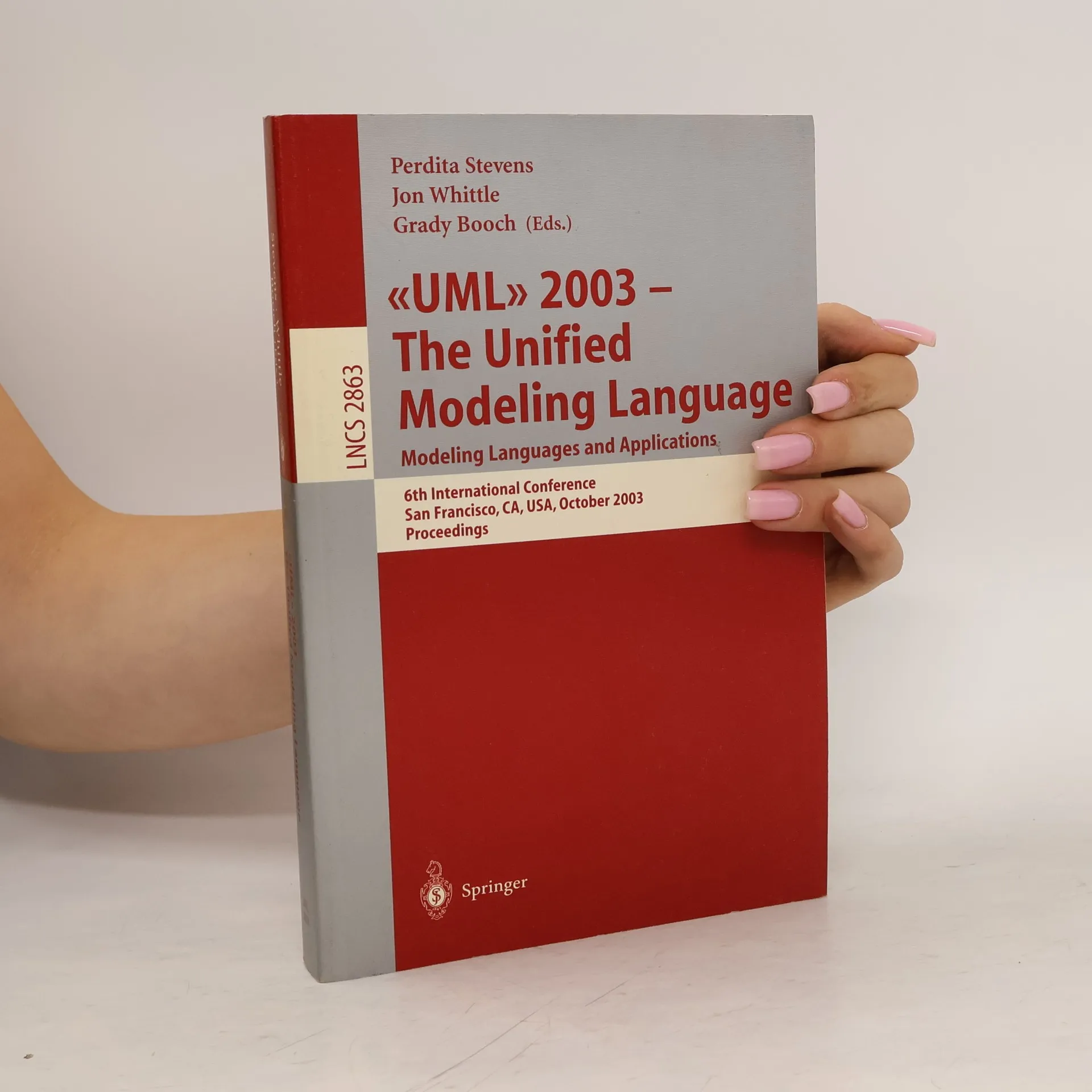
Thepastyearhasbeenaneventfuloneforthoseinterestedinsoftwaremodeling. The ? rst major revision of the Uni? ed Modeling Language, UML2.0, is in the process of adoption by the Object Management Group (OMG), and it makes many long-desired additions and improvements to UML. At the same time, it expands what was already a large language. A challenge for both practitioners andresearchersistohelpsmooththeadoptionofthisnewlanguage. Increasingly, attention is being paid to the use of specialized languages, often pro? les of UML, appropriate for di? erent purposes; this is one way to make UML less overwh- ming. Accordingly, the focus of the UML conference is gradually expanding from UML to software modeling in general. Simultaneously, model-driven development is being pursued as a way of - creasing the bene? ts from modeling throughout the software development p- cess. Gradually, it is developing from a set of slogans into a reality. Many of the papers in this volume are concerned, directly or indirectly, with how to make modeling, rather than coding, the heart of software development, and how to realize the resulting bene? ts of higher-level thinking. Much work remains to be done.
Book purchase
The unified modeling language, Perdita Stevens
- Language

- Released
- 2003
- Binding
- (Paperback)
Payment methods
No one has rated yet.
- Title
- The unified modeling language
- Language
- English
- Authors
- Perdita Stevens
- Publisher
- Springer***5108985
- Released
- 2003
- Format
- Paperback
- Pages
- 415
- ISBN10
- 3540202439
- ISBN13
- 9783540202431
- Series
- Tags
- Description
- Thepastyearhasbeenaneventfuloneforthoseinterestedinsoftwaremodeling. The ? rst major revision of the Uni? ed Modeling Language, UML2.0, is in the process of adoption by the Object Management Group (OMG), and it makes many long-desired additions and improvements to UML. At the same time, it expands what was already a large language. A challenge for both practitioners andresearchersistohelpsmooththeadoptionofthisnewlanguage. Increasingly, attention is being paid to the use of specialized languages, often pro? les of UML, appropriate for di? erent purposes; this is one way to make UML less overwh- ming. Accordingly, the focus of the UML conference is gradually expanding from UML to software modeling in general. Simultaneously, model-driven development is being pursued as a way of - creasing the bene? ts from modeling throughout the software development p- cess. Gradually, it is developing from a set of slogans into a reality. Many of the papers in this volume are concerned, directly or indirectly, with how to make modeling, rather than coding, the heart of software development, and how to realize the resulting bene? ts of higher-level thinking. Much work remains to be done.