





Parameters
- 208 pages
- 8 hours of reading
More about the book
The liberal arts face significant challenges as governors in states like Florida, Texas, and North Carolina vow to cut taxpayer funding for these programs, a sentiment echoed by President Obama, who suggested that vocational training may offer better financial prospects. This perspective has led to a decline in traditional majors such as English and history. Fareed Zakaria reflects on his upbringing in India, where a skills-based education was highly prioritized, yet he argues that this view is fundamentally flawed. He highlights the essential skills gained from a liberal arts education, including clear writing, persuasive expression, and analytical thinking. Zakaria counters the vocational argument by pointing out the automation and outsourcing of routine manufacturing jobs, emphasizing that specific vocational skills can quickly become obsolete. While engineering is valuable, he stresses the importance of creativity, lateral thinking, design, communication, storytelling, and a lifelong passion for learning—qualities nurtured by a liberal education. He also notes that technology is revolutionizing education, making high-quality courses accessible to millions globally, marking the beginning of an unprecedented expansion of liberal education.
Language



Book purchase
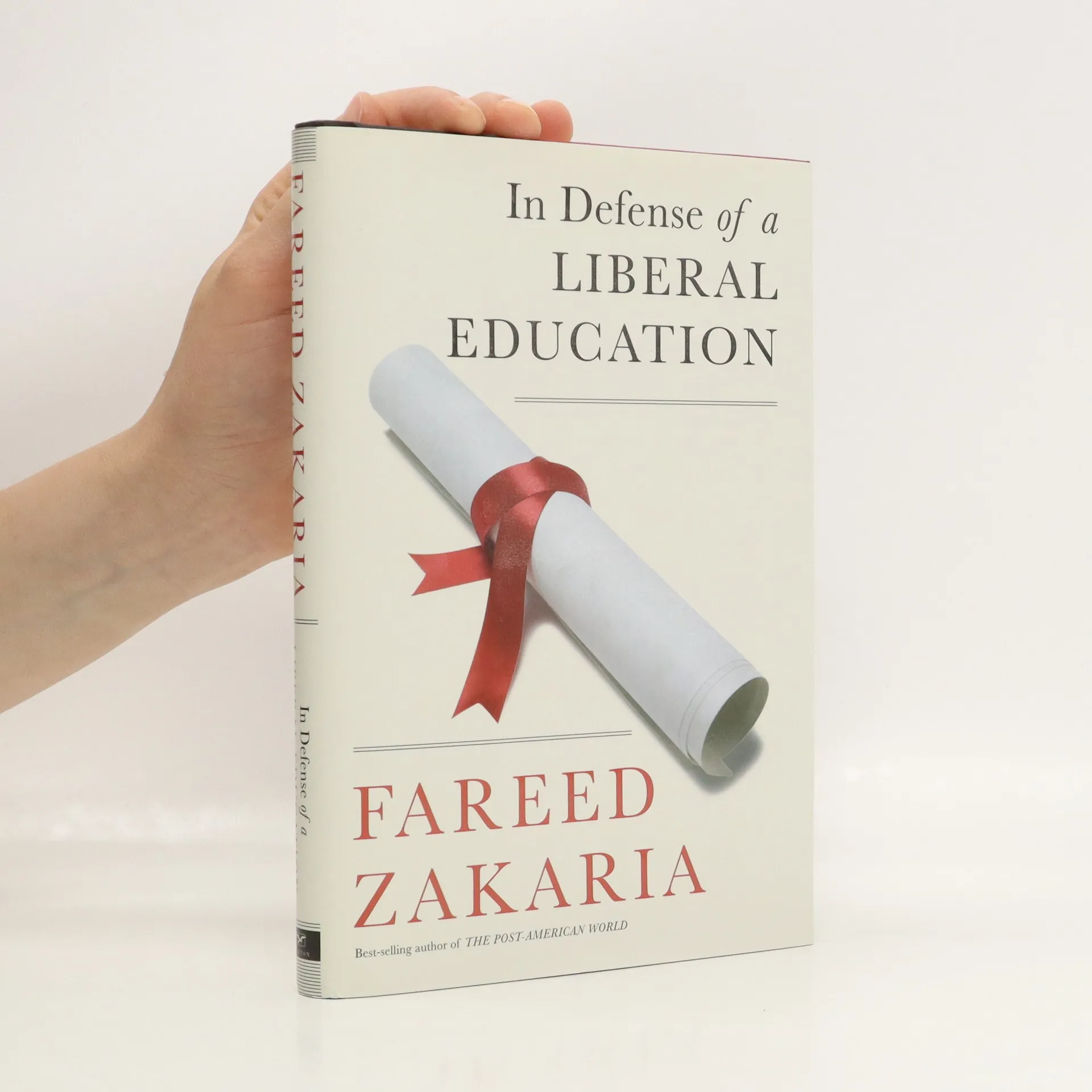
In defense of a liberal education, Fareed Zakaria
- Language

- Released
- 2015
- product-detail.submit-box.info.binding
- (Hardcover)
Payment methods
We’re missing your review here.
- Language
- English
- Authors
- Fareed Zakaria
- Publisher
- W.W. Norton & Company
- Released
- 2015
- Format
- Hardcover
- Pages
- 208
- ISBN10
- 0393247686
- ISBN13
- 9780393247688
- Series
- Tags
- Non-Fiction, Social Sciences, Historical Themes, History, True Stories, Political Science & Politics, Philosophical Topics, Philosophy, Politics, Sociology, Opinion Journalism & Essays, Education & School System, Gifts for grandpa, Culture, University, College, Upbringing and Education, Humanities, Cultural Traditions
- First published
- 2015
- Original title
- In Defense of a Liberal Education
- Rating
- 3.8 out of 5
- Description
- The liberal arts face significant challenges as governors in states like Florida, Texas, and North Carolina vow to cut taxpayer funding for these programs, a sentiment echoed by President Obama, who suggested that vocational training may offer better financial prospects. This perspective has led to a decline in traditional majors such as English and history. Fareed Zakaria reflects on his upbringing in India, where a skills-based education was highly prioritized, yet he argues that this view is fundamentally flawed. He highlights the essential skills gained from a liberal arts education, including clear writing, persuasive expression, and analytical thinking. Zakaria counters the vocational argument by pointing out the automation and outsourcing of routine manufacturing jobs, emphasizing that specific vocational skills can quickly become obsolete. While engineering is valuable, he stresses the importance of creativity, lateral thinking, design, communication, storytelling, and a lifelong passion for learning—qualities nurtured by a liberal education. He also notes that technology is revolutionizing education, making high-quality courses accessible to millions globally, marking the beginning of an unprecedented expansion of liberal education.