

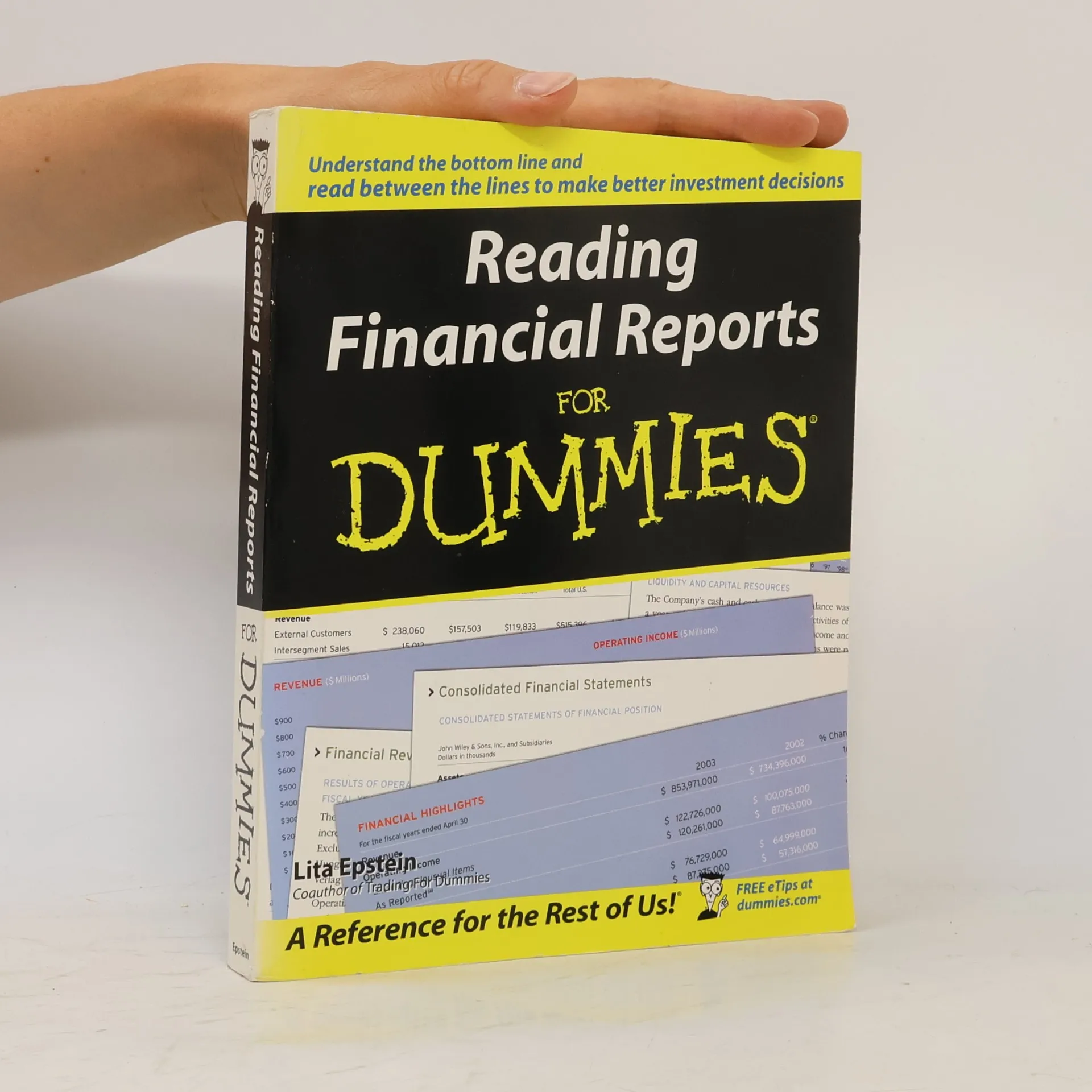



More about the book
The U.S. government began standardizing financial reporting in 1929 after the stock market crash revealed that businesses often made misleading claims, leaving investors vulnerable. Today, financial reports serve multiple purposes: they help management assess profitability and optimize operations, assist banks and lenders in evaluating financial health, and inform investors considering stock purchases. However, for those lacking financial expertise, annual reports filled with figures and fine print can be daunting. Gaining a fundamental understanding of finance and its terminology allows readers to uncover valuable insights. This resource equips you with the knowledge needed to navigate financial reports effectively. Investors are encouraged to maintain a healthy skepticism, as companies may resort to "creative" accounting under pressure to satisfy Wall Street. The guide is structured to allow readers to start at their comfort level and progress at their own pace. It aids managers in preparing annual reports and utilizing financial data for efficient budgeting while empowering investors to make informed decisions based on understanding rather than hype. In both business and investing, knowledge proves to be a significant asset.


Book purchase
Reading Financial Reports For Dummies, Lita Epstein
- Language

- Released
- 2005
- Binding
- (Paperback)
Payment methods
We’re missing your review here.
- Language
- English
- Authors
- Lita Epstein
- Publisher
- For Dummies
- Released
- 2005
- Format
- Paperback
- Pages
- 362
- ISBN10
- 0764577336
- ISBN13
- 9780764577338
- Series
- Rating
- 4.4 out of 5
- Description
- The U.S. government began standardizing financial reporting in 1929 after the stock market crash revealed that businesses often made misleading claims, leaving investors vulnerable. Today, financial reports serve multiple purposes: they help management assess profitability and optimize operations, assist banks and lenders in evaluating financial health, and inform investors considering stock purchases. However, for those lacking financial expertise, annual reports filled with figures and fine print can be daunting. Gaining a fundamental understanding of finance and its terminology allows readers to uncover valuable insights. This resource equips you with the knowledge needed to navigate financial reports effectively. Investors are encouraged to maintain a healthy skepticism, as companies may resort to "creative" accounting under pressure to satisfy Wall Street. The guide is structured to allow readers to start at their comfort level and progress at their own pace. It aids managers in preparing annual reports and utilizing financial data for efficient budgeting while empowering investors to make informed decisions based on understanding rather than hype. In both business and investing, knowledge proves to be a significant asset.