






Parameters
- 510 pages
- 18 hours of reading
More about the book
Kipling's epic rendition of the imperial experience in India is also his greatest long work. Two men - Kim, a boy growing into early manhood, and the lama, an old ascetic priest - are fired by a quest. Kim is white, although born in India. While he wants to play the Great Game of imperialism, he is also spiritually bound to the lama and he tries to reconcile these opposing strands. A celebration of their friendship in an often hostile environment, Kim captures the opulence of India's exotic landscape, overlaid by the uneasy presence of the British Raj. Contains an introduction by Harish Trivedi placing the novel in its literary and social context. Also includes notes, chronology, further reading, a General Preface by the series editor Jan Montefiore and Edward Said's famous introduction from the previous Penguin Classics edition as an appendix.








Payment methods
We’re missing your review here.
- Title
- Kim
- Language
- English
- Authors
- Rudyard Kipling
- Publisher
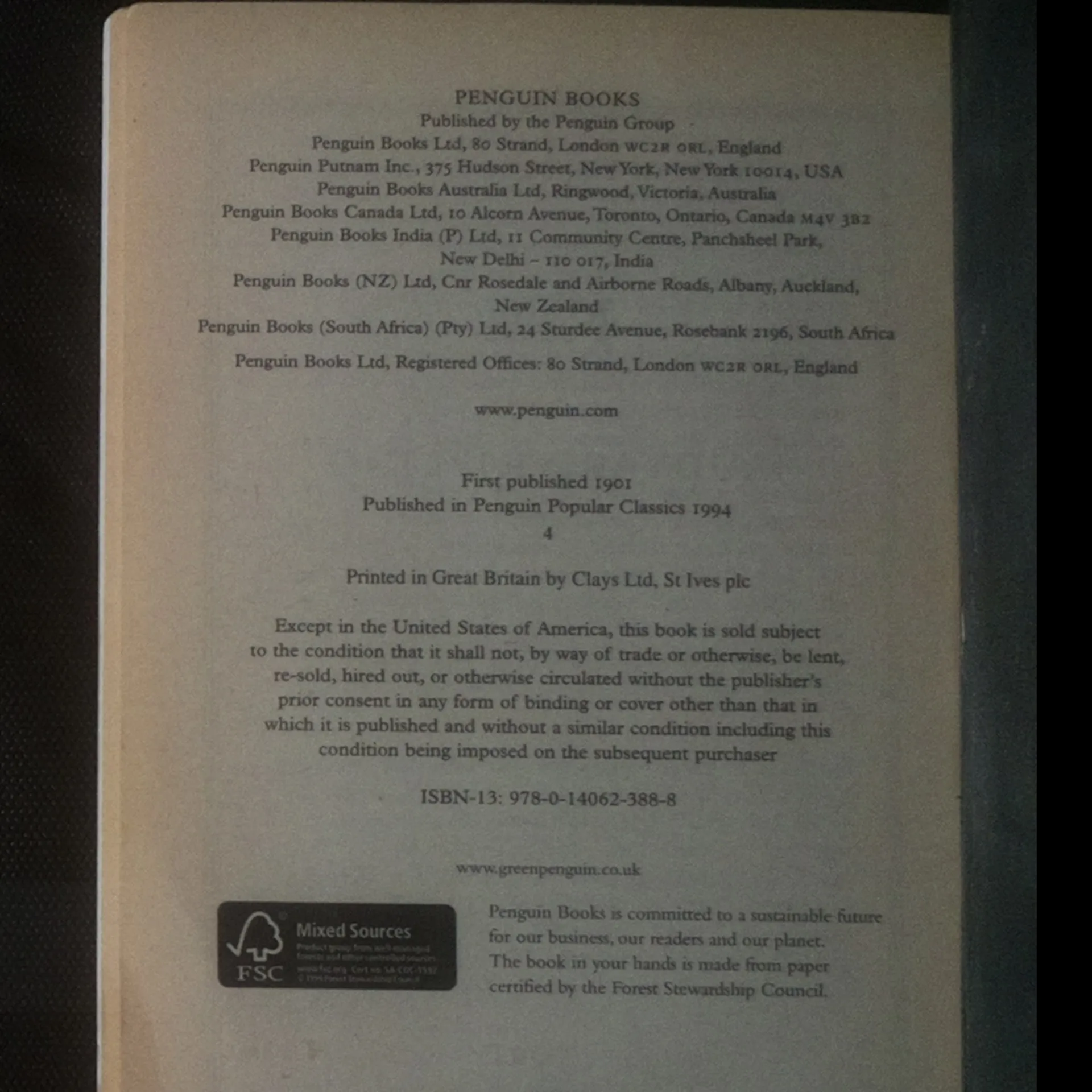
- Penguin Books
- Released
- 1994
- Pages
- 510
- ISBN10
- 0141971282
- ISBN13
- 9780141971285
- Series
- Tags
- Fiction, Religion & Spirituality, Adventure, Young Adult, Religious Topics, Religion, Classics, Suspense, Society, Russia, Adapted for Film, Buddhism, Espionage, Ireland, India, Journey, Spiritual Development, Search, Nobel prize, Secret Services, Boys, Agents, Colonialism, Monks, Classicism, Colonies, End of the 19th Century
- First published
- 1901
- Original title
- Kim: Comics Adaptation
- Rating
- 3.7 out of 5
- Description
- Kipling's epic rendition of the imperial experience in India is also his greatest long work. Two men - Kim, a boy growing into early manhood, and the lama, an old ascetic priest - are fired by a quest. Kim is white, although born in India. While he wants to play the Great Game of imperialism, he is also spiritually bound to the lama and he tries to reconcile these opposing strands. A celebration of their friendship in an often hostile environment, Kim captures the opulence of India's exotic landscape, overlaid by the uneasy presence of the British Raj. Contains an introduction by Harish Trivedi placing the novel in its literary and social context. Also includes notes, chronology, further reading, a General Preface by the series editor Jan Montefiore and Edward Said's famous introduction from the previous Penguin Classics edition as an appendix.