

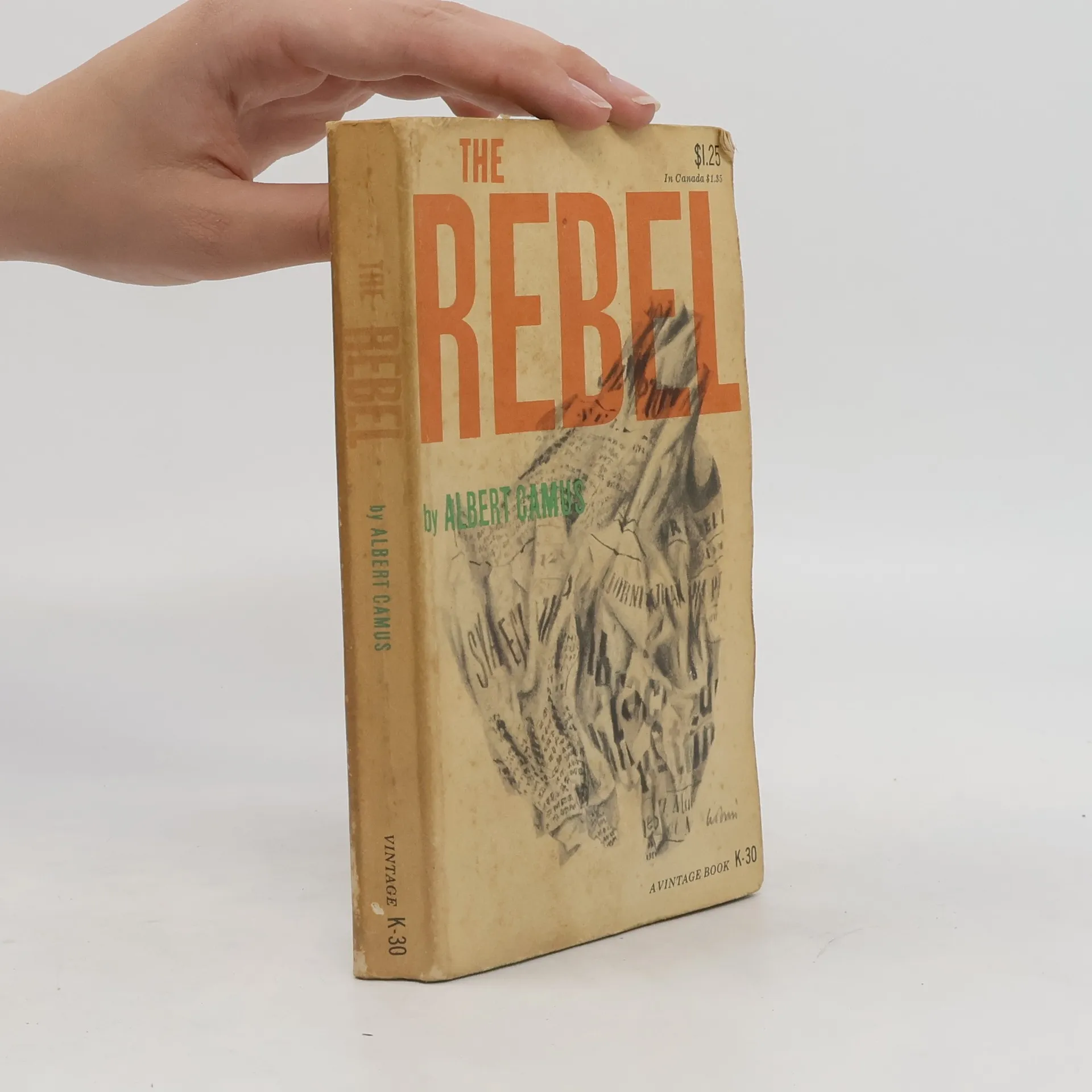
More about the book
Translated by Anthony Bower With an Introduction by Oliver Todd 'A conscience with style' V.S. Pritchett The Rebel (1951) is Camus's 'attempt to understand the time I live in' and a brilliant essay on the nature of human revolt. Here he makes a daring critique of communism - how it had gone wrong behind the Iron Curtain and the resulting totalitarian regimes. And he questions two events held sacred by the left wing - the French Revolution of 1789 and the Russian Revolution of 1917 - that had resulted, he believed, in the use of terrorism as a political instrument. In this towering intellectual document, Camus argues that hope for the future lies in revolt with revolution - a chance to achieve change without losing our freedom. 'The last French intellectual to take the side of humanity and talk its language . . . a figure of immense moral stature' Sunday Times Winner of the Nobel Prize for Literature







Book purchase
The Rebel, Albert Camus
- Language

- Released
- 1951
- product-detail.submit-box.info.binding
- (Paperback)
Payment methods
We’re missing your review here.
- Title
- The Rebel
- Language
- English
- Authors
- Albert Camus
- Publisher
- Vintage
- Released
- 1951
- Format
- Paperback
- Series
- Tags
- Non-Fiction, Social Sciences, True Stories, Political Science & Politics, Philosophical Topics, Politics, France, Opinion Journalism & Essays, Gifts for grandpa, French Literature, Existentialism
- First published
- 1951
- Original title
- ĽHomme révolté
- Rating
- 4.15 out of 5
- Description
- Translated by Anthony Bower With an Introduction by Oliver Todd 'A conscience with style' V.S. Pritchett The Rebel (1951) is Camus's 'attempt to understand the time I live in' and a brilliant essay on the nature of human revolt. Here he makes a daring critique of communism - how it had gone wrong behind the Iron Curtain and the resulting totalitarian regimes. And he questions two events held sacred by the left wing - the French Revolution of 1789 and the Russian Revolution of 1917 - that had resulted, he believed, in the use of terrorism as a political instrument. In this towering intellectual document, Camus argues that hope for the future lies in revolt with revolution - a chance to achieve change without losing our freedom. 'The last French intellectual to take the side of humanity and talk its language . . . a figure of immense moral stature' Sunday Times Winner of the Nobel Prize for Literature