

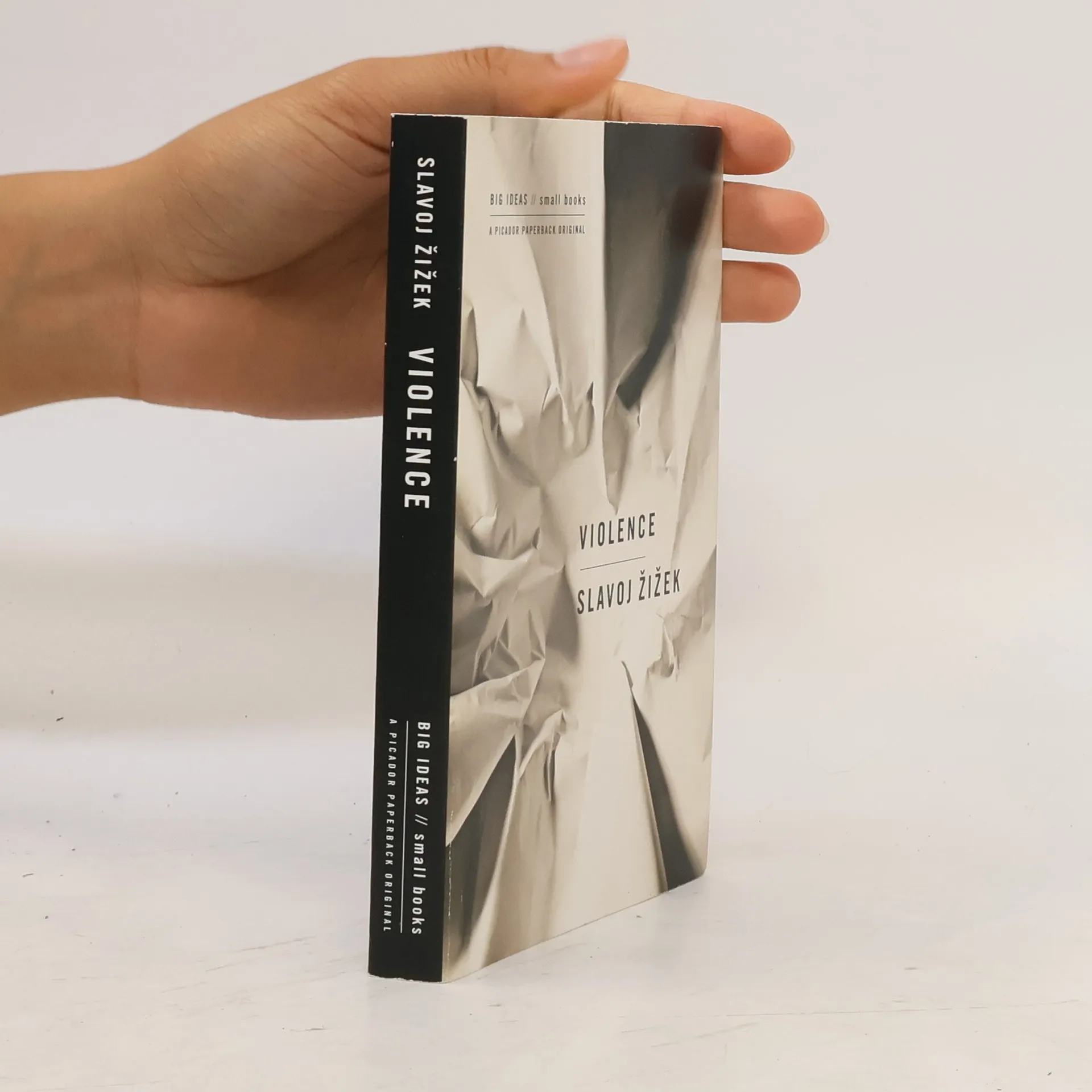


Parameters
- 262 pages
- 10 hours of reading
More about the book
Philosopher, cultural critic, and agent provocateur Slavoj Žižek constructs a fascinating new framework to look at the forces of violence in our world.Using history, philosophy, books, movies, Lacanian psychiatry, and jokes, Slavoj Žižek examines the ways we perceive and misperceive violence. Drawing from his unique cultural vision, Žižek brings new light to the Paris riots of 2005; he questions the permissiveness of violence in philanthropy; in daring terms, he reflects on the powerful image and determination of contemporary terrorists.Violence, Žižek states, takes three forms--subjective (crime, terror), objective (racism, hate-speech, discrimination), and systemic (the catastrophic effects of economic and political systems)--and often one form of violence blunts our ability to see the others, raising complicated questions.Does the advent of capitalism and, indeed, civilization cause more violence than it prevents? Is there violence in the simple idea of "the neighbour"? And could the appropriate form of action against violence today simply be to contemplate, to think?Beginning with these and other equally contemplative questions, Žižek discusses the inherent violence of globalization, capitalism, fundamentalism, and language, in a work that will confirm his standing as one of our most erudite and incendiary modern thinkers.




Book purchase
Violence, Slavoj Žižek
- Language

- Released
- 2008
- product-detail.submit-box.info.binding
- (Paperback)
Payment methods
We’re missing your review here.
- Title
- Violence
- Subtitle
- Six sideways reflections
- Language
- English
- Authors
- Slavoj Žižek
- Publisher
- Picador
- Released
- 2008
- Format
- Paperback
- Pages
- 262
- ISBN10
- 0312427182
- ISBN13
- 9780312427184
- Series
- Tags
- Non-Fiction, Social Sciences, True Stories, Political Science & Politics, Psychological Topics, Philosophical Topics, Philosophy, Psychology, Politics, Sociology, Opinion Journalism & Essays, Violence, Scientific Theories, Psychoanalysis
- First published
- 2008
- Original title
- Violence: Six Sideways Reflections
- Rating
- 3.9 out of 5
- Description
- Philosopher, cultural critic, and agent provocateur Slavoj Žižek constructs a fascinating new framework to look at the forces of violence in our world.Using history, philosophy, books, movies, Lacanian psychiatry, and jokes, Slavoj Žižek examines the ways we perceive and misperceive violence. Drawing from his unique cultural vision, Žižek brings new light to the Paris riots of 2005; he questions the permissiveness of violence in philanthropy; in daring terms, he reflects on the powerful image and determination of contemporary terrorists.Violence, Žižek states, takes three forms--subjective (crime, terror), objective (racism, hate-speech, discrimination), and systemic (the catastrophic effects of economic and political systems)--and often one form of violence blunts our ability to see the others, raising complicated questions.Does the advent of capitalism and, indeed, civilization cause more violence than it prevents? Is there violence in the simple idea of "the neighbour"? And could the appropriate form of action against violence today simply be to contemplate, to think?Beginning with these and other equally contemplative questions, Žižek discusses the inherent violence of globalization, capitalism, fundamentalism, and language, in a work that will confirm his standing as one of our most erudite and incendiary modern thinkers.